1. ArchDaily
  2. Isamu Noguchi

Isamu Noguchi: The Latest Architecture and News

“Built Environment: An Alternative Guide to Japan” Exhibition in Montréal Examines Resilient Japanese Architecture

The exhibition Built Environment: An Alternative Guide to Japan at the Université du Québec à Montréal's (UQAM) Centre de design will be on view until January 25, 2026. Curated by Shunsuke Kurakata, Satoshi Hachima, and Kenjiro Hosaka, it features a selection of 80 projects from Japan's 47 prefectures, including works by renowned Japanese architects such as 2014 Pritzker Prize laureate Shigeru Ban, Kengo Kuma, the designer of the Museum of Modern Art's renovation in New York Yoshio Taniguchi, celebrated landscape architect and sculptor Isamu Noguchi, and 2019 Pritzker Prize laureate Arata Isozaki. The selection aims to offer a renewed perspective on Japan through innovative buildings, civil engineering projects, and landscape designs. Organized in collaboration with the Japan Foundation and presented with the support of the Consulate General of Japan in Montreal, the exhibition is conceived as a traveling project exploring the resilience of Japanese architecture and infrastructure in the face of natural disasters and climate change.


Cultural Venues, Fresh Perspectives on Public Space and One Month until the Winter Olympics: This Week’s Review

This week's news compilation brings together current discussions around public and collective space, cultural infrastructure, and long-term urban transformation across diverse geographic contexts. From shared management models redefining public space ownership in cities such as Paris and New York, to large-scale event-driven initiatives linked to Milano Cortina 2026 and the World Urban Forum in Baku, the selected projects and initiatives highlight how governance, culture, and infrastructure intersect in contemporary practice. These themes are further developed through a mix of strategic planning processes, including international test planning efforts in Northern Lviv, and built projects spanning education, culture, and temporary architecture, from a new dental teaching facility in Blantyre, Malawi, to restored and newly opened cultural venues in the United States and Taiwan, and adaptive reuse interventions showcased at the Chicago Architecture Biennial. The international examples outline an architectural landscape shaped by reuse, public engagement, and the evolving role of design in responding to social, cultural, and institutional frameworks.

Cultural Venues, Fresh Perspectives on Public Space and One Month until the Winter Olympics: This Week’s Review - Image 1 of 4Cultural Venues, Fresh Perspectives on Public Space and One Month until the Winter Olympics: This Week’s Review - Image 2 of 4Cultural Venues, Fresh Perspectives on Public Space and One Month until the Winter Olympics: This Week’s Review - Image 3 of 4Cultural Venues, Fresh Perspectives on Public Space and One Month until the Winter Olympics: This Week’s Review - Image 4 of 4Cultural Venues, Fresh Perspectives on Public Space and One Month until the Winter Olympics: This Week’s Review - More Images+ 15

High Museum of Art Announces Touring Exhibition on Isamu Noguchi’s Design Work

The High Museum of Art in Atlanta will present Isamu Noguchi: "I am not a designer" from April 10 to August 2, 2026. The exhibition examines the design work of Isamu Noguchi (1904–1988) across sculpture, furniture, lighting, landscape, and stage design, marking his first major design-focused retrospective in nearly 25 years. Following its presentation in Atlanta, the exhibition will travel to the Peabody Essex Museum in Salem, Massachusetts, from September 19, 2026, to January 3, 2027, and to the Memorial Art Gallery of the University of Rochester in spring 2027.

High Museum of Art Announces Touring Exhibition on Isamu Noguchi’s Design Work - Image 1 of 4High Museum of Art Announces Touring Exhibition on Isamu Noguchi’s Design Work - Image 2 of 4High Museum of Art Announces Touring Exhibition on Isamu Noguchi’s Design Work - Image 3 of 4High Museum of Art Announces Touring Exhibition on Isamu Noguchi’s Design Work - Image 4 of 4High Museum of Art Announces Touring Exhibition on Isamu Noguchi’s Design Work - More Images+ 4

Inclusive Playgrounds: Every Body Can Play Through Architecture

Play extends beyond its recreational dimension, unfolding as a social act that encourages children to learn, interact, be creative, and engage with their spatial context. As Johan Huizinga notes in Homo Ludens, it is a fundamental element of culture, where kids form bonds and explore ways of coexisting. When the architecture of play spaces excludes certain bodies or modes of participation, the collective experience becomes fragmented and loses part of its meaning. Designing with inclusion in mind, therefore, means recognizing that the actual value of play lies in its potential to be shared by everyone.

Playgrounds as Political Spaces: Negotiating Risk, Space, and Childhood

Playgrounds are spatial instruments through which society projects its expectations on childhood, testing the boundaries between control and autonomy, exposure and protection. They regulate how children relate to space, to others, and their bodies — encoding, often invisibly, social norms, fears, and aspirations. In this sense, playgrounds are not peripheral spaces of leisure; they are political constructs shaped by specific ideologies about what childhood is and how it should unfold. Since 1989, the right to play has been formally recognised in the United Nations Convention on the Rights of the Child, affirming that play is a fundamental part of human development. To design a playground is not only to draw lines on a plan or to install equipment in a park; it is to define the conditions under which play is permitted, imagined, or constrained.

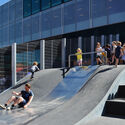
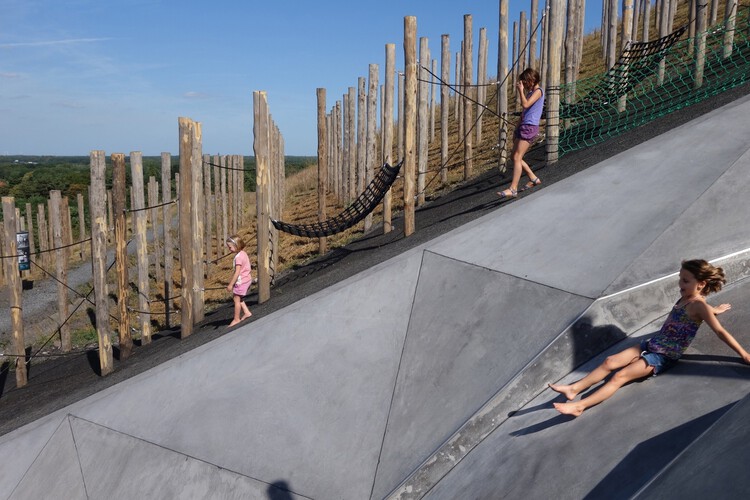
Playgrounds as Political Spaces: Negotiating Risk, Space, and Childhood - Image 1 of 4Playgrounds as Political Spaces: Negotiating Risk, Space, and Childhood - Image 2 of 4Playgrounds as Political Spaces: Negotiating Risk, Space, and Childhood - Image 3 of 4Playgrounds as Political Spaces: Negotiating Risk, Space, and Childhood - Image 4 of 4Playgrounds as Political Spaces: Negotiating Risk, Space, and Childhood - More Images+ 21

Playscapes and Public Imagination: The Ambiguous Play in Urban Life of Hong Kong

When we think about cities and urban life, we often focus on infrastructure, culture, commerce, nightlife, and density. In metropolises where there seems to be an endless array of activities—especially for adults—play rarely enters the conversation. Yet, the act of playing should be considered a vital part of urban life. Play directly influences how we shape our future cities—starting with how children engage with their environments. The experience of play, and more specifically, the design and presence of playgrounds, leaves lasting impressions on how young people grow up in cities. These spaces form a child's first, physical connection to the urban landscape. In this way, play deserves far more attention in conversations around urban wellness, livability, and the design of public space.

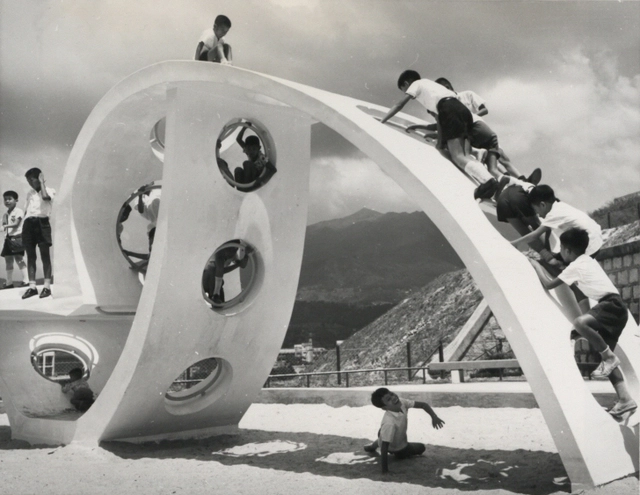
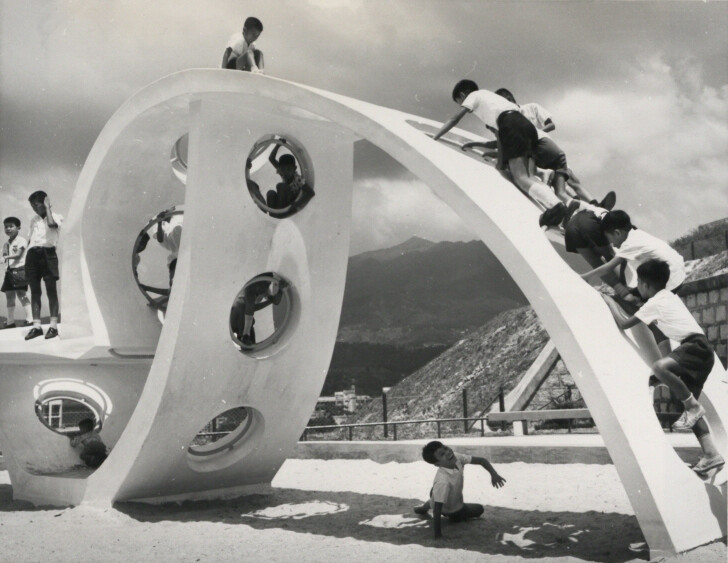
Playscapes and Public Imagination: The Ambiguous Play in Urban Life of Hong Kong - Image 1 of 4Playscapes and Public Imagination: The Ambiguous Play in Urban Life of Hong Kong - Image 2 of 4Playscapes and Public Imagination: The Ambiguous Play in Urban Life of Hong Kong - Image 3 of 4Playscapes and Public Imagination: The Ambiguous Play in Urban Life of Hong Kong - Image 4 of 4Playscapes and Public Imagination: The Ambiguous Play in Urban Life of Hong Kong - More Images+ 13

Yoshio Taniguchi, Architect Behind MoMA Redesign, Passes Away at 87

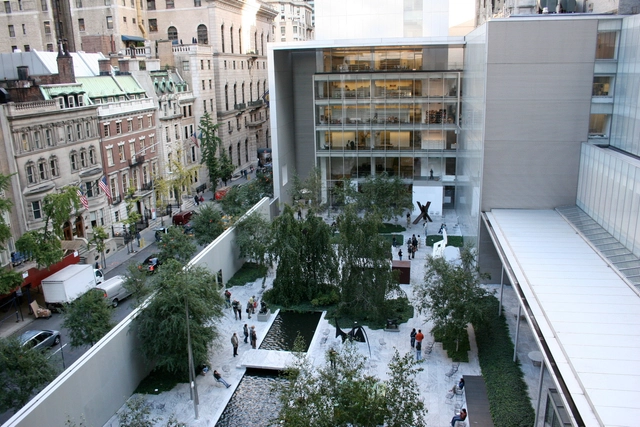
Yoshio Taniguchi, the renowned architect behind the redesign of New York's Museum of Modern Art (MoMA) and other celebrated cultural landmarks, has passed away, at the age of 87 due to pneumonia. Known for his minimalist designs that emphasize clarity and simplicity, Taniguchi's work includes the MoMA expansion completed in 2004, the Heisei Chishinkan Wing of the Kyoto National Museum, and the Toyota Municipal Museum of Art. His projects are characterized by a deep respect for space and proportion, allowing the art within to take center stage.

Yoshio Taniguchi, Architect Behind MoMA Redesign, Passes Away at 87 - Image 1 of 4Yoshio Taniguchi, Architect Behind MoMA Redesign, Passes Away at 87 - Image 2 of 4Yoshio Taniguchi, Architect Behind MoMA Redesign, Passes Away at 87 - Image 3 of 4Yoshio Taniguchi, Architect Behind MoMA Redesign, Passes Away at 87 - Image 4 of 4Yoshio Taniguchi, Architect Behind MoMA Redesign, Passes Away at 87 - More Images

Norman Foster to Receive Isamu Noguchi Award

Subscriber Access | 

The Noguchi Museum will be honoring architect Norman Foster and contemporary artist Hiroshi Sugimoto as the first recipients of the Isamu Noguchi Award on Tuesday, May 13. The award acknowledges individuals whose work relates to landscape architect and artist Isamu Noguchi, who promoted a multi-disciplinary, collaborative approach to the arts and was committed to innovation, global consciousness, and Japanese/American exchange. For more information on the benefit, see here.

Architecture City Guide: Houston

Subscriber Access | 
Architecture City Guide: Houston - Image 6 of 4

Houston is our focus this week for our Architecture City Guide series. We know Houston is packed with lots of great architecture so we are expecting to hear about your can’t miss buildings in the comment section below. Remember this list is intended to be added to by you, our readers. We will be updating our Architecture City Guides in the future to reflect your suggested buildings to visit.

Follow the break for our Houston list and corresponding map!