1. ArchDaily
  2. Internet

Internet: The Latest Architecture and News

Architects Must Resist the AI “Revolution”

This article was originally published on Common Edge.

Recently, I resolved that I wasn’t going to be drawn into the silly posturing about how ChatGPT would take the jobs of every experienced architect on earth before 2030, but an intelligent post on this website by Geethanjali Raman and Mohik Acharya broke that resolve. What isn’t being stressed is that algorithms that sample internet-based information are only as good as the quality of that information. Architectural history suggests that all new things have a shelf life, quickly fading from view after being hyped. Only the best will persist after a lengthy period of evaluation and criticism. Any new architecture widely praised and available since the rise of the internet is likely to be untested by time and thus not worth using as a benchmark. And let’s face it: Some of the worst buildings ever designed by humans are out there in cyberspace, crowding out better ones that haven’t yet been digitized.

Why Gen Z Is Changing the Identity of Architecture

Subscriber Access | 

Generation Z comprises people born after 1995. They grew along with the popularization of the internet and interact with the world by integrating all forms of available technology.

The diversity of available media, the speed in information traffic, the interactivity in the virtual environment and the daily use of these technological assets common today, influence the behavior of individuals of this generation, inspiring versatility, agility and curiosity.

How Internet Connectivity Impacts Urban Inequity

If you’re reading this right now, or have read an article on ArchDaily, it’s because you were in a place that enabled you to connect to the internet. Think about a time when you found yourself in a dead zone, where the internet was lagging and you were unable to connect your computer to WiFi to finish an assignment or even without the ability to connect your phone to quickly Google something. You likely dashed to the nearest coffee shop, or place where WiFi was more reliable, just to have the feeling of being online again. The internet, in an ideal world, is equally open to all providing access to knowledge and the ability to easily connect with others. But what happens when you don’t have internet? How is your life impacted if you’re on the wrong side of the digital divide and live in an area without broadband access?

ArchDaily, One of the 1,000 Most Visited Websites on the Internet

ArchDaily has become one of the 1,000 most visited websites on the Internet, according to the latest Alexa Internet ranking -- an Amazon-owned company that measures the popularity of all Internet sites.

More than 360,000 users visit our flagship English-speaking platform every day, which when combined with our network of Spanish, Portuguese, and Chinese sites, creates a daily global audience of 650,000 people: the most visited architecture network in the world. 

But why is this relevant? Why do these numbers matter?

When we started this project 15 years ago, we knew that the expansion of cities would become the biggest challenge for humanity, and that architects, with better access to knowledge, had the ability to radically improve the quality of life of billions of people. That is why we envisioned ArchDaily as a global source of inspiration, knowledge, and tools to help architects face this challenge. A carefully curated, objective, categorized database of projects and knowledge, paired with a stream of globally diverse content.

But architecture is bigger than architects, and it has become - to our joy - a transversal subject. We have all, as a society, understood the importance of our built environment, how it can shape our mindset, improve our well being, form our education, and drive opportunities and set the grounds for a more egalitarian society. Moreover, a bounty of changes in urban and economic dynamics is also molding architecture into something more relevant, more recognizable, and more democratic. That is why our profession and craft are permeating into Netflix and Apple TV shows, becoming an object of admiration on Instagram, and representing something that you can dream of, aspire to, and work towards catalogues such as Pinterest.

Virtual Vernissage! "Weird Sensation Feels Good", an Exhibition about ASMR

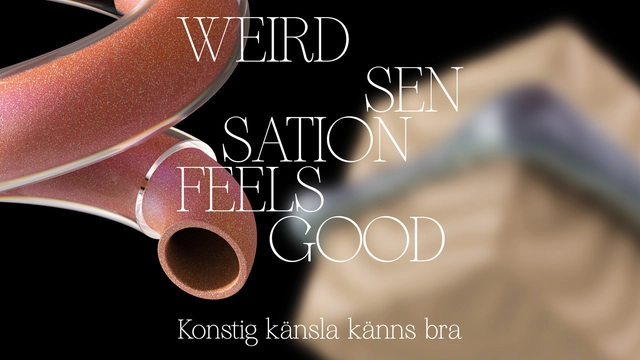
ArkDes, the Swedish Centre for Architecture and Design, is excited to invite you to the virtual vernissage of 'WEIRD SENSATION FEELS GOOD'—an exhibition about ASMR. Tune in (with headphones) from 5pm CEST (11am-12:30pm EST) on April 7, 2020 to learn more about a field of design that mediates between mind and body.

The Expansive and Inclusive Architectural Galaxy of Archive of Affinities

This article was originally published on the blog of the Chicago Architecture Biennial, the largest platform for contemporary architecture in North America. The 2017 Biennial, entitled Make New History, will be free and open to the public between September 16, 2017 and January 6, 2018.

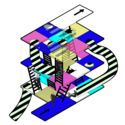
In the era of the Internet every image is an advertisement. Almost every architect contributes to the limitless overabundance offered by social media by sharing instantaneous personal archives, student projects, and their own work. Each image is a miniature manifesto shared with the broader public, circulating freely and endlessly – they shape and identify the work of architects, they track and create lineages and alliances, and they also begin to form and transmit sensibilities, ideologies, and aesthetic preferences, both individually and collectively.

The Expansive and Inclusive Architectural Galaxy of Archive of Affinities - Image 8 of 4

The Expansive and Inclusive Architectural Galaxy of Archive of Affinities - Image 1 of 4The Expansive and Inclusive Architectural Galaxy of Archive of Affinities - Image 2 of 4The Expansive and Inclusive Architectural Galaxy of Archive of Affinities - Image 3 of 4The Expansive and Inclusive Architectural Galaxy of Archive of Affinities - Image 4 of 4The Expansive and Inclusive Architectural Galaxy of Archive of Affinities - More Images+ 4

This Student-Run Website Is Experimenting With Architecture Through Cubes 

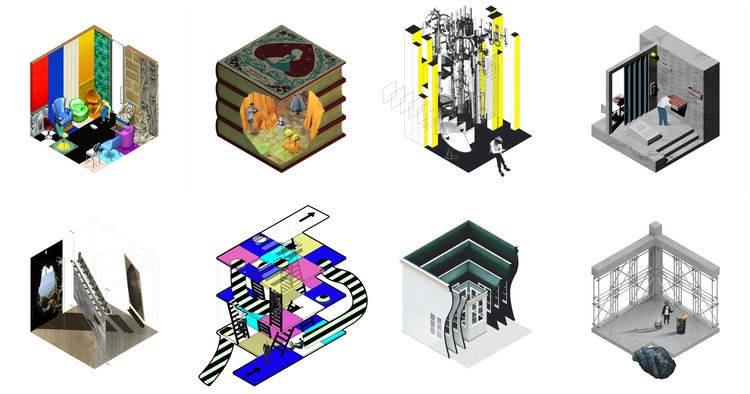
From the first moment you enter architectural education, tutors tell you repeatedly and often passionately that the learning never stops; this is how it is going to be from now on. Student platforms are an example of our efforts to share our discoveries, many emerging out of the tension between academia and independent learning. From the post-digital advocate KoozA/rch to university publications like The Bartlett's Lobby, AA files, or Yale School of Architecture’s Perspecta, research and media platforms represent the creative consciousness of our generation today. Volume64 is a recent newcomer born out of this tension, and behind it is a team myself and my colleagues have founded and run. Through ArchDaily, we’re sharing a little bit of our story so far.

This Student-Run Website Is Experimenting With Architecture Through Cubes  - Image 1 of 4This Student-Run Website Is Experimenting With Architecture Through Cubes  - Image 2 of 4This Student-Run Website Is Experimenting With Architecture Through Cubes  - Image 3 of 4This Student-Run Website Is Experimenting With Architecture Through Cubes  - Image 4 of 4This Student-Run Website Is Experimenting With Architecture Through Cubes  - More Images+ 21

Step Into a Movie Dreamworld With "Accidental Wes Anderson" on Reddit

Subscriber Access | 
Step Into a Movie Dreamworld With "Accidental Wes Anderson" on Reddit - Image 6 of 4
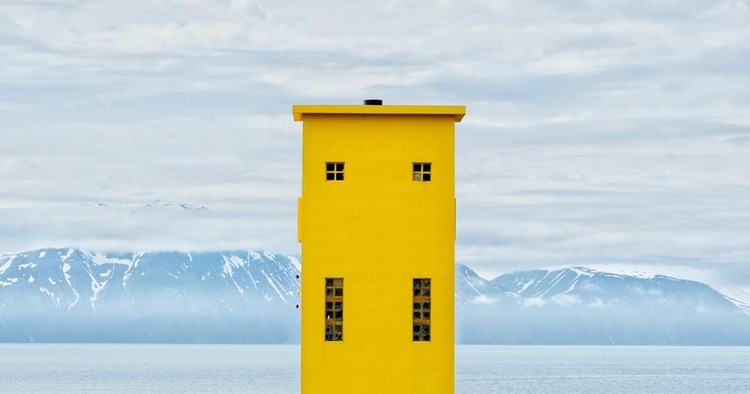
Lighthouse in Húsavík, Iceland. Image via Reddit user Milonade

If you ever have those moments where you take a step back from your life and feel like you’ve suddenly fallen into a scene from a movie, you may appreciate the subreddit /r/AccidentalWesAnderson. Director, producer, screenwriter, and actor Wes Anderson is well known for creating scenes in his films that blur the lines between the real and the unreal. His extreme symmetry and restricted color palettes can often give the impression of a surreal, self-contained world. The purpose of the Accidental Wes Anderson subreddit is for users to post photos of real-world architecture and scenes they’ve stumbled upon that look like they could be stills from one of Anderson’s movies, with Redditors finding Anderson-esque scenes around the globe in everything from bathrooms to staircases to city streets. Even a viewer unfamiliar with Anderson’s films can browse the collection of photos and easily understand his aesthetic. Below is just a small selection of some of the most evocative photos to be found on the subreddit.

Step Into a Movie Dreamworld With "Accidental Wes Anderson" on Reddit - Image 1 of 4Step Into a Movie Dreamworld With "Accidental Wes Anderson" on Reddit - Image 2 of 4Step Into a Movie Dreamworld With "Accidental Wes Anderson" on Reddit - Image 3 of 4Step Into a Movie Dreamworld With "Accidental Wes Anderson" on Reddit - Image 4 of 4Step Into a Movie Dreamworld With Accidental Wes Anderson on Reddit - More Images+ 7

Explore Endless Palladian-Inspired Facades Using This Random Generator

In his seminal work, Four Books on Architecture (1570), Andrea Palladio outlined the architectural elements that would make up his signature style, borrowing from the architecture of the ancient Romans and the principles directed by Vitruvius and Leon Battista Alberti. In designing his buildings, Palladio employed a full palette of motifs, from pediments to loggias to porticos, resulting in structures that followed a certain formula, while remaining individually distinct.

Recognizing the architectural patterns in his work, programmer “23” (Paul O’Leary McCann) set out to create a code project that could randomly generate Palladian-inspired facades. Adjusting the to size of your screen, the program can create facades ranging in scale from one-story temples to elaborate mega-structures that bear similarity to the magnificent toy block towers created by future-architect children.

"Are.na" is an Online Tool for Contextualizing the Internet – Here's Why It's Useful to Architects

Subscriber Access | 

Outside of our familiar feeds, social or otherwise, the Internet can be a daunting place. While information and interaction have never been easier, developing ways to get a handle on the quantity and pace of this crowded, if not valuable, world can often be difficult – it’s all too easy to find your digital life unintentionally isolated. In the architectural sphere, shared knowledge and a broad understanding of history and contemporary practice are all-important; discourse and conversation even more so. Are.na, a platform for collaborative and independent research, provides a new lens when surfing, capturing and contextualizing the content of the Internet.

"Are.na" is an Online Tool for Contextualizing the Internet – Here's Why It's Useful to Architects - Image 1 of 4"Are.na" is an Online Tool for Contextualizing the Internet – Here's Why It's Useful to Architects - Image 2 of 4"Are.na" is an Online Tool for Contextualizing the Internet – Here's Why It's Useful to Architects - Image 3 of 4"Are.na" is an Online Tool for Contextualizing the Internet – Here's Why It's Useful to Architects - Image 4 of 4Are.na is an Online Tool for Contextualizing the Internet – Here's Why It's Useful to Architects - More Images+ 7

Evil vs. Impressive: How do Scale and Lighting Affect Perception of Architecture?

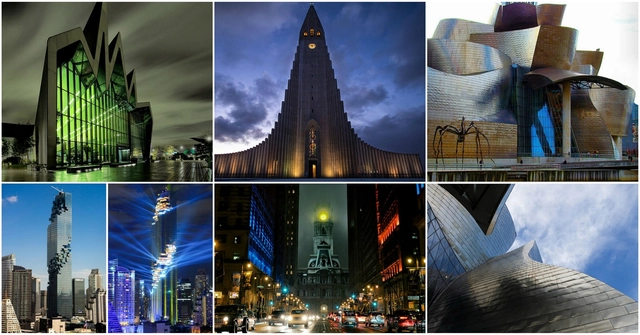
When it comes to viral architecture, readers love a sense of the theatrical. This trend has led to a new internet obsession: ‘evil’ buildings that look like they could be the home of a supervillain or nefarious corporation.

Compiled on sites such as Reddit and BoredPanda, lists of ‘Evil Buildings’ tend to feature structures that feel sterile to non-architects, photographed in dramatic lighting or surrounded in fog. Projects by Zaha Hadid Architects, Frank Gehry and Ole Scheeren are among those represented. But what exactly makes these buildings feel evil?

Connected Lighting: From Ethernet to Li-Fi Internet

How will our buildings change when your mobile device can receive huge amounts of data flowing from the luminaires above you? Not only has LED brought us a highly efficient light source, but a promising instrument for visible light communication (VLC) as well. Therefore light will not only be a medium to support vision, but it will also be an essential means of data communication. With the low energy consumption of LED one can even set up luminaires without mains cables for the power and just install Ethernet cables. Welcome to the world of digital lighting.

VIDEO: Inside A Data Center, The Architecture Of The Cloud

Subscriber Access | 

Have you ever wondered where your information goes when you save it to "The Cloud"? The answer is within giant data centers. According to reports, Facebook and Google's data centers resemble something from Science Fiction, while some could come straight from a Bond flick. In a new short film named Internet Machine, Filmmaker and Visual artist Timo Arnall takes us where few have been granted access, showing the world what "The Cloud" really is - a massive architectural space with extreme energy demands. To experience the power surging and hear the deafening hum of a data center, check out the trailer above.

6 Tips to Build Business in the Digital Age

Subscriber Access | 

This article, which originally appeared as "Clients for Life: 6 Tips to Generate Leads and Build New Business" on Autodesk’s Line//Shape//Space publication, is by Ken Micallef; it features the advise of John Beveridge, a 30-year veteran in the management-consulting industry.

“Like most small businessmen,” Beveridge says, “I too am a small-business guy trying to compete with bigger companies, trying to generate leads.”

To that end, Beveridge stresses the importance of Internet marketing. But creating a business website is only the first step.

See Beveridge's 6 tips to building business, after the break...