After two weeks of voting in our 14th edition of the Building of the Year Awards, our readers have narrowed down over 4,500 projects to just 75 finalists across 15 categories, casting over 100,000 votes. This year's awards celebrate the very best in design, innovation, and sustainability from around the globe, with the shortlist featuring an exceptional range of projects, from a house in a favela to cutting-edge cultural centers and innovative public spaces that are sure to impress. As a crowdsourced award, we are proud to say that your selections are a true reflection of the state of architecture, and this year's finalists are no exception.
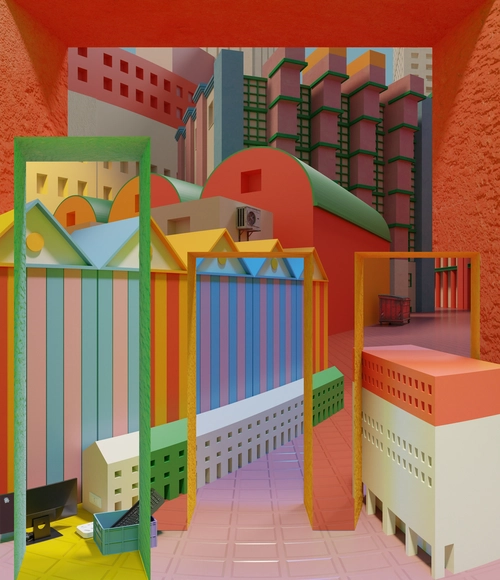
Through the “Search History” exhibition at MAXXI Museum in Rome, Lara Lesmes and Fredrik Hellberg, directors of the architecture and art studio Space Popular, set out to explore the work of Also Rossi and to translate his notions of “urban fact” and “analogous city” to the virtual realm. The installation is a reflection on the proliferation of metaverse platforms and the concept of virtual urbanism. The exhibition is part of the fifth edition of Studio Visit, a partnership between Alcantara and the MAXXI Museo nazionale delle arti del XXI secolo, which challenges designers to put forward a personal reinterpretation of the works of the masters in the MAXXI Architecture Collections.
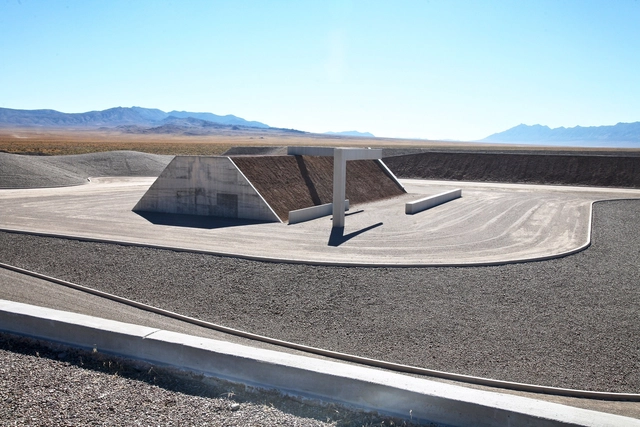
Artists are frequently inspired by land — be it painter Robert S. Duncanson’s renditions of American landscapes, or William Kentridge’s subversions of colonial-era British paintings depicting African vistas. Some artists, though, have preferred to work directly with the land, creating structures that sit on landscapes, or carving into the land itself. This art style — formally termed as Land Art — gained prominence in 1960s and 70s United States, in the context of the rise of the environmental movement amidst civil rights and antiwar protests, and as artists looked to separate themselves from the art market.
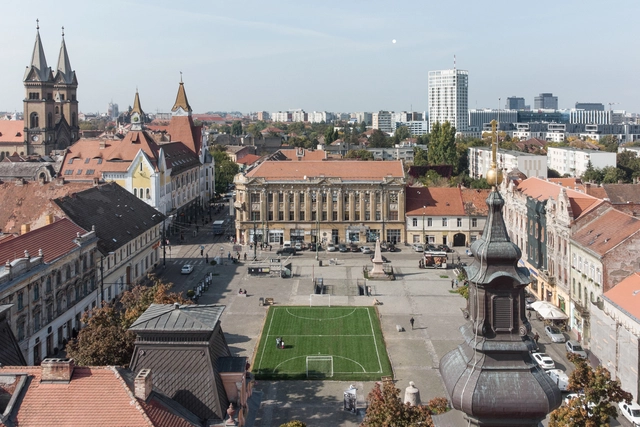
“Another Breach in the Wall’ was the chosen theme for the main exhibition presented at Beta 2022, the Timișoara Architecture Biennial, which ran from 23 September to 23 October 2022. Curated by Daniel Tudor Munteanu and Davide Tommaso Ferrando, it aimed to explore the concept of loopholes, a term referring both to inadequacies in a set of regulations and an arrow slit in a defensive wall. The exhibition aimed to inspire action an empower citizens to appropriate the urban fabric by exposing submissive urban strategies. The projects and actions presented were selected based on their potential to create novel urban spaces by questioning the laws that regulate the use of public space.
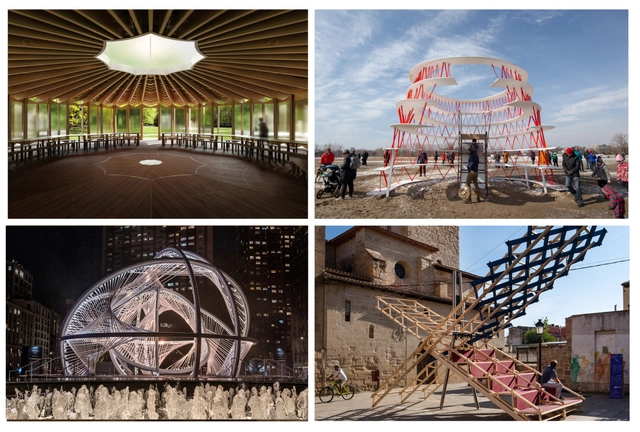
Staged stories on community and identity, ephemeral architecture showed that in 2022 it doesn't have to be permanent to be powerful. A direct and popped-up public installation can shift from preparation to action, reclaiming and defining what makes a community unique. Highlighting installations to acknowledge linguistic diversity in NYC, a giant table to celebrate culinary in Barcelona, and a large-scale net in Dubai to represent the local culture, among others, these initiatives seek to understand ways in which local and regional expressions can help cities to be more equal and diverse.
Globalization has connected the world boundaryless. While it has also made information more accessible, it has led to homogeneity and identity crisis at melding unique societies and cultural expressions. Cultural differences are undeniable as globalization grows. Hence, as architecture produces common living standards, it can also highlight singularities. Festivals, installations, and pavilions, 2022 was the year to express local memories to be recognized and celebrated, setting Community and identity as central topics in ephemeral architecture throughout the year.
Videos
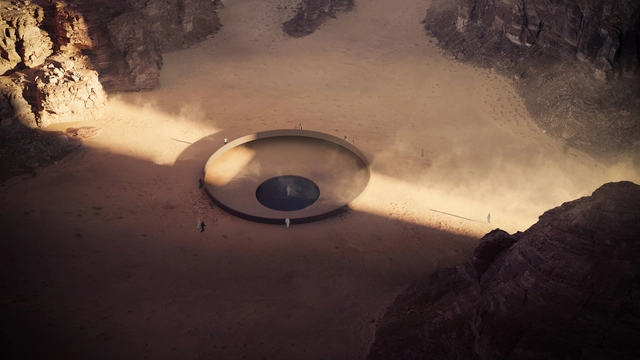
Visualization by Atelier Monolit. Image Courtesy of ATHR Gallery
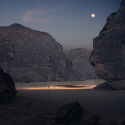
The new cultural destination Wadi AlFann, Valley of the Arts in AlUla desert, Saudi Arabia, unveiled its first permanent large-scale installations by some of the world's most compelling contemporary artists. Agnes Denes, Ahmed Mater, James Turrell, Manal AlDowayan, and Michael Heizer will be the first five to be completed and unveiled by 2024, starting a program of commissions with more renowned artists to be announced.
The site, a vast valley spanning approximately 39 square kilometers with a millennial legacy, aims to become the new global cultural destination for contemporary art, contemplating another 15-20 artworks by 2035. The plan builds upon the success of two editions of the international art exhibitionDesert XAlUla, in 2020 and most recently the 2022 edition, featuring work by Ayman Zedani, Jim Denevan, and Zeinab Al Hashemi.
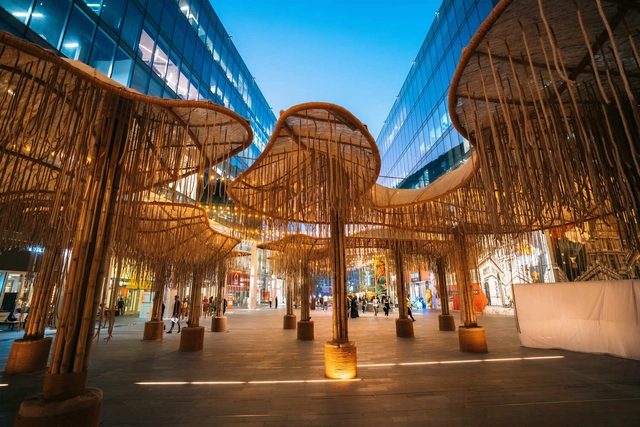
Once Upon a Forest / OBMI. Image Courtesy of Dubai Design Week
One of the most significant cultural events in the Middle East, Dubai Design Week represents a platform that offers individuals and companies the opportunity to showcase their design experience and to open conversations about the most pressing issues of our times. Developed in a strategic partnership with Dubai Design District (d3), the event presents a series of immersive, large-scale installations that highlight the festival’s theme: Design with Impact.
This year’s program is focused on designing a sustainable future. To promote this, Dubai Design Week has invited international and regional architects and designers to create installations that demonstrate creative design thinking, to introduce innovative materials, and spark conversations about the ways in which design can have a positive impact on the environment.
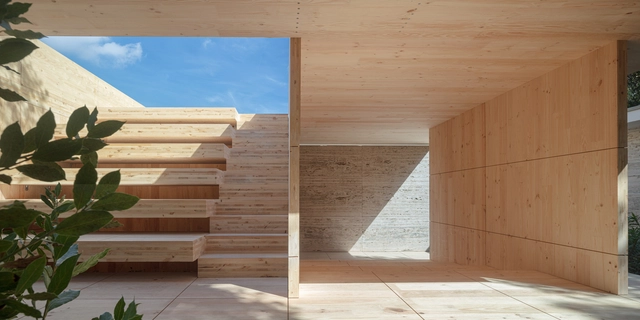
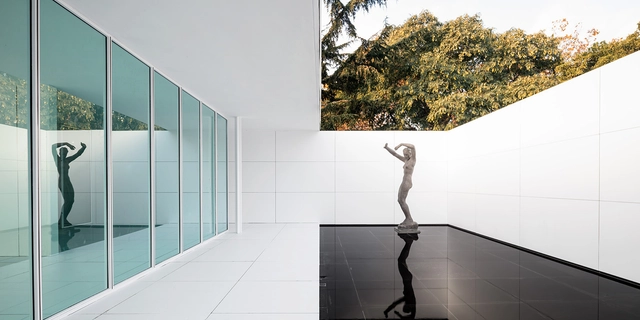
On the 4th of October, the temporary installation "Mass is More", a project designed by Daniel Ibáñez and Vicente Guallart, from the Institute for Advanced Architecture of Catalonia (IAAC), together with Alan Organschi from Bauhaus Earth (BE), was presented at the Barcelona Pavilion. It was open to the general public from the 1st to the 9th of October.
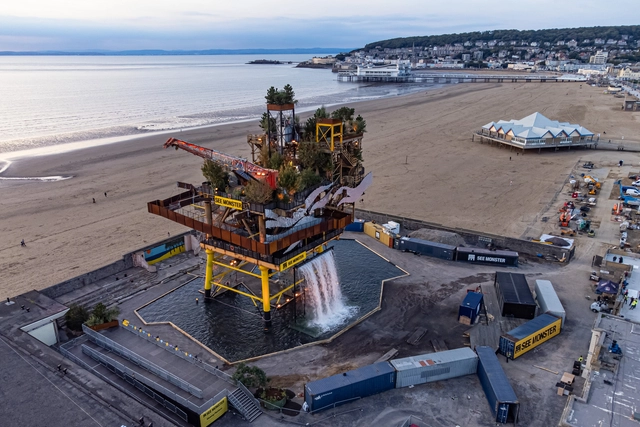
NEWSUBSTANCE transforms an oil rig into a 35 meters tall public art installation in Weston-super-Mare, UK. The mega-platform features a 10- meter-high waterfall, a wild garden, and a 6,000-piece kinetic installation, including Ivan Black's work and Trevor Lee's art pieces. From 24 September to 5 November 2022, "SEE MONSTER" will welcome the public to inspire conversations about reuse, renewables, and the great British weather, as part of the festival UNBOXED: Creativity in the UK.
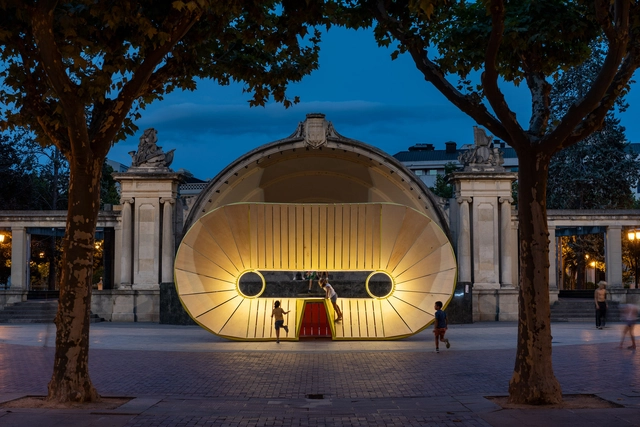
Every year, the Concéntrico festival in Logroño, Spain, brings together architects and designers from all over the world with the hope of employing creativity to create a better city. During this year's event, a few overarching themes could be observed as critical points of interest for the participating architects and designers. Many urban installations hoped to help citizens rediscover places of interest in their city and beyond, while others challenged the often-fixed ideas of what a home can and should look and function. Many designers saw opportunities in the concept of unstructured play, as the exploratory activity can activate unused public spaces and engage people of all ages.
Since 2015, the Concéntrico festival has presented 91 installations and pavilions during its seven editions. The festival is primarily known for bringing together emerging architects and designers who are given the freedom to experiment with new fields of environmental design. The festival is organized by the Cultural Foundation of the Architects of La Rioja together with Javier Peña Ibáñez, promoter of the initiative, in collaboration with the Logroño City Council, the Government of La Rioja, Garnica and Bodegas LAN, and 30 other supporting institutions.
"Concéntrico wants to achieve a better city", says Javier Peña as he inaugurates the International Festival of Architecture and Design of Logroño in Spain. An event that since its first edition in 2015 has proposed rediscovering the spaces of interest in the historic center, reflecting on the urban environment through different proposals for installations and ephemeral exhibitions. This year, it celebrates its eighth meeting from the 1st to the 6th of September.
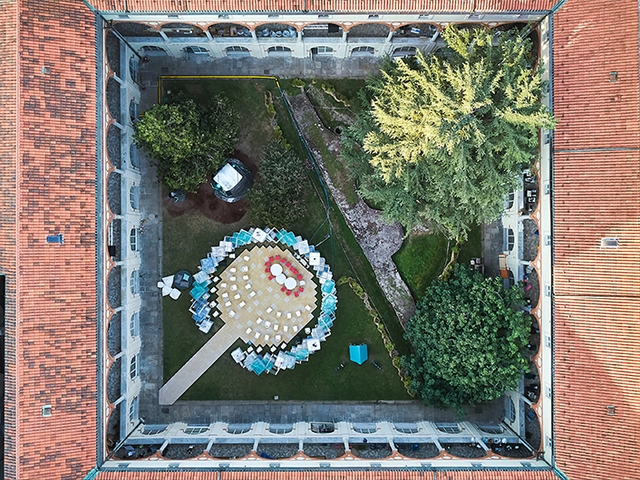
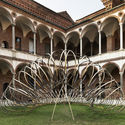
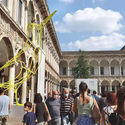
This year's architectural contributions, which were on display across the busy streets of Milan, Brera design district and botanical garden, Alcova, BASE, and other cultural venues, highlighted this year's Milan Design Week theme of sustainability and environmental awareness with respect to furniture production.
After an extensive five-year restoration carried out by David Chipperfield Architects and Generali, the iconic Procuratie Vecchiein St. Mark's Square has opened again to the city, with an installation by Italian artist Edoardo Tresoldi. Titled "Monumento", the artwork responds to the new socially-driven functions presented by the vast space, "renewing the language of the monumental column and the values to which society aspires in order to reflect its own epoch".
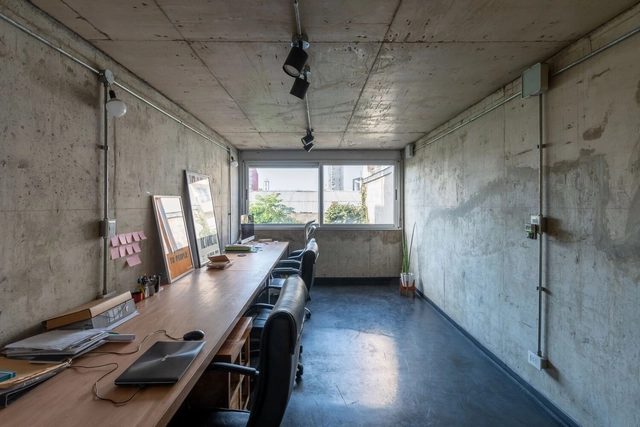
Pipes, wiring and ducts of different materials in walls, ceilings and roofs make up all the spaces we walk through and inhabit. They represent the set of networks and equipment necessary for the development of life in our buildings, providing services such as water, electricity or gas, among many others. According to the regulations in each country and the use defined in each space, the installations can be left visible, giving a certain character and aesthetic to interior spaces.
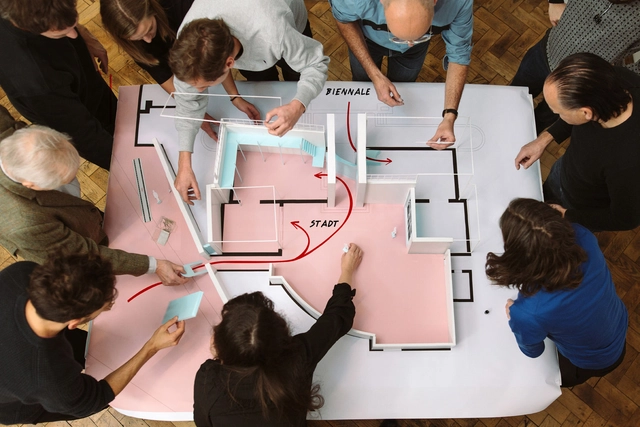
Architecture collective AKT and Hermann Czech will be collaborating on the concept and design of the Austrian Pavilion at the 18th International Architecture Exhibition - La Biennale di Venezia. Titled "Beteiligung / Participation", the pavilion will be temporarily converted into a social experiment that explores themes such as public vs. private, accessible vs. inaccessible, and communal vs. individual through architectural interventions. The 18th International Architecture Exhibition will be held from May 20th until November 26th, 2023.
In 1929, Ludwig Mies van der Rohe and Lilly Reich design the German National Pavilion for the 1929 Barcelona International Exhibition. The official reception for the exhibition was held there, presided over by King Alfonso XIII and the German authorities. From then on, the story is well known to everyone. A symbolic work of the Modern Movement, the Pavilion has been extensively studied and interpreted, and has inspired the work of several generations of architects.
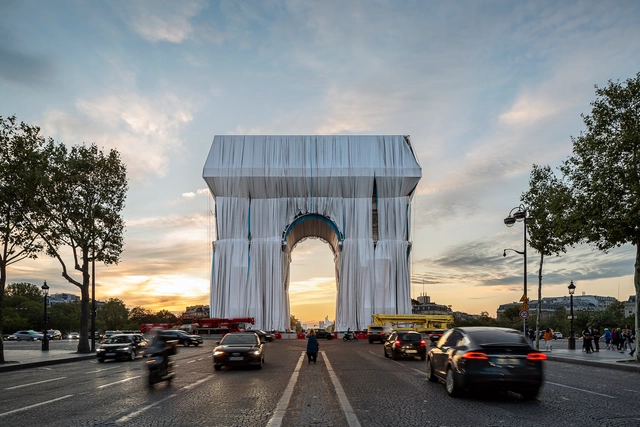
Work has just begun on the late Christo's unfulfilled intervention for the Arc de Triomphe in Paris. The first images by architectural photographer Jad Sylla highlight the wrapping up of the famous monument with 25,000 square meters of recyclable polypropylene fabric in silvery blue, and with 3,000 meters of red rope. Scheduled for September 18 until October 3, 2021, the temporary artwork ‘l’Arc de Triomphe, Wrapped’ will only remain on display for 16 days.
During the first week of September, Milan Design Week opened its doors to more than 60,000 architects, designers, artists, and craftsmen from all around the world to explore new design innovations and exchange ideas about the interior design, furniture, and lighting. In parallel to the event hosted at the Rho Fiera, interventions by world-renowned architects were installed across the city as part of the Fuorisalone.
The Fuorisalone program took place under the patronage of the Municipality of Milan, and started last April with a digital edition under the theme of "Forms of Living", taking a view on the questions that inspire and influence the future of the furniture and design. Read on to discover the top 5 outdoor installations along with their description.