1. ArchDaily
  2. Installations

Installations: The Latest Architecture and News

3daysofdesign 2026 Returns to Copenhagen With City-Wide Exhibitions and Events

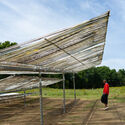
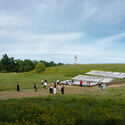
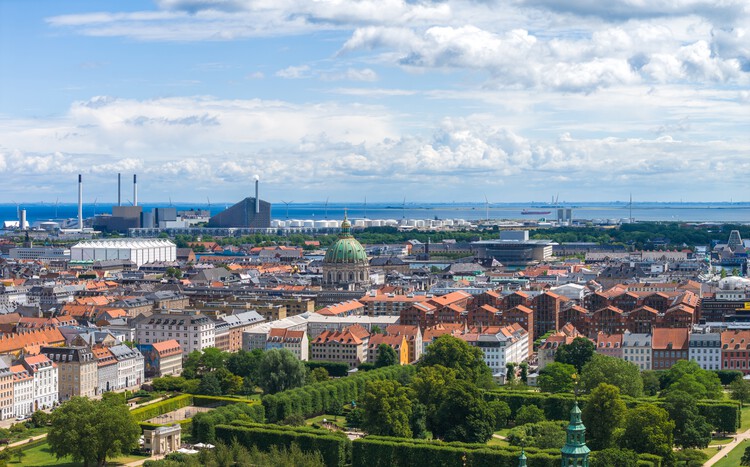
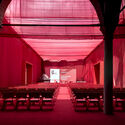
From June 10-12, 2026, 3daysofdesign returns to Copenhagen with a city-wide program of exhibitions, installations, talks, and showroom presentations organized around the theme "Make This Moment Matter." Taking place across eight Design Districts throughout the Danish capital, this year's festival brings together design brands, cultural institutions, studios, and practitioners to explore contemporary questions shaping design and the built environment. As part of the program, Cobe and ArchDaily will host the public launch of a guest-edited edition of Cobe Notes, under the theme Thresholds, at the Cobe Bookcafé, Nordhavn on June 10.

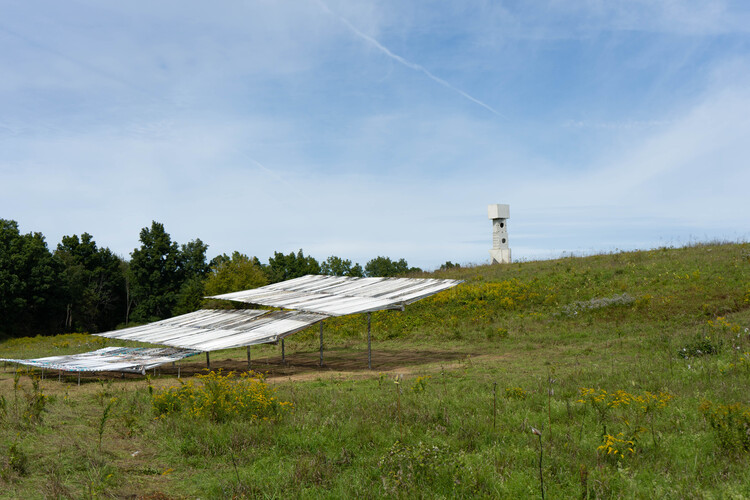
3daysofdesign 2026 Returns to Copenhagen With City-Wide Exhibitions and Events - Image 1 of 43daysofdesign 2026 Returns to Copenhagen With City-Wide Exhibitions and Events - Image 2 of 43daysofdesign 2026 Returns to Copenhagen With City-Wide Exhibitions and Events - Image 3 of 43daysofdesign 2026 Returns to Copenhagen With City-Wide Exhibitions and Events - Image 4 of 43daysofdesign 2026 Returns to Copenhagen With City-Wide Exhibitions and Events - More Images+ 2

Concéntrico Festival 2026 Unveils 24 Urban Installations Across Logroño, Spain

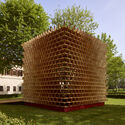
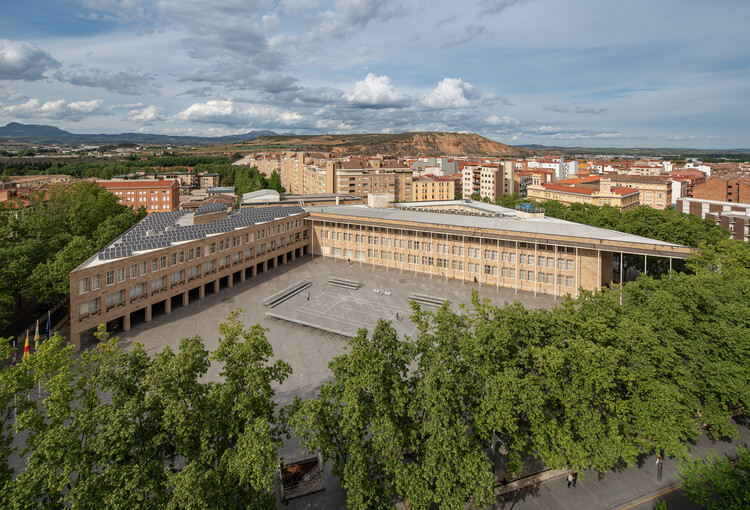
Concéntrico Festival 2026 will take place in Logroño, Spain, from June 18 to 23, transforming the city into a large-scale laboratory for architecture, design, and urban experimentation. Over six days, more than twenty interventions will be distributed across squares, vacant plots, streets, bridges, and emblematic spaces throughout the city, bringing together leading studios, researchers, and creators from the international scene, including Chilean architect Smiljan Radić, the raumlabor collective, Matilde Cassani, AAU Anastas, and Sahra Hersi, among others. This edition introduces a shift towards more collective, festive, and performative practices in public space, with a strong emphasis on sonic experiences and projects linked to accessibility, inclusion, and urban transformation. The programme is structured around three thematic axes: Identity and Fiction, Urban Ecologies, and Ephemeral Agents, ranging from architectures that understand public space as ritual or celebration to experimental approaches exploring materials, sound, and processes of reuse.

Concéntrico Festival 2026 Unveils 24 Urban Installations Across Logroño, Spain - Image 1 of 4Concéntrico Festival 2026 Unveils 24 Urban Installations Across Logroño, Spain - Image 2 of 4Concéntrico Festival 2026 Unveils 24 Urban Installations Across Logroño, Spain - Image 3 of 4Concéntrico Festival 2026 Unveils 24 Urban Installations Across Logroño, Spain - Image 4 of 4Concéntrico Festival 2026 Unveils 24 Urban Installations Across Logroño, Spain - More Images+ 36

Global Design Forum Istanbul Concludes First Edition With City-Wide Programme of Installations and Talks

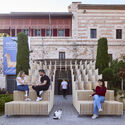
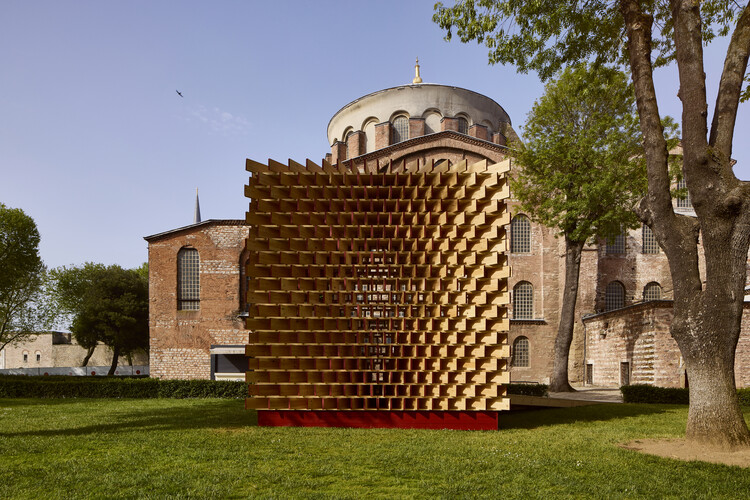
Global Design Forum Istanbul concluded its inaugural edition between May 13 and 16, 2026, bringing together architects, designers, urbanists, and cultural practitioners through a city-wide programme of installations, talks, screenings, and public events. Presented by London Design Festival in collaboration with People Places Ideas, the forum was developed and curated by Artistic Director Melek Zeynep Bulut and Forum Content Advisor Beatrice Galilee. Organized around the theme "Worlds in Contact," the programme featured contributions from figures including Lina Ghotmeh, Marina Tabassum, Liam Young, Tom Dixon, Lesley Lokko, Ma Yansong, Andrew Waugh, and Olaf Grawer, positioning Istanbul as a platform for interdisciplinary discussions on design and the built environment.

Global Design Forum Istanbul Concludes First Edition With City-Wide Programme of Installations and Talks - Image 1 of 4Global Design Forum Istanbul Concludes First Edition With City-Wide Programme of Installations and Talks - Image 2 of 4Global Design Forum Istanbul Concludes First Edition With City-Wide Programme of Installations and Talks - Image 3 of 4Global Design Forum Istanbul Concludes First Edition With City-Wide Programme of Installations and Talks - Image 4 of 4Global Design Forum Istanbul Concludes First Edition With City-Wide Programme of Installations and Talks - More Images+ 2

Designing with Sound: How Audio Shapes Residential Architecture

 | In Collaboration

What defines the atmosphere of a home? Beyond material palettes and natural light, sound plays a defining role in how spaces are perceived and inhabited. The reverberation of footsteps across stone, the muted calm of a textile-lined room, or the way music carries through an open-plan interior all shape the sensory identity of domestic space. Architecture is experienced not only visually, but acoustically.

The concept of the "soundscape" describes this relationship between people, sound, and the built environment. In residential architecture, sound is more than background noise or technical performance; it influences privacy, concentration, rest, and emotional comfort. Geometry and materiality act as the primary acoustic conductors: while concrete, glass, and stone reflect and amplify, timber and upholstery soften and absorb. Ceiling heights, circulation paths, and room proportions further shape how sound travels and settles across a space.

Tallinn Architecture Biennale 2026 Announces Winners of Installation and Vision Competitions

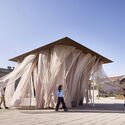
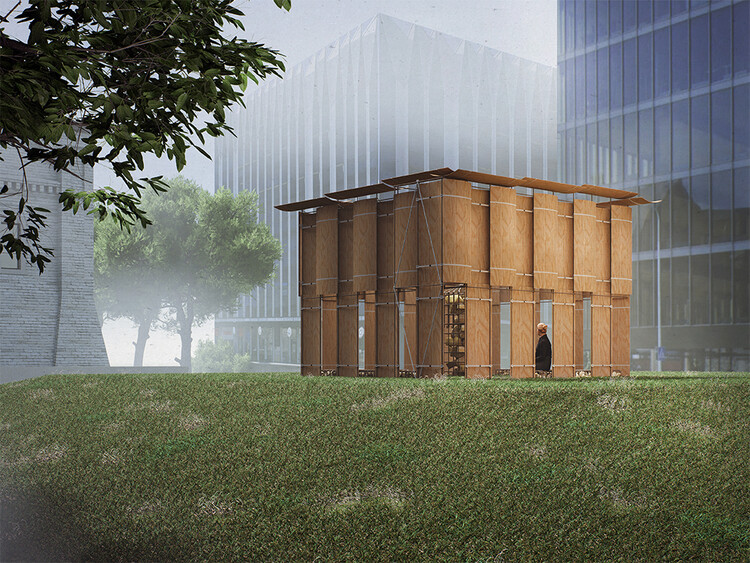
The 8th edition of the Tallinn Architecture Biennale 2026 (TAB 2026) has announced the winners of its Installation Programme Competition and Vision Competition, both developed within the curatorial framework titled "How Much?". Organized by the Estonian Centre for Architecture, the biennale will take place from September 9 to November 30, 2026, with its Opening Week scheduled from September 9 to 13. Curated by Stuudio TÄNA, Mark Aleksander Fischer, and Mira Samonig, TAB 2026 explores the role of money, affordability, and resource allocation in shaping architecture and the built environment, while examining how contemporary practice negotiates economic constraints and cultural value.

Tallinn Architecture Biennale 2026 Announces Winners of Installation and Vision Competitions - Image 1 of 4Tallinn Architecture Biennale 2026 Announces Winners of Installation and Vision Competitions - Image 2 of 4Tallinn Architecture Biennale 2026 Announces Winners of Installation and Vision Competitions - Image 3 of 4Tallinn Architecture Biennale 2026 Announces Winners of Installation and Vision Competitions - Image 4 of 4Tallinn Architecture Biennale 2026 Announces Winners of Installation and Vision Competitions - More Images+ 8

OMA / Shohei Shigematsu Completes First Public Project in Japan at Newly Renovated Edo-Tokyo Museum

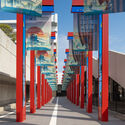
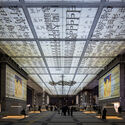
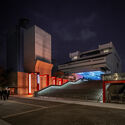
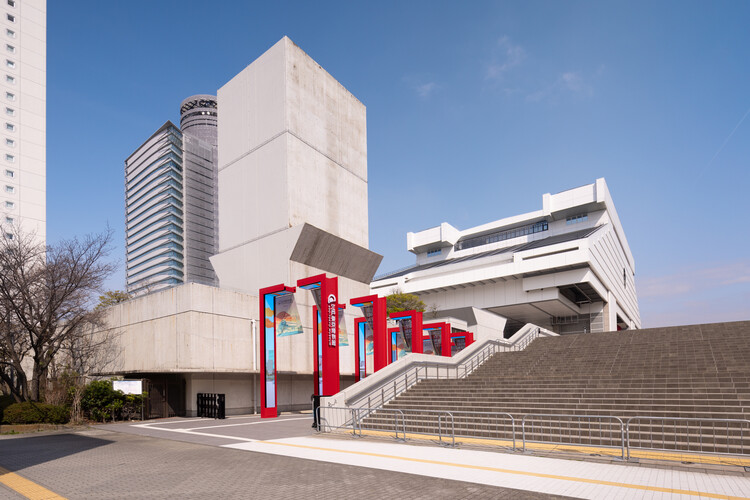
The Edo-Tokyo Museum has reopened to the public following a multi-year renovation, unveiling a series of scenographic interventions and installations designed by OMA under the direction of Shohei Shigematsu. Marking the firm's first public project in Japan, the commission forms part of the broader renewal of the museum's iconic building by Metabolist architect Kiyonori Kikutake. Originally opened in 1993 as the first museum dedicated to the history of Tokyo, the institution traces the city's evolution from the Edo period to the present day, and the new interventions aim to strengthen its relationship with contemporary audiences while preserving the identity of Kikutake's architecture.

OMA / Shohei Shigematsu Completes First Public Project in Japan at Newly Renovated Edo-Tokyo Museum - Image 1 of 4OMA / Shohei Shigematsu Completes First Public Project in Japan at Newly Renovated Edo-Tokyo Museum - Image 2 of 4OMA / Shohei Shigematsu Completes First Public Project in Japan at Newly Renovated Edo-Tokyo Museum - Image 3 of 4OMA / Shohei Shigematsu Completes First Public Project in Japan at Newly Renovated Edo-Tokyo Museum - Image 4 of 4OMA / Shohei Shigematsu Completes First Public Project in Japan at Newly Renovated Edo-Tokyo Museum - More Images+ 16

Milan Design Week 2026 Selection and Wasl Tower in Dubai: This Week’s Review

Across cultural platforms, heritage sites, and institutional developments, this week's news reflects how the built environment is reshaped through processes of transformation, reinterpretation, and public engagement. From archaeological reactivations and adaptive reuse strategies to museum expansions and large-scale international gatherings, architecture operates across multiple temporalities, balancing preservation with contemporary use and spatial continuity with evolving cultural programs. Within this context, ArchDaily's selection of installations and exhibitions from Milan Design Week 2026 highlights how design weeks increasingly function as curatorial frameworks for experimentation, while global events and institutional projects continue to expand the formats through which architecture is produced, shared, and debated.
Milan Design Week 2026 Selection and Wasl Tower in Dubai: This Week’s Review - Image 1 of 4Milan Design Week 2026 Selection and Wasl Tower in Dubai: This Week’s Review - Image 2 of 4Milan Design Week 2026 Selection and Wasl Tower in Dubai: This Week’s Review - Image 3 of 4Milan Design Week 2026 Selection and Wasl Tower in Dubai: This Week’s Review - Image 4 of 4Milan Design Week 2026 Selection and Wasl Tower in Dubai: This Week’s Review - More Images+ 6

"Calibrated Instability": Daryan Knoblauch on Building With Tension, Time, and Light

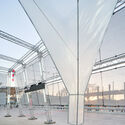
Daryan Knoblauch's work sits at the intersection of architecture and live cultural production, with a focus on how space is made legible through tension and atmosphere. Rather than treating temporary work as a lesser category of architecture, Knoblauch approaches installations, stages, and event architectures as full disciplinary problems—where enclosure, stability, light, and movement must be resolved with the same seriousness as any building, often under tighter constraints and faster timelines.

Across projects, a consistent thread is the productive tension between high-modern precision and an intentionally raw clarity of assembly. Membranes and lightweight systems are not deployed as surface effects, but as structural and spatial instruments—tuned to wind, load, and occupation, and calibrated to produce a sublimity that is felt as much as it is seen. Here, ephemerality is not simply a duration, but a design condition: temporality makes forces—weather, wear, performance—more visible, and demands an ethic of making that is both exacting and adaptable.

"Calibrated Instability": Daryan Knoblauch on Building With Tension, Time, and Light - Image 1 of 4"Calibrated Instability": Daryan Knoblauch on Building With Tension, Time, and Light - Image 2 of 4"Calibrated Instability": Daryan Knoblauch on Building With Tension, Time, and Light - Image 3 of 4"Calibrated Instability": Daryan Knoblauch on Building With Tension, Time, and Light - Image 4 of 4Calibrated Instability: Daryan Knoblauch on Building With Tension, Time, and Light - More Images+ 4

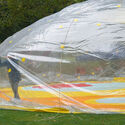
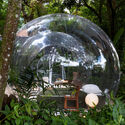
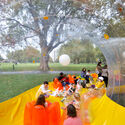
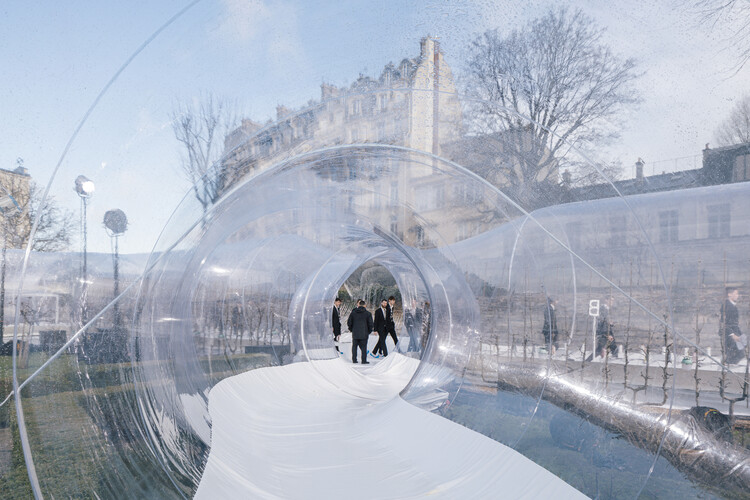
Transparent Lightness: When Pneumatic Architecture Connects with the Environment

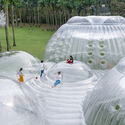
In Six Memos for the Next Millennium, Italo Calvino explores lightness from a literary perspective and argues, "Opposed to lightness is weight. Removing weight produces lightness; it is a value, not a defect." Drawing on Greek mythology, he reflects on one of Perseus's feats after severing the head of the terrible Gorgon Medusa without being turned to stone. Assisted by the gods Hades, Hermes, and Athena, Perseus flies with his winged sandals and uses a bronze shield as a mirror to reflect her image. Relying, like many architects, on what is lightest—the wind and the clouds—he also fixes his gaze on what is revealed through indirect vision: an image reflected in a mirror.

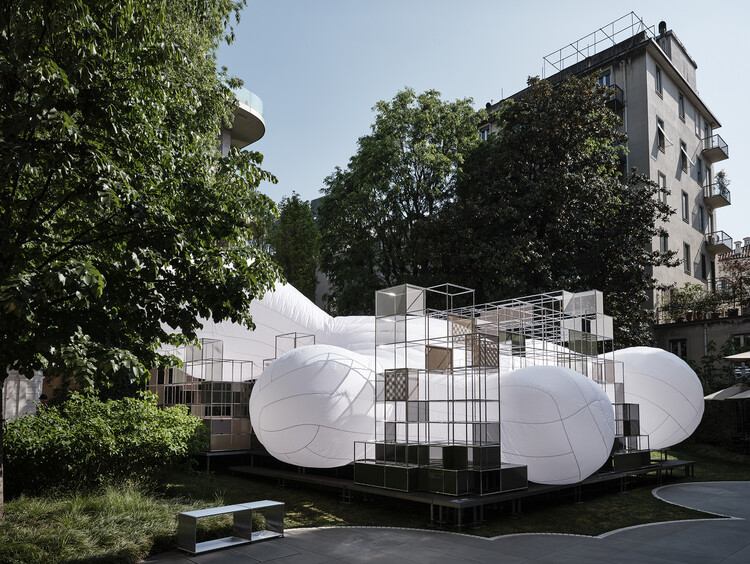
Historically, transparency has been naturalized as an inherent condition of modern architecture. With the shift from the heavy load-bearing wall to the lightweight glass envelope, glass was introduced into the discipline, blurring the boundaries between interior and exterior spaces. In connection with inflatable architecture, transparency is linked to lightness and impermanence, leaving temporary traces on the landscapes it inhabits. By using textiles or plastics as main materials and air as a structural system, the search for lightness in the built environment now recognizes more than a single atmosphere of application.

Transparent Lightness: When Pneumatic Architecture Connects with the Environment - Image 1 of 4Transparent Lightness: When Pneumatic Architecture Connects with the Environment - Image 2 of 4Transparent Lightness: When Pneumatic Architecture Connects with the Environment - Image 3 of 4Transparent Lightness: When Pneumatic Architecture Connects with the Environment - Image 4 of 4Transparent Lightness: When Pneumatic Architecture Connects with the Environment - More Images+ 15

ArchDaily’s Selection: 15 Installations and Exhibitions from Milan Design Week 2026

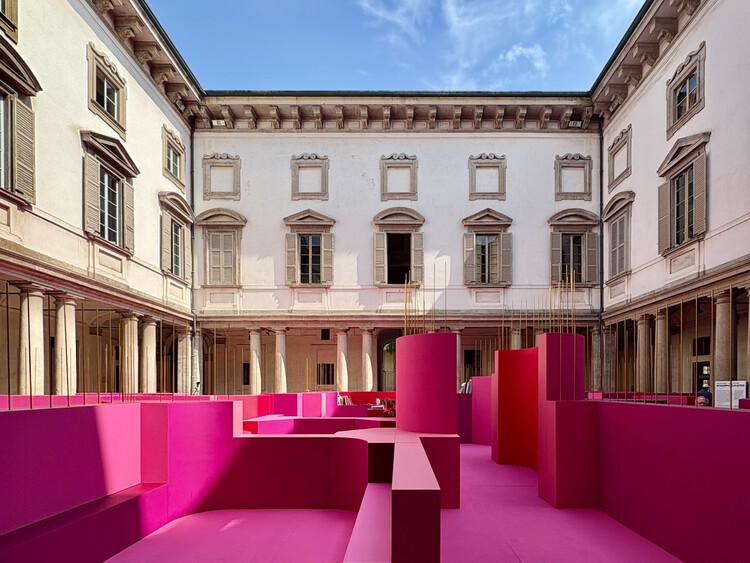
Bringing together a week of exhibitions, installations, and industry exchange, Milan Design Week 2026 and the 64th edition of Salone del Mobile.Milano concluded on April 26, following six days of programming across the fairgrounds and the city. Held from April 20 to 26, this year's events reaffirmed Milan's central role within the global design calendar. The Salone itself drew over 316,000 visitors from 167 countries. With 1,900 brands represented and a strong international presence, the week once again operated as both a cultural platform and an economic engine, navigating a context marked by market uncertainty while maintaining its capacity to convene designers, institutions, and industry leaders at a global scale.
ArchDaily’s Selection: 15 Installations and Exhibitions from Milan Design Week 2026 - Image 1 of 4ArchDaily’s Selection: 15 Installations and Exhibitions from Milan Design Week 2026 - Image 2 of 4ArchDaily’s Selection: 15 Installations and Exhibitions from Milan Design Week 2026 - Image 3 of 4ArchDaily’s Selection: 15 Installations and Exhibitions from Milan Design Week 2026 - Image 4 of 4ArchDaily’s Selection: 15 Installations and Exhibitions from Milan Design Week 2026 - More Images+ 26

Salone del Mobile.Milano and Milan Design Week 2026 Open Across the City and Fairgrounds

Milan reactivates its role as a global design capital this week as Milan Design Week 2026 has began on April 20, followed by the opening of the 64th edition of Salone del Mobile.Milano on April 21 at Fiera Milano, Rho. Rather than a single event, the week unfolds as a layered system in which the fair and the city operate through different temporalities and spatial conditions. From early openings across urban districts to the formal start of the fairgrounds program, the staggered calendar reinforces a continuous flow of activity that extends across institutions, infrastructures, and public space.

Salone del Mobile.Milano and Milan Design Week 2026 Open Across the City and Fairgrounds - Image 1 of 4Salone del Mobile.Milano and Milan Design Week 2026 Open Across the City and Fairgrounds - Image 2 of 4Salone del Mobile.Milano and Milan Design Week 2026 Open Across the City and Fairgrounds - Image 3 of 4Salone del Mobile.Milano and Milan Design Week 2026 Open Across the City and Fairgrounds - Image 4 of 4Salone del Mobile.Milano and Milan Design Week 2026 Open Across the City and Fairgrounds - More Images+ 11

Coachella 2026 Immersive Installations Explore Monumentality and Light Transparency in the California Desert

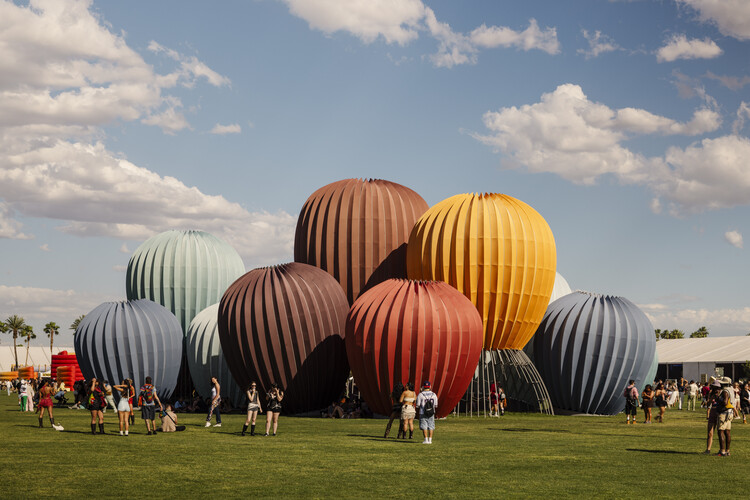
The 25th edition of the Coachella Valley Music and Arts Festival returns to the Empire Polo Club in Indio, California, from April 10 to 12 and April 17 to 19, 2026, bringing together more than 130 acts alongside an ambitious program of large-scale art installations. Presented by Public Art Company (PAC) and curated by founder Raffi Lehrer in collaboration with Goldenvoice Art Director Paul Clemente, this year's selection explores monumentality through luminance, transparency, and lightness of form. Set within Coachella's desert oasis, the installations invite visitors to engage physically and sensorially, responding to shifting daylight and the evolving atmosphere from sunrise to nightfall.

Coachella 2026 Immersive Installations Explore Monumentality and Light Transparency in the California Desert - Image 1 of 4Coachella 2026 Immersive Installations Explore Monumentality and Light Transparency in the California Desert - Image 2 of 4Coachella 2026 Immersive Installations Explore Monumentality and Light Transparency in the California Desert - Image 3 of 4Coachella 2026 Immersive Installations Explore Monumentality and Light Transparency in the California Desert - Image 4 of 4Coachella 2026 Immersive Installations Explore Monumentality and Light Transparency in the California Desert - More Images+ 77

Kengo Kuma & Associates Present Site-Specific Installation “Earth | Tree” at Copenhagen Contemporary

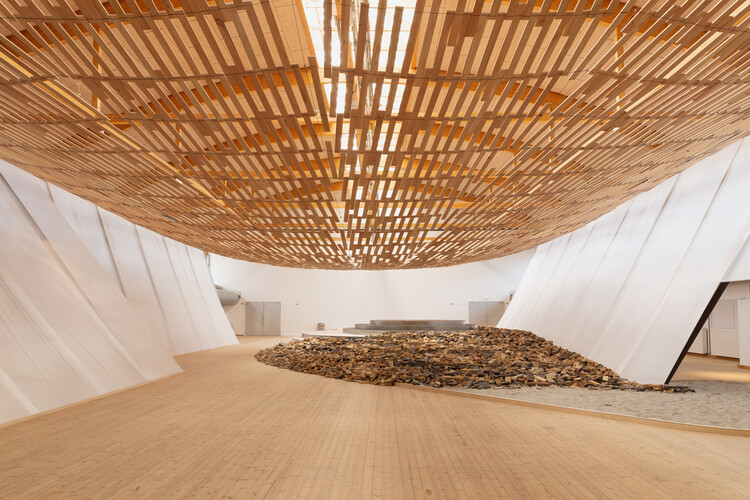
Japanese architect Kengo Kuma and his studio Kengo Kuma & Associates (KKAA) have unveiled Earth | Tree, a site-specific installation at Copenhagen Contemporary, developed in collaboration with Danish wood manufacturer Dinesen. Opened on March 28, 2026, as part of the institution's CCreate programme, the project occupies a former industrial hall, introducing a spatial intervention defined by timber, brick, and light. Led by partner Yuki Ikeguchi, with team members Asger T. Taarnberg, Nicolas Guichard, and Yasemin Shiner, the installation marks KKAA's first exhibition in Scandinavia and situates the studio's material-oriented practice within an exhibition format.

Kengo Kuma & Associates Present Site-Specific Installation “Earth | Tree” at Copenhagen Contemporary - Image 1 of 4Kengo Kuma & Associates Present Site-Specific Installation “Earth | Tree” at Copenhagen Contemporary - Image 2 of 4Kengo Kuma & Associates Present Site-Specific Installation “Earth | Tree” at Copenhagen Contemporary - Image 3 of 4Kengo Kuma & Associates Present Site-Specific Installation “Earth | Tree” at Copenhagen Contemporary - Image 4 of 4Kengo Kuma & Associates Present Site-Specific Installation “Earth | Tree” at Copenhagen Contemporary - More Images+ 13

Concéntrico 2026 Features Smiljan Radić Installation and 26 Urban Interventions in Logroño, Spain

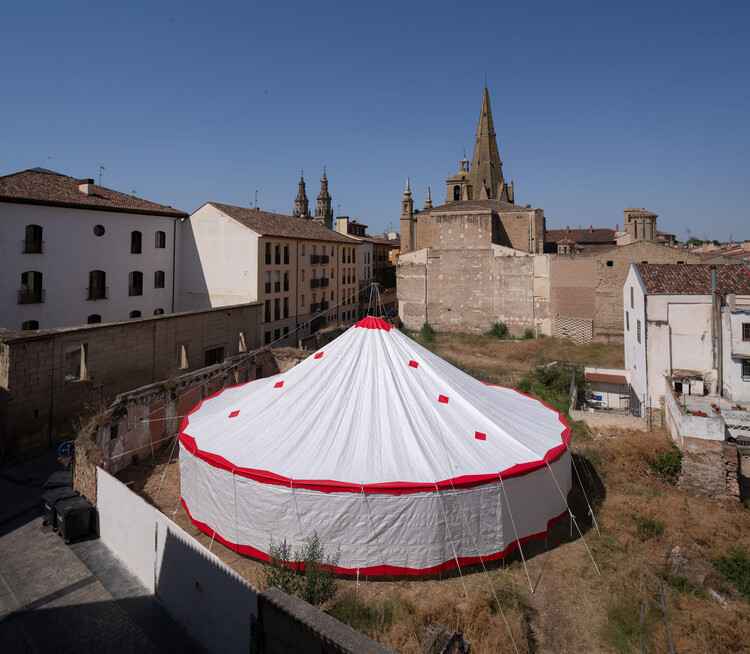
Concéntrico, the Spanish laboratory for urban innovation exploring new ways of inhabiting public space through temporary urban installations, presented the program for its upcoming edition on March 17th, along with its main lines of work for the 2025–2026 season. The festival invites architects, designers, artists, and researchers from different geographies to propose interventions that activate squares, streets, riverbanks, and vacant spaces in the city. This year's edition includes the participation of Smiljan Radić, the recently awarded Pritzker Architecture Prize laureate, who will develop a light, foldable, and temporary structure built from industrial plastic fabrics following the concept of a "poor circus." Another 26 teams, including three practices selected through the festival's international open calls, will intervene in Logroño's public space from June 18 to 23, 2026, with projects ranging from climate-responsive structures to ephemeral public space activations.

Concéntrico 2026 Features Smiljan Radić Installation and 26 Urban Interventions in Logroño, Spain - Image 1 of 4Concéntrico 2026 Features Smiljan Radić Installation and 26 Urban Interventions in Logroño, Spain - Image 2 of 4Concéntrico 2026 Features Smiljan Radić Installation and 26 Urban Interventions in Logroño, Spain - Image 3 of 4Concéntrico 2026 Features Smiljan Radić Installation and 26 Urban Interventions in Logroño, Spain - Image 4 of 4Concéntrico 2026 Features Smiljan Radić Installation and 26 Urban Interventions in Logroño, Spain - More Images+ 3

Modular Installation Reimagines Unfinished Structures at Limbo Museum in Accra, Ghana

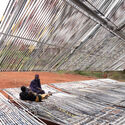
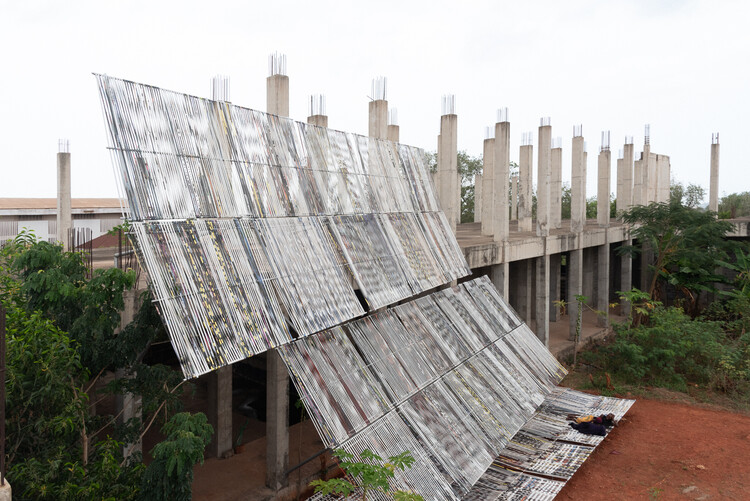
The recently opened Limbo Museum in Accra, Ghana, inaugurated a two-part architectural installation by TAELON7 on March 12th, led by architect Juergen Benson-Strohmayer. The installation was commissioned by the museum in partnership with Art Omi, a not-for-profit arts center in New York's Hudson Valley. The project is the first commission of a collaboration between the two institutions and will be installed in both locations, Accra and New York. Titled Limbo Engawa, the modular, lightweight structure dialogues with the formerly abandoned Brutalist building housing the museum, transforming its skeletal concrete structure and its surrounding land into spaces for use, care, and encounter. The project reflects on the boundaries between unfinished urban architecture and the landscape, foregrounding the labor and stewardship often invisible in both urban and institutional contexts, and asserting that even incomplete or overlooked sites are vessels of civic possibility.

Modular Installation Reimagines Unfinished Structures at Limbo Museum in Accra, Ghana - Image 1 of 4Modular Installation Reimagines Unfinished Structures at Limbo Museum in Accra, Ghana - Image 4 of 4Modular Installation Reimagines Unfinished Structures at Limbo Museum in Accra, Ghana - Image 5 of 4Modular Installation Reimagines Unfinished Structures at Limbo Museum in Accra, Ghana - Image 23 of 4Modular Installation Reimagines Unfinished Structures at Limbo Museum in Accra, Ghana - More Images+ 27

Smiljan Radić Clarke Receives the 2026 Pritzker Prize, The Artist of Unspoken Architecture

Chilean architect Smiljan Radić Clarke has been announced as the laureate of the 2026 Pritzker Architecture Prize, regarded as one of the highest honors in the field of architecture. The award recognizes Radić for a body of work that explores architecture through material experimentation, spatial perception, and a careful engagement with landscape and context. Born in Santiago, Chile, where he continues to live and work, Radić leads the practice Smiljan Radić Clarke, established in 1995. As the second Chilean to receive the prize, after Alejandro Aravena in 2016, he joins a distinguished list of previous laureates, including Liu Jiakun in 2025, Riken Yamamoto in 2024, David Chipperfield in 2023, and Diébédo Francis Kéré in 2022.

Radić's architecture operates within a territory where the phenomenological experience of space precedes explanation. His buildings often appear quiet, elemental, and resistant to easy verbal interpretation, encouraging visitors to experience them through movement, atmosphere, and perception rather than through formal expression. 

Smiljan Radić Clarke Receives the 2026 Pritzker Prize, The Artist of Unspoken Architecture - Image 32 of 4Smiljan Radić Clarke Receives the 2026 Pritzker Prize, The Artist of Unspoken Architecture - Image 3 of 4Smiljan Radić Clarke Receives the 2026 Pritzker Prize, The Artist of Unspoken Architecture - Image 33 of 4Smiljan Radić Clarke Receives the 2026 Pritzker Prize, The Artist of Unspoken Architecture - Image 5 of 4Smiljan Radić Clarke Receives the 2026 Pritzker Prize, The Artist of Unspoken Architecture - More Images+ 32

BuildFest Introduces “Acts of Construction,” a Three-Year Exploration of Timber Installations

 | Sponsored Content

The Bethel Woods Art and Architecture Festival announces BuildFest: Acts of Construction, a three-year initiative that activates the historic grounds of the 1969 Woodstock festival through large-scale timber installations and multimedia experiences. Each year is organized around a single theme, inviting designers to collaborate on an interdisciplinary series of "acts" that build on one another to create an interconnected set of installations, activations, and performances. Act One: Staging is currently accepting proposals for adaptive art infrastructure designed to "set the stage" for future activations. It will be followed by Act Two: Choreography in 2027 and Act Three: Performance in 2028.

The 12th Edition of Toronto’s Winter Stations Reveals Images of Five Winning Projects

The annual Winter Stations design competition returns to Toronto for its twelfth edition, once again transforming the lifeguard stations of Woodbine Beach into temporary works of public art. On view from February 16 to March 30, 2026, this year's exhibition is organized under the theme Mirage, inviting participants to examine perception, illusion, and the shifting boundaries between what is seen and what is constructed. Selected from more than 300 international submissions, three winning proposals from Canada, the United States, and a GermanyUkraine collaboration are presented alongside two installations developed by university teams. Installed along the frozen shoreline of Lake Ontario, the projects reinterpret seasonal infrastructure as platforms for spatial experimentation during the winter months.

The 12th Edition of Toronto’s Winter Stations Reveals Images of Five Winning Projects - Image 1 of 4The 12th Edition of Toronto’s Winter Stations Reveals Images of Five Winning Projects - Image 2 of 4The 12th Edition of Toronto’s Winter Stations Reveals Images of Five Winning Projects - Image 3 of 4The 12th Edition of Toronto’s Winter Stations Reveals Images of Five Winning Projects - Image 4 of 4The 12th Edition of Toronto’s Winter Stations Reveals Images of Five Winning Projects - More Images+ 16