Architecture praxis has traditionally focused on customized, project-based services – a well-established model continually favored by industry professionals. While this approach yields remarkable built environments, it struggles to achieve scalability and longevity. The architectural industry has shown little interest in exploring alternative practices, processes and business models, considering that the traditional mode is equally vulnerable to market cycles as other industries are. Bespoke design solutions, the cornerstone of conventional practice, make standardizing processes and scaling services challenging. This focus also leads to fragmented workflows among firms and stakeholders. The stability and establishment of traditional practices can breed a risk-averse culture, hampering disruptive innovations within the industry.
Airbnb has undoubtedly disrupted the hospitality industry, inspiring an ecosystem of companies leveraging the sharing economy such as co-living startups. While these companies have achieved impressive financial success, they have been purported to produce problematic effects at the scale of the city. Airbnb, in particular, is alleged to have driven an increase in rental prices in cities already grappling with housing affordability challenges. Much like the case of Uber's impact on urban mobility, Airbnb's rapid growth has caused significant challenges for local governments, demanding comprehensive regulation and a re-evaluation of its functioning at the city scale.
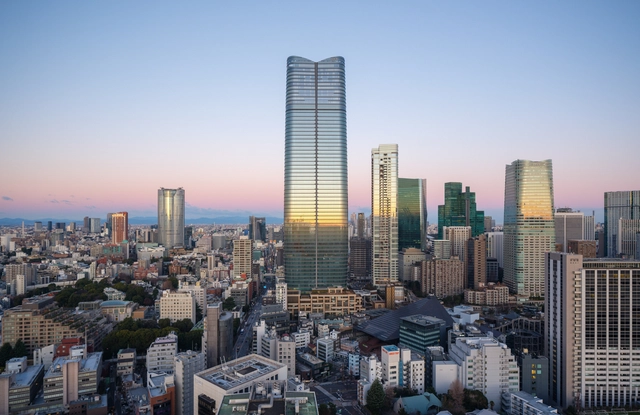
Pelli Clarke & Partners has just completed the Mori JP Tower, now standing as Japan’s tallest building. Situated in the recently revitalized Azabudai Hills district, the tower emerges at the center of this development. Establishing a new focal point for Tokyo’s skyline, the building soars 330 meters at the heart of this dynamic new mixed-use district in the city center.
For the 18th year, the International Architecture Awards has returned to celebrate outstanding architectural achievements globally. Based in Chicago, these awards feature exceptional new buildings, urban planning projects, and landscape architecture of 2023. Additionally, this month, the Chicago Architecture Biennial (CAB 5) is currently taking place in the city. Both the awards and the Biennial attempt to shed light on each country’s architectural, design, cultural, and social trends.
The history of architects designing resorts is intertwined with the development of the hospitality industry and the concept of leisure travel. The origins can be traced back to ancient times when the Romans built luxurious villas and bathhouses as retreats for the wealthy. However, the modern notion of resorts emerged during the 19th century with industrialization and the growing middle class seeking recreational experiences.
At a very high standard of luxury, resort hotels provide an immersive and rejuvenating vacation experience. These resorts are frequently rooted in beautiful landscapes in remote locations, often containing full-service accommodations, offering escapism and complete disconnection. Architects have continued to shape the resort landscape in recent decades with their designs. Sustainability and integration with natural surroundings have gained importance as architects strive to create environmentally conscious and immersive resort experiences.
The main purpose of public houses and eateries is to provide customers – both individuals and groups – with an environment and an atmosphere in which to release the stresses of their day or week so far, either with a quiet drink in a quiet corner, or in larger, more social groups.
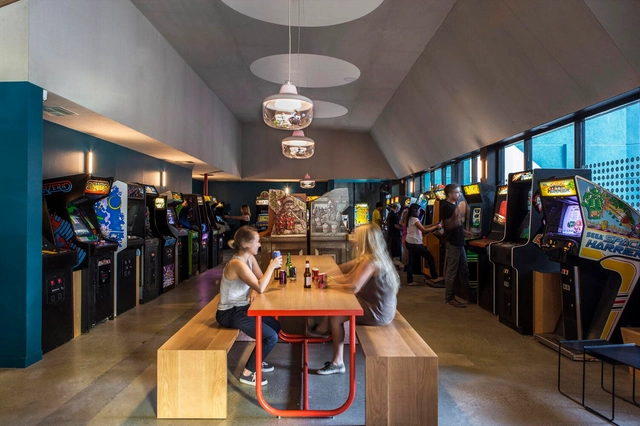
Even before COVID brought with it more permanent closing times, the rise of on-demand TV and food delivery services meant that staying ‘in-in’ –with the comforting embrace of their pillow just a short hike up the wooden hill to Bedfordshire– was becoming a more popular choice. Perhaps it’s no surprise, then, to see the growing emergence of establishments that offer more active entertainment than a quiz night and karaoke box.
Here are five examples of bars and restaurants designed for life’s players.
Hidden in plain sight, ceilings are often the final surface interior designers and architects think about, but the expansive plane of unobstructed plaster or concrete offers mar more creative freedom than we realize. Modern design rules demand that the ceiling is kept clean. Not with a telescopic mop attachment, but by stripping off the popcorn spray, wood-chip wallpaper, or plaster patterning that haunt my own memories of ceilings-past.
While many clients greet this contemporary need for clean lines with acquiescence, choosing smooth, skimmed plaster finishes with unobtrusive yet forgetful recessed spots, other bolder clients recognize the ceiling’s potential for the creative outlet it is.
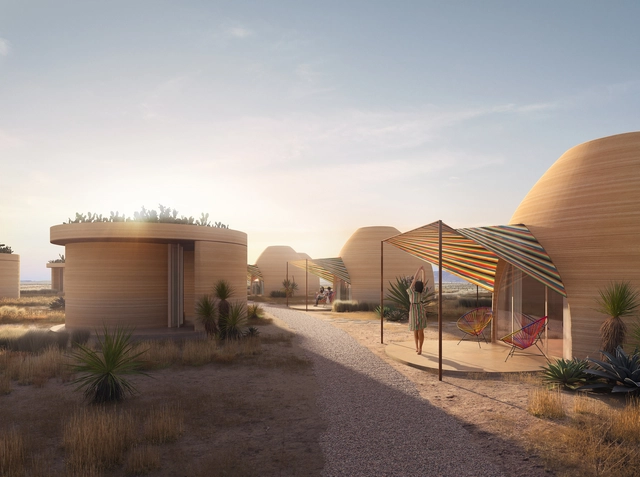
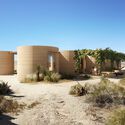
El Cosmico 3D-printed Hotel - exterior. Image Courtesy of ICON, BIG for El Cosmico
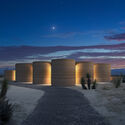
Hospitality expert Liz Lambert has announced a collaboration with ICON, the office that pioneered large-scale 3D printing, and BIG – Bjarke Ingels Group, to rebuild El Cosmico, a campground hotel in Marfa, Texas. The team plans to relocate the venue to a 62 acres plot, where new architectural approaches are made possible by including advanced technologies and 3D-printing elements such as domes, vaults, and parabolic forms. The innovative development will feature guest accommodation and new hospitality programming, including a pool, spa, and shared communal facilities. The project is expected to break ground in 2024.
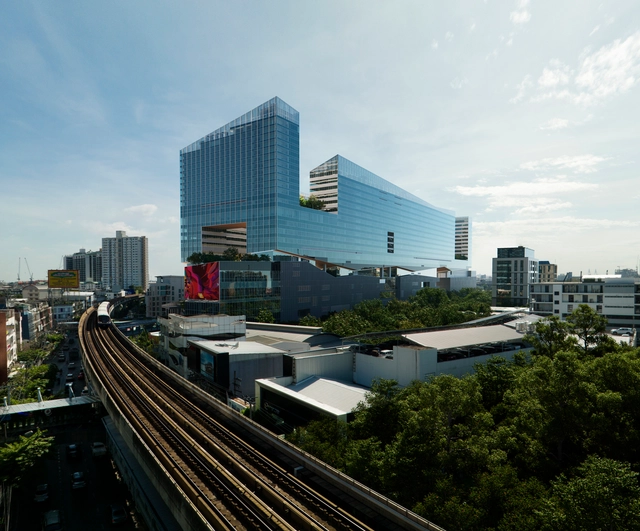
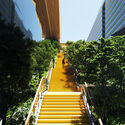
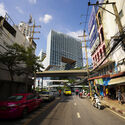
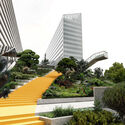
Snøhetta, in collaboration with MQDC, has released the design for Cloud 11, a large-scale mixed-use complex in the South Sukhumvit district in Bangkok, Thailand. The new development addresses the pressing need for urban green spaces in the densely built neighborhood. The project, measuring a total of 250.000 square meters, also aims to help transform the Sukhumvit into a hub for innovation and tech companies in the city while providing the area with a large, green public space and spaces for artists, makers, and tech entrepreneurs. Construction has already started, and the project is expected to be completed by the end of 2024.
Snøhetta, the Norweigan-based architecture and landscape practice, has been chosen to re-imagine the French Asylum and Administrative Courts of Montreuil. The proposal puts together both institutions on one site, surrounded by luscious green areas and a biophilic landscape. Set to begin construction in 2024, and be completed by 2026, the project includes the design of the buildings, landscape, wayfinding, interior, and furniture.
After two weeks of voting in our 14th edition of the Building of the Year Awards, our readers have narrowed down over 4,500 projects to just 75 finalists across 15 categories, casting over 100,000 votes. This year's awards celebrate the very best in design, innovation, and sustainability from around the globe, with the shortlist featuring an exceptional range of projects, from a house in a favela to cutting-edge cultural centers and innovative public spaces that are sure to impress. As a crowdsourced award, we are proud to say that your selections are a true reflection of the state of architecture, and this year's finalists are no exception.
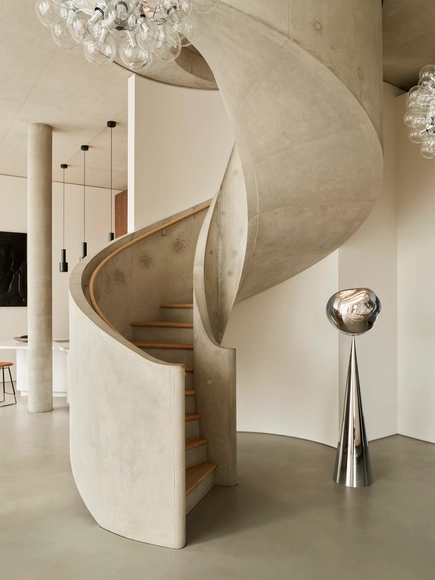
With a simple flick of a switch, lighting has the ability to completely transform a space, define its ambiance and create a mesmerizing, multi-sensory experience. It can cast shadows and highlights, add depth and texture, and even has the power to stir emotions and influence our well-being. More than just a practical source of illumination, it’s a tool for sculpting spaces and making a bold statement. Lighting fixtures come in various shapes, sizes and styles, each with a unique character and purpose; from the ornate elegance of a chandelier hanging from the ceiling to the sleek minimalism of a recessed light installed into a wall. The possibilities for creative expression are endless. Innovating and breaking the boundaries of traditional lighting design, Tom Dixon’s sculptural luminaires are a testament to these possibilities.
In hospitality, first impressions count. Corian® Solid Surface – an exclusive product of Corian® Design, a division of DuPont company – has become a more and more regular guest in hotels over the past decades as designers and architects look to create highly hygienic and adaptable interior designs. designboom and ArchDaily concluded its three-part webinar series with the material producer, this time to explore the future of hospitality design. Leading architectural and design experts joined the live conversation, including TBI Architecture & Engineering, JOI-Design and Ultraspace – watch above.
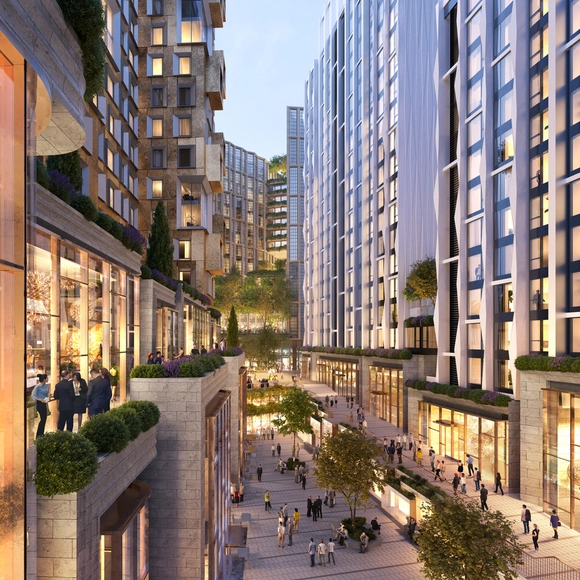
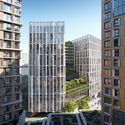
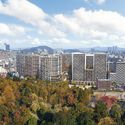
International architecture office KPF has unveiled the design for Parkside Seoul, a new mixed-use neighborhood planned for the South Korean capital designed to complement the surrounding natural elements and pay homage to Yongsan Park. The 482,600 square meter development is composed of a layered exterior envelope that encompasses various programs and public amenities with the purpose of enhancing the residents’ experience of space. Besides the residential units, the complex includes office and retail spaces, and hospitality facilities along with public and green spaces.
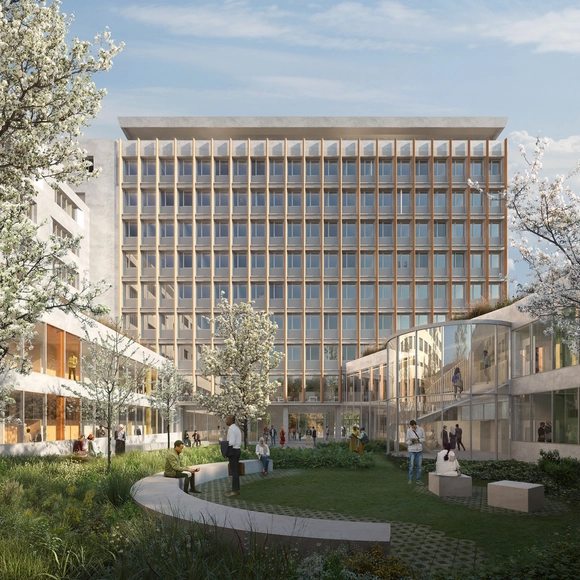
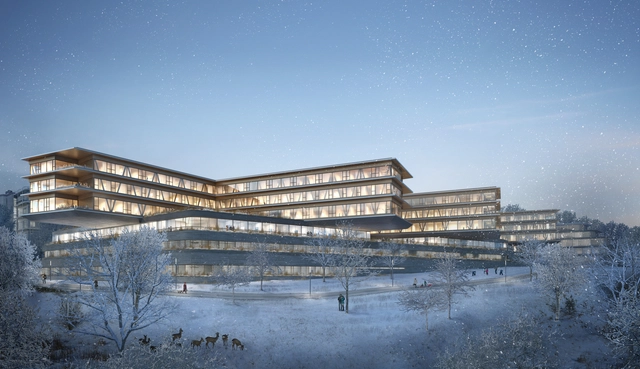
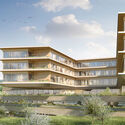
White Arkitekter and HPP Architekten have been selected to design the new medical clinic, NMK, in Tübingen, Germany. Both firms, with vast experience in healthcare design and wood architecture, aim to realize a project in which, the elements of an integral, sustainable overall concept also play an essential role, in addition to the aspects of healing architecture and optimized functional organization. The new Medical Clinic of the University Hospital of Tübingen will be one of the 34 university hospitals in Germany that contributes to the successful combination of high-performance medicine, research, and teaching.
Hospitality is an industry made of people being hospitable to people, and our interaction with places is its foundation. If the zeitgeist of our era lies in the perpetual dance of shock and awareness of how we treat each other and the planet we live on, what considerations should we pose to inform and shape what’s next for hotels? If there’s ever been a moment to think about the future of hospitality, this is it.
The luxury hotel, as an architectural typology, is distinctive. In effect, it's a self-contained community, a building that immerses the well-off visitor into their local context. Self-contained communities they might be, but these hotels are also vessels of the wider socioeconomic character of a place, where luxury living is often next door to informal settlements in the most extreme examples of social inequality.