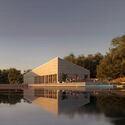
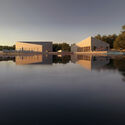
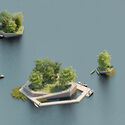
1. ArchDaily
  2. Floating Architecture

Floating Architecture: The Latest Architecture and News

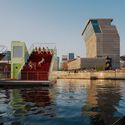
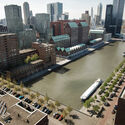
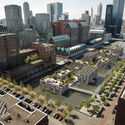
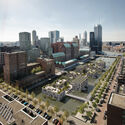
No Solid Ground: Three Approaches to Building Below Sea Level in Rotterdam

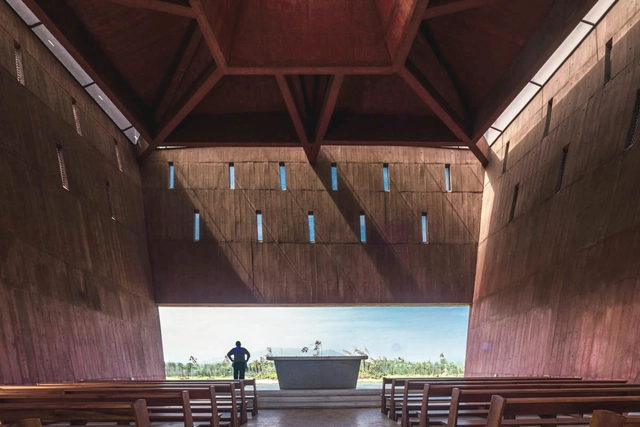
Architects carefully calibrate their relationship to the earth, adjusting foundations to soil, groundwater, climate, risk, and culture. Driven timber piles, rammed-earth platforms, and poured concrete slabs are each a response to a specific set of ground conditions, and each shapes the architecture that rises from it. The way a building meets the earth determines its durability and its limits because foundations are among the most consequential design choices an architect makes.

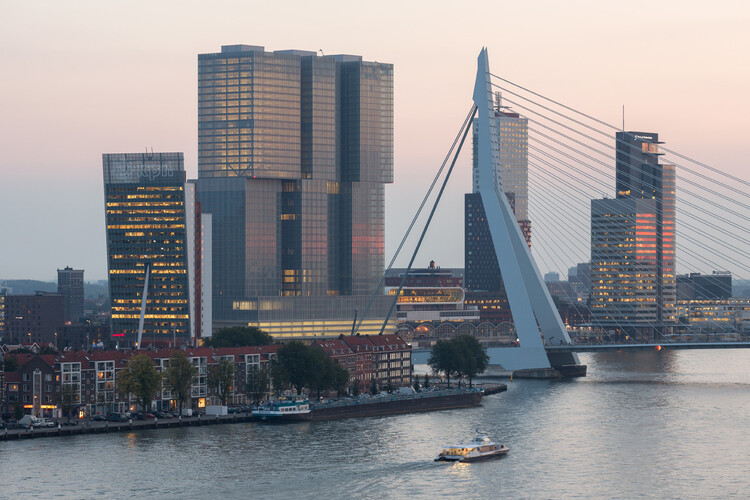
The city of Rotterdam sits approximately one meter below sea level, an organizing condition that shapes daily life in the Netherlands' second-largest city and is a growing preoccupation amid unstable coastal conditions. The city occupies the delta of the Rhine and Maas rivers, a landscape that was never naturally dry but has been kept functional through centuries of hydraulic intervention. The water boards in this region are among the oldest democratic institutions in the world, created in the thirteenth century to manage shared water drainage and still operating today as elected bodies with technical capacity. As sea levels rise and rainfall across Northern Europe grows less predictable and more extreme, Rotterdam faces a significantly increased risk of coastal storm surges and urban flooding driven by overwhelmed drainage infrastructure.

No Solid Ground: Three Approaches to Building Below Sea Level in Rotterdam - Image 16 of 4No Solid Ground: Three Approaches to Building Below Sea Level in Rotterdam - Image 57 of 4No Solid Ground: Three Approaches to Building Below Sea Level in Rotterdam - Image 25 of 4No Solid Ground: Three Approaches to Building Below Sea Level in Rotterdam - Image 54 of 4No Solid Ground: Three Approaches to Building Below Sea Level in Rotterdam - More Images+ 65

Off the Mainland: Floating Architecture Projects Redefining the Built Environment

Building above water means doing away with a part of construction that is quite literally the basis of most of our built environment: the foundation. In a world dominated by water, currents, and shifting levels are variables that simply cannot be ignored, which is why the most emblematic feature these projects share is their adaptability.

Instead of robust, deep bases – such as piles or caissons – designed to anchor architecture into the earth, floating structures frequently employ solutions like concrete pontoons or plastic drums to prevent the building from sinking. These are typically paired with anchoring systems to "fix" the structures, even if only temporarily, to a specific location.

Off the Mainland: Floating Architecture Projects Redefining the Built Environment  - Image 1 of 4Off the Mainland: Floating Architecture Projects Redefining the Built Environment  - Image 2 of 4Off the Mainland: Floating Architecture Projects Redefining the Built Environment  - Image 3 of 4Off the Mainland: Floating Architecture Projects Redefining the Built Environment  - Image 4 of 4Off the Mainland: Floating Architecture Projects Redefining the Built Environment  - More Images+ 23

Carlo Ratti Associati and Höweler + Yoon Launch Floating Plaza "AquaPraça" in Venice on Its Way to COP30

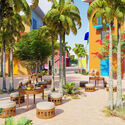
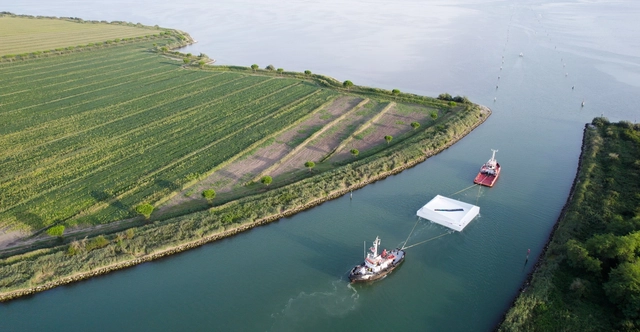
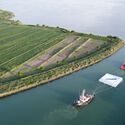
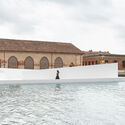
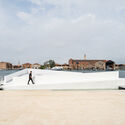
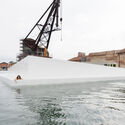
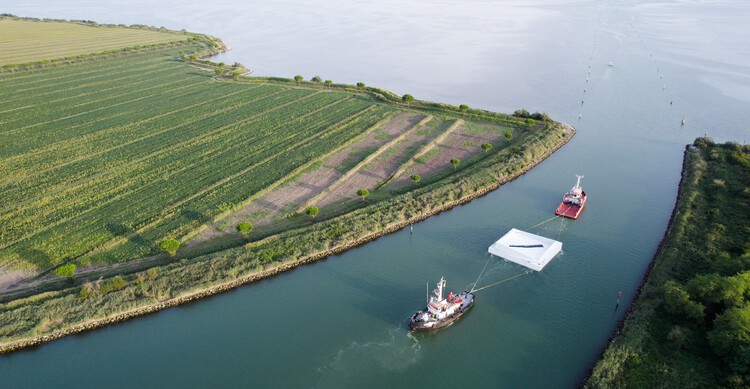
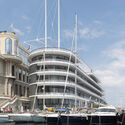
CRA–Carlo Ratti Associati and Höweler + Yoon designed AquaPraça, a floating gathering space for global climate dialogue set to anchor COP30 in Belém, Brazil, making its debut at the 19th International Architecture Exhibition of La Biennale di Venezia on 5 September 2025. It will then embark on a transatlantic journey to Brazil, where it will form part of the Italian Pavilion at COP30, held from November 10 to 21, 2025. Following the event, it is intended to become a permanent floating landmark in the Amazon as part of Belém's cultural infrastructure.

Carlo Ratti Associati and Höweler + Yoon Launch Floating Plaza "AquaPraça" in Venice on Its Way to COP30 - Featured ImageCarlo Ratti Associati and Höweler + Yoon Launch Floating Plaza "AquaPraça" in Venice on Its Way to COP30 - Image 1 of 4Carlo Ratti Associati and Höweler + Yoon Launch Floating Plaza "AquaPraça" in Venice on Its Way to COP30 - Image 2 of 4Carlo Ratti Associati and Höweler + Yoon Launch Floating Plaza "AquaPraça" in Venice on Its Way to COP30 - Image 3 of 4Carlo Ratti Associati and Höweler + Yoon Launch Floating Plaza AquaPraça in Venice on Its Way to COP30 - More Images+ 17

Longevity Through Renewal: The Enduring Wisdom of Hong Kong's Water Villages

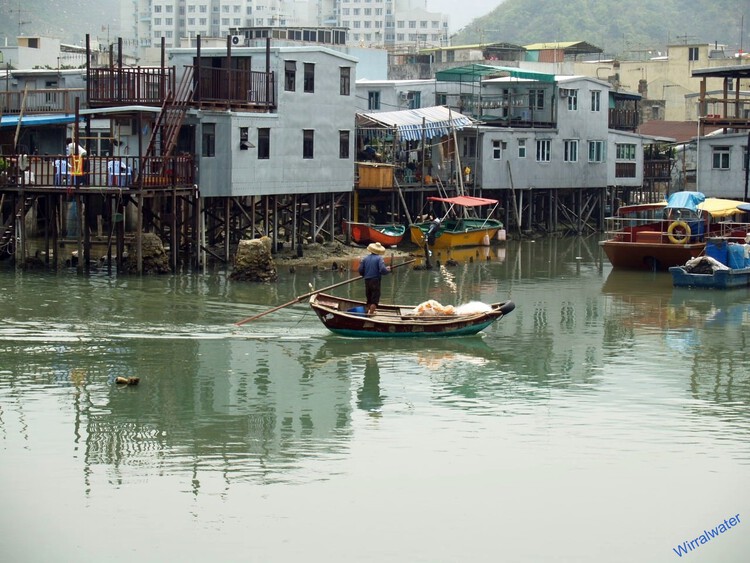
While Hong Kong is widely celebrated for its iconic harbor view, glittering skyline, and fast-paced urban lifestyle, its origins tell a different story—one deeply rooted in its relationship with water. Before transforming into a dense, vertical metropolis, Hong Kong's architectural identity was closely tied to its maritime context. Today, the city is often associated with slender, glass-clad towers that symbolize modernity. While visually striking in their pursuit of height and form, many of these buildings appear disconnected from their immediate environment, often overlooking natural site conditions, ecological responsiveness, and contextual sensitivity.

Historically, however, this was not the case. Hong Kong's earliest built environments—rural fishing villages in areas like Tai O, Aberdeen, and Shau Kei Wan—emerged through organic, community-driven spatial practices that engaged closely with their surroundings. These coastal and riverside settlements developed architectural systems tailored to the marine environment and to the rhythms of fishing life. Villages were sited around water, and construction strategies were adapted to fluctuating tides, terrain, and social use.

Longevity Through Renewal: The Enduring Wisdom of Hong Kong's Water Villages - Image 1 of 4Longevity Through Renewal: The Enduring Wisdom of Hong Kong's Water Villages - Image 2 of 4Longevity Through Renewal: The Enduring Wisdom of Hong Kong's Water Villages - Image 3 of 4Longevity Through Renewal: The Enduring Wisdom of Hong Kong's Water Villages - Image 4 of 4Longevity Through Renewal: The Enduring Wisdom of Hong Kong's Water Villages - More Images+ 13

Between Fantasy and Reality: Aldo Rossi's Floating Teatro del Mundo for the First Venice Architecture Biennale

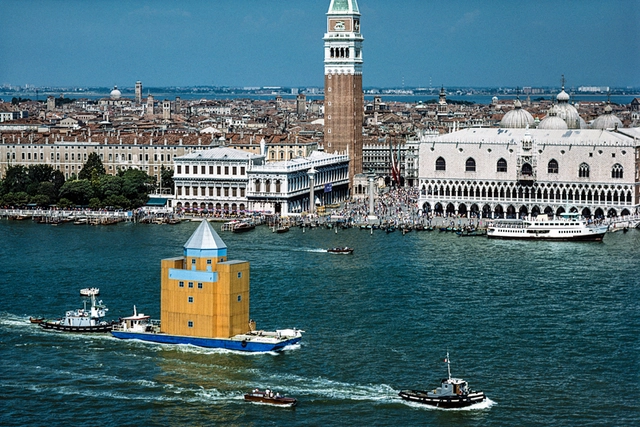
The first edition of the Venice Architecture Biennale took place in 1980, immediately revealing its role as a platform for images and ideas that would become essential references in contemporary architectural theory and practice. This disruptive character was embodied from the very beginning by the strangely familiar floating structure designed by Aldo Rossi, titled Teatro del Mondo. At once temporary and archetypal, the project introduced central themes that would shape Italian architectural discourse in the years that followed. To this day, it continues to inspire reflections on timelessness, imagination, and the memory embedded in cities.

Between Fantasy and Reality: Aldo Rossi's Floating Teatro del Mundo for the First Venice Architecture Biennale - Image 1 of 4Between Fantasy and Reality: Aldo Rossi's Floating Teatro del Mundo for the First Venice Architecture Biennale - Image 2 of 4Between Fantasy and Reality: Aldo Rossi's Floating Teatro del Mundo for the First Venice Architecture Biennale - Image 3 of 4Between Fantasy and Reality: Aldo Rossi's Floating Teatro del Mundo for the First Venice Architecture Biennale - Image 4 of 4Between Fantasy and Reality: Aldo Rossi's Floating Teatro del Mundo for the First Venice Architecture Biennale - More Images

NYC’s First River-Based, Water-Filtering Pool Takes Shape at Pier 35

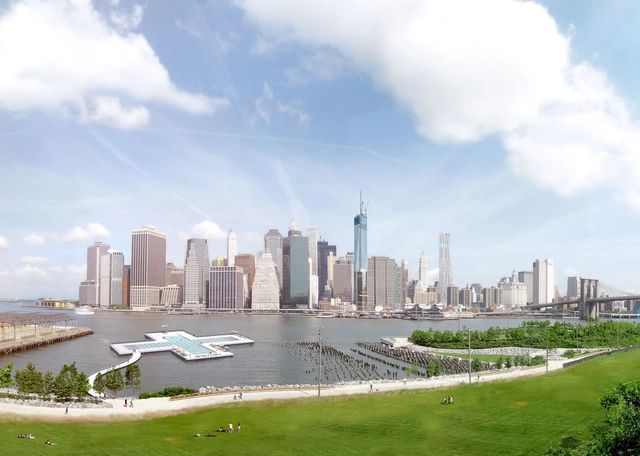
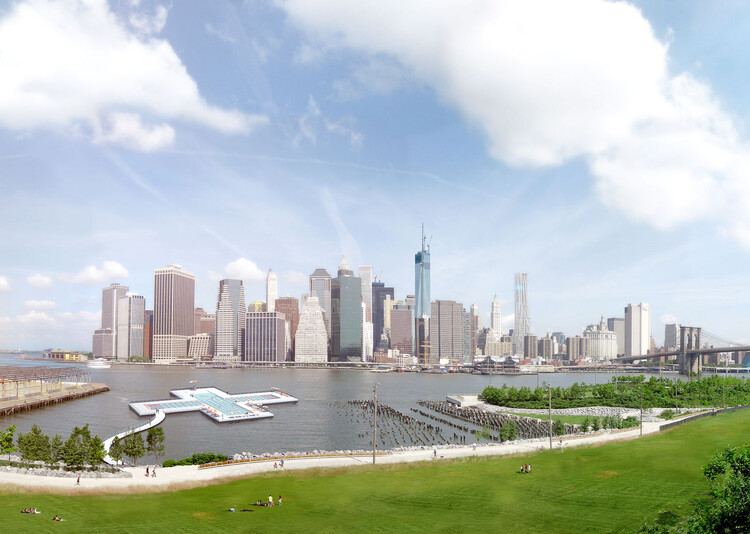
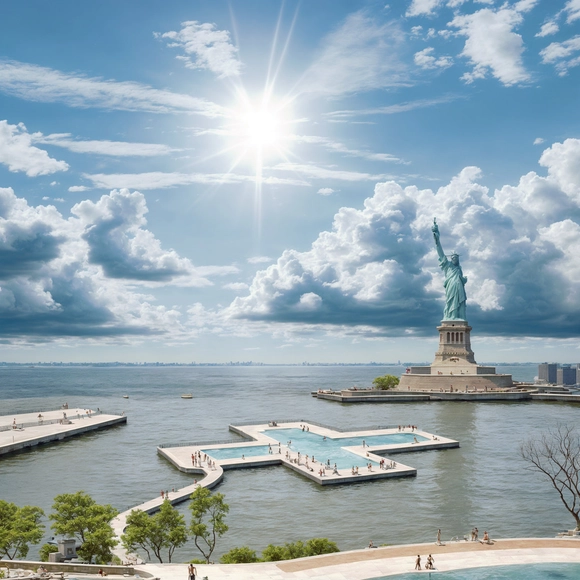
Friends of + POOL has announced the next steps in the realization of New York City's first water-filtering floating swimming pool, to be installed at Pier 35, north of the Manhattan and Brooklyn Bridges. The project seeks to provide safe public access to swimming in the city's rivers by integrating a custom-designed filtration system into a floating pool structure. Installation at Pier 35 is scheduled for May 2026, when the pool will enter its final phase of evaluation. Public access will be contingent on the successful completion of large-scale filtration testing and the full build-out of the facility for safe public use.

NYC’s First River-Based, Water-Filtering Pool Takes Shape at Pier 35 - Image 1 of 4NYC’s First River-Based, Water-Filtering Pool Takes Shape at Pier 35 - Image 2 of 4NYC’s First River-Based, Water-Filtering Pool Takes Shape at Pier 35 - Image 3 of 4NYC’s First River-Based, Water-Filtering Pool Takes Shape at Pier 35 - Image 4 of 4NYC’s First River-Based, Water-Filtering Pool Takes Shape at Pier 35 - More Images+ 4

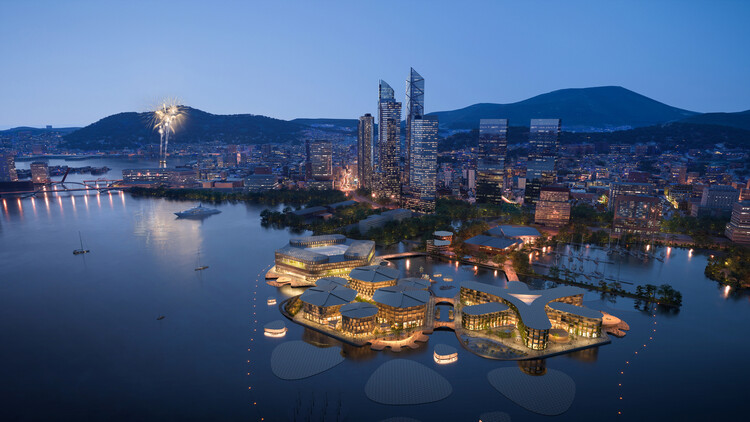
MAST Reveals Floating Neighborhood Design for Rotterdam’s Disused Spoorweghaven Dock

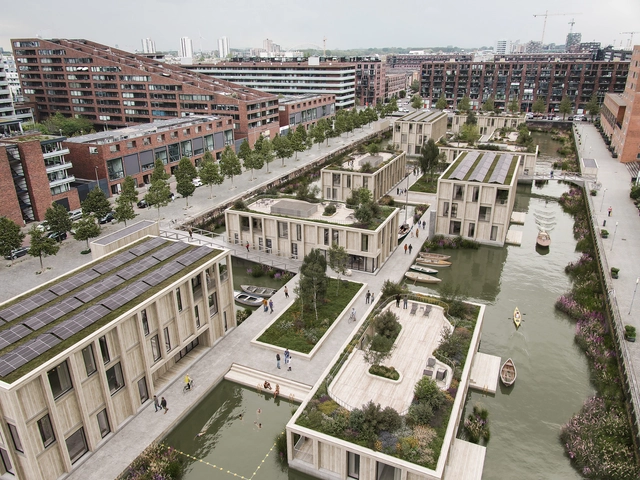
Danish maritime architecture studio MAST, in collaboration with construction company BIK Bouw, has designed a new floating community for the disused Spoorweghaven dock in Rotterdam, Netherlands. The proposed neighborhood, which has received initial support from the Municipality of Rotterdam, includes over 100 apartments, public spaces, commercial units, and a recreational harbor near the city center. Floating architecture is MAST's response to the Netherlands' housing crisis, offering a modular, adaptable solution for building a wide range of structures on water.

MAST Reveals Floating Neighborhood Design for Rotterdam’s Disused Spoorweghaven Dock - Image 1 of 4MAST Reveals Floating Neighborhood Design for Rotterdam’s Disused Spoorweghaven Dock - Image 4 of 4MAST Reveals Floating Neighborhood Design for Rotterdam’s Disused Spoorweghaven Dock - Image 2 of 4MAST Reveals Floating Neighborhood Design for Rotterdam’s Disused Spoorweghaven Dock - Image 3 of 4MAST Reveals Floating Neighborhood Design for Rotterdam’s Disused Spoorweghaven Dock - More Images+ 10

Touching the Earth Lightly: How Freeing the Ground Plane Shapes Architectural Atmosphere

Architecture and its atmospheric qualities have long been a subject of discussion, yet reaching a consensus on the matter remains elusive. This is largely because spatial experience is deeply personal—rooted in emotions, sensory perceptions, and individual preferences that are difficult to articulate in words alone. The way one perceives, feels, and interacts with a space adds another layer of complexity, making it challenging to define and agree upon its atmospheric impact. Nevertheless, architects and designers continuously strive to shape environments that are not only functional and comfortable but also capable of evoking emotions and leaving a lasting impression on their occupants.

Touching the Earth Lightly: How Freeing the Ground Plane Shapes Architectural Atmosphere  - Image 5 of 4Touching the Earth Lightly: How Freeing the Ground Plane Shapes Architectural Atmosphere  - Image 1 of 4Touching the Earth Lightly: How Freeing the Ground Plane Shapes Architectural Atmosphere  - Image 2 of 4Touching the Earth Lightly: How Freeing the Ground Plane Shapes Architectural Atmosphere  - Image 3 of 4Touching the Earth Lightly: How Freeing the Ground Plane Shapes Architectural Atmosphere  - More Images+ 36

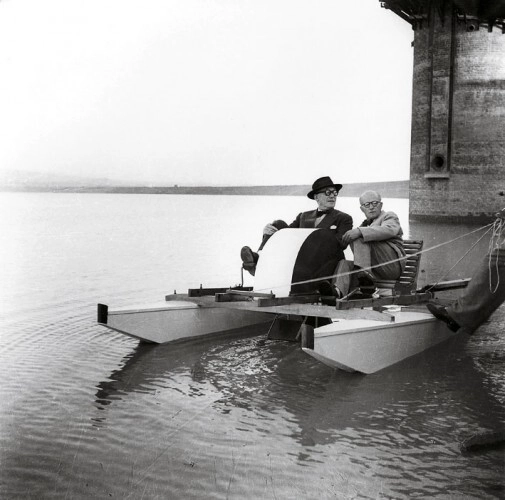
Architects and Boats: A Love Affair

The relationship between architecture and naval design has been a fascinating interplay of form and function that has evolved significantly. Both disciplines have a shared history of innovation, aesthetics, and functionality that have informed and inspired each other. This "love affair" has seen architects drawing inspiration from boats, particularly in the modernist era when ships' streamlined, efficient designs influenced the aesthetic of buildings. Conversely, architectural principles have also been adapted to enhance the functionality and form of boats, demonstrating a reciprocal exchange that continues to shape both disciplines.

Architects and Boats: A Love Affair - Image 1 of 4Architects and Boats: A Love Affair - Featured ImageArchitects and Boats: A Love Affair - Image 2 of 4Architects and Boats: A Love Affair - Image 3 of 4Architects and Boats: A Love Affair - More Images+ 29

A Skyward Shift: Exploring the Social Impact of Elevated Public Spaces in Cities

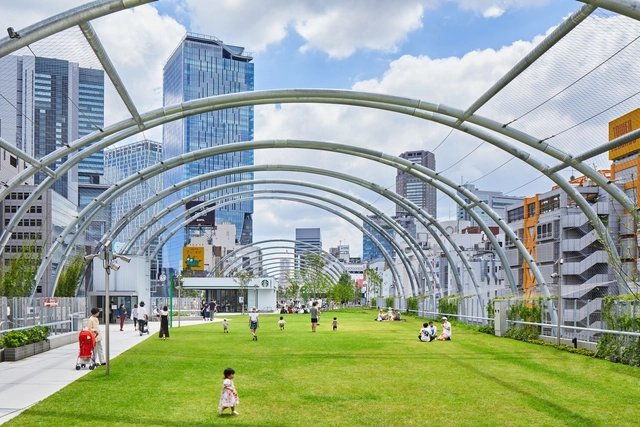
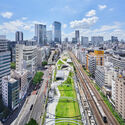
With escalating land values in urban centers, there has been a growing trend to float public spaces from ground level to elevated locations, such as rooftops or podiums between buildings. From a development perspective, maximizing floor area has become crucial as urban environments expand. Ground-level spaces are highly sought after for retail use due to their strategic location, which attracts foot traffic and potential customers and drives city development and economics.

This financial consideration, which often guides building activities and directions in urban centers, contradicts design principles advocated during the modernist era for the benefits of better outdoor space for the public, such as the concept of 'Freeing the Ground'. Architects like Le Corbusier championed this concept through projects like Villa Savoye and Unite d' Habitation. These modernist designs envisioned a future where buildings were elevated to restore open, accessible outdoor ground-level spaces for its users. However, for the reasons above, many contemporary projects instead seek to replicate the function of public grounds within the building's structure.

A Skyward Shift: Exploring the Social Impact of Elevated Public Spaces in Cities - Image 5 of 4A Skyward Shift: Exploring the Social Impact of Elevated Public Spaces in Cities - Image 1 of 4A Skyward Shift: Exploring the Social Impact of Elevated Public Spaces in Cities - Image 2 of 4A Skyward Shift: Exploring the Social Impact of Elevated Public Spaces in Cities - Image 3 of 4A Skyward Shift: Exploring the Social Impact of Elevated Public Spaces in Cities - More Images+ 10

EFFEKT and MAST Reveal Gateway to Denmark’s Largest Marine Nature Park

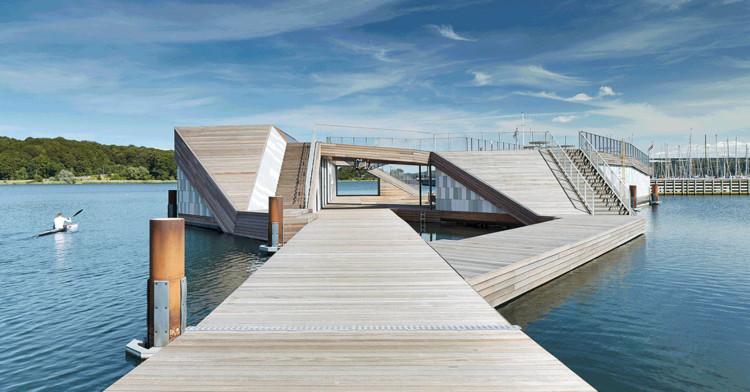
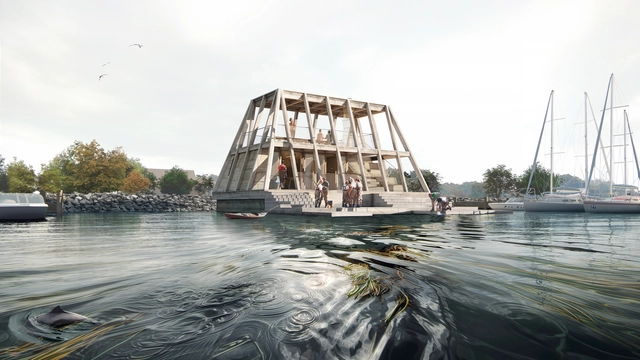
EFFEKT and MAST have just revealed SØMÆRKET, a new access point to Nature Park Lillebælt in Denmark. Serving as the gateway to one of Denmark’s most protected coastal landscapes, the Little Belt strait, the design aims to strengthen the connections between the cities of Middlefart, Holding, and Fredericia. Renowned for having the world’s highest concentration of harbor porpoises and a rich diversity of flora and fauna, the Little Belt Strait is a popular destination for divers across Europe.

 EFFEKT and MAST Reveal Gateway to Denmark’s Largest Marine Nature Park - Image 1 of 4 EFFEKT and MAST Reveal Gateway to Denmark’s Largest Marine Nature Park - Image 2 of 4 EFFEKT and MAST Reveal Gateway to Denmark’s Largest Marine Nature Park - Image 3 of 4 EFFEKT and MAST Reveal Gateway to Denmark’s Largest Marine Nature Park - Image 4 of 4 EFFEKT and MAST Reveal Gateway to Denmark’s Largest Marine Nature Park - More Images+ 4

First-Ever +POOL to Open in New York City This Summer, with Plans to Expand Swimming Access across the State

New York Governor Hochul has announced a partnership with the nonprofit Friends of + POOL to open the first urban river-sourced swimming facility in the United States. Utilizing + POOL’s design and technology, the 2,000-square-foot plus-shaped swimming pool is set to open in New York City’s East River in the summer of 2024. In 2010, four young designers, Archie Lee Coates IV, Dong-Ping Wong, Jeffrey Franklin, and Oana Stanescu, established + POOL with the goal of providing New Yorkers with access to free and safe river swimming. Now the state promised to invest $16 million to pilot and scale the system, hoping to expand it across the state of New York.

First-Ever +POOL to Open in New York City This Summer, with Plans to Expand Swimming Access across the State - Image 1 of 4First-Ever +POOL to Open in New York City This Summer, with Plans to Expand Swimming Access across the State - Image 2 of 4First-Ever +POOL to Open in New York City This Summer, with Plans to Expand Swimming Access across the State - Image 3 of 4First-Ever +POOL to Open in New York City This Summer, with Plans to Expand Swimming Access across the State - Image 4 of 4First-Ever +POOL to Open in New York City This Summer, with Plans to Expand Swimming Access across the State - More Images+ 8

Public Waterfront Pools: 10 Aquatics Facilities Bordering Rivers and Oceans

Subscriber Access | 
Public Waterfront Pools: 10 Aquatics Facilities Bordering Rivers and Oceans  - Featured Image
Piscinas en Leça de Palmeira / Alvaro Siza. Image © Fernando Guerra | FG+SG

At first glance, building a pool right beside another body of water seems a little redundant. After all, why would someone choose to swim in a pool when they have a river or ocean to enjoy? However, for people with limited mobility and younger more inexperienced swimmers, natural bodies of water can prove both daunting and dangerous. Pools not only provide a controlled, secure space for them to enjoy aquatic activities, they also provide a connection with the surrounding landscape.

Kunlé Adeyemi's Water Cities Rotterdam Exhibition: A Testing Ground for Water-Related Design Solutions

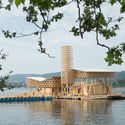
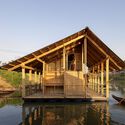
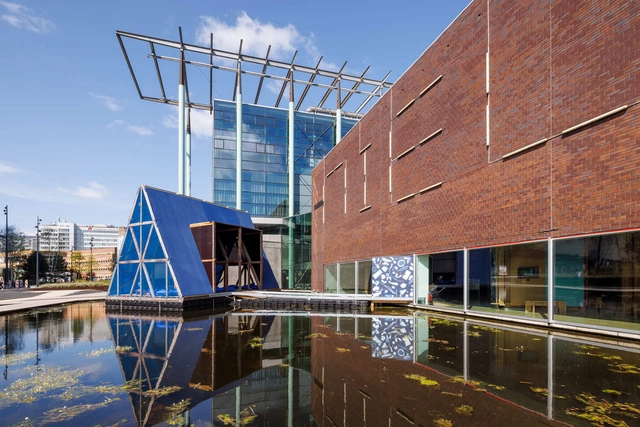
Nieuwe Instituut in Rotterdam has inaugurated the ‘Water Cities Rotterdam. By Kunlé Adeyemi,’ a cultural project comprising of exhibitions along with several floating pontoons and artist installations that present the Nigerian-Dutch architect Kunlé Adeyemi’s waterfront designs in the Netherlands. The exhibition brings a seven-meter-high floating wooden pavilion on the institute’s outdoor ponds. Inside the pavilion, landscape architect and artist Thijs de Zeeuw has created an artwork to allow visitors to experience the pavilion from the perspective of nature while contemplating the consequences of building and living on the water for the surrounding ecology and biodiversity. The entire exhibition is on display at the Nieuwe Instituut until 22 October 2023.

Kunlé Adeyemi's Water Cities Rotterdam Exhibition: A Testing Ground for Water-Related Design Solutions - Image 1 of 4Kunlé Adeyemi's Water Cities Rotterdam Exhibition: A Testing Ground for Water-Related Design Solutions - Image 2 of 4Kunlé Adeyemi's Water Cities Rotterdam Exhibition: A Testing Ground for Water-Related Design Solutions - Image 3 of 4Kunlé Adeyemi's Water Cities Rotterdam Exhibition: A Testing Ground for Water-Related Design Solutions - Image 4 of 4Kunlé Adeyemi's Water Cities Rotterdam Exhibition: A Testing Ground for Water-Related Design Solutions - More Images+ 10

The Floating Village of Ganvie: A Model for Socio-Ecological Urbanism

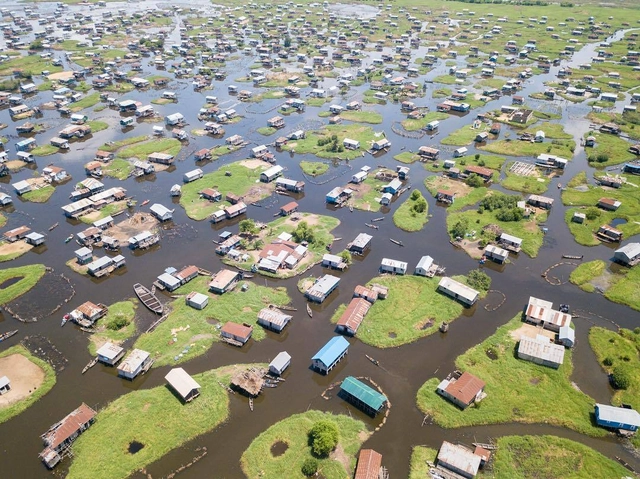
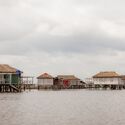
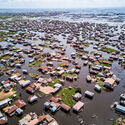
Located in the southern part of Benin-Republic, near the port city of Cotonou, is Ganvie; the largest floating village in Africa. It is situated in the middle of Lake Nokoué and is characterized by colorful wooden stilt houses arranged around artificial islands dating back to the 17th century.

This unique architecture was born from the history of the Tofinu tribe, who built it as a refuge from the slave trade. It has been sustained over time by their communal socio-ecological aquacultural systems and has now become a global tourist attraction for the country. The village was recognized as a world cultural heritage site by UNESCO in 1996, attracting up to 10,000 visitors annually. However, this influx of tourists has impacted the locals and their socio-ecological practices that sustain this water environment. Aquaculture has become increasingly challenging to maintain as the village struggles to retain its economic foundation. Additionally, traditional building practices have given way to modern ones, and the village faces ongoing environmental challenges. Nevertheless, the unique lifestyle of the locals around the water still offers many lessons for the design of prospective floating cities.

The Floating Village of Ganvie: A Model for Socio-Ecological Urbanism - Image 1 of 4The Floating Village of Ganvie: A Model for Socio-Ecological Urbanism - Image 2 of 4The Floating Village of Ganvie: A Model for Socio-Ecological Urbanism - Image 3 of 4The Floating Village of Ganvie: A Model for Socio-Ecological Urbanism - Image 4 of 4The Floating Village of Ganvie: A Model for Socio-Ecological Urbanism - More Images+ 5

Modern Aquatic Architecture: 5 Homes Around the World that Make the Case for Living on Water

Subscriber Access | 

Following findings from a study published in the Nature Ecology & Evolution journal this April, it has become public knowledge that the phenomenon dubbed the Great Pacific Garbage Patch (an area of 620,000 square miles between California and Hawaii) is serving as host to an entire coastal ecosystem. Marine wildlife is using the massive area compiled of human plastic waste as a floating habitat, and scientists are shocked at the number of species that have managed to establish life in this otherwise hostile environment.

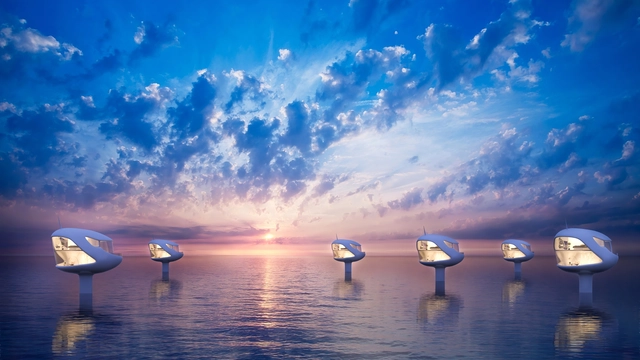
The news once again brings into sharp focus not only pressing issues of climate change and ocean pollution but also the question of environmentally-induced migration, even at a microbial level. Architecture is moving into more and more experimental realms when it comes to considering locations for the communities of our future – and rising sea levels have promoted water to the top of the list. But these deliberations are not as recent as one might think: floating cities have been around for centuries and individual homes on water are common in areas of Benin, Peru or Iraq, among others.
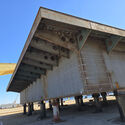
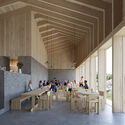
Modern Aquatic Architecture: 5 Homes Around the World that Make the Case for Living on Water - Image 1 of 4Modern Aquatic Architecture: 5 Homes Around the World that Make the Case for Living on Water - Image 2 of 4Modern Aquatic Architecture: 5 Homes Around the World that Make the Case for Living on Water - Image 3 of 4Modern Aquatic Architecture: 5 Homes Around the World that Make the Case for Living on Water - Image 4 of 4Modern Aquatic Architecture: 5 Homes Around the World that Make the Case for Living on Water - More Images+ 7

MAST Transforms a Former Quarry in Milan, Italy, into a Central Park and Floating Forest

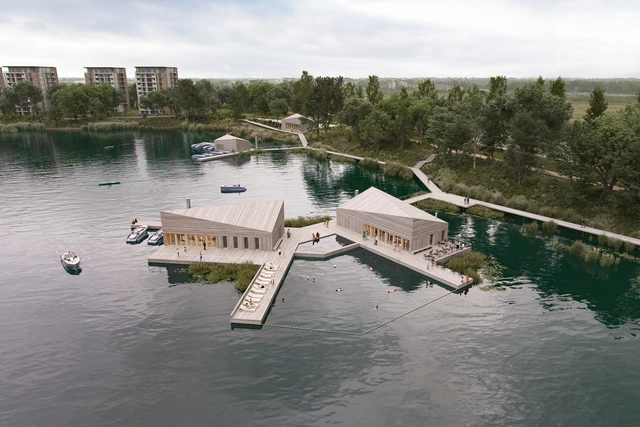
Danish Maritime Architecture Studio MAST, working together with the Municipality of Segrate, plans to transform a former sand quarry into a central park to reconnect the surrounding neighbourhoods and create a new destination for the residents of Milan, Italy. The abandoned quarry has left behind a unique landscape. The off]ice’s proposal includes a series of buildings along the lake’s perimeter linked by a public walkway and a cluster of islands in the centre of the lake. MAST is currently working with the Municipality of Segrate toward realising the project.

MAST Transforms a Former Quarry in Milan, Italy, into a Central Park and Floating Forest - Image 1 of 4MAST Transforms a Former Quarry in Milan, Italy, into a Central Park and Floating Forest - Image 2 of 4MAST Transforms a Former Quarry in Milan, Italy, into a Central Park and Floating Forest - Image 3 of 4MAST Transforms a Former Quarry in Milan, Italy, into a Central Park and Floating Forest - Image 4 of 4MAST Transforms a Former Quarry in Milan, Italy, into a Central Park and Floating Forest - More Images+ 4

The Challenges of Designing a Reusable, Floating Wooden Building

Subscriber Access | 

Everyone who has ever built anything—a model, a birdhouse, or small pieces of furniture—has a clear sense of the amount of things that can go wrong during the construction process. A screw that is impossible to tighten fully, a warped wooden board, an inattention or a miscalculation that can frustrate plans instantly. When we transport these small inconveniences to a building scale, with countless processes and many different people involved, we know how complex a work can become and how many things can get out of control, taking more and more time and requiring more and more resources to finish. And when we talk about a building that needs to float, be completely self-sufficient, and, after fulfilling its useful life, be completely reused—could you imagine the technical challenges of building something like this?