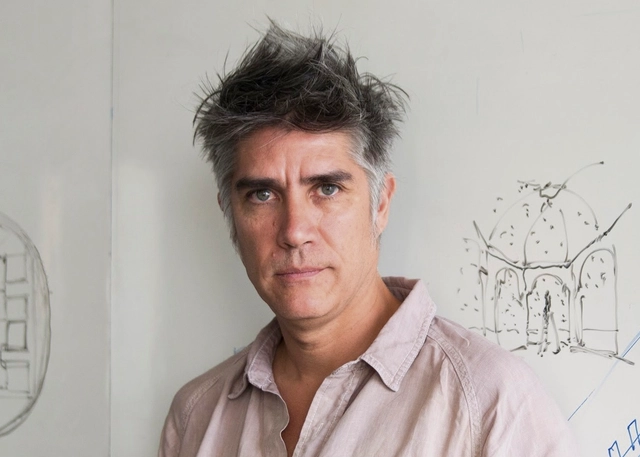
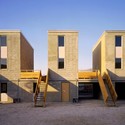
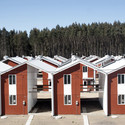
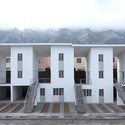
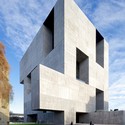
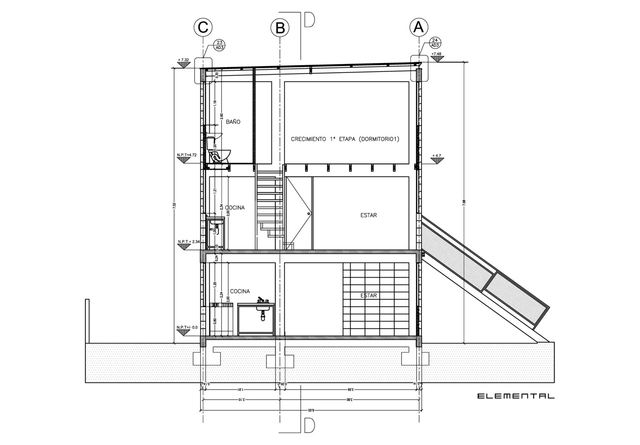
As part of a Tec de Monterrey initiative, this year the First Prize of the 213th Traditional Tec Draw is being held with a work by the Chilean architect who won the 2016 Pritzker Prize, Alejandro Aravena. Elemental House, is the second of the Houses of the 75th Anniversary of Sorteos Tec, which is celebrated this year.
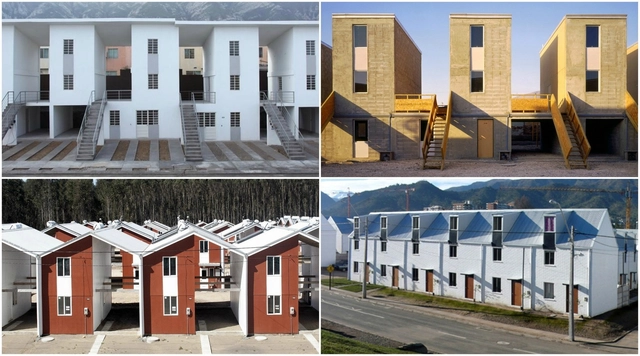
In 2016, Pritzker Prize winner Alejandro Aravena announced that his firm, ELEMENTAL, had released the rights to four of their social housing projects, and all documents would be uploaded to their website for public use. Aravena’s goal was to start a movement in which architects would work together to tackle the world’s challenges around housing shortages and affordability, especially with increased migration. The shared drawing sets and a description of the project’s principles provide architects with the necessary documentation for building a low-cost home, encouraging designers to do the same with their work, contractors to assist in building these homes, and governments to shift their thinking of how they can approach mass urbanization. Six years later, how has the concept of open-source architecture progressed, and how has it impacted the architectural profession ever since?
In New Mexico, irrigation channels that have been in continuous operation for three centuries replenish and nourish the wetlands of the American Southwest. These channels are known as Acequias – communally managed water systems built on democratic tradition. Members of the community own water rights, who then elect a three-person team to oversee the channels. In Cairo and Barcelona, Tahrir Square and Plaza de Catalunya have acted as important sites for voicing political dissatisfaction. The Tahrir Square protests of 2011, for instance, resulted in the eventual toppling of an almost 30-year-old government.
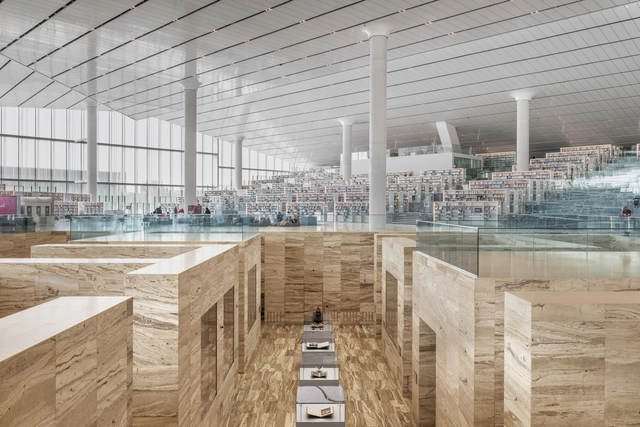
Following Qatar's ambitious museum-building project to further promote cultural institutes in the country, Her Excellency Sheikha Al Mayassa bint Hamad bin Khalifa Al Thani, Chairperson of Qatar Museums has announced that OMA, Herzog & de Meuron, and ELEMENTAL will be designing three new museums in Doha that explore the themes of Islamic art, contemporary art, and evolution of the automobile industry respectively.
Courtesy of Seoul Biennale of Architecture and Urbanism
Under the theme of "Crossroads: Building the Resilient City", the 2021 Seoul Biennale of Architecture and Urbanism explores cities through architecture, design, and urban planning by highlighting "the virtues and dialogue of crossroads of knowledge" through exhibitions, installations, and events, that tackle the city of tomorrow led by architect Dominique Perrault. With more than 100 participating cities across five continents and installations by world renowned architects and designers, the Seoul Biennale will take place at various locations across the city from September 16 until October 31st, 2021.
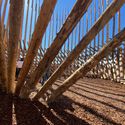
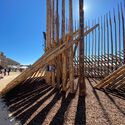
The 17th Venice Architecture Biennale invited architects to ponder the question “How will we live together”, eliciting a variety of answers, readings and interpretations. The International Exhibition unfolding in Giardini, the Arsenale and Forte Maghera presents 112 participants in the competition, coming from 46 countries, whose contributions are organized into five scales: Among Diverse Beings, As New Households, As Emerging Communities, Across Borders, and As One Planet. Answering “How will we live together as a community? “ is Chilean office ELEMENTAL and Archdaily met in Venice with Alejandro Aravena to discuss the idea behind the project KOYAÜWE, which creates a space that recovers the tradition of parleys, as a means to address the historical Chilean-Mapuche conflict.
Globalization and its pension for both virtual and physical connectivity has led to the linking of the world's economies, territories, and cultures and nowhere is this more evident than in the field of architecture.
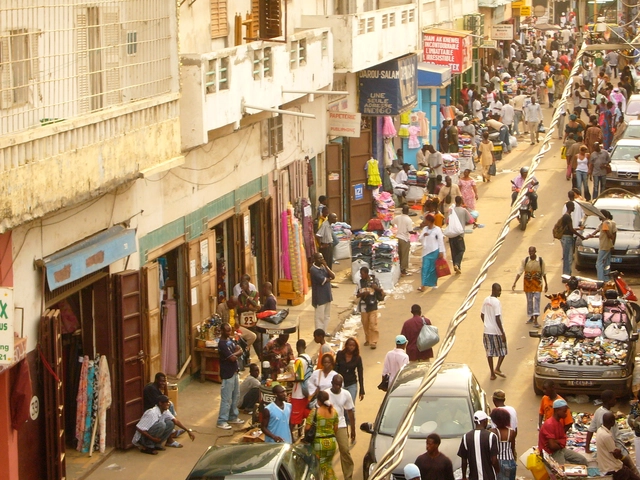
Launched by the Goethe Institut, Habiter Dakar (Living in Dakar) is a virtual exhibition tackling Housing in the Senegalese capital. The study was led by Nzinga Mboup and Caroline Geffriaud, both Architects based in Dakar. They noticed that the current housing offer in the city was particularly far off the needs of its inhabitants, whether on the cultural, societal or environmental level.
The architects analyzed the progression through which the Senegalese capital's Urban Landscape and Housing development had passed, starting from the traditional compound living type to today’s international housing models which seem to be disconnected from the daily reality of most of the city’s inhabitants. The study is concentrated on Housing which is an essential part of the formation and evolution of Dakar and suggests important theoretical and concrete reflections for the future development of the African metropolis.
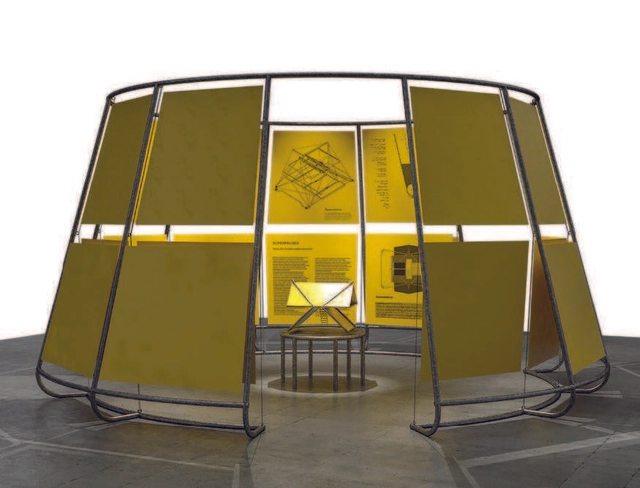
ELEMENTAL presents a sneak peek of its contribution to "How will we live together?" at the Venice Architecture Biennale 2021. Recently, violence has increased in the historical Mapuche-Chilean conflict, that is why the architectural office proposed to build places that recover the old tradition of parleys, spaces to meet in order to settle differences and discuss terms for an armistice.
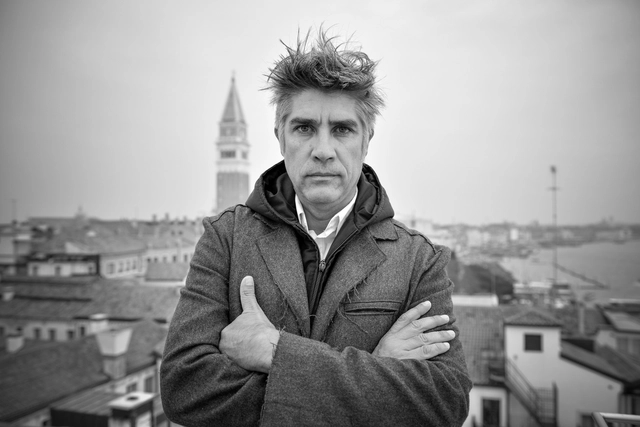
The Pritzker Prize, architecture’s highest honor, has just announced the appointment of Alejandro Aravena as Chair of the Pritzker Architecture Prize Jury as of March 2021, in time for the award’s 43rd year. Moreover, the announcement also designated Manuela Lucá-Dazio, the Executive Director of the Department of Visual Arts and Architecture of La Biennale di Venezia, as an advisor to the Prize and the next Executive Director.
In a new video released by Louisiana Channel, Pritzker Prize winner Alejandro Aravena shares his advice to young architects. The acclaimed Chilean architect directs those just starting out to be as nerdy, free, and rebellious as possible. By absorbing and understanding as much as you can and then using that knowledge to approach a project with freedom from convention or imagined constraints, Aravena states that it’s a cycle that continually feeds itself. Listening, and particularly listening with an open mind and without preconceptions, is Aravena’s second major piece of advice. “We are not consultants, we are authors...That means to take the risk of doing proposals,” Aravena continues, describing the practice of architecture.
Sergey Makhno Architects. Image Courtesy of ArchDaily
As Milan Design Week continues to set avant-garde design trends for the upcoming years, the 2019 Salone del Mobile’s lighting biennale, Euroluce, saw a nod to classic designs mixed with contemporary craftsmanship.
Two dominant trends at this year’s Euroluce are ‘rediscovering the past’ and a ‘reference to nature’. Vintage lighting pieces were rediscovered, not only to serve as valuable tokens of the past, but as foundation for new research. The reference to nature is evidently the most dominant design trend at this year’s lighting biennale, as designers found inspiration from natural, organic forms, and produced their pieces with eco-friendly material.
However, some of the most unique pieces at this year’s Euroluce were developed in collaboration with heavyweights in the world of design. Profound architects found their way into the 2019 Euroluce, bringing together their design skills with the engineering solutions of design companies.
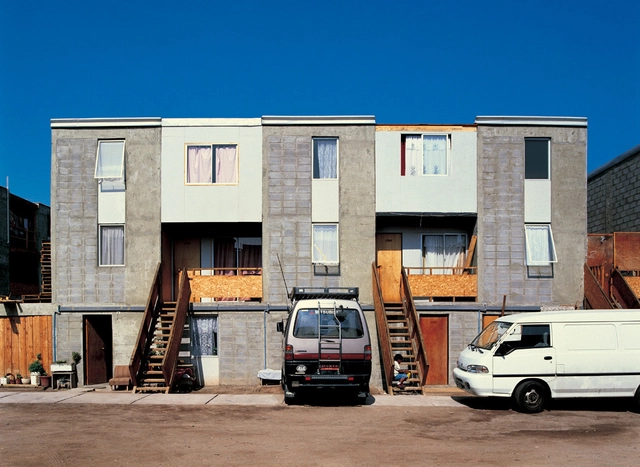
Good location, harmonious growth over time, concern for urban design, and the delivery of a structure that has "middle-class DNA" are the key points of the ABC of incremental housing, developed in detail by the Chilean architects ELEMENTAL. It's a question of ensuring a balance between "low-rise high-density, without overcrowding, with the possibility of expansion (from social housing to middle-class dwelling)."
Following this line of action, the office has released the drawings of four of the projects carried out under these principles, to serve as good examples of design which have already been implemented and proven in reality. However, despite making them available for free consultation and download, the architects emphasize that these designs must be adjusted to comply with the regulations and structural codes of each locality, using relevant building materials.
2016 Pritzker Prize winner Alejandro Aravena has been selected as the 2017 recipient of the Gothenburg Prize for Sustainable Development, an international award that recognizes an individual or group for “outstanding performance and achievements towards a sustainable future. Given annually since 2005, the prize has previously been awarded to environmentalists, scientists, engineers and political advocates – Aravena is the first architect to receive the honor.
MARK #53 surveys American low-income housing from coast to coast. Michael Webb provides the historical and cultural context for some recent success stories in affordable development and presents three buildings in California designed by Kevin Daly Architects, OJK Architects and Planners, and Rob Wellington Quigley.
Larger low-income developments in New York and Los Angeles, by David Adjaye and Michael Maltzan respectively, speak to overcoming the challenge of aesthetic innovation on a tight budget. In the southern and western states, we find the Rural Studio at Auburn University and Design Build Bluff at the Universities of Utah and Colorado tackling the low-income housing issue outside the city, realizing rural homes for less than €20,000 each.
Then, it’s time for dinner and a show. Tour MVRDV’s mixed-use Markthal, a food paradise for casual grazers and sit-down diners alike, before talking with Jan Versweyveld, who designed the scenography for a stage adaptation of The Fountainhead.
Aravena also emphasized the importance of community participation in his projects, saying: “We won’t ever solve the problem unless we use people’s own capacity to build.” Watch Aravena’s full talk above and take a peek at some of his key projects below.
Santiago-based architect Alejandro Aravena of Elemental discusses the sustainable reconstruction of Constitución in Chile following a devastating earthquake in 2010. Given just 100 days to design a resilient masterplan, capable of protecting the city against future natural disasters, Elemental implemented a natural solution: planting a forest that would protect the city from future floods. The design has since receive international recognition, most recently being awarded first prize in the Zumtobel Group Award’s Urban Development & Initiatives category.












.jpg?1623242708)



_0523.jpg?1554982545&format=webp&width=640&height=580)
_Malcolm_Reading_Consultants_and_Elemental.jpg?1494852304&format=webp&width=640&height=580)