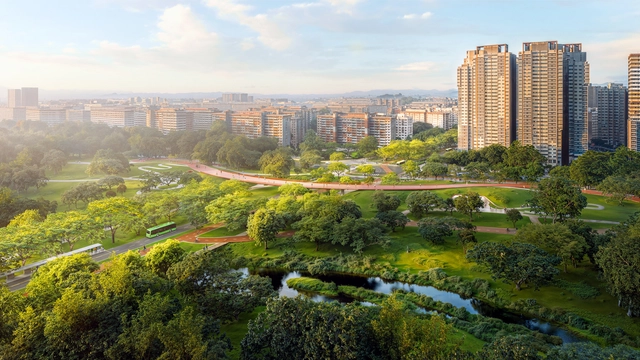
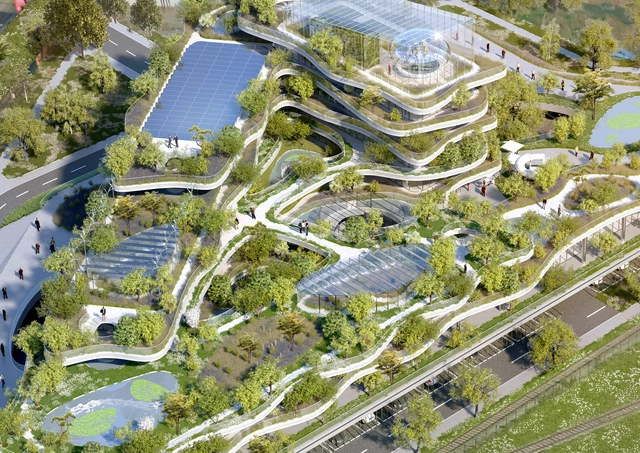
The team led by Henning Larsen, in collaboration with Ramboll, Cistri, Gehl, Participate in Design, and Camphora has won the commission for the master plan consultancy to design Singapore’s North-South Corridor’s surface streets. The project proposes an expansive urban transformation, aiming to integrate public transport, active mobility, community-focused spaces, and greenery along the 21.5km corridor. Local communities and stakeholders are also actively engaged in the design process through public engagement sessions. The initial master plan design is set to continue into 2026, over the next 18 months.
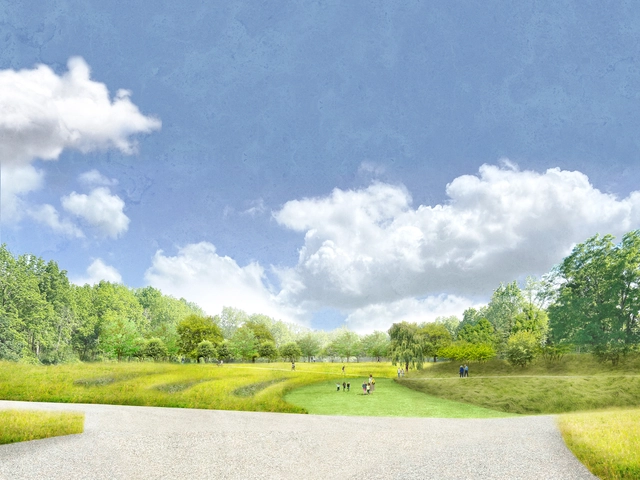
Rendering of Dia Beacon’s south landscape. Image Courtesy of Studio Zewde, 2024
Dia Art Foundation announced a major landscape project to reimagine the land at Dia Beacon, New York. Commissioned landscape architect Sara Zewde of Studio Zewde aims to go beyond the simple arrangement of attractive plants and integrate ideas of ecology, culture, and people into the design. Taking over the museum’s 32-acre campus, the project will create an expanded outdoor park, free to access for visitors and locals alike, complete with native meadows, sculptural landforms, and winding pathways. The project, which has been recently extended to also include the museum’s eight back acres, is expected to open to the public in 2025.
Urban environments are constantly evolving, with cities becoming the hubs of cultural diversity and economic life. In fact, the globe is speeding towards a future in which 70% of people will live in cities by 2050. Architects are at the core of this revolutionary movement, rethinking the nature of a city due to this urban surge. In response to this immense focus on newer and more diverse cities, architects and designers are leaning towards multifunctional and mixed-use projects. Attracting diverse crowds of people, mixed-use architecture explores the maximum potential of what a structure can serve.
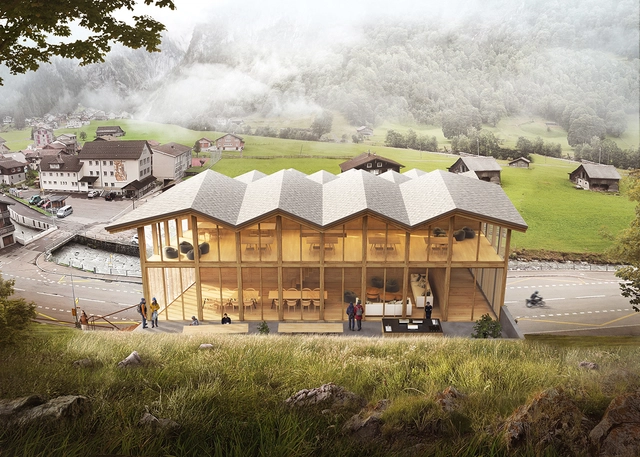
Highlighting architecture firms such as Atelier 333, MOR Architects, BXB studio Bogusław Barnaś, Beek Architects, Frey Architekten, and Kalbod Design Studio, among others, the forthcoming exploration unveils a collection of unbuilt architectural projects submitted to ArchDaily that champion multi-function in their design. From the innovative Plata.forma in Laqlouq to the maritime haven of The Ark and the Swiss House's harmonious alpine blend, these projects redefine urban living.
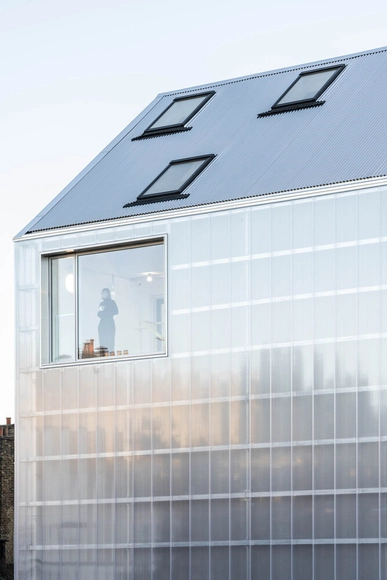
Bradbury Works / [Y/N] Studio. Image Courtesy of [Y/N] Studio
In the contemporary context, global warming has marked a turning point in the way we think about architecture. We are witnessing record temperatures on our planet and a challenging panorama in many large cities, characterized by heatwaves and, in some cases, more severe winters. These circumstances have triggered a cycle in which the demand for heating and cooling systems increases, which, in turn, translates into higher energy and operating costs for buildings.
Given this situation, it becomes imperative to design energy-efficient buildings to reduce both the environmental impact and the associated costs. One of the strategies to achieve this is to properly plan the facade, which, serving a function similar to the building's skin, can help reduce the energy required for heating and cooling. In this context, the polycarbonate panels developed by Rodeca contribute to the energy efficiency of buildings, in addition to their lightweight, slender construction, and translucent aesthetics.
https://www.archdaily.com/1009134/ecological-lightweight-and-slender-energy-efficient-architecture-with-translucent-polycarbonateEnrique Tovar
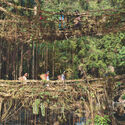
Today is the premiere of the first episode of a new documentary series that explores the projects of Al Borde. Titled "Building with Living Trees", this first instalment highlights the stories behind Casa Jardín (Garden House), a single-family home located in the suburban area of Quito, Ecuador.
Designed for an ecologist named José, the residence is developed into three small independent pavilions with hybrid structures that combine living trees with various construction systems. These structures utilize a vernacular technique of living fences that has been employed in the Andes since ancient times, showcasing a genuine pursuit of coexistence between architecture and nature.
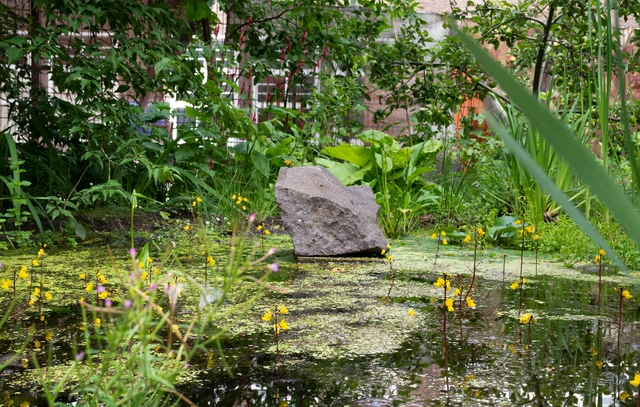
In an age where humanity's detrimental impact on the environment has become increasingly evident, the concept of rewilding is emerging as a powerful approach to conservation and ecological restoration. In line with growing attention on landscape architecture in recent years, the idea of removing human intervention from our natural surroundings in order to restore a stable equilibrium seems to offer a low-effort, ethereal way to right fundamental climate wrongs. But is a lack of meddling in nature really all there is to rewilding, and how does this relate to architecture and design? We look at key concepts, applications, and examples to find out.
We invite you to join re:arc institute—a new philanthropic organization supporting architectures of planetary well-being—in celebration of the opening of The Greenhouse: a UIA Pavilion in the form of a new, youth-focused environmental education space in Copenhagen.
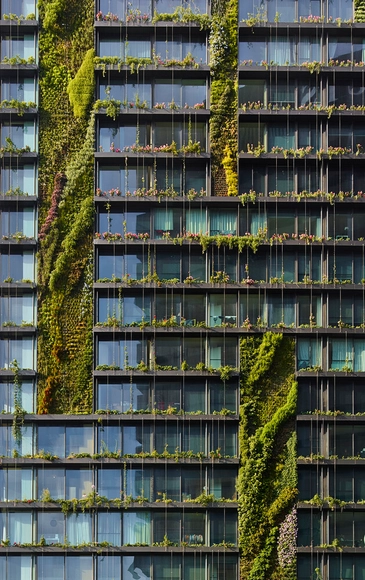
Rising over global cities, the modern skyscraper has long been a symbol of economic growth and environmental decline. For years, they have been reviled by environmentalists for being uncontrolled energy consumers. Malaysian architect Kenneth Yeang acknowledged the skyscraper as a necessityin modern cities and adopted a pragmatic approach to greening the otherwise unsustainable building typology. Yeang’s bioclimatic skyscrapers blend the economics of space with sustainability and improved living standards.
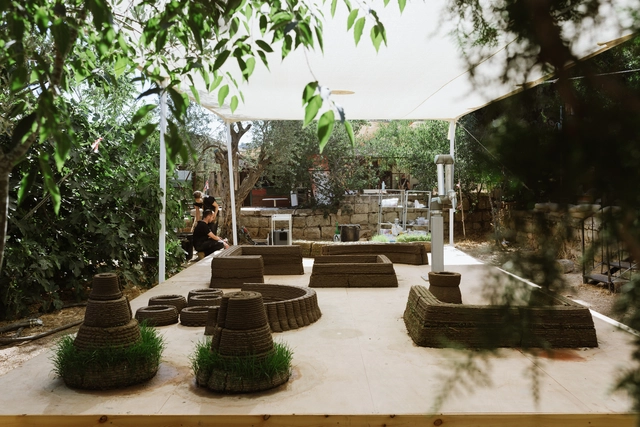
Can you imagine a world in which the built environment around us is 3D printed from living materials? That buildings will germinate, bloom, wither, produce new kinds of material, and eventually return back to the soil? To Grow a Building is a performative lab space that 3D prints - in real time - a live structure. The project presents a new approach to integrating flora into the design process, by developing a novel material for 3D printing, through which seeding is an inseparable part of the fabrication process. To Grow a Building is a gate into a future world in which there are people who build buildings, and there are people who grow them.
In the current scenario of a climate crisis, thinking about an architectural project without defining ecological guidelines has become practically unacceptable. One of the main emitters of carbon dioxide and other pollutants, the construction sector is increasingly looking for new ways and means that can make works more sustainable and, in some way, mitigate damage to the environment. Thinking about ecological materials can be one of the fundamental steps, but, which materials are these?
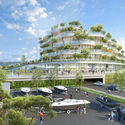
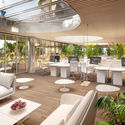
In a design proposal for Soprema’s new company headquarters in Strasbourg, France, Vincent Callebaut Architectures envisions an 8,225 square-meter ecological utopia. The building, called Semaphore, is described in the program as a “green flex office for nomad co-workers” and is dedicated to urban agriculture and employee well-being.
An eco-futuristic building, Semaphore is inspired by biomimicry and intended as a poetic landmark, as well as aiming to serve as a showcase for Soprema’s entire range of insulation, waterproofing, and greening products. The design is an ecological prototype of the green city of the future, working to achieve a symbiosis between humans and nature.
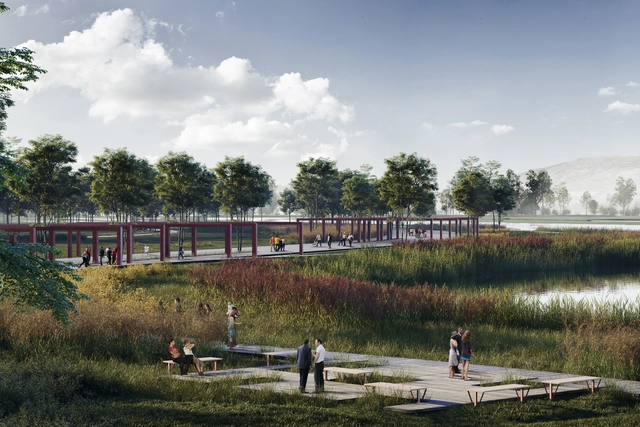
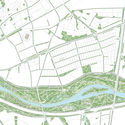
A combination of geographical features has seen the city of Sivas remain one of the greatest focal points of settlement and transit in the Greater Anatolia Region of Turkey. The region is divided in two by the Kızılırmak River, the longest river entirely within Turkey, and it has long been regarded as a barrier to unification. Due to access and safety concerns, Kızılırmak River has been separated from Sivas, perceived as something outside of the city perimeter. Now, advancements in flood mitigation have opened up the possibilities for the river to be re-integrated into the city fabric.
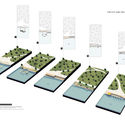
To investigate the possible role of the river in holistically reuniting the two halves of the area, the Sivas Municipality opened a competition to design a six million square meters of land adjacent to the waterfront. A scheme from a team comprised of ONZ Architects and Mdesign took an approach which equally considered the site in terms of its biological and cultural possibilities. Their design establishes the Kızılırmak River Corridor as an "ecological and recreational spine," managing the floodplain and integrating vital public program throughout.