1. ArchDaily
  2. Ecological Architecture

Ecological Architecture: The Latest Architecture and News

Guesthouses and Lessons in Generosity: Spaces of Hospitality in Rural America

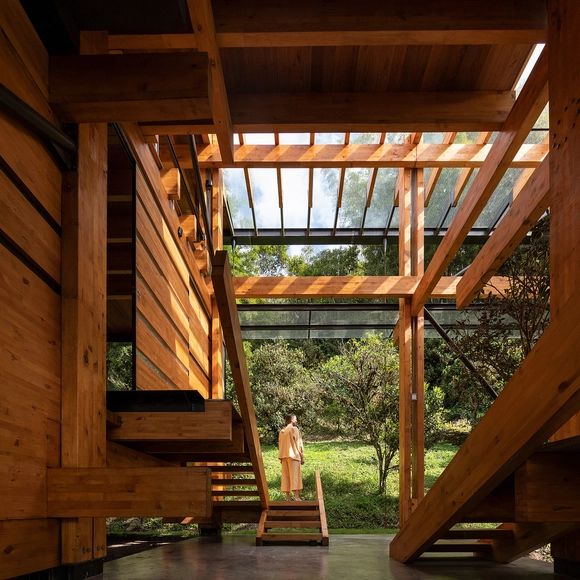
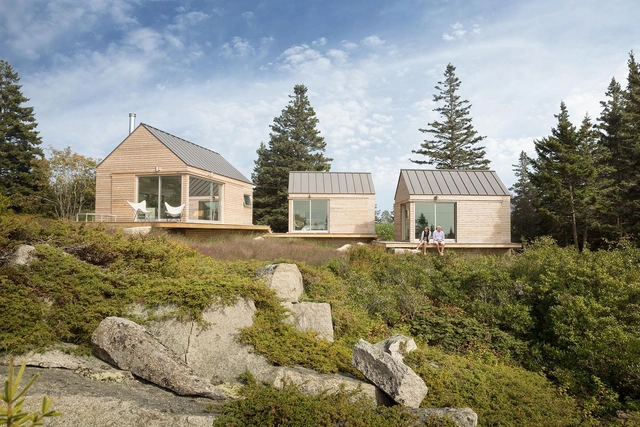
Spaces of hospitality are a mirror to how different cultures articulate generosity, care, belonging, and identity. In busy city settings, this is reflected in hotels, service systems, and curated amenities that directly shape the visitor experience. These spaces translate care into measurable forms, where success is correlated with efficiency, luxury, and brand identity.

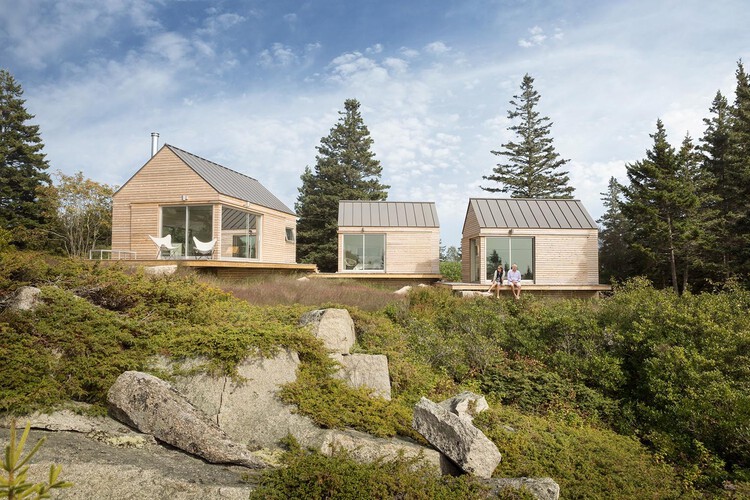
In rural America, hospitality operates with a different logic. In these environments, care is grounded in labor and community, while directly responding to the specific ecological and cultural geographies. Distance, limited infrastructure, and close social networks demand forms of architecture that are flexible and self-sufficient. Designs respond to shifting weather, local materials, and a culture where support often begins with neighbors. In this landscape, architectural thresholds of hospitality emerge in responsive, yet unexpected, ways.
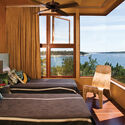
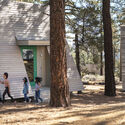
Guesthouses and Lessons in Generosity: Spaces of Hospitality in Rural America - Image 1 of 4Guesthouses and Lessons in Generosity: Spaces of Hospitality in Rural America - Image 3 of 4Guesthouses and Lessons in Generosity: Spaces of Hospitality in Rural America - Image 2 of 4Guesthouses and Lessons in Generosity: Spaces of Hospitality in Rural America - Image 4 of 4Guesthouses and Lessons in Generosity: Spaces of Hospitality in Rural America - More Images+ 39

Why Sit by the Dock of the Bay? Designing Thresholds to the Water

Subscriber Access | 

Boat docks and harbors are liminal spaces where the shore marks the meeting of land and water, and serve as a space for the convergence of culture, industry, and community. For those who work at sea, from commercial fishers to marine freight operators, the dock is a threshold between labor and rest, between oceanic uncertainty and terrestrial stability. For others, the dock serves as a gateway to recreation, sport, and adventure, accommodating everything from rowing clubs to family sailing trips. And for many who never board a vessel, the dock offers a powerful connection to the marine environment where one can pause, observe, and engage with the rhythmic tides.
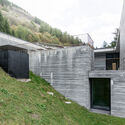
Why Sit by the Dock of the Bay? Designing Thresholds to the Water - Image 1 of 4Why Sit by the Dock of the Bay? Designing Thresholds to the Water - Image 2 of 4Why Sit by the Dock of the Bay? Designing Thresholds to the Water - Image 3 of 4Why Sit by the Dock of the Bay? Designing Thresholds to the Water - Image 4 of 4Why Sit by the Dock of the Bay? Designing Thresholds to the Water - More Images+ 48

Of a Feather: The Hidden Architecture of Bird Watching

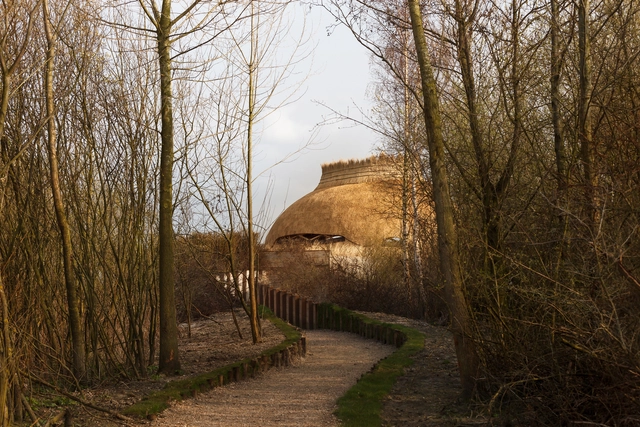
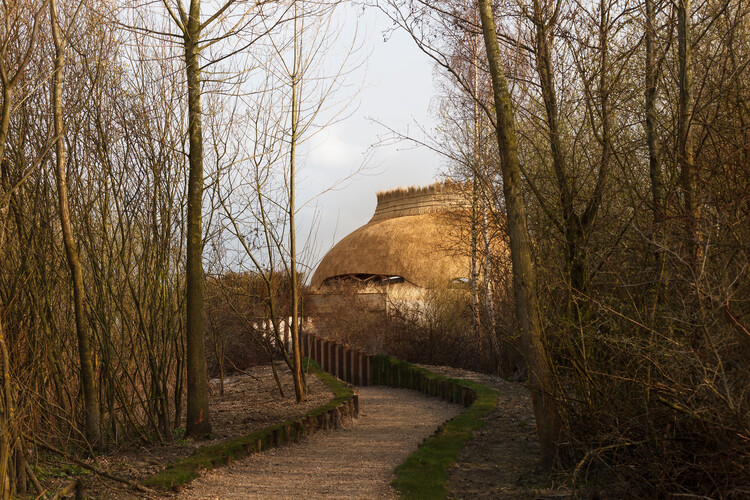
Around the world, a passionate community of bird watchers, from novice observers to seasoned ornithologists, is drawn to the subtle movements, distinct calls, and remarkable migrations of birds. This global fascination has led to the creation of thoughtfully designed spaces by architects and designers, enhancing the bird-watching experience while respecting the ecological landscapes in which they are placed.

Of a Feather: The Hidden Architecture of Bird Watching - Image 1 of 4Of a Feather: The Hidden Architecture of Bird Watching - Image 2 of 4Of a Feather: The Hidden Architecture of Bird Watching - Image 3 of 4Of a Feather: The Hidden Architecture of Bird Watching - Image 4 of 4Of a Feather: The Hidden Architecture of Bird Watching - More Images+ 25

Rhythms of the Soil: Architecture as Agroecology

At a time of ecological collapse and rising food insecurity, architecture is increasingly called upon to engage not only with landscapes but with the systems that sustain and regenerate them. Among these systems, agriculture occupies a paradoxical role, as both a leading contributor to environmental degradation and a potential agent of ecological recovery. Industrial farming has depleted soils, fragmented habitats, and driven climate change through monocultures, fossil-fuel dependency, and territorial standardization. In response, agroecology has emerged as a counter-practice rooted in biodiversity, local knowledge, and the cyclical rhythms of nature. It reframes farming not as extraction, but as regeneration of ecosystems, communities, and the soil itself.

This reframing opens space for architecture to contribute meaningfully. To align with agroecology is not only to support food production, but to engage with the broader cultural, spatial, and ecological conditions that sustain it. It implies designing with seasonal variation, supporting shared use, and building in ways that respect both the land and those who work it. Architecture becomes more than enclosure — it becomes a mediator of cultivation, reciprocity, and coexistence.

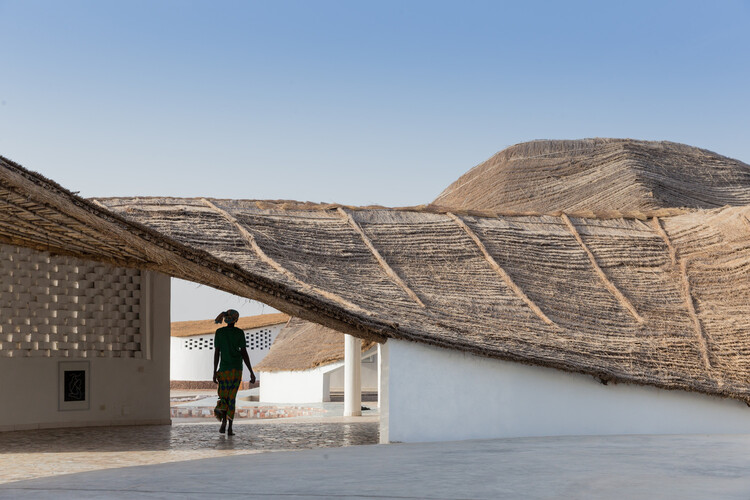
Rhythms of the Soil: Architecture as Agroecology - Image 1 of 4Rhythms of the Soil: Architecture as Agroecology - Image 2 of 4Rhythms of the Soil: Architecture as Agroecology - Image 3 of 4Rhythms of the Soil: Architecture as Agroecology - Image 4 of 4Rhythms of the Soil: Architecture as Agroecology - More Images+ 47

Co-Designing with Nature: How Communities Are Becoming Stewards of Urban Biodiversity

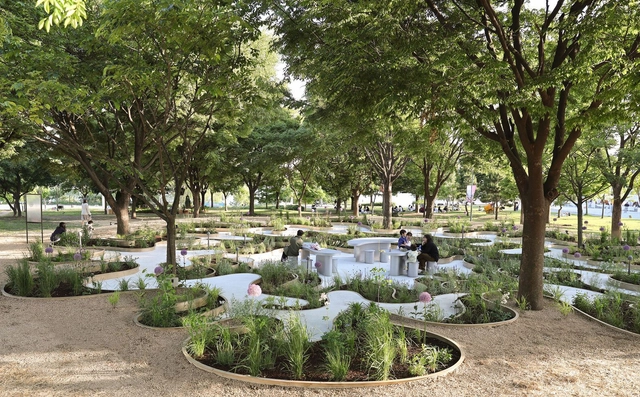
The concrete canyon of Melbourne's Degraves Street was once a stark service corridor in functional obscurity. Today, the narrow laneway now pulses with life beyond its famous café. Native grasses cascade from carefully positioned planters while small shrubs create cooling microclimates. Challenging traditional ecological design models, community-led approaches to biodiversity invite a reimagining of how architects, planners, and communities collaborate to develop biodiverse urban futures.

Co-Designing with Nature: How Communities Are Becoming Stewards of Urban Biodiversity - Image 1 of 4Co-Designing with Nature: How Communities Are Becoming Stewards of Urban Biodiversity - Image 2 of 4Co-Designing with Nature: How Communities Are Becoming Stewards of Urban Biodiversity - Image 3 of 4Co-Designing with Nature: How Communities Are Becoming Stewards of Urban Biodiversity - Image 4 of 4Co-Designing with Nature: How Communities Are Becoming Stewards of Urban Biodiversity - More Images+ 2

The Korean Hanok: Exploring Traditional Architecture's Environmental Principles

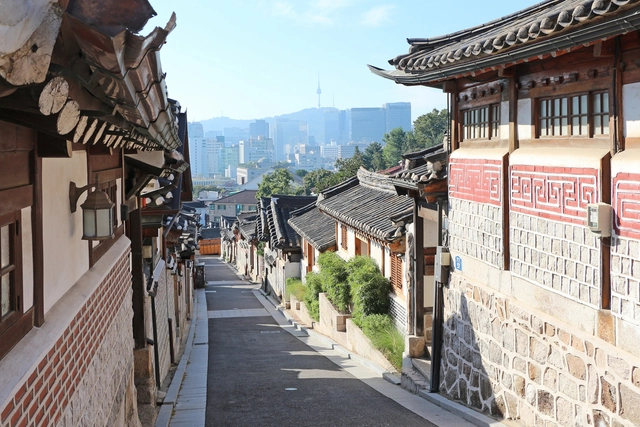
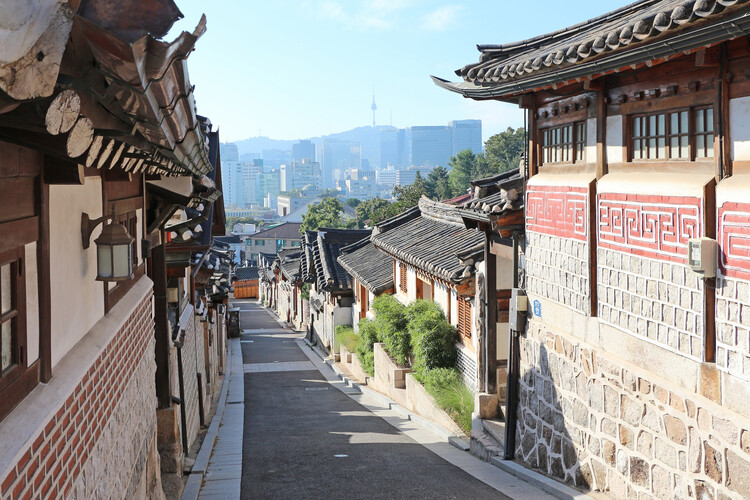
Vernacular architecture often utilizes locally sourced materials and construction practices honed over centuries. This approach raises questions about its potential relevance for contemporary design challenges. The prevalence of high-rise developments globally, often relying on sealed envelopes and mechanical climate control, contrasts with historical architectural practices. Traditionally, regional architectures emerged from local communities, fostering distinct cultural identities and integrating passive systems for ventilation, cooling, and heating, often utilizing natural elements. The Hanok, traditional Korean houses, serve as a case study. Beyond their current role in tourism, they are also an example of how vernacular knowledge can provide passive climate-response strategies that align with the current principles of creating environmentally friendly buildings.

The Korean Hanok: Exploring Traditional Architecture's Environmental Principles - Image 1 of 4The Korean Hanok: Exploring Traditional Architecture's Environmental Principles - Image 2 of 4The Korean Hanok: Exploring Traditional Architecture's Environmental Principles - Image 3 of 4The Korean Hanok: Exploring Traditional Architecture's Environmental Principles - Image 4 of 4The Korean Hanok: Exploring Traditional Architecture's Environmental Principles - More Images+ 4

Understanding Eco Brutalism: The Paradox of Structure, Sustainability, and Style

Subscriber Access | 

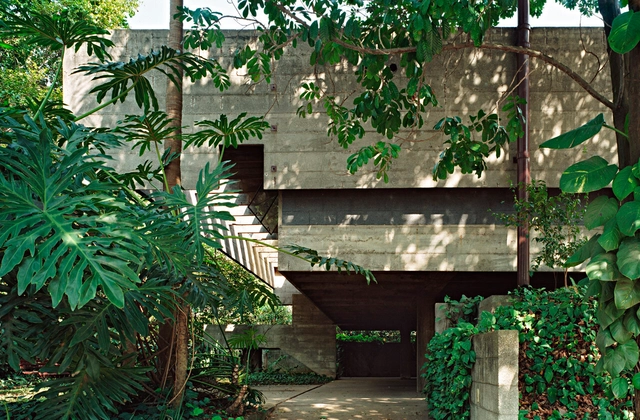
The built environment is expected to reduce carbon emissions, support biodiversity, and respond to changing ecological conditions, all while providing housing for communities and reflecting their cultural values. In this shifting landscape, a once-maligned architectural style emerges in a surprising new form. Brutalism, long associated with institutional gravitas and material austerity, is now being reframed through an ecological lens. This hybrid movement, known as eco-brutalism, combines the power of concrete with greenery and climate-sensitive design strategies. The result is a set of spaces that are visually arresting, conceptually complex, and increasingly popular among designers, urban planners, and the general public. This movement includes not only the direct lineage of 1960s Brutalism but also contemporary projects that, while not strictly Brutalist, share its material honesty, monumental scale, and use of expressive concrete forms.

Understanding Eco Brutalism:  The Paradox of Structure, Sustainability, and Style - Image 1 of 4Understanding Eco Brutalism:  The Paradox of Structure, Sustainability, and Style - Image 2 of 4Understanding Eco Brutalism:  The Paradox of Structure, Sustainability, and Style - Image 3 of 4Understanding Eco Brutalism:  The Paradox of Structure, Sustainability, and Style - Image 4 of 4Understanding Eco Brutalism:  The Paradox of Structure, Sustainability, and Style - More Images+ 39

The Architecture of Rewilding: Designing for Ecosystem Recovery

As climate instability reshapes design priorities, architecture is increasingly drawn into ecological debates not as a spectator but as a participant. Among the concepts gaining traction is rewilding, a practice rooted in the restoration of self-sustaining ecosystems through the reintroduction of biodiversity, the removal of barriers, and the rebalancing of human presence in the landscape. Though often associated with conservation biology, rewilding also opens up new spatial and architectural imaginaries — ones that challenge conventional notions of permanence, authorship, and use.

The Architecture of Rewilding: Designing for Ecosystem Recovery - Image 1 of 4The Architecture of Rewilding: Designing for Ecosystem Recovery - Image 2 of 4The Architecture of Rewilding: Designing for Ecosystem Recovery - Image 3 of 4The Architecture of Rewilding: Designing for Ecosystem Recovery - Image 4 of 4The Architecture of Rewilding: Designing for Ecosystem Recovery - More Images+ 68

Should Buildings Be Designed to Decay?

Subscriber Access | 

Buildings are physical, static, and permanent. To imagine them otherwise often requires some creative thinking. The industry has operated with this strong association between structures and permanence, unknowingly constraining perspectives on building life cycles. Innovations in building materials have opened up avenues for cirular design that challenge the long-held notion that buildings must endure indefinitely. Emerging approaches promote architecture that ebbs and flows with nature.

Should Buildings Be Designed to Decay? - Image 1 of 4Should Buildings Be Designed to Decay? - Image 2 of 4Should Buildings Be Designed to Decay? - Image 3 of 4Should Buildings Be Designed to Decay? - Image 4 of 4Should Buildings Be Designed to Decay? - More Images+ 1

Concéntrico 2025: The Politics of Urban Presence

Subscriber Access | 

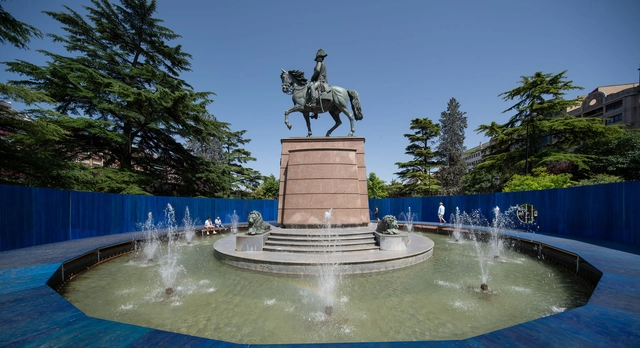
Every June, the Spanish city of Logroño transforms into a space of architectural dialogue, opening its streets, plazas, riverbanks, and traffic islands to temporary structures that redefine how cities are inhabited. For ten editions, Concéntrico has worked not as a specialized fair or an architecture biennale, but as a portable museum — a curatorial gesture that brings a dispersed collection of contemporary architecture into public space. Set in a city suspended between arid plains and distant mountains, far from the circuits of capital cities and cultural institutions, Concéntrico presents itself as a temporary promise. It's a reminder that even cities that are often overlooked can host architecture that is current, diverse, and speculative. In this sense, the festival is less about celebration and more about activation.

But beyond its curatorial logic, Concéntrico operates as a political structure. In the ancient sense of polis, it invites citizens, architects, and institutions to reassess what public space can be. The interventions offer speculative proposals for urban life that reveal what is missing, what is possible, and what should be questioned. A temporary pool over a fountain, a bathhouse in a roundabout, or a shared meal on a major avenue are not just spatial gestures — they are political statements, asking how urban infrastructure might be redirected from control to care, from efficiency to encounter. In that way, the festival becomes not just a reflection of the city, but an instrument for its transformation.

Concéntrico 2025: The Politics of Urban Presence - Image 1 of 4Concéntrico 2025: The Politics of Urban Presence - Image 2 of 4Concéntrico 2025: The Politics of Urban Presence - Image 3 of 4Concéntrico 2025: The Politics of Urban Presence - Image 4 of 4Concéntrico 2025: The Politics of Urban Presence - More Images+ 58

From Root to Roof: In Venice, ArchDaily Highlights Restorative Emerging Practices

In partnership with the European Cultural Center (ECC), ArchDaily has launched its inaugural exhibition as part of the seventh iteration of Time Space Existence, an architectural showcase occurring concurrently with the 19th Venice Architecture Biennale. Open from May 10 to November 23, 2025, in various locations throughout Venice, this edition centers on the theme of "Repair, Regenerate, and Reuse," promoting innovative and sustainable approaches in architecture. ArchDaily's contribution is located at Palazzo Mora, complementing other venues like Palazzo Bembo, Marinaressa Gardens, and Palazzo Michiel.

From Root to Roof: In Venice, ArchDaily Highlights Restorative Emerging Practices - Image 1 of 4From Root to Roof: In Venice, ArchDaily Highlights Restorative Emerging Practices - Image 2 of 4From Root to Roof: In Venice, ArchDaily Highlights Restorative Emerging Practices - Image 3 of 4From Root to Roof: In Venice, ArchDaily Highlights Restorative Emerging Practices - Image 4 of 4From Root to Roof: In Venice, ArchDaily Highlights Restorative Emerging Practices - More Images+ 17

Rethinking Sustainability Through Site-Specific Strategies

Subscriber Access | 

Sustainability in architecture is often framed as a universal challenge, leading to standardized solutions that prioritize efficiency over context. However, architecture is inherently tied to its environment — buildings interact with climate, topography, and cultural history in ways that demand specificity. Instead of relying on standardized sustainability checklists, how can architecture embrace site-specific solutions? This conversation is deeply connected to the concept of Genius Loci, or the spirit of a place, introduced by Christian Norberg-Schulz and embraced by architects advocating for designs that resonate with their surroundings. It suggests that architecture should not be imposed upon a site but rather emerge from it, informed by its materials, climate, and cultural significance. This philosophy challenges the widespread application of generic sustainable technologies, instead proposing that sustainability must be inherently tied to the location in which it operates.

Rethinking Sustainability Through Site-Specific Strategies - Image 1 of 4Rethinking Sustainability Through Site-Specific Strategies - Image 2 of 4Rethinking Sustainability Through Site-Specific Strategies - Image 3 of 4Rethinking Sustainability Through Site-Specific Strategies - Image 4 of 4Rethinking Sustainability Through Site-Specific Strategies - More Images+ 81

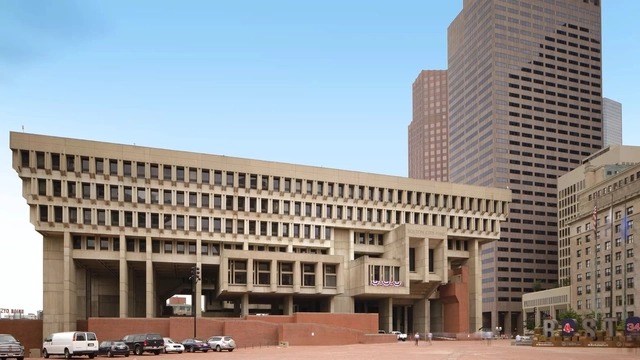
Reconsidering Brutalist Renovations: A Transformation of the Boston City Hall for the Public

Boston City Hall, one of the most debated examples of Brutalist architecture in the United States, has significantly transformed since its conception. Designed by Kallmann, McKinnell, and Knowles and completed in 1968, the fortress-like concrete exterior and geometric austerity have long divided public opinion. Critics, including a former mayor, called for its demolition for decades arguing that its imposing design was inhospitable, inefficient, and most importantly, not beautiful. However, rather than tearing it down, Boston has chosen to renovate and revitalize the structure, demonstrating that contested Brutalist architectural styles can be adapted for a more sustainable future.

Reconsidering Brutalist Renovations: A Transformation of the Boston City Hall for the Public - Image 1 of 4Reconsidering Brutalist Renovations: A Transformation of the Boston City Hall for the Public - Image 2 of 4Reconsidering Brutalist Renovations: A Transformation of the Boston City Hall for the Public - Image 3 of 4Reconsidering Brutalist Renovations: A Transformation of the Boston City Hall for the Public - Image 5 of 4Reconsidering Brutalist Renovations: A Transformation of the Boston City Hall for the Public - More Images+ 4

Ecovillage Design: Models for Regenerative Urban Neighborhoods

Subscriber Access | 

Social fragmentation and economic divides have fractured the fabric of urban environments. In this context, ecovillages emerge as influential remedies to societal and ecological crises, microcosms where sustainable living, social cohesion, and economic resilience drive urban growth. Rooted in environmental stewardship and circular systems, ecovillages offer a scalable model to inspire the development of regenerative urban neighborhoods across the world. Traditional urban and suburban development has led to sprawl and social isolation which have had detrimental effects on community cohesion and the environment. Alongside this phenomenon, cities have become inhumane, characterized by anonymity, unaffordable housing, traffic congestion, and pollution. The lack of access to nature solidifies these issues, leaving many urban dwellers disconnected from elements that promote well-being and a sense of belonging.

Ecovillage Design: Models for Regenerative Urban Neighborhoods - Image 1 of 4Ecovillage Design: Models for Regenerative Urban Neighborhoods - Image 2 of 4Ecovillage Design: Models for Regenerative Urban Neighborhoods - Image 3 of 4Ecovillage Design: Models for Regenerative Urban Neighborhoods - Image 4 of 4Ecovillage Design: Models for Regenerative Urban Neighborhoods - More Images+ 2

The Obel Award Announces the Theme for Its 2025 Edition

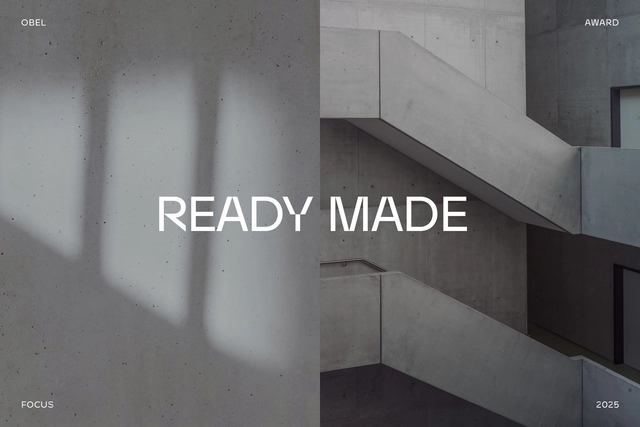
The OBEL Award is an international prize for architectural practice, presented annually by the Henrik Frode Obel Foundation. The jury, composed of representatives from firms such as Snøhetta and MVRDV, alongside professionals from other disciplines, selects a theme to guide the choice of winners for each edition. The goal is to steer proposals toward solutions that foster dialogue and generate knowledge on emerging issues, aiming to promote architecture in service of social and ecological development worldwide. For its seventh edition, the 2025 call focus is Ready Made, targeting projects that place reuse and repurposing at the core of architecture for the common good.

The Obel Award Announces the Theme for Its 2025 Edition - Image 1 of 4The Obel Award Announces the Theme for Its 2025 Edition - Image 2 of 4The Obel Award Announces the Theme for Its 2025 Edition - Image 3 of 4The Obel Award Announces the Theme for Its 2025 Edition - Image 4 of 4The Obel Award Announces the Theme for Its 2025 Edition - More Images+ 4

Cultivating Green Apartments: A Guide to Integrating Nature in Small Urban Spaces

Subscriber Access | 

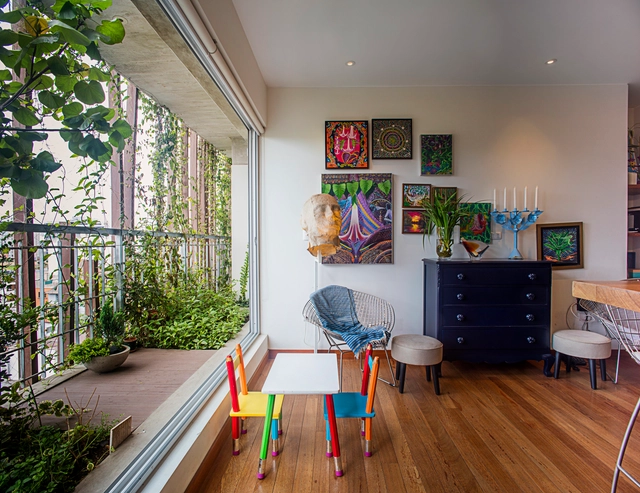
Urban living has become synonymous with limited space and creativity for compact apartments. As cities become more dominated by concrete and steel, there is an exciting, yet unsurprising, rise in interest in embracing the green thumb, even within the constraints of a dense urban environment. This interest is not purely to tend aesthetic tastes, as studies consistently show that exposure to nature reduces stress, improves focus, and enhances overall well-being. However, in dense urban environments, the challenge lies in finding innovative ways to make this vision a reality for apartments where every inch matters.

Cultivating Green Apartments: A Guide to Integrating Nature in Small Urban Spaces - Image 1 of 4Cultivating Green Apartments: A Guide to Integrating Nature in Small Urban Spaces - Image 2 of 4Cultivating Green Apartments: A Guide to Integrating Nature in Small Urban Spaces - Image 3 of 4Cultivating Green Apartments: A Guide to Integrating Nature in Small Urban Spaces - Image 4 of 4Cultivating Green Apartments: A Guide to Integrating Nature in Small Urban Spaces - More Images+ 4

Redefining Urban Domesticity: How SO-IL Transforms the Concept of Home

Subscriber Access | 

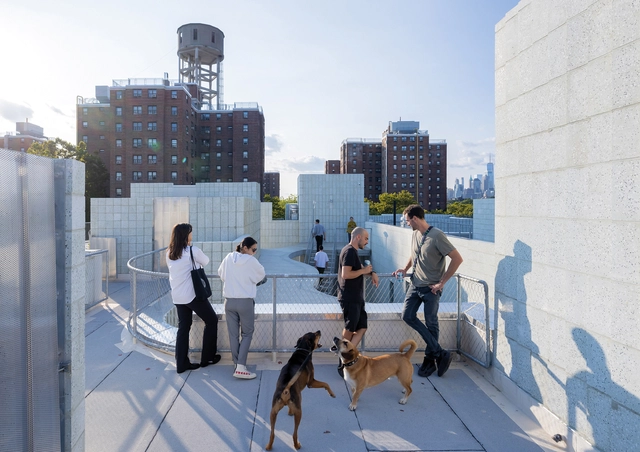
SO-IL (Solid Objectives – Idenburg Liu) is an architectural design firm based in Brooklyn, New York, founded in 2008 by Florian Idenburg and Jing Liu. Known for an architecture deeply engaged with social, cultural, and environmental contexts, the studio focuses on exploring innovative materials, creating fluid spatial experiences, and prioritizing ecological sustainability. SO-IL's work spans various scales and program types, reflecting their versatile approach to design. In 2024, their housing project 450 Warren in Brooklyn was selected as ArchDaily's Building of the Year by the audience in the housing category.

In their latest book, In Depth: Urban Domesticities Today, SO-IL explores the evolving concept of home in contemporary urban contexts, transforming it "from a source of vulnerability into a tool for empowerment." The book redefines domesticity as an active and shared experience and examines how architects can address pressing urban challenges such as affordability, density, and sustainability. SO-IL's work advocates for flexible, resilient housing that fosters community while integrating ecological and social dimensions. ArchDaily spoke with the architects about the innovative solutions and ideas presented in the book, delving into how their projects challenge conventional systems and envision a future where architecture is a tool for empowerment.

Redefining Urban Domesticity: How SO-IL Transforms the Concept of Home - Image 1 of 4Redefining Urban Domesticity: How SO-IL Transforms the Concept of Home - Image 2 of 4Redefining Urban Domesticity: How SO-IL Transforms the Concept of Home - Image 3 of 4Redefining Urban Domesticity: How SO-IL Transforms the Concept of Home - Image 4 of 4Redefining Urban Domesticity: How SO-IL Transforms the Concept of Home - More Images+ 13

Bauhaus Earth Announces 2025 Experimental Fellows to Investigate Earth's Role in Contemporary Design

Maria Lisogorskaya and Kaye Song from the London-based collective Assemble, along with Lviv-based architects Anna Pomazanna and Mykhailo Shevchenko, have been announced as the 2025 Experimental Fellows at Bauhaus Earth. Selected from 120 submissions, their projects are set to explore earth as a material in contemporary architecture. The annual Bauhaus Earth Fellowship program was established in 2022 by architect Prof. Regine Leibinger. It aims to support diverse projects that explore new modes of practice across various geographies, that can contribute to ecological and social resilience. Fellows receive financial support, mentorship, and access to a network encouraging collaboration among architects, manufacturers, and local stakeholders.

Bauhaus Earth Announces 2025 Experimental Fellows to Investigate Earth's Role in Contemporary Design - Image 1 of 4Bauhaus Earth Announces 2025 Experimental Fellows to Investigate Earth's Role in Contemporary Design - Image 2 of 4Bauhaus Earth Announces 2025 Experimental Fellows to Investigate Earth's Role in Contemporary Design - Image 3 of 4Bauhaus Earth Announces 2025 Experimental Fellows to Investigate Earth's Role in Contemporary Design - Image 4 of 4Bauhaus Earth Announces 2025 Experimental Fellows to Investigate Earth's Role in Contemporary Design - More Images+ 16