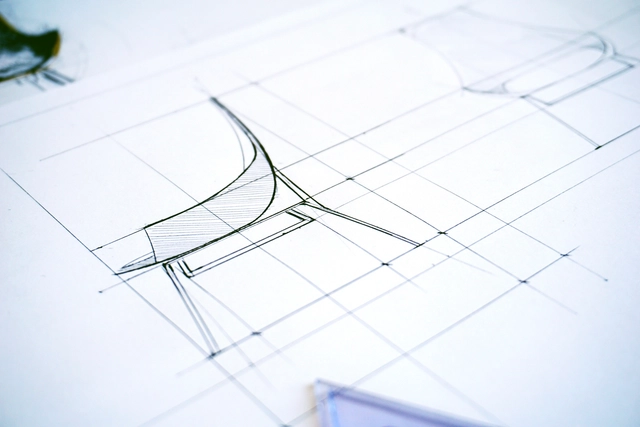
The black sheep of all architectural drawing has got to be technical drawing. Everybody loves drawing perspectives, sketches —you know the creative, interesting and expressive part of architectural drawing. But what about the aspects of drawing: the technical, logical, rational part? It might not be as sexy as freehand drawing, but it is just as important.
If you don’t know proper technical drawing skills it will show in your work; your perspectives will look ‘less smart’ and badly proportioned and your designs will lack consistency. So in order to make technical drawings look less cold and more approachable, I’m sharing the best 20 technical drawing tips I’ve come across.
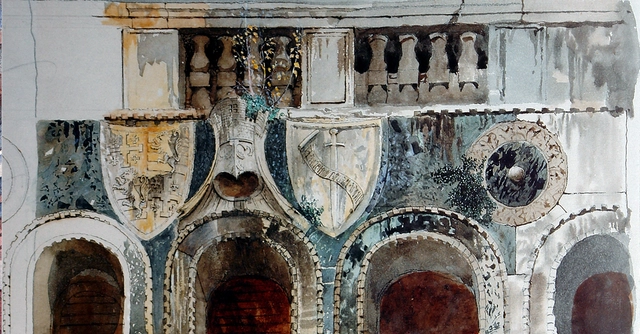
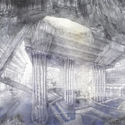
Ubaldo Occhinegro (commended, Hand-Drawn category): Utopia. Image Courtesy of Sir John Soane's Museum
The Architecture Drawing Prize received 166 entries from 26 different countries, offering a fascinating cross-section of approaches to and uses of architectural drawing today: from highly sophisticated design drawings to lyrical hand-drawn sketches, and everything in between. The exhibition retains a sense of this variety so along with the three category winners, it was decided to showcase the ten entries that received commendations from the judges.
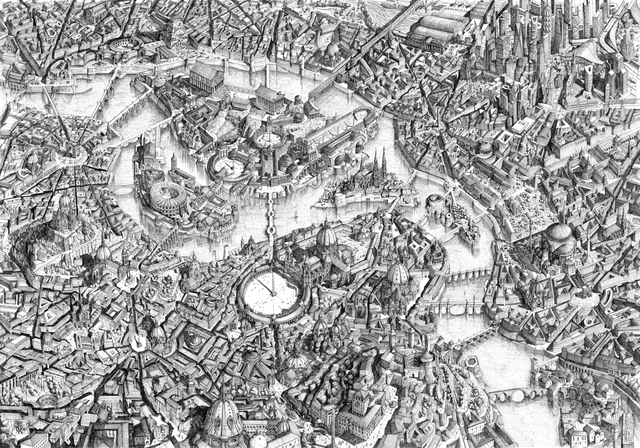
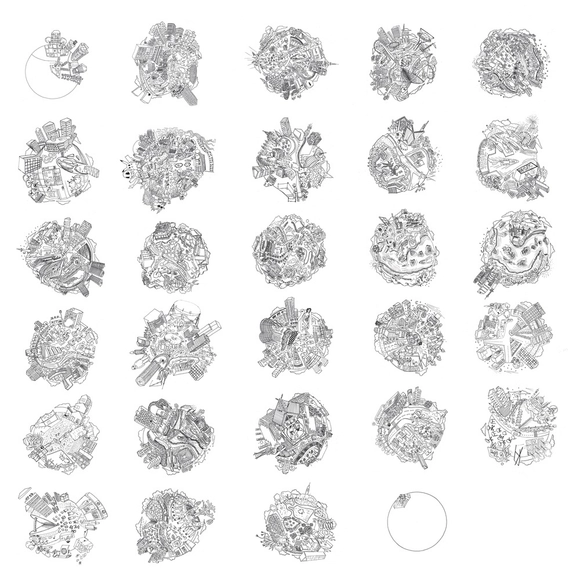
Trained in Architecture, Urban Design, and Theory, Alina Sonea illustrates the complex and often paradoxical nature of the cities we inhabit. The Feldkirch-based artist and architect has, since 2013, completed a series of detailed illustrations that employ graphic yet delicate black lines to render dense images of fantastical metropolises.
Update:The deadlines for this opportunity have been extended
Call For tutors : Extended till January 28
Call for participants : Ends on February 28
MEDS workshop “Meetings of Design Students” is an international workshop that takes part each summer in a different country, focusing on various issues, themes, topics and settings that will help any designer expand their expertise. It is a chance to get in touch with diverse approaches to design, different building techniques, traditions and skills. MEDS workshop is both practical and educational because it focuses not only on creative theoretical designs, but actually compels participants to execute these designs during the 2-week span of the workshop. You can apply to MEDS as a tutor or as a participant.
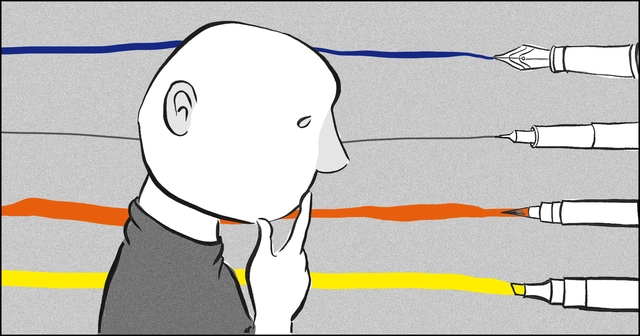
Architects are people of great taste, who enjoy the finer things in life – especially when it comes to pens. The saying goes: ‘don’t judge a book by its cover’, but inevitably we find ourselves judging an architect by their choice of pen. It’s easy to do when your colleague decides to grab the nearest biro to sketch a quick diagram, leaving you to squirm as you sit and watch it indent the paper.
Pens are powerful tools for architects, that harness our thoughts and ideas into potential three-dimensional structures. In the age of the digital world, pens have become sacred, grounding us back to the simple pleasure of drawing to begin the creative process. After years of trying and testing all the different writing instruments out there, we eventually find the one which can say a lot more about ourselves than you may think.
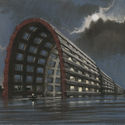
1st prize - The One Day Unit / Charles Weinberg and Shai Ben Ami (Click Image for Full Size). Image Courtesy of Arkitektskolan Aarhus
The Aarhus School of Architecture has revealed the winners of their drawing competition, Drawing of the Year 2017, which asked architecture students around the globe to submit their best digital, hand-drawn or hybrid drawings under the theme of “Everyday Utopia.”
More than 230 submissions were evaluated by an esteemed jury of architects, which consisted of Moon Hoon, founder of Moon Hoon Architects; Trine Berthold, associate partner at schmidt hammer lassen; and Torben Nielsen, professor at Aarhus School of Architecture.
The jury was impressed by the “overwhelming burst of creativity and clever concepts demonstrated in the drawings,” calling out the high level of craft and experimental approaches to drawing.
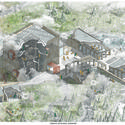
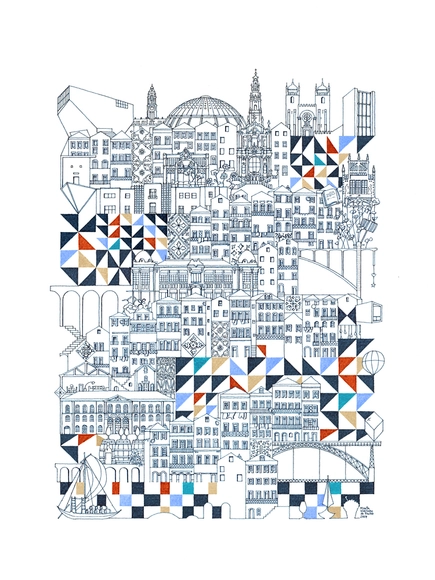
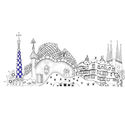
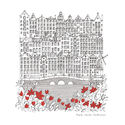
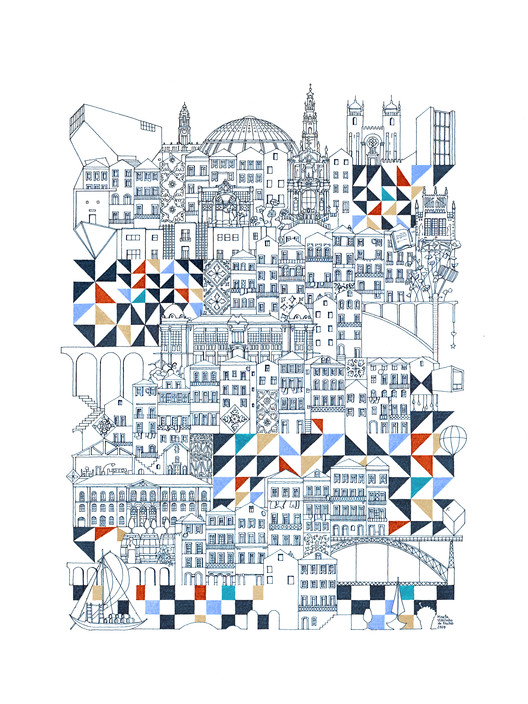
Architect and illustrator, Marta Vilarinho de Freitas has yet again enchanted us with her intricate drawings of cities in thin-line-pen on paper. The Portuguese architect has been exercising her passion in drawing through a series of drawings entitled, Cities and Memory - the Architecture and the City.
Fascinated by cities, Marta’s illustrations express her connection with architecture while still capturing the romantic and qualitative aspects of each city, its patterns, colors, atmosphere, and light.
Marta Vilarinho de Freitas combines fantasy with detailed accuracy in her compositions of stacked building facades, roof pitches, plans and sections along with elements distinct to the city depicted such as Dutch windmills, boats, books, and instruments.The process of creating these drawings is cyclical in that they continue to inform Marta of the spirit of each city as she draws each art piece.
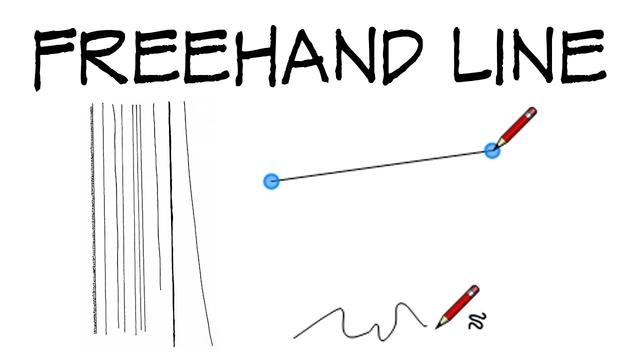
The Modmin has been a go-to for quality videos and tutorials on architectural drawing and sketching. Their newest video tackles a drawing fundamental: the ability to draw a straight line. For many seasoned architects, this is a skill that they mastered long ago. But if you are just starting out, or if you've been hiding behind your computer's ability to consistently draw straight lines, then this hack is for you.
Referring to the first tip in Matthew Frederick's 101 Things I Learned in Architecture School, Themodmin's Umar shares an exercise he was taught for achieving straight lines.
https://www.archdaily.com/885006/drawing-hack-how-to-draw-a-straight-lineAD Editorial Team
The sketchbook: it is probably the first thing you buy in architecture school, and, the thing you hold on to most dearly. It is one of the most important tools to help document, problem-solve, and archive your journey as an architect. The sketchbook is the physical extension of one’s architectural mind, and the way one organizes it says a lot about the holder. What does your sketchbook say about you? Read on to find out:
DailyDose—one of ArchDaily'sfive favorite daily newsletters of 2017—have published a collection of drawings submitted as part of an open competition to sketch a composition of just five lines. To celebrate the milestone of their 1000th newsletter which has, over the course of the last five years, delivered 34,297 collected images to inboxes around the globe, one work (by Roberto de Oliveira Castro) will be made available as a limited edition framed artwork by Desplans.
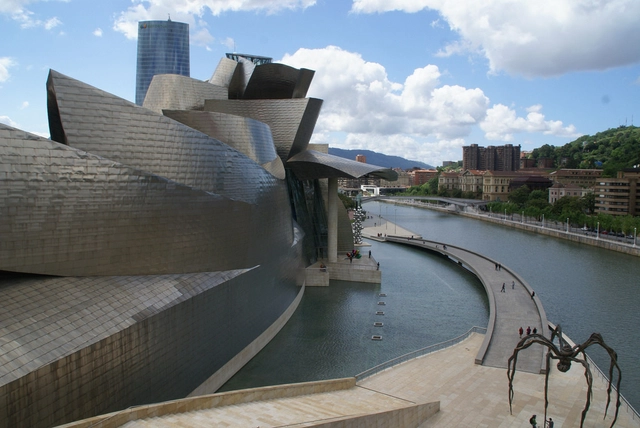
On October 15th four languages, three countries, and three astounding architectural projects will be brought together through a series of events and workshops to celebrate the 20th anniversary of the Guggenheim Museum Bilbao. The Solomon R. Guggenheim Foundation seeks to commemorate the event with a full day program of activities entitled Drawing the Guggenheim. Visitors can explore and sketch the museums during a variety of public drawing exercises, architectural tours, films and family events at each of the Guggenheim locations.
This short article, written by the author and critic Jonathan Glancey, coincides with the launch of the inaugural Architecture Drawing Prize – a competition curated by the World Architecture Festival, the Sir John Soane's Museum, and Make. The deadline for the award has been extended to September 25, 2017, and successful entries will be exhibited in both London and Berlin.
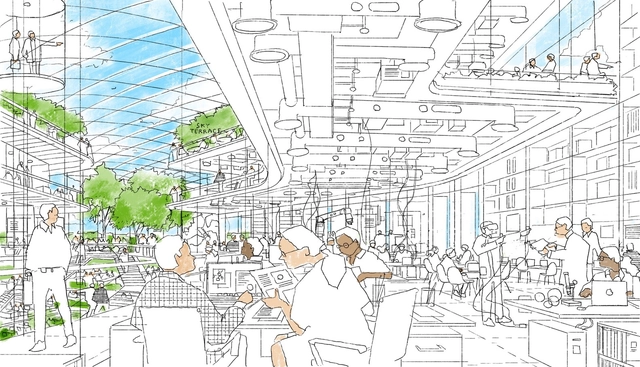
For architects, says Narinder Sagoo, Head of Design Communications at Foster + Partners, drawings are about story telling. They are also a highly effective way of raising questions about design projects. Although the history of architecture—certainly since the Italian Renaissance—has been mapped by compelling drawings asserting the primacy, and reflecting the glory, of fully resolved buildings, there is another strain of visualisation that has allowed architects to think through projects free of preconceptions.
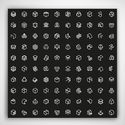
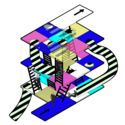
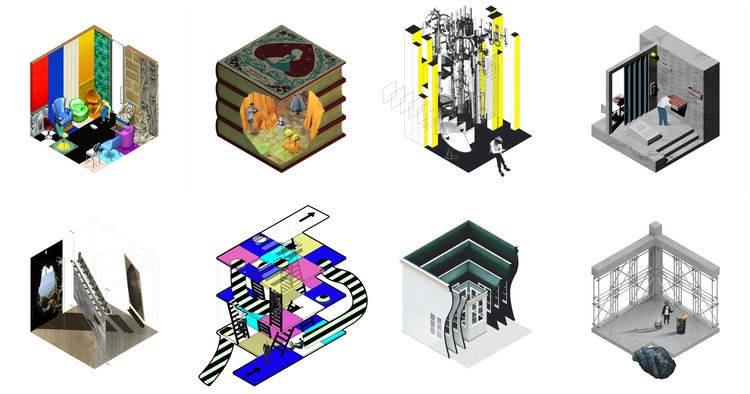
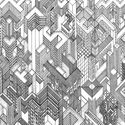
Former architect Yannick Martin, who has previously confined architecture's most famous houses to a cube, is a graphic designer who explores line and geometric shapes to examine the language of the diagram. By fragmenting simple shapes, Martin seeks to offer new ways of looking at an icon so commonplace and ubiquitously used that, for most, the sheer potential and variety of its application can be overlooked.
This short essay, written by the author and critic Jonathan Glancey, coincides with the launch of the inaugural Architecture Drawing Prize – a competition curated by the World Architecture Festival, the Sir John Soane's Museum, and Make. The deadline for the award is the 18th September 2017 and successful entries will be exhibited in both London and Berlin.
For John Ruskin, Venetian Gothic design in the guise of polychromatic gasworks in Brentford, ornate factory chimneys in Croydon, glistering gin palaces in Bloomsbury and even the well-meaning Reform Club in Manchester was nothing short of anathema. Even at their risible best, these flamboyant Victorian buildings were idle travesties of the influential 19th Century critic’s beloved Ca’ d’Oro and Palazzo Ducale adorning the Grand Canal.
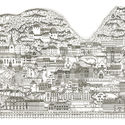
London-based artist, illustrator, and animator Patrick Vale, known for his panoramic drawings of cities, completed another complex mural at design company IDEO’s studio in San Francisco, California. Vale’s time-lapse videos such as “Empire State of Pen” and his drawing of Manhattan, show the process of creating his detailed illustrations that take from several hours to months to complete. Vale spent 13 days at the downtown San Francisco office to complete the drawing.
From the first moment you enter architectural education, tutors tell you repeatedly and often passionately that the learning never stops; this is how it is going to be from now on. Student platforms are an example of our efforts to share our discoveries, many emerging out of the tension between academia and independent learning. From the post-digital advocate KoozA/rch to university publications like The Bartlett's Lobby, AA files, or Yale School of Architecture’s Perspecta, research and media platforms represent the creative consciousness of our generation today. Volume64 is a recent newcomer born out of this tension, and behind it is a team myself and my colleagues have founded and run. Through ArchDaily, we’re sharing a little bit of our story so far.
Through his sketches, Renzo Piano communicates the true intentions of his projects, pointing to the specific concepts that will become the protagonists of his works, including concern for the human scale and comfort, solar studies, and dialogue with the immediate environment. We compile here ten projects by the architect accompanied by their sketches, through which it is possible to see how the 1998 Pritzker Prize winner takes his designs from paper to reality.












.gif)