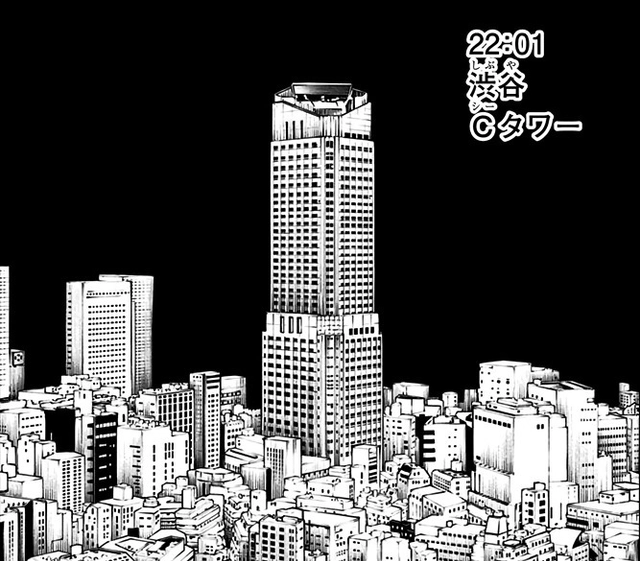
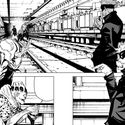
Manga is an umbrella term for a wide variety of comic books and graphic novels originally produced and published in Japan, and unlike western comic books that we may be more familiar with seeing printed in full color, are primarily published in black and white. Manga is the Japanese word for comics published in Japan, with the word itself comprising of two kanji characters: man (漫) meaning 'whimsical' and ga (画) meaning 'pictures'.
Not to be confused with the popular Japanese medium of anime, manga is print media whilst anime stands as visual media that is either hand-drawn or computer-produced, combining graphic art, characterization, cinematography, and other forms of creative and individualistic techniques. It is most notable that a lot of anime is developed as a result of a successful franchise that began as mere manga novels, but what continually unites the medium of manga and anime is the use of diverse art styles throughout various narratives that have been constructed for us consumers to follow.
Architecture uses drawings as a form of communication. Whether to represent ideas, communicate spaces and their ambiences or even technically understand constructive issues, there are many types of drawings and tools used to make them. It is up to the architects to find, within their knowledge, preferences and goals, the best way to communicate. If, on the one hand, the work drawings are more technical, rigid and standardized, so that they can be used for constructive execution, those used to understand the project by the client are usually freer and have greater visual appeal. It is within this aesthetic freedom that we question: how far can we go with these representations without confusing people?
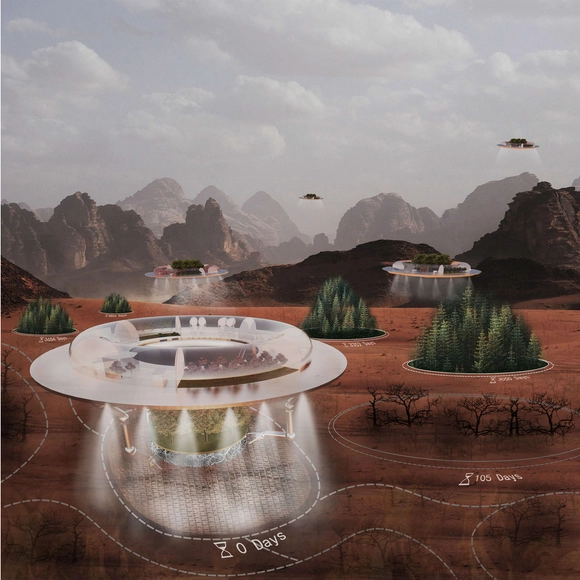
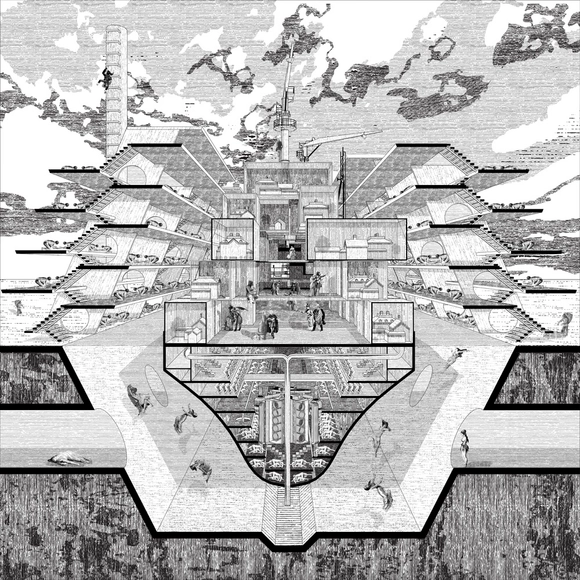
Alternate Realities | AR 2022. Image Courtesy of Charette _ By Lau Yee Mu, Ang Hui Yi, Melissa Ho Er Shwen _ Chia Hui Yen - First Prize
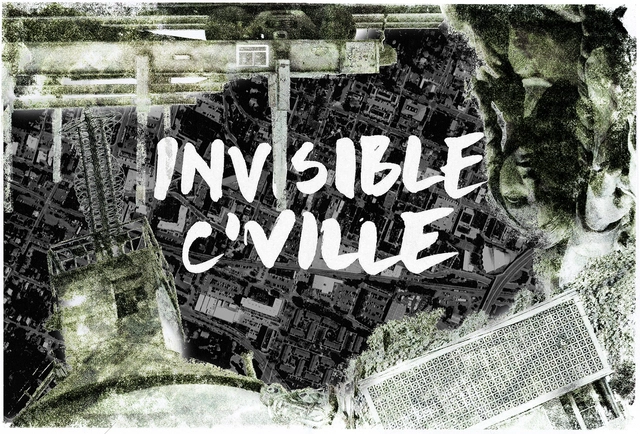
Along with several other imperative factors, the success of an architectural project relies heavily on how it is communicated to its users and builders. Most architects opt for realistic computer generated renders to showcase their projects, while others choose to explore different techniques, translating their architectural narratives through photo collages, sketches, animation, hyper-realistic miniature models, walkthroughs, diagrams, and occasionally, script.
This week’s curated selection of Best Unbuilt Architecture highlights projects submitted by the ArchDaily community that are presented through different media. From a hand-drawn sketch of a coastal redevelopment in Norway to an abstract composition of photography and architectural drawings in Poland, this round up of unbuilt projects showcases diverse architectural typologies and their unique visualizations. The article also includes projects from the Netherlands, Hungary, Poland, United Arab Emirates, and Uzbekistan.
‘’The delight I get out of doing buildings is to say: Screw you, it can be built’’ says Architect Peter Cook in conversation with Louisiana Channel, where he discusses his determination to communicate ideas through vivid Architectural drawings and the skepticism he has faced in regards to his ambitious design proposals and their outlandish appearance.
“Is graphicacy a word?” asks Ken Shuttleworth, founder of Make Architects and instigator of The ArchitectureDrawing Prize. It is. “Like literacy”, he says, “, it’s certainly what I’m interested in when looking at and judging drawings. It’s about a fluency in making and understanding them.” The Architecture Drawing Prize is in its fifth year now. “We tend to see very few hand drawings by young architects - they mostly use computers - and, today, most architectural students come from more of a maths and physics than an art background. I still believe, though, that hand drawing is very important.”
Talking to the Louisiana Channel, Danish architect Mikkel Frost, talks about how he visualises his ideas and represents his architectural concepts - through the mediums of pen, ink and watercolours. Frost views his use of drawing as different from other architects, who "think as they draw". Frost, on the other hand, "prints" the image he already has in his mind, saying "I'm many steps ahead of what I draw, basically printing the whiteboard in my mind."
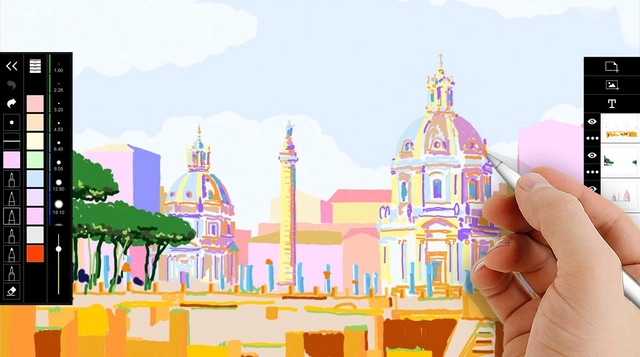
Morpholio has just released “Smart Hatch”, a new addition featured in its Trace app, famous for sketching and drafting, as well as storing and organizing ideas by layers. Making drawing details, elevations, plans, and sections by hand way easier, Smart Hatch calculates the areas for the user and fills their drawings with the sketch style hatch they desire.
Throughout history, drawing has been the essential medium of conveying architectural ideas, operating on multiple levels, from the practical application of serving the construction process to the more artistic quality of expressing a vision and providing an impression of what the architecture will be like. The book Architecture – Drawn, From the Middle Ages to the Present, authored by University of Stuttgart Prof. Dr. Phil. Klaus Jan Philipp, recounts the historical development of architectural drawings, exploring all the different inventions, revolutions and continuities spanning eight centuries of architectural representation.
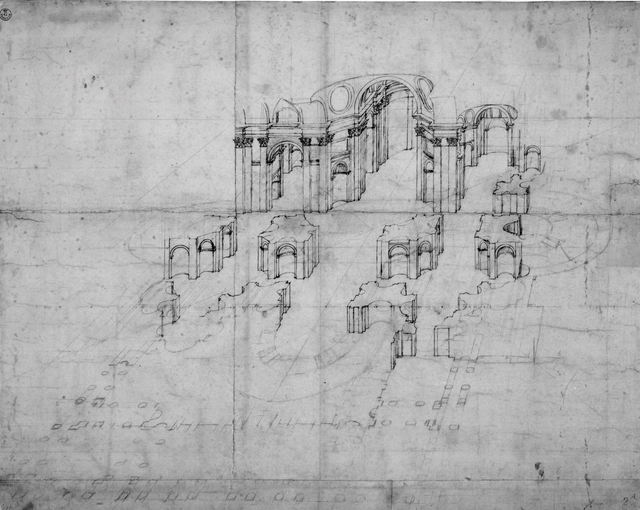
An extraordinarily modern cut away perspective of the, as yet unbuilt, central crossing of St Peter’s by Baldassare Peruzzi.. Image Courtesy of Oro Editions
Why should any 21st Century architect bother to draw by hand? There is, after all, an abundance of readily available digital tools that make pens and pencils seem little more than primeval artefacts. Fondly regarded, perhaps, yet as charmingly irrelevant to contemporary architecture as heavy horses are to today’s farmers or typewriters are to newspaper journalists.
The Trinity Buoy Wharf Drawing Prize is now launching a milestone edition. 2020 will be the 3rd year of support for the Trinity Buoy Wharf Drawing Prize by the Trinity Buoy Wharf Trust and the 25th consecutive annual exhibition since 1994.
Non Architecture - SOCIAL DISTANCING - Housing Block
Our world is changing fast, while ambitions and challenges match in importance. In this context, design can play a huge role. How do we imagine the world to be? What range of possibilities we haven’t discovered yet? What’s a Non-Architecture for a World in crisis? In 2020 we started the second phase of competitions to address the issues of tomorrow.
Non Architecture - HEALING - Alternative Designs for Quarantine Cities
Our world is changing fast, while ambitions and challenges match in importance. In this context, design can play a huge role. How do we imagine the world to be? What range of possibilities we haven’t discovered yet? What’s a Non-Architecture for a World in crisis? In 2020 we started the second phase of competitions to address the issues of tomorrow.
Play is an essential part of all our lives, whether child or adult. Be it playing sports, a board game or simply sharing jokes with friends, play is just as important to adults as building a den or playing dress-up is to a child.
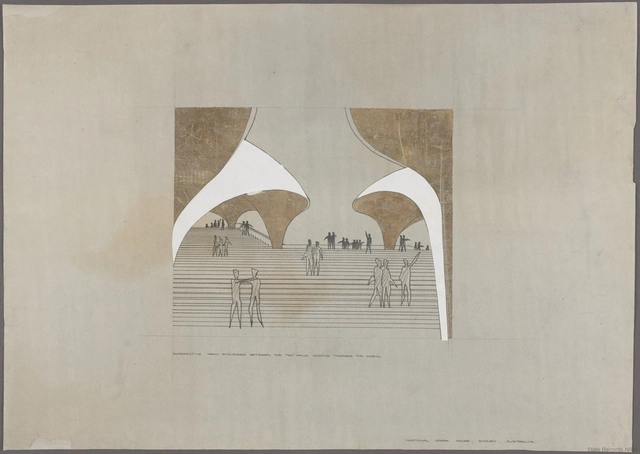
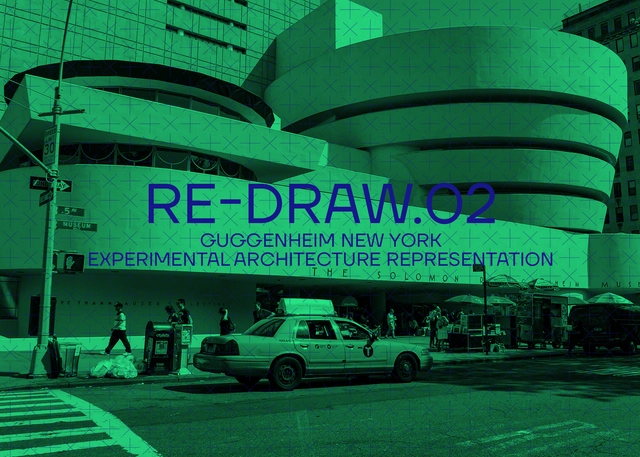
The aim of the RE-DRAW competition is to develop one drawing to ‘represent’ an iconic architecture. The participants are asked to draft one image, with absolute freedom of scale, technique and level of abstraction.
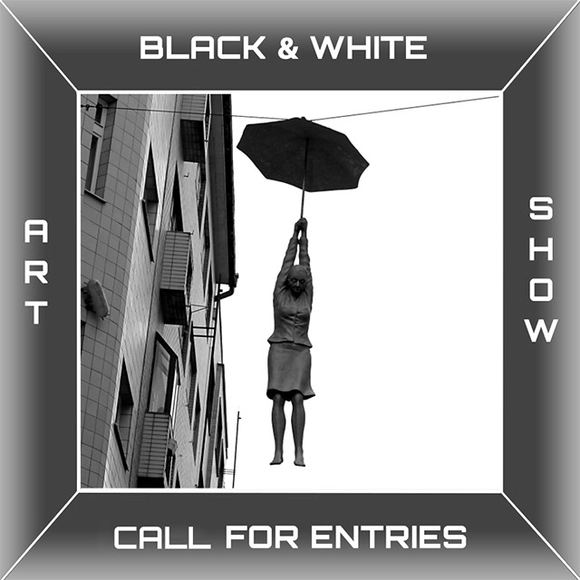
Grey Cube Gallery proudly presents the first Black & White Show for the month of February 2020. The contest is open to all artists worldwide over 18 years of age. Entries must include the black and white or shades of gray as the primary focus. All visual art mediums (except video and sound) are allowed. The Best of Show winning artwork will be displayed as the poster of the show. All wining artists ( Merit Award & Honorable Mention) will receive a digital award certificate. The application fee is $16 for the 2 images of artwork. You may enter more than once. The deadline to submit entries is March, 05 2020.
Contemporary Art Room Gallery is proud to announce their 1st “Landscapes” Online Art Competition for the month of January 2020. This is an international competition and artists from around the world are welcome to submit their work. The gallery invites all artists and photographers from around the world to submit their best representational and non-representational art related to the Landscapes theme. The Landscapes theme is considered to be any art with interpretation of natural elements such as mountains, hills, valleys, deserts, forests, farmland, trees, rivers, lakes, polar regions, rainforests, islands and tropical landscapes. All visual art mediums are acceptable (painting, photography, drawing, sculpture, digital, prints, fiber art, collage or installation art) except sound and video art.