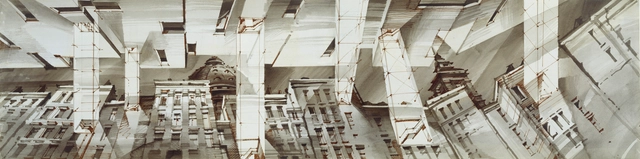
"How does a thought evolve into a freehand sketch? What is the importance of the interaction between the mind, eyes and hand?“


"How does a thought evolve into a freehand sketch? What is the importance of the interaction between the mind, eyes and hand?“
In the thousands of posts we publish yearly, we have the privilege of seeing a large number of impressive architecture drawings. They are submitted by established practices, architecture students, artists and, occasionally, our readers. From precise, old-school hand drawings to architectural representation that pushes the boundary of collage, photography and digital sketching, drawings hold a particular intrigue in the hearts of architecture lovers.
Since inspiration is at the heart of ArchDaily's mission, we'd like to invite all members to submit their best drawing for inclusion in our 2017 "Best Drawings" post.
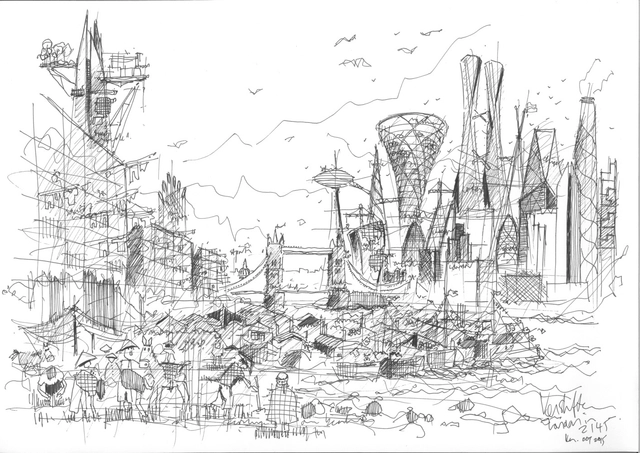
Update: the deadline for this competition has been extended to September, 25, 2017 at 23:30 BST.
Make, the Sir John Soane’s Museum and the World Architecture Festival (WAF) have come together to create a prize for architectural drawing. The Prize recognises the continuing importance of hand drawing but also embraces creative use of digitally produced renderings.
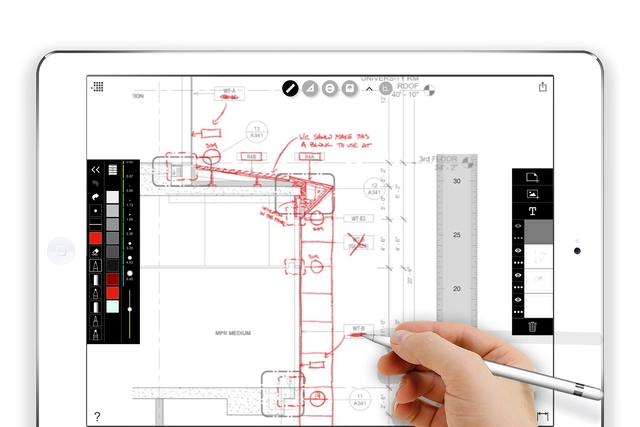
If you visit an architecture office today, you may sense a slight change. The days of bulky desktops, ergonomic mouse pads and tower-high stacks of drawing sets are slowly giving way to digital pencils, tablets, and tons of architects’ hand-drawings—both physical and digital. Architects across the globe are clearing their desks, literally, and utilizing emerging touchscreen tools and software for designing, sharing and collaborating. It seems possible that, for the first time in years, the architecture profession could revisit Bernard Tschumi’s “paperless” studio which formed a key part of his tenure as dean of Columbia University’s GSAPP in the mid-1990s. However, this time, “paperless” starts with a pencil, instead of a click.

The ever-growing realm of “post-digital” drawing is currently at the forefront of a healthy dosage of discourse, appreciation and even criticism, as professionals and students alike continue to push the envelope of accepted architectural representation and exchange a waning hyperrealism for the quirks and character of alternative visual narratives. Central to this new wave of illustration is the inclusion and appropriation of specific icons and characters from famous pieces of modern art, selected in particular from the works of David Hockney, Edward Hopper and Henri Rousseau, whose work undoubtedly remains at the forefront of their individual crafts and styles.
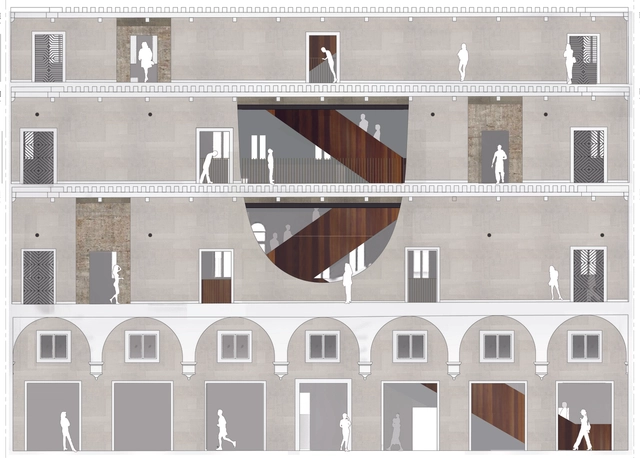
The representation of architecture is important in the absence of tangible space. Throughout a lifetime, even the most devoted, well-travelled design enthusiast will experience only a small percentage of architectural works with their own eyes. Consider that we exist in only one era of architectural history, and the percentage reduces even further. Many architectural works go unbuilt, and the buildings we experience in person amount to a grain of sand in a vast desert.
Then we consider the architecture of the future. For buildings not yet built, representation is not a luxury, but a necessity to test, communicate and sell an idea. Fortunately, today’s designers have unprecedented means to depict ideas, with an explosion in technology giving us computer-aided drafting, photo-realistic rendering, and virtual reality. Despite these vast strides, however, the tools of representation are a blend of old and new – from techniques which have existed for centuries, to the technology of our century alone. Below, we give five answers to the question of how architecture should be depicted before it is built.

You may know about Lynda.com, the online education platform that hosts thousands of video courses for learning how to use software. But did you know that Lynda also has some great drawing, animation, and design courses? The best part (if you're a current student or local library card owner)? Lynda can be accessed for free from many universities, colleges, and libraries! If your backpack-toting, library-visiting days are behind you, the platform offers a free 10-day trial.
If you're looking to perfect your ability to capture or project building interiors and exteriors, Amy Wynne's hour-long course "Drawing 2-Point Perspective" is a solid option.
Drawing on a touchscreen or trackpad can be a huge pain – but when you’re on the go, sometimes that may be your only option to quickly convey an image. To the rescue, Google has unveiled its latest AI experiment, AutoDraw, which uses machine learning to pair your wobbly doodle with a corresponding artist-drawn image – like autocorrect for sketching.

The following excerpt was originally published in Natascha Meuser's Construction and Design Manual: Architecture Drawings (DOM Publishers). With our industry's technological advances, "the designing architect is not simultaneously the drawing architect." Meuser's manual aims to help architects develop and hone their technical drawing skills as the "practical basis and form of communication for architects, artists, and engineers." Read on for ten freehand drawing exercises that tackle issues ranging from proportion and order to perspective and space.
What is beauty? A few years ago, a group of international researchers sought to unravel the mysteries of human beauty. They used state-of-the-art, totally impartial computer technology and a huge dataset to establish once and for all why particular faces are perceived as beautiful, and whether beauty exists independently of ethnic, social and cultural background; in other words, whether it can be calculated mathematically. The scientists input countless photos of faces from all over the world, each described by survey respondents as particularly beautiful, into a powerful computer. The resulting information, they believed, could be used to generate a face that would be recognized by any human being as possessing absolute beauty. But what the computer eventually spat out was a picture of an ordinary face, neither beautiful nor ugly, devoid of both life and character. It left most viewers cold. The accumulated data had created not superhuman beauty, but a statistically correct average.

Architect and illustrator Diego Inzunza has created a new series titled "Architectural Classics," which presents and analyzes 20 iconic architectural works from the 20th-century. Using a graphic technique based upon axonometric views, the style allows each building to be seen from multiple sides, creating a comprehensive overall interpretation of the architecture.
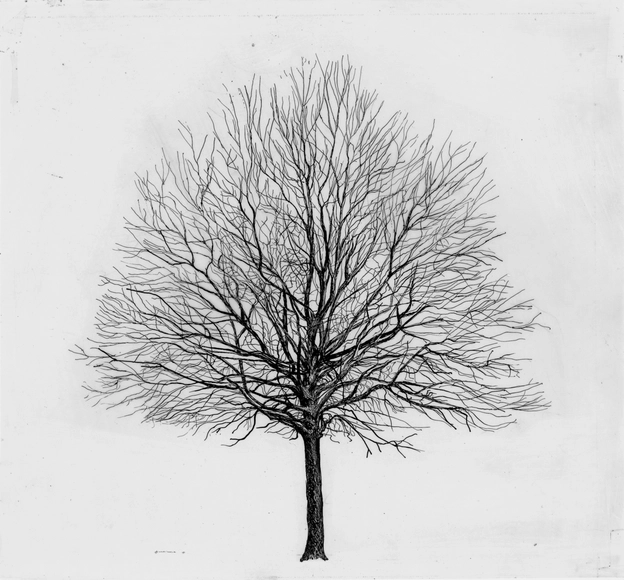
The Villa Croce Museum of Contemporary Art presents the first monographic exhibition on the work of Cesare Leonardi (Italian, b. 1935). In the course of a career spanning more than four decades Leonardi, an architect and photographer, has continuously challenged the boundary between design and artistic practice. In spite of the recognition gained by his early furniture design, most of Leonardi’s oeuvre has remained little known, even within Italy. Cesare Leonardi: Strutture, organised in close cooperation with Leonardi’s archive, sheds light on an intimate yet multifaceted body of work.

I prefer drawing to talking. Drawing is faster, and leaves less room for lies. (Le Corbusier)
Even with the evolution of technology and the popularization of advanced computer programs, most architecture projects still begin with a blank sheet of paper and the casual strokes of a pen. Rather than simply representing a project, the sketch allows us to examine the project, understand the landscape or topography, or communicate an idea to another team member or even the client. Its main purpose, however, is to stimulate the creative process and overcome the fear of blank paper. Sketches are usually made with imprecise, overlapping, ambiguous strokes, accompanied by annotations, arrows, and lack great technical accuracy and graphic refinement.
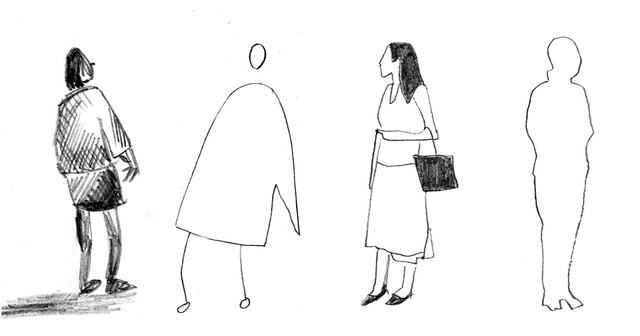
Sketches of scale figures can be seen as an architectural signature. These miniature stand-ins for human life not only bring scale and understanding to a sketch, they also offer a glimpse into the architect’s personality. Some designers automatically go for realistic, anatomically correct people, while others have more abstract interpretations of the human body. But what exactly do these predilections say about their illustrator? Read on to find out:
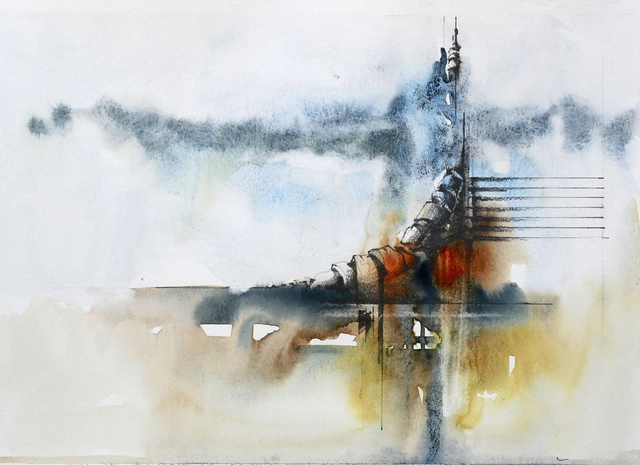
Established in 1974 by the AIA Dallas Chapter, the Ken Roberts Memorial Delineation Competition (KRob) is “the world’s longest running architectural drawing competition of its kind”. Named after architect Ken Roberts, famous for his ink perspective drawings, the competition recognizes innovations in both hand-drawn and digital architectural drawing. The winners and shortlist each year serve as an inspiring reference for architects, and showcase the intersection between technology, design and culture.
In 2015, the new award for “Excellence in Architectural 3D Printing” was added, and with a total of 424 entries from 28 countries, this year’s competition was the largest to date. The 2015 jury consisted of Michel Rojkind, Paul Stevenson Oles and John P. Maruszcak. The competition culminated in an awards ceremony and panel discussion at Alto 211 in Dallas. See the winners after the break.

Drawings from the private collection of Alvin Boyarsky, Chairman of the Architectural Association (AA) from 1971 to 1990, will be on display as part of Drawing Ambience: Alvin Boyarsky and the Architectural Association. Hosted by The Irwin S. Chanin School of Architecture of The Cooper Union from October 13 to November 25, 2015, the free, public exhibit will also feature panel discussions with Nicholas Boyarsky, Joan Ockman, Bernard Tschumi, Anthony Vidler, Michael Webb and Dean Nader Tehrani. Read more about this event and the drawings exhibited after the break.
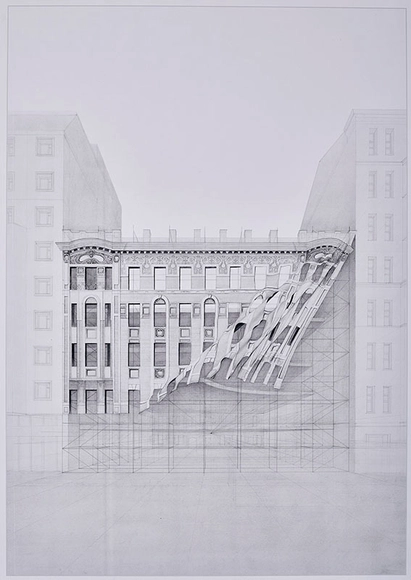
Aarhus School of Architecture, schmidt hammer lassen architects, VOLA, and the Danish Arts Foundation have announced their collaborative competition, entitled Drawing of the Year 2015, which calls for imaginative student drawings, and aims to “celebrate the oldest tool of architects.”
Students worldwide are invited to submit drawings “that inspire, communicate, and engage” with the theme of Sustainability Through Architecture. Thus, drawings “should focus on sustainability and architecture’s ambition to take an active part in the change of our society,” and “should address architecture’s ability to contribute to a sustainable environment on all scales—concepts, utopias, buildings, landscapes, and cities.”
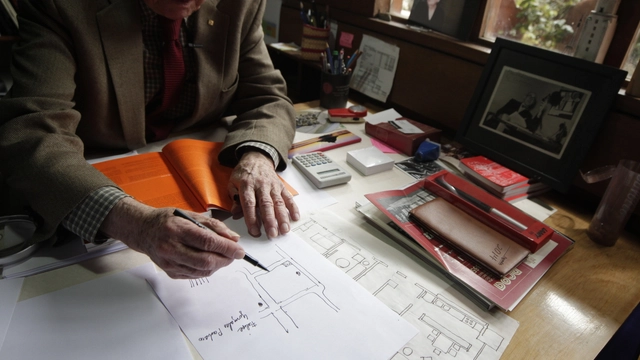
Hiding out from the gentle Bogotá rain, a cat with turquoise eyes and a black and white coat prowls along the ledge of an office hidden in the midst of lush vegetation. A large window with a wooden frame filters the light and illuminates the interior: a desk, hundreds of books, manila folders, and backlit pictures. Sitting comfortably in his chair, 91-year-old Colombian architect Germán Samper takes a pencil, presses it to the surface of a sheet of paper, and begins to explain everything he is saying by drawing for us in the most clear and simple manner possible.
Whether he's giving instructions on taking a taxi in Bogotá or explaining the recent modifications to the historic Colsubisdio citadel, Samper -- a master of Colombian architecture -- can express ideas on paper with an ease that makes us think that drawing might be very simple, but it's really just a great trick.
Perseverance is key and Samper knows this from experience. "I don't understand why architects don't draw more if it is truly a pleasure," he ponders.
After the break, a conversation with Germán Samper and a series of unedited sketches by the Colombian architect.
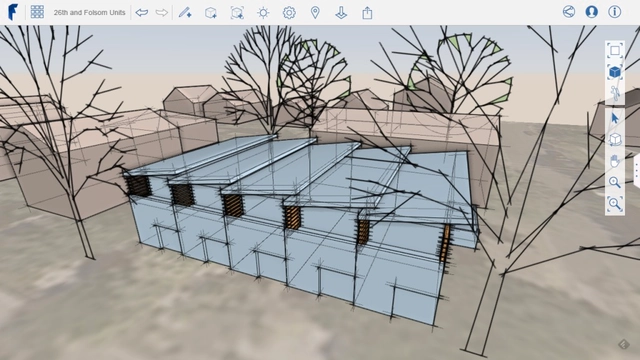
Every good design should start with a sketch. The problem, as everyone knows, is that computers are killing sketching. Or are they?
To begin with, it’s questionable whether there really has been a decline in sketching, given the conviction with which so many architects defend the importance of hand drawing. Even for the most technologically savvy architects, many simply don’t see an alternative to the humble pen and paper.
However, this doesn’t mean that all is well when it comes to sketching. Often the hardest part of the design process is to maintain a great concept - usually discovered through a sketch - when translating a design into programs such as Revit which are necessary in modern architectural practice.
_copy.jpg?1488996934 "Casa Gropius / Walter Gropius + Marcel Breuer / 1938 . Image Cortesía de Diego Inzunza - Estudio Rosamente")
_copy.jpg?1488997079 "Prairie Chicken House / Herb Greene / 1961. Image Cortesía de Diego Inzunza - Estudio Rosamente")
_copy.jpg?1488996911 "Casa de Vidrio / Philip Johnson / 1949. Image Cortesía de Diego Inzunza - Estudio Rosamente")
_copy.jpg?1488996891 "Casa Farnsworth / Mies van der Rohe / 1951 . Image Cortesía de Diego Inzunza - Estudio Rosamente")
_copy.jpg?1488996826)