With the opening of the final section of New York's High Line last month, the city can finally take stock on an urban transformation that took a decade and a half from idea to reality - and which in the five years since the first section opened has become one of the great phenomena of 21st century urban planning, inspiring copycat proposals in cities around the globe. In this article, originally published by Metropolis Magazine as "The High Line's Last Section Plays Up Its Rugged Past," Anthony Paletta reviews the new final piece to the puzzle, and examines what this landmark project has meant for Manhattan's West Side.
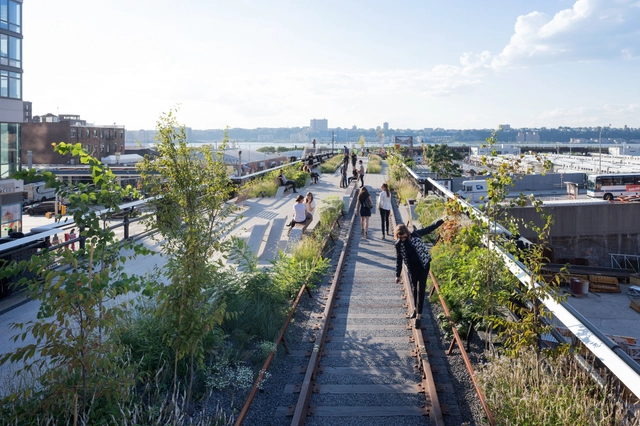
The promise of any urban railroad, however dark or congested its start, is the eventual release onto the open frontier, the prospect that those buried tracks could, in time, take you anywhere. For those of us whose only timetable is our walking pace, this is the experience of the newly opened, final phase of the High Line. The park, after snaking in its two initial stages through some 20 dense blocks of Manhattan, widens into a broad promenade that terminates in an epic vista of the Hudson. It’s a grand coda and a satisfying finish to one of the most ambitious park designs in recent memory.
Sunday marked the completion of the New York City High Line, a three-phased project that transformed the once disused elevated rail tracks on Manhattan’s West Side into one of the world’s most respected public parks. With the first section opening in 2009, architectural photographer Iwan Baan has been documenting the entire process. Now, for the first time we present to you a photographic journey through the completed High Line designed by James Corner Field Operations with Diller Scofidio + Renfro. Take a look, after the break.
This Sunday (September 21), the third and final section of the New York City High Line will open at the Rail Yards. You can expect to see familiar benches morphed into picnic tables and seesaws amongst a lush, diverse and seemingly unkept landscape that is reminiscent of the “forgotten” tracks. As Piet Oudolf- the Dutch garden designer who worked with James Corner Field Operations and Diller Scofidio & Renfro - described, the $75 million northernmost section will be an “introduction to the wild” that responds directly to the public’s desire to “walk on the original tracks.” Stay tuned for more images from the opening.
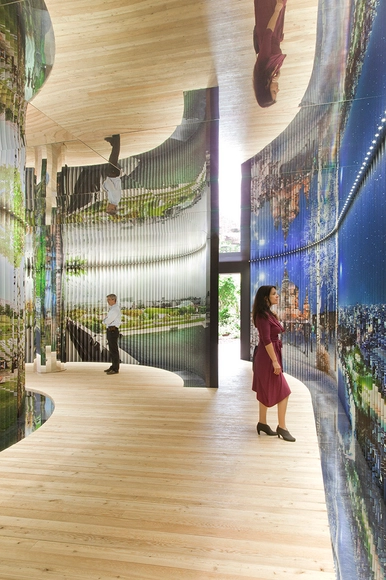
In their collateral event for the debut of the Moscow pavilion at the Venice Biennale, the exhibition "Moskva: urban space" explores the historic development of public spaces and examines the city’s progress in the context of Diller Scofidio + Renfro’s winning proposal for Zaryadye Park. Curated by Sergey Kuznetsov, Chief Architect of Moscow together with Kristin Kristin Feireiss from AEDES, and organized by MCA - Moscow Committee of Architecture and Urban Development, the exhibition comes at a pivotal moment in determining the future of urban development in Moscow. As Kuznetsov states, "While the face of Moscow in the past 100 years was largely determined by the architecture of its buildings, representing political and economic developments, today’s urban singularity is based on the “connective fabric” of its public spaces that have become equally important identity-makers and contributes significantly to improving the quality of urban life for its citizens." To see photos of the exhibition by Patricia Parinejad and learn more about the story behind it, continue reading after the break.
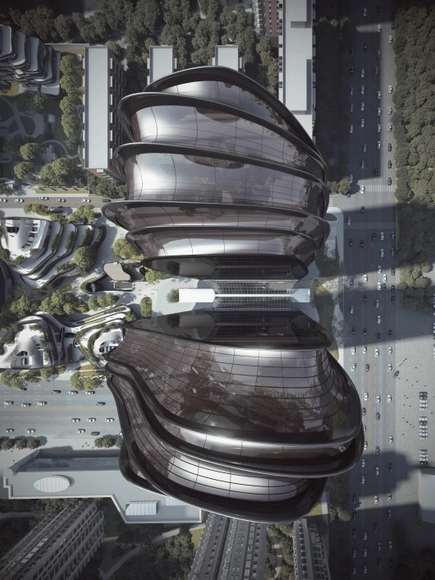
When you think about the future, how do you envision the built environment? According to this article, originally appearing on The Huffington Post as The Architecture of the Future is Far More Spectacular than You Could Imagine, the future is closer than we might think – current projects are already answering the imagined needs and desires of the next generation. From a tower with rotating floors to a park with the ability to cleanse raw sewage, check out fourteen projects believed to embody the architecture of tomorrow, after the break.
The largest private project New York City has seen in over 100 years may also be the smartest. In a recent article on Engadget, Joseph Volpe explores the resilience of high-tech ideas such as clean energy and power during Sandy-style storms. With construction on the platform started, the Culture Shed awaiting approval, and Thomas Heatherwick designing a 75-Million dollar art piece and park – the private project is making incredible headway. But with the technology rapidly evolving, how do investors know the technology won't become obsolete before its even built?
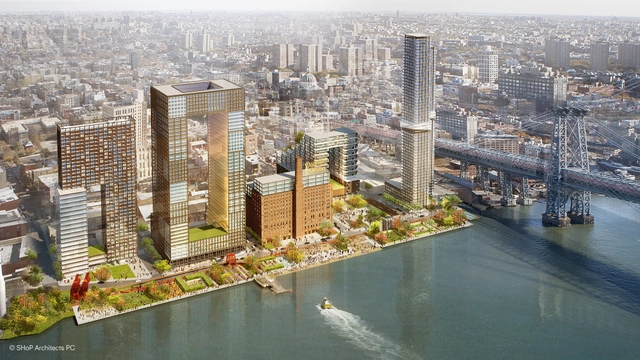
Domino Sugar Factory Master Plan Development / SHoP Architects
Fast Company has announced who they believe to be the most innovative practices in architecture for 2014. Topping this list is New York’s SHoP Architects who has gone from “boutique to big commissions in only a few years.” See who made the list after the break and let us know who you believe is the world’s most innovative firms in the comment section below.
Rice University has commissioned Diller Scofidio & Renfroto transform an existing parking lot between Alice Pratt Brown Hall, the home of Rice's Shepherd School of Music, and Rice Stadium into a 600-seat opera theater. Charles Renfro, a 1989 Rice graduate and the project’s lead architect, stated: "It feels really natural in a lot of ways to be returning to campus, a place I've spent so much time and love so much." Completion is scheduled for 2018.
In case you missed it, we're re-publishing this popular post for your material pleasure. Enjoy!
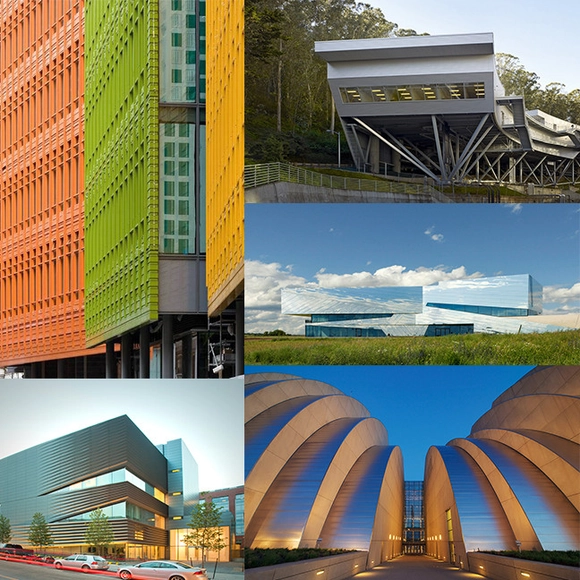
To celebrate the recent launch of ArchDaily Materials we've brought together five projects with fantastic façades, from Viñoly's Dolby Regeneration Medicine Building in San Francisco to Holzer Kobler's PALÄON in Schöningen, Germany. A building's envelope is often people's first impression and, in recent years, have been one of the focuses of innovation in the design and construction industry. The projects we've collated show a glimpse at what's possible with façades and wall finishings.
Liz Diller, one of the three partners of Diller Scofidio + Renfro, discusses the history of the High Line and the active design decisions which led to its success.
The elevated railroad, which was designed to penetrate city blocks rather than parallel an avenue, saw its last delivery (of frozen turkeys) in 1980. By 1999, a “very strange landscape had formed, with a whole eco system around it,” says Diller. Advocacy for the site’s preservation began with two local residents, and culminated in its reclamation with the multidisciplinary collaboration of city officials and impassioned designers (namely James Corner Field Operations, Diller Scofidio + Renfro, and planting designer Piet Oudolf). "The High Line project couldn’t have happened without the right people, the right time and the right administration."
Alongside news that The Broad’s completion date has been pushed back to 2015, rather than this fall, Diller Scofidio + Renfro has unveiled a new collaboration with landscape architect Walter Hood that will transform the mid-block parcel adjacent to the Grand Avenue museum into a pedestrian-friendly landscaped plaza and restaurant. As reported by the Los Angeles Times, the new square will establish an important link to the neighboring school and apartment, as well as the future 2020 Regional Connector subway stop. The 24,000 square foot parcel will be enhanced by100-year-old olive trees transplanted from Northern California. Watch a video about the design after the break, and find more information here.
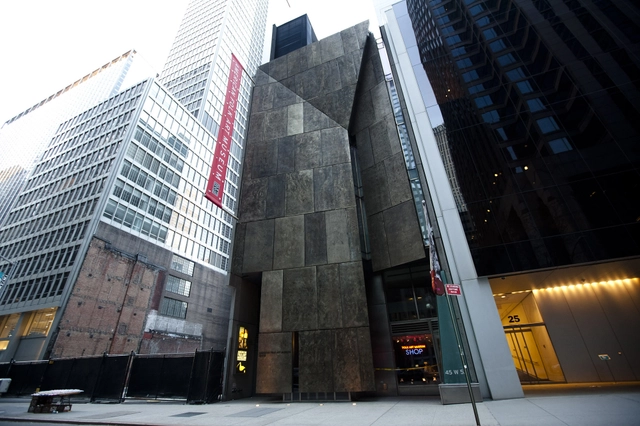
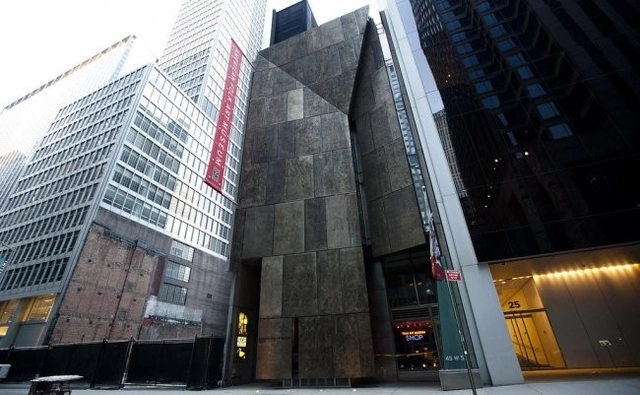
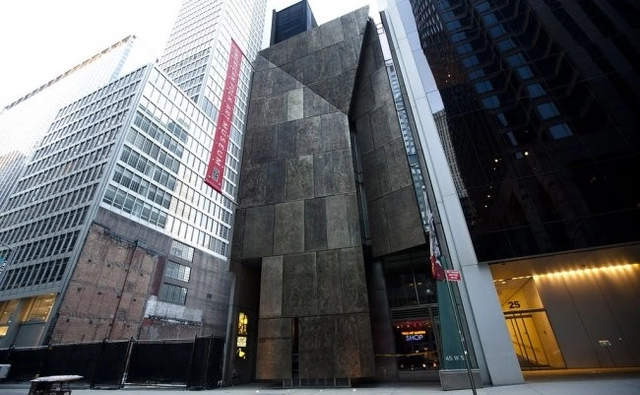
“We will take the facade down, piece by piece, and we will store it,” Glenn D. Lowry, the director of the Museum of Modern Art, said in an interview. “We have made no decision about what happens subsequently, other than the fact that we’ll have it and it will be preserved.”
With all the controversy surrounding Diller Scofidio +Renfro (DSR) and MoMA's decision to demolish the American Folk Art Museum to make way for expansion, DS+R has increasingly come under fire (indeed, even DS+R's democratizing move to make the MoMA's sculpture garden accessible to the public has provoked considerable ire). In the following article, which originally appeared on Metropolis as "Damage Control," critic and author Martin Pedersen questions: why didn't DS+R just walk away?
A few weeks ago, in the wake of MoMA’s decision to raze the Folk Art Museum, the estimable Christopher Hawthorne of the Los Angeles Times asked ; why Diller Scofidio + Renfro (DSR) didn’t simply resign the commission, rather than recommend the demolition of a building designed by their (former?) friends. At the time, I was skeptical of the suggestion. But with the onslaught of negative publicity—which will continue up until the demolition of the building and perhaps well beyond—I’m beginning to think Hawthorne was right. And right not just from a moral, ethical and historic perspective.
Videos
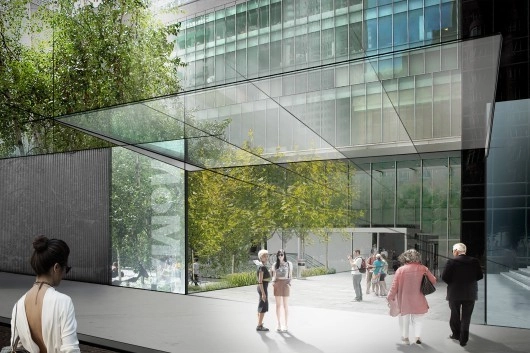
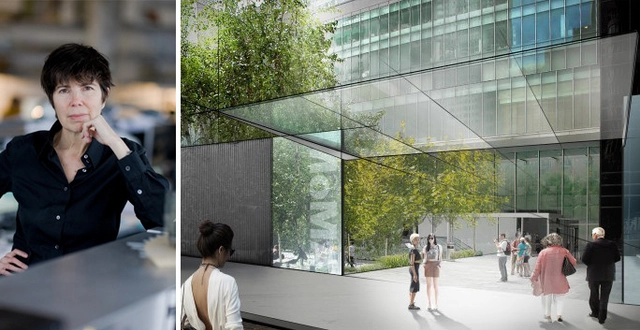
Rendering of the garden entrance of the new MoMA, by Diller Scofidio + Renfro. Image Courtesy of MoMA
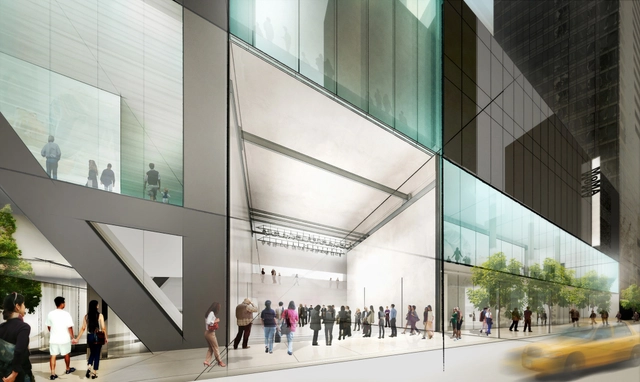
Yesterday, Glenn Lowry, director of the Museum of Modern Art (MoMA), and Elizabeth Diller, principal of Diller Scofidio + Renfro, presented their plans for the MoMA expansion to an audience in New York City, insisting - once again - that they require the demolition of the American Folk Art Museum.
The presentation was part of a larger event, "A Conversation on the Museum of Modern Art’s Plan for Expansion," presented by The Architectural League, the Municipal Art Society, and the American Institute of Architects New York Chapter. After Lowry and Diller reiterated their case, a panel of experts - including the editor of Architectural Record, Cathleen McGuigan, and critic Nicolai Ouroussoff - gave their opinions on the subject (some panelists spousing particularly anti-MoMA sentiments). ArchDaily was there to catch the conversation; read on after the break for the highlights.
Hawthorne asks some great, insightful questions: from whether or not architecture should be considered ephemeral to whether or not idiosyncratic architecture is more vulnerable to change. Diller responds with some fascinating points, claiming that if DS+R's ICA museum in Boston faced demolition, she'd understand because of the possibility that "at a certain point [a building] takes on another identity." But perhaps the most poignant response is the one that she gives regarding the maelstrom of negative criticism surrounding the demolition of the Folk Art Museum, saying, "We would be on the same side if we didn’t know all the details that we know." To learn more about those "details," read on for excerpts from the interview...
Rendering of the "art bay" of the new MoMA, by Diller Scofidio + Renfro. Image Courtesy of MoMA
In a statement released last night, Glenn Lowry, the director of the MoMA, confirmed that the American Folk Art Museum, designed by Tod Williams and Billie Tsien Architects, will be demolished in order to make way for a re-design and expansion spearheaded by Diller Scofidio + Renfro (DS+R).
More information - and the critics' reactions - after the break.