The inaugural SAH Change Agent Award will be presented to the partners of the New York architecture firm Diller, Scofidio + Renfro: Elizabeth Diller, Ricardo Scofidio, Charles Renfro and Benjamin Gilmartin, at a reception at the Century Club in midtown Manhattan.
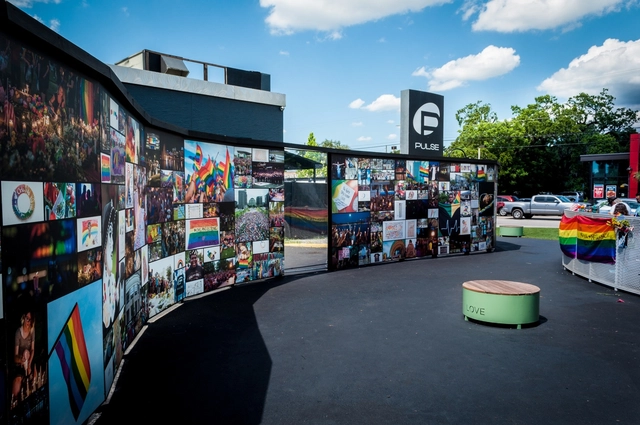
The shortlist has been announced for the design of the National Pulse Memorial & Museum in Orlando, Florida, honoring the 49 people killed during the Pulse nightclub shooting on June 12th, 2016. Established by Dovetail Design Strategists for the onePULSE Foundation, the open, two-stage international competition seeks to honor those killed while also supporting the families, survivors, and first responders.
https://www.archdaily.com/918366/high-profile-architects-shortlisted-for-pulse-nightclub-shooting-memorialNiall Patrick Walsh
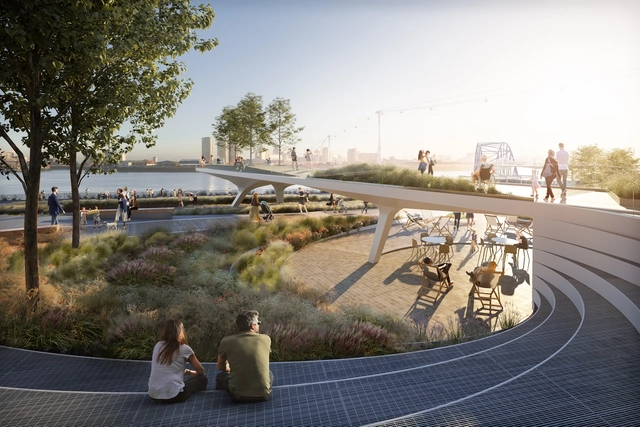
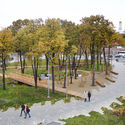
Designed by Diller Scofidio + Renfro, the new linear park running along the river Thames is opening its doors on Greenwich Peninsula, London, this July. In collaboration with Neiheiser Argyros, the New York-based office has created the next culture and leisure destination in the UK's capital, offering an evolving collection of free-to-view public art by emerging and world-renowned artists along a landscaped route for running, walking and meditation. The 5 kilometers-long landscape features 9 meters-high elevated walkways flowing through trees and giant sculptures.
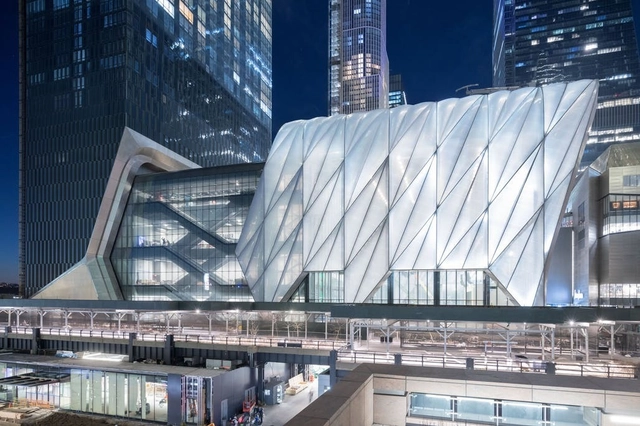
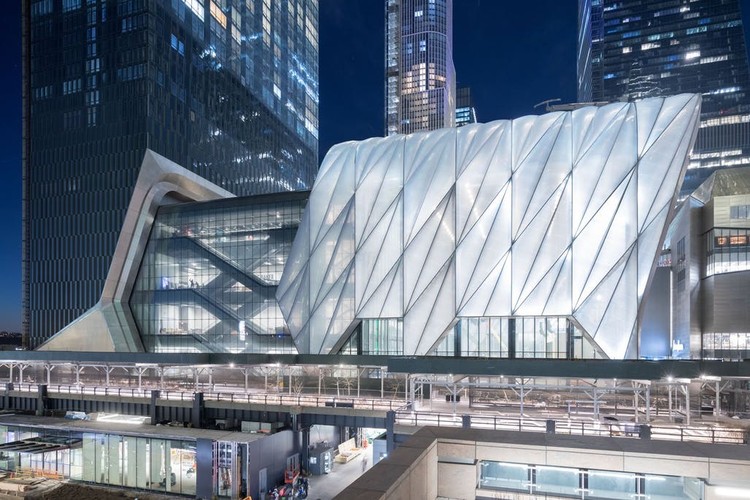
Diller Scofidio + Renfro and Rockwell Group's iconic Shed has opened after more than a decade in the making in New York City. The building features a 120-foot telescopic shell in Hudson Yards that can extend out from the base building when needed for larger performances. Clad in ethylene tetrafluoroethylene (ETFE) “pillows,” the project is connected to the High Line on 30th Street to bring performances and art to the city's newest neighborhood,
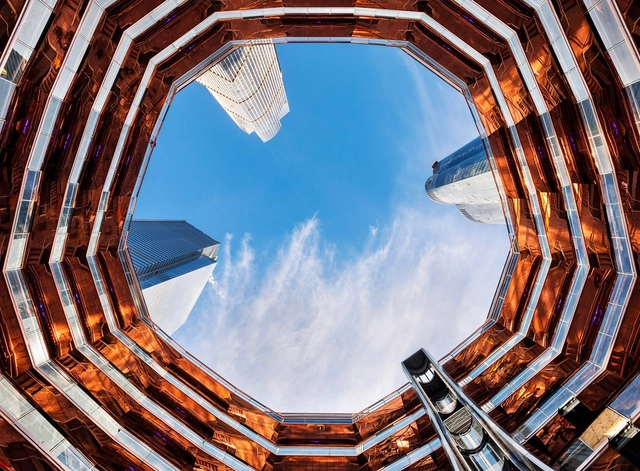
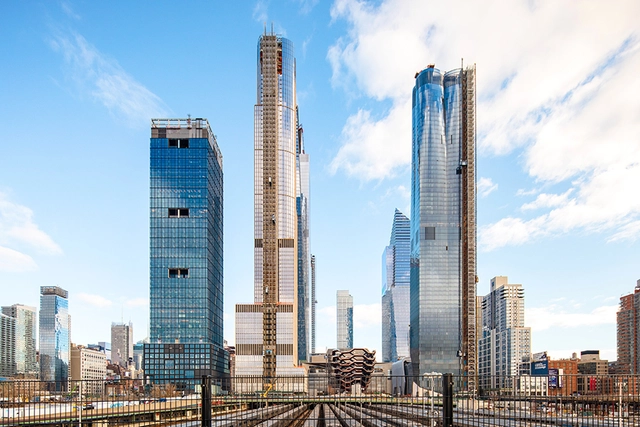
New York City’s Hudson Yards has opened its doors to the public, and the reviews are flooding in. Built on Midtown Manhattan’s West Side, the project is New York’s largest development to date and the largest private real estate venture in American history, covering almost 14 acres of land with residential towers, offices, plazas, shopping centers, and restaurants. A host of architecture firms have shaped the development, including BIG, SOM, Diller Scofidio + Renfro, Rockwell Group, and many others.
Read on to find out how critics have responded to Hudson Yards so far.
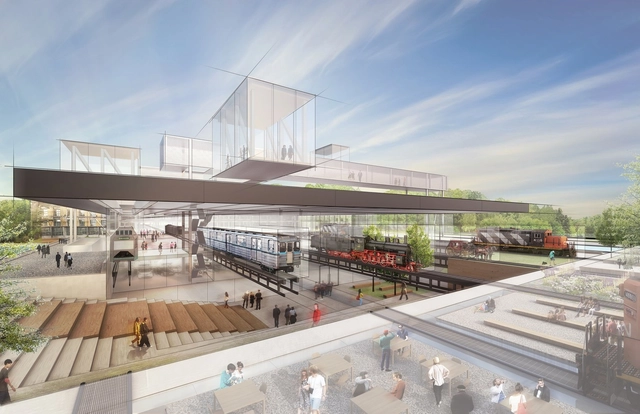
Hungarian Museum of Transport. Image Courtesy of Diller Scofidio + Renfro
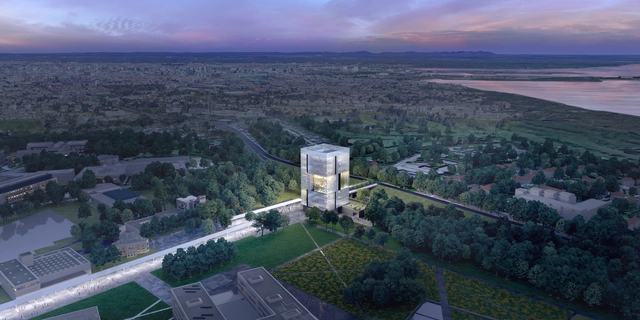
Architecture and design practice Diller Scofidio + Renfro have been selected to design the Hungarian Museum of Transport in Budapest. As the new home for one of the oldest transport museums in Europe, the project will be sited in a former railway yard. The project uses the idea of ground transportation as a central organizing principle, highlighting the central role of the ground in urban planning and infrastructure. The design de-familiarizes ground by excavating, lifting, and cutting to produce unexpected environments.
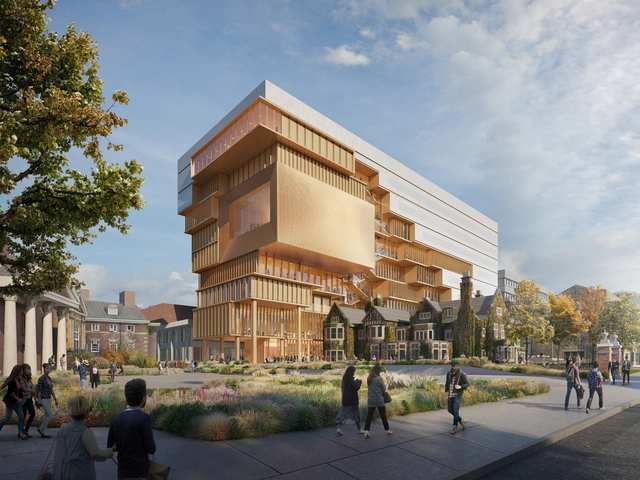
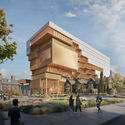
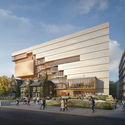
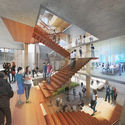
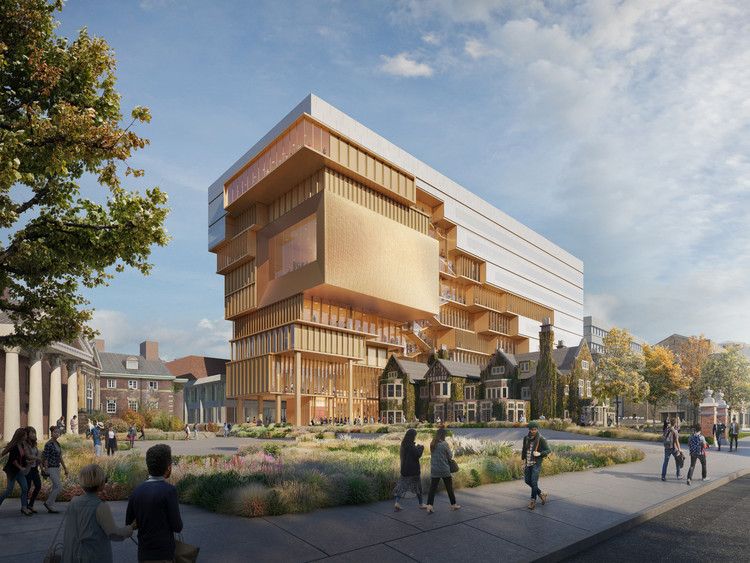
Diller Scofidio + Renfro have revealed the design for 90 Queen’s Park, a new education and cultural building for the University of Toronto in Canada. The project will combine a range of classrooms and public spaces to house the University of Toronto's School of Cities for its urban-focused research, educational and outreach initiatives. The nine-story building will become a new gateway to the campus with views across the Toronto skyline.
There’s something striking about the command center of America’s largest private real estate development, Hudson Yards, in that it’s actually pretty boring. The room—technically known as the Energy Control Center, or ECC for short—contains two long desks crammed with desktop computers, a few TV monitors plastered to the wall, and a corkboard lined with employee badges. The ceiling is paneled; the lighting, fluorescent. However, New York’s Hudson Yards was once billed as the country’s first “quantified community”: A network of sensors would collect data on air quality, noise levels, temperature, and pedestrian traffic. This would create a feedback loop for the developers, helping them monitor and improve quality of life. So where is the NASA-like mission control? Data collection and advanced infrastructure will still drive parts of Hudson Yards’ operations, but not (yet) as first advertised.
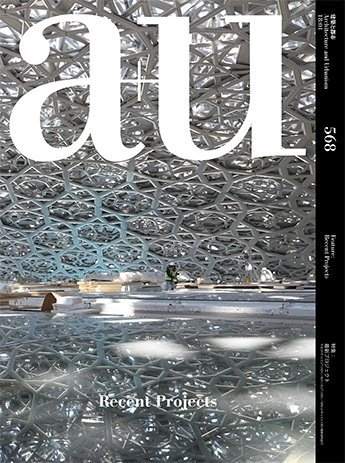
This edition of a+u introduces the 23 recent works of architecture and technology that emerged from their relationship with the urban structure or the development history. In this issue, we focus our attention on the process of conceiving and realizing the projects driven by various motivations and tactics. We invite readers to look beyond the confinement of a single building and examine the works on their possibilities to be in use for a long time.
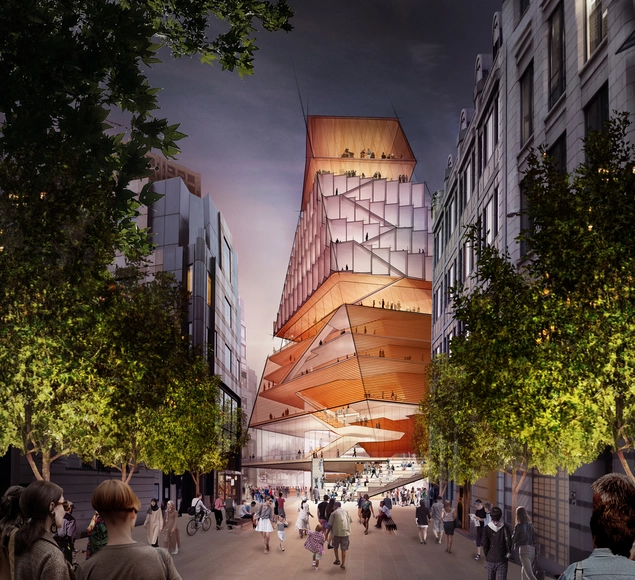
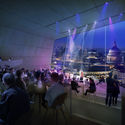
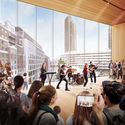
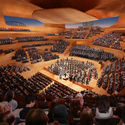
Concept Design: Centre for Music. Image Courtesy of Diller Scofidio + Renfro
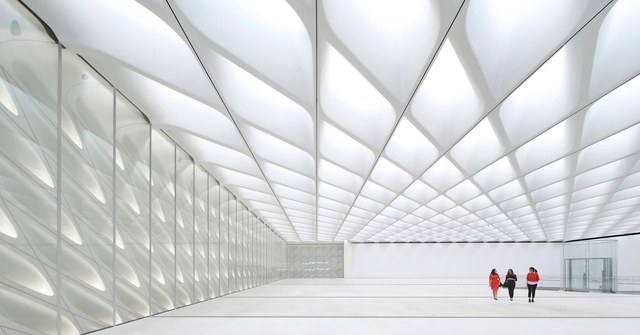
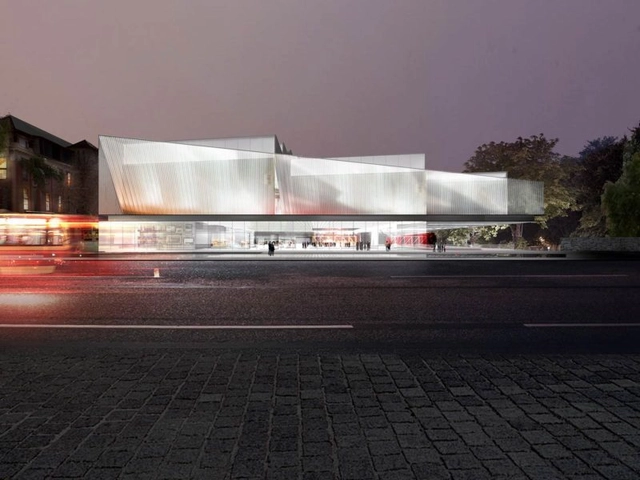
Diller Scofidio + Renfro have revealed the design for the new London Centre for Music. Made for The Barbican, London Symphony Orchestra and Guildhall School of Music & Drama, the first concept designs were released as part of a progress update on plan for the new proposed building. Made to be a world class center for music in London, the design would create an iconic new gateway to the City of London’s emerging Culture Mile.
Architecture is a profession deeply dependent on the visual. It’s imagined, sold, critiqued and consumed almost entirely on the strength (or lack thereof) of drawings. We pick and prod at images presented at angles we’ll never be able to see, admiring the architectonic qualities of elements we’ll never actually experience.
https://www.archdaily.com/904318/this-week-in-architecture-more-than-visualKatherine Allen
What comes to mind when you encounter the term “sensory design”? Chances are it is an image: a rain room, a funky eating utensil, a conspicuously textured chair. But the way things actually feel, smell, even taste, is much harder to capture. This difficulty points to how deeply ingrained the tyranny of vision is. Might the other senses be the keys to unlocking broader empirical truths? Does the ocular-centric bias of art, architecture, and design actually preclude a deeper collective experience?
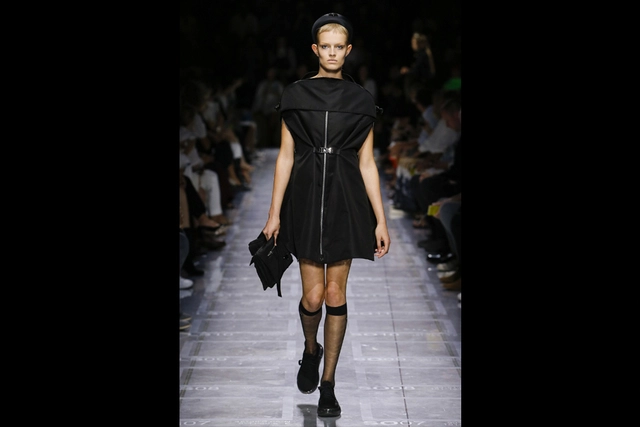
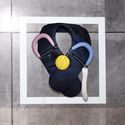
DS+R partner Elizabeth Diller has designed two new pieces for Prada's 2019 spring/summer womenswear collection. Created from Prada nylon as part of the Prada Invites project, the two pieces include a garment bag with utilitarian zippers and buckles and a raincoat that transforms from the same yoke style bag. The yoke style bag was also imagined as a lighter item for women to carry sketchpads, sandwiches and lipstick. The Prada invitation was made to expand the company's fascination with multifaceted representations of contemporary femininity.
It is so refreshing to hear the words: “We do everything differently. We think differently. We are still not a part of any system or any group.” In the following excerpt of my recent conversation with Liz Diller and Ric Scofidio at their busy New York studio we discussed conventions that so many architects accept and embrace, and how to tear them apart in order to reinvent architecture yet again. In New York the founding partners of Diller, Scofidio + Renfro have shown us exactly that with their popular High Line park, original redevelopment of the Lincoln Center, sculpture-like Columbia University Medical Center in Washington Heights, and The Shed with its movable “turtle shell” that’s taking shape in the Hudson Yards to address the evolving needs of artists because what art will look like in the future is an open question.
For the last eight years, Moscow has hosted the Moscow Urban Forum, a yearly gathering for experts to reunite to discuss pressing issues of today’s metropolises. Some of the most renowned architects and urbanists, city mayors, government officials, economists, developers, academics, citizens and professionals from diverse fields and nationalities come together in the iconic Russian city and its important venues like Menage or VDNKh. But it was the presence of two of the world’s most influential men in their respective areas of influence which marked the importance of this year Moscow Urban Forum: Rem Koolhaas and Vladimir Putin.
The project will include two major changes to UCD’s Belfield campus, located about 5 km from Dublin’s city center: a major update to the campus’ entry precinct along Stillorgan Road, as well as a new 8,000 square meter Centre for Creative Design, which will house UCD’s design studios.
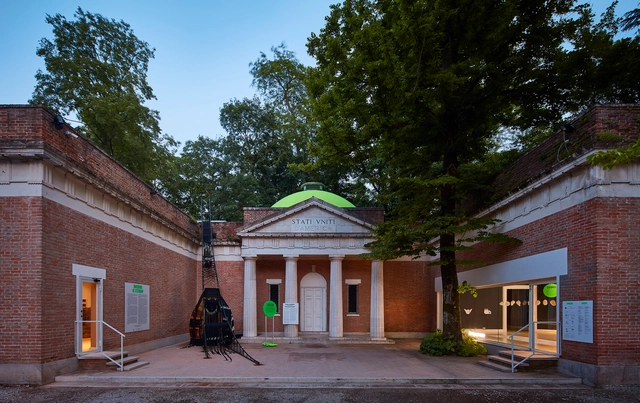
The pavilion representing the United States at this year’s biennale brings together the work of seven different transdisciplinary teams who each prepared an installation addressing the concept of citizenship at a different scale. Entitled Dimensions of Citizenship, the exhibition is intended to challenge the definition and conception of citizenship, examining issues and citing examples on the scale of the citizen, civitas, region, nation, globe, network and cosmos. The pavilion was commissioned on behalf of the US Department of State’s Bureau of Educational and Cultural Affairs by the School of the Art Institute of Chicago and the University of Chicago.
https://www.archdaily.com/895830/diller-scofidio-plus-renfro-and-woods-bagot-win-star-studded-competition-for-adelaide-contemporary-art-museumNiall Patrick Walsh