1. ArchDaily
  2. Digital Realities

Digital Realities: The Latest Architecture and News

Digital Worlds and the Limits of Frictionless Space: Rethinking Scale and Materiality

Audio available

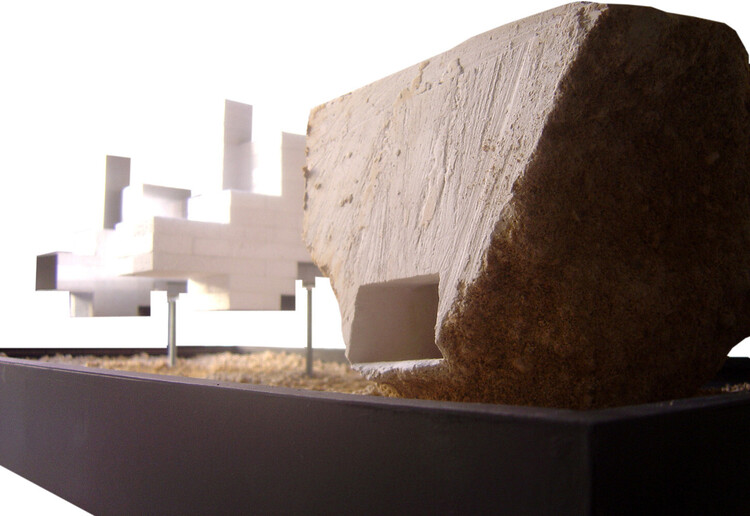
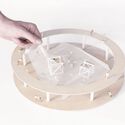
Historically, the way we design has been closely linked to the way we build. Architecture moved through physical testing, trial and error, projection drawings, mock-ups, and physical models: each introducing a new layer of abstraction, but still remaining tied to material, scale, and construction. The introduction of CAD significantly changed this dynamic. At first, it was largely understood as the computerization of precise geometry for construction. Over time, however, digital tools moved earlier into the design process, replacing sketching, physical trial and error, model-making, and other forms of thinking that had once kept scale and material close at hand.

The lineage of architectural design can therefore be understood, in part, as an evolution of abstractions. Some have been extraordinarily productive. Plans and sections, for example, isolate particular dimensions of architecture while still allowing the mind to reconstruct the whole. They flatten, cut, and reduce, but they do not abandon the building. Through the combination of drawings, one can understand rooms, circulation, structure, openings, and spatial relationships without becoming lost in the complexity of the project. Their abstraction is disciplined because it remains tied to an architectural reality that must eventually be measured, built, and inhabited.

Digital Worlds and the Limits of Frictionless Space: Rethinking Scale and Materiality - Imagem 1 de 4Digital Worlds and the Limits of Frictionless Space: Rethinking Scale and Materiality - Imagem 2 de 4Digital Worlds and the Limits of Frictionless Space: Rethinking Scale and Materiality - Imagem 3 de 4Digital Worlds and the Limits of Frictionless Space: Rethinking Scale and Materiality - Imagem 4 de 4Digital Worlds and the Limits of Frictionless Space: Rethinking Scale and Materiality - More Images+ 8

The Ecological Footprint of Data Centers: The Downpour of a Digital Future

Subscriber Access | 

This article is the winning entry of the Epistle Writing Prize 2024, an annual competition dedicated to recognizing outstanding writing on design, architecture, and the environment.

We might be in the age of the digital cloud - however celestial or ethereal it may appear to be - but it is not only incontrovertibly material but also a powerful ecological force. In present times, data centers are mammoth powerhouses of modern information, communication, and technology industries with giant servers that store and process data. While their proliferation is in a sense, a consequence of our consumption patterns, and as the global demand for the digital grows, so does the data center footprint.

AI, Data, and Predicting Urbanism: Interview with Peter Hirshberg and Anna Fedorova

This article is the ninth in a series focusing on the Architecture of the Metaverse. ArchDaily has collaborated with John Marx, AIA, the founding design principal and Chief Artistic Officer of Form4 Architecture, to bring you monthly articles that seek to define the Metaverse, convey the potential of this new realm as well as understand its constraints. In this feature, architect John Marx interviews Peter Hirshberg, chairman, and Anna Fedorova, principal at the Maker City Project.

AI, Data, and Predicting Urbanism: Interview with Peter Hirshberg and Anna Fedorova - Imagen 1 de 4AI, Data, and Predicting Urbanism: Interview with Peter Hirshberg and Anna Fedorova - Imagen 2 de 4AI, Data, and Predicting Urbanism: Interview with Peter Hirshberg and Anna Fedorova - Imagen 3 de 4AI, Data, and Predicting Urbanism: Interview with Peter Hirshberg and Anna Fedorova - Imagen 4 de 4AI, Data, and Predicting Urbanism: Interview with Peter Hirshberg and Anna Fedorova - More Images+ 3

The Metaverse Unleashed: The Rise of Human-Scale Digital Venues

This article is the eighth in a series focusing on the Architecture of the Metaverse. ArchDaily has collaborated with John Marx, AIA, the founding design principal and Chief Artistic Officer of Form4 Architecture, to bring you monthly articles that seek to define the Metaverse, convey the potential of this new realm as well as understand its constraints. In this feature, architect John Marx interviews Heather Gallagher, an international expert in transformative events and the experience economy and former Head of Technology at Burning Man.

The Metaverse Unleashed: The Rise of Human-Scale Digital Venues - Image 1 of 4The Metaverse Unleashed: The Rise of Human-Scale Digital Venues - Image 2 of 4The Metaverse Unleashed: The Rise of Human-Scale Digital Venues - Image 3 of 4The Metaverse Unleashed: The Rise of Human-Scale Digital Venues - Image 4 of 4The Metaverse Unleashed: The Rise of Human-Scale Digital Venues - More Images+ 6

Experiencing Reality in the Metaverse from Life-Like to Surreal

This article is the third in a series focusing on the Architecture of the Metaverse. ArchDaily has collaborated with John Marx, AIA, the founding design principal and Chief Artistic Officer of Form4 Architecture, to bring you monthly articles that seek to define the Metaverse, convey the potential of this new realm as well as understand its constraints.

"I had lunch on the moon, took a swim in a shadowy lake on Mars, played croquet with the clouds, and chased rainbows under the sea, all in one glorious afternoon" ... how real and meaningful these experiences felt will be greatly influenced by how and where you interact with a Metaverse opening near you soon. While in a fundamental sense, the Metaverse can be seen as a series of overlapping economic intentions, there is a unique and important opportunity for architects and designers of space and place to influence the outcome of these efforts and to create a more humane and vibrant future.

Experiencing Reality in the Metaverse from Life-Like to Surreal  - Image 1 of 4Experiencing Reality in the Metaverse from Life-Like to Surreal  - Image 2 of 4Experiencing Reality in the Metaverse from Life-Like to Surreal  - Image 3 of 4Experiencing Reality in the Metaverse from Life-Like to Surreal  - Image 4 of 4Experiencing Reality in the Metaverse from Life-Like to Surreal  - More Images+ 3

How We Learn to Live in Synthesized Realities: The Albanian Pavilion Investigates Virtual Civic Spaces at the 2023 Venice Architecture Biennale

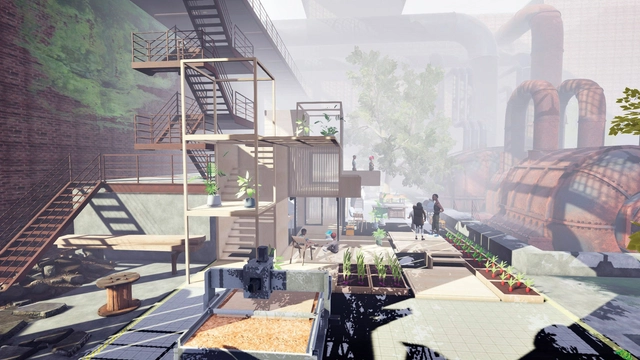
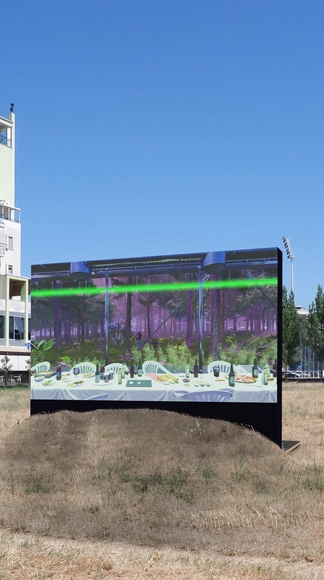
For the 18th International Architecture Exhibition – La Biennale di Venezia, The Albanian Pavilion set out to respond to the theme “The Laboratory of the Future” with the exhibition “Untimely Meditations or: How We Learn to Live in Synthesized Realities.” The project seeks to introduce and understand new typologies of civic spaces by repurposing the rendering engine as a mechanism for exploration. The curatorial team is composed of architects Martin Gjoleka, and Era Merkuri, exhibiting together with architect Ani Marku and 3D digital artist Geraldo Prendushi.

How We Learn to Live in Synthesized Realities: The Albanian Pavilion Investigates Virtual Civic Spaces at the 2023 Venice Architecture Biennale - Imagem 1 de 4How We Learn to Live in Synthesized Realities: The Albanian Pavilion Investigates Virtual Civic Spaces at the 2023 Venice Architecture Biennale - Imagem 2 de 4How We Learn to Live in Synthesized Realities: The Albanian Pavilion Investigates Virtual Civic Spaces at the 2023 Venice Architecture Biennale - Imagem 3 de 4How We Learn to Live in Synthesized Realities: The Albanian Pavilion Investigates Virtual Civic Spaces at the 2023 Venice Architecture Biennale - Imagem 4 de 4How We Learn to Live in Synthesized Realities: The Albanian Pavilion Investigates Virtual Civic Spaces at the 2023 Venice Architecture Biennale - More Images+ 4