1. ArchDaily
  2. Cultural Museum

Cultural Museum: The Latest Architecture and News

Forum, Depot, Maze: Toward a Plural Ecology of Museums

Subscriber Access | 

This article is part of our new Opinion section, a format for argument-driven essays on critical questions shaping our field.

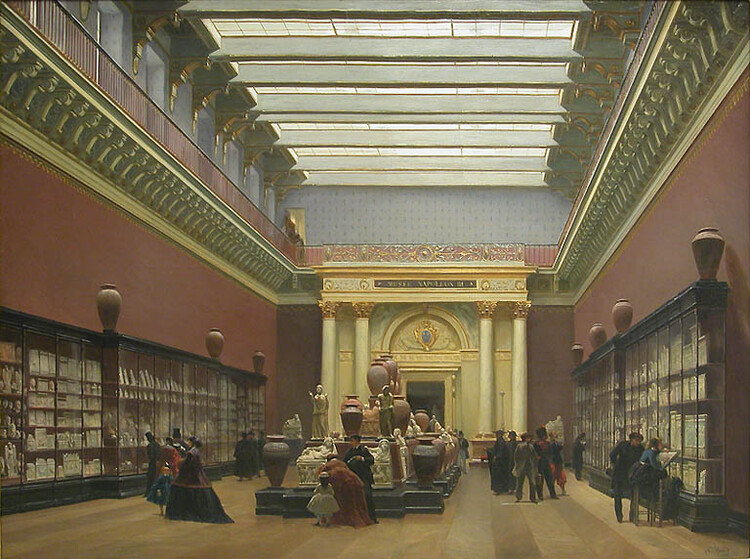
Traditionally, a museum visit is a calendared occasion with a clearly scripted sequence. Arrival is ceremonially marked—by grand stairs or thresholds, by ticketing and information desks, by an audio guide and a concise institutional preface about mission and history. That deliberate "special occasion" quality extends from how museums were long conceived: deliberately exceptional, tightly curated, and organized around a specific narrative arc. In this model, the museum assumes an authoritative voice—its knowledge deep, vetted, and to be respected rather than contested—while architecture and choreography reinforce a rather singular way of entering, learning, and remembering.
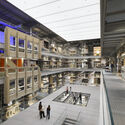
Forum, Depot, Maze: Toward a Plural Ecology of Museums - Image 1 of 4Forum, Depot, Maze: Toward a Plural Ecology of Museums - Image 2 of 4Forum, Depot, Maze: Toward a Plural Ecology of Museums - Image 3 of 4Forum, Depot, Maze: Toward a Plural Ecology of Museums - Image 4 of 4Forum, Depot, Maze: Toward a Plural Ecology of Museums - More Images+ 17

Rethinking Museums: A Conversation with Béatrice Grenier on Architecture as Cultural Policy

Subscriber Access | 

The opening of the new Fondation Cartier pour l'Art Contemporain in Paris last October sparked renewed questions around the role, form, and future of museums. As cultural institutions continue to proliferate worldwide in this digital era, the museum itself appears increasingly in need of redefinition. Rather than offering a single model or solution, Architecture for Culture: Rethinking Museums, written by architectural historian and curator Béatrice Grenier, argues for a more contextual and plural understanding of what a museum can be: an institution shaped by its environment, its public, and the specific cultural questions it seeks to address.

ArchDaily had the opportunity to discuss these ideas with the author against the backdrop of the Fondation Cartier's newly inaugurated home on Rue de Rivoli. Housed within a restored Haussmannian building that once accommodated the Grands Magasins du Louvre, the space has been radically reimagined by Jean Nouvel as a dynamic, transformable architecture.

Rethinking Museums: A Conversation with Béatrice Grenier on Architecture as Cultural Policy - Image 1 of 4Rethinking Museums: A Conversation with Béatrice Grenier on Architecture as Cultural Policy - Image 2 of 4Rethinking Museums: A Conversation with Béatrice Grenier on Architecture as Cultural Policy - Image 3 of 4Rethinking Museums: A Conversation with Béatrice Grenier on Architecture as Cultural Policy - Image 4 of 4Rethinking Museums: A Conversation with Béatrice Grenier on Architecture as Cultural Policy - More Images+ 11

The Line of Fragile Radiance: Neon Light as Atelier, Architecture, and Archive

Subscriber Access | 

The fragility—and temporal beauty—of neon has captivated audiences since the early 1900s. First shown commercially by French engineer Georges Claude at the 1910 Paris Motor Show, neon spread rapidly, achieving broad popularity in the United States from the 1920s through the 1950s. Mid-century America saw it everywhere: from the casinos of the Las Vegas Strip to roadside motor inns along Route 66 and the spectacle of Times Square. By the latter half of the century, however, many signs were scrapped or left to decay, and numerous municipalities restricted neon as visually garish or power-hungry—despite the technology's comparatively modest energy use. In the U.S., renewed interest in neon arguably didn't meaningfully return until the early 2000s.

In Hong Kong, by contrast, neon was embraced with unusual enthusiasm at a time when it began to lose popularity elsewhere. Even as installation slowed in recent decades—largely due to updated ordinances requiring removal of overhanging signs whose support structures failed to meet safety standards—the city's affinity for neon never fully disappeared.

The Line of Fragile Radiance: Neon Light as Atelier, Architecture, and Archive - Image 1 of 4The Line of Fragile Radiance: Neon Light as Atelier, Architecture, and Archive - Image 2 of 4The Line of Fragile Radiance: Neon Light as Atelier, Architecture, and Archive - Image 3 of 4The Line of Fragile Radiance: Neon Light as Atelier, Architecture, and Archive - Image 4 of 4The Line of Fragile Radiance: Neon Light as Atelier, Architecture, and Archive - More Images+ 16

Almaty Museum of Arts by Chapman Taylor Opens in Kazakhstan

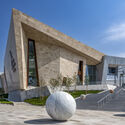
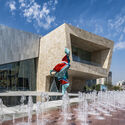
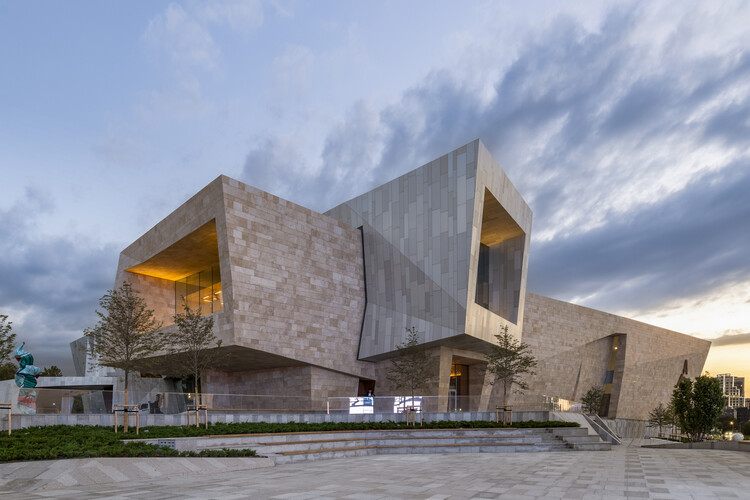
The Almaty Museum of Arts has opened in Kazakhstan, establishing a new cultural institution dedicated to contemporary art in Central Asia and internationally. Designed by Chapman Taylor, the museum is located at the foothills of the Tian Shan mountains and encompasses 10,060 square meters. The design draws inspiration from the contrast between the city of Almaty and its mountainous surroundings, a relationship expressed through two interconnecting limestone and aluminium-clad volumes. These are organized around a central, light-filled atrium referred to as the "Art Street," which serves as the primary circulation and gathering space.

Almaty Museum of Arts by Chapman Taylor Opens in Kazakhstan - Image 1 of 4Almaty Museum of Arts by Chapman Taylor Opens in Kazakhstan - Image 2 of 4Almaty Museum of Arts by Chapman Taylor Opens in Kazakhstan - Image 3 of 4Almaty Museum of Arts by Chapman Taylor Opens in Kazakhstan - Image 4 of 4Almaty Museum of Arts by Chapman Taylor Opens in Kazakhstan - More Images+ 3

A Culture of Reuse: 5 European Museums Embedded into Their Historical Contexts

Subscriber Access | 

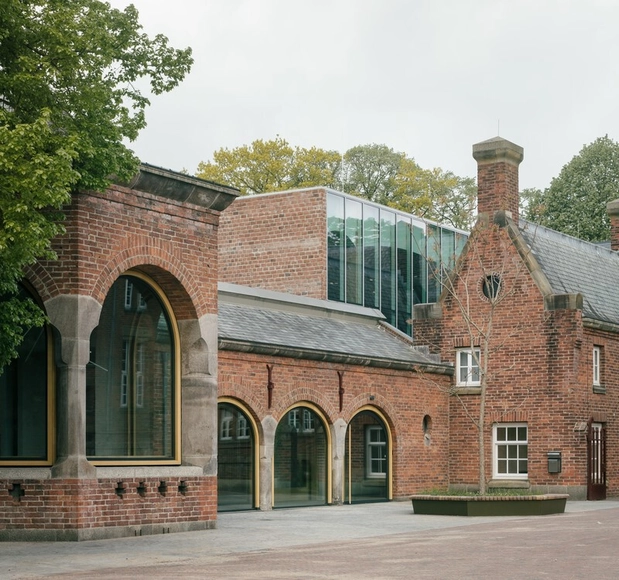
Throughout their relatively recent history, museums have evolved to condense particular aspects of a culture and present them in a coherent and unified manner. This makes the connection between the architecture and the exhibit a crucial matter, as the architect is tasked with designing not only the framework and background of the exhibited arts or artifacts but also taking charge of the journey undertaken by the visitor, harmonizing the cultural gain with the lived spatial experience of walking the exhibition halls. However, not all museums have been purposely built for this task.

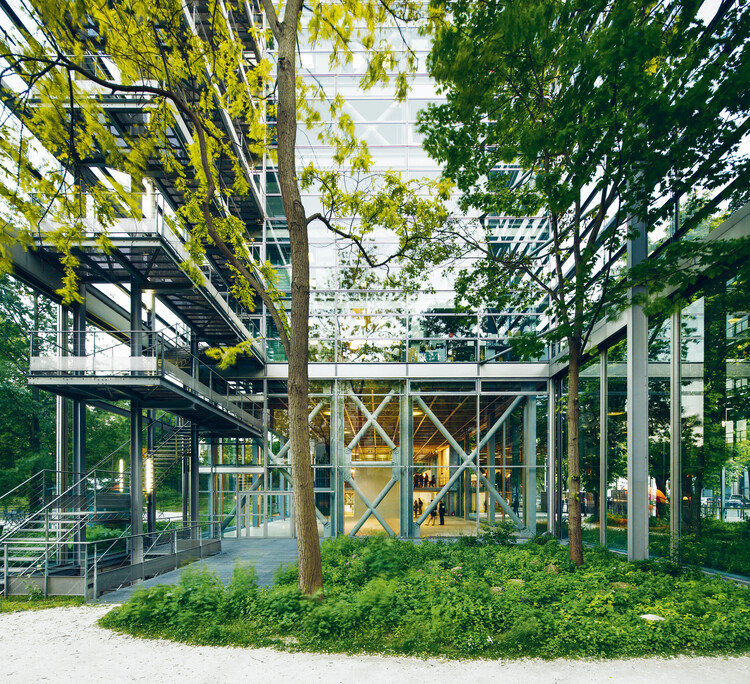
Across Europe, museums are being organized within or expanding upon historical monuments and buildings that have lost their original purpose. Then in a state of decay, this decision to reorganize them as cultural venues stops the decay and preserves the historical material, adding a new layer of complexity to the intended exhibits. The architect's role becomes that of introducing order and a system that can balance the heritage of the place with the needs of modern functionality, ensuring that the essence of the original structure is preserved while meeting the needs of contemporary exhibitions and public engagement.

A Culture of Reuse: 5 European Museums Embedded into Their Historical Contexts - Image 1 of 4A Culture of Reuse: 5 European Museums Embedded into Their Historical Contexts - Image 2 of 4A Culture of Reuse: 5 European Museums Embedded into Their Historical Contexts - Image 3 of 4A Culture of Reuse: 5 European Museums Embedded into Their Historical Contexts - Image 4 of 4A Culture of Reuse: 5 European Museums Embedded into Their Historical Contexts - More Images+ 23

A Translucent Art Museum in Dubai and a Biennale Exhibition Hall in South Korea: 8 Unbuilt Cultural Institutions Submitted by the ArchDaily Community

Subscriber Access | 

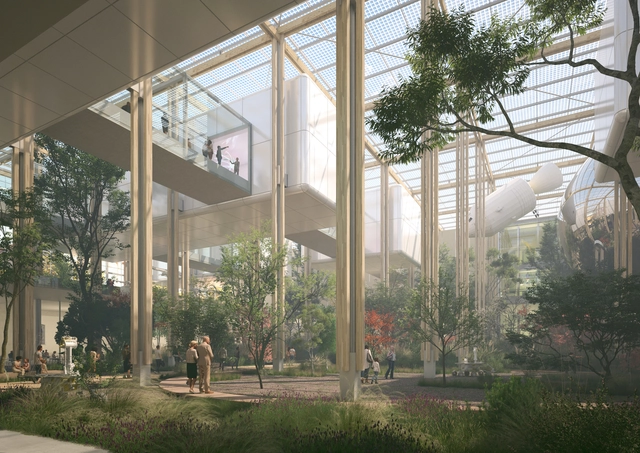
In the contemporary context, museums face contradictory sets of ideas: becoming attractions on and of themselves but presenting an understated image that shifts the attention to the exhibits, creating a safe and protected environment for the artifacts, yet opening them up to the public, becoming repositories of history yet catalysts for innovation. Searching for the balance between all of these constraints has resulted in the flourishing of diverse types of museums and cultural institutions, from those dedicated to the remembrance of a single event or persona to temporary homes for cultural events or spaces that expand their cultural offering beyond exhibition areas.

This curated selection of Best Unbuilt Architecture highlights projects submitted by the ArchDaily community that demonstrate the fusion of art, technology, and innovation within the realm of museums and cultural centers. Among the featured designs are works from renowned architectural offices, including CAA architects, NextOffice – Alireza Taghaboni, and Fentress Architects, along with several emerging firms. Ranging from a sculptural art museum in Dubai to a local cultural and recreational complex in Senegal, or an immersive science museum in Rome, Italy, this diverse compilation strives to showcase the spectrum of scales and purposes of cultural institutions.

A Translucent Art Museum in Dubai and a Biennale Exhibition Hall in South Korea: 8 Unbuilt Cultural Institutions Submitted by the ArchDaily Community - Image 6 of 4A Translucent Art Museum in Dubai and a Biennale Exhibition Hall in South Korea: 8 Unbuilt Cultural Institutions Submitted by the ArchDaily Community - Image 16 of 4A Translucent Art Museum in Dubai and a Biennale Exhibition Hall in South Korea: 8 Unbuilt Cultural Institutions Submitted by the ArchDaily Community - Image 21 of 4A Translucent Art Museum in Dubai and a Biennale Exhibition Hall in South Korea: 8 Unbuilt Cultural Institutions Submitted by the ArchDaily Community - Image 29 of 4A Translucent Art Museum in Dubai and a Biennale Exhibition Hall in South Korea: 8 Unbuilt Cultural Institutions Submitted by the ArchDaily Community - More Images+ 41

OMA's Expansion and Renovation Project of the Buffalo AKG Art Museum Will Open in May 2023

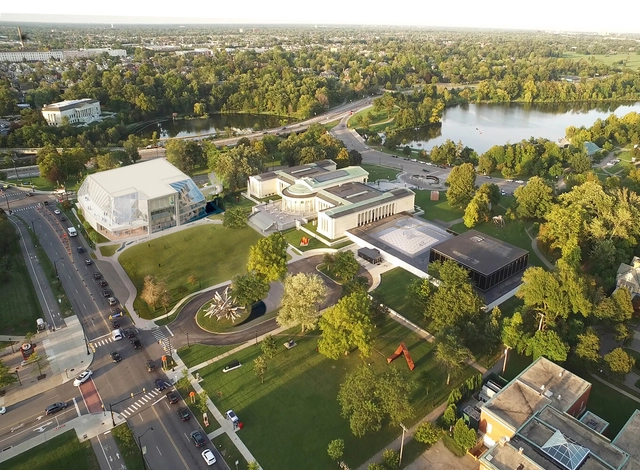
The Buffalo AKG Art Museum (formerly known as the Albright-Knox Art Gallery) has announced that it will welcome its first visitors on the 25th of May, 2023. Revamped and expanded, the new campus designed by OMA/Shohei Shigematsu in collaboration with Cooper Robertson features “new work of signature architecture, the Jeffrey E. Gundlach building, and extensive renovation to existing buildings”.

OMA's Expansion and Renovation Project of the Buffalo AKG Art Museum Will Open in May 2023 - Image 1 of 4OMA's Expansion and Renovation Project of the Buffalo AKG Art Museum Will Open in May 2023 - Image 2 of 4OMA's Expansion and Renovation Project of the Buffalo AKG Art Museum Will Open in May 2023 - Image 3 of 4OMA's Expansion and Renovation Project of the Buffalo AKG Art Museum Will Open in May 2023 - Image 4 of 4OMA's Expansion and Renovation Project of the Buffalo AKG Art Museum Will Open in May 2023 - More Images+ 10

Adjaye Associates Reveals Preliminary Design for Edo Museum of West African Art in Nigeria

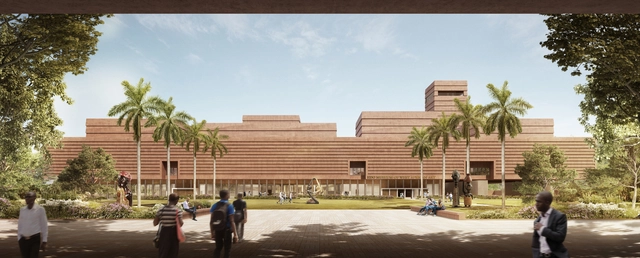
Adjaye Associates unveiled its design for the Edo Museum of West African Art (EMOWAA). Investigating the archaeology of the Kingdom of Benin, including buried remains below the site, the EMOWAA Archaeology Project is set to start in 2021, involving the Legacy Restoration Trust (LRT) and the British Museum with the local communities, the Benin Royal Court, the Government of Edo State, and the National Commission for Museums and Monuments (NCMM).

Adjaye Associates Reveals Preliminary Design for Edo Museum of West African Art in Nigeria - Image 1 of 4Adjaye Associates Reveals Preliminary Design for Edo Museum of West African Art in Nigeria - Image 2 of 4Adjaye Associates Reveals Preliminary Design for Edo Museum of West African Art in Nigeria - Image 3 of 4Adjaye Associates Reveals Preliminary Design for Edo Museum of West African Art in Nigeria - Image 4 of 4Adjaye Associates Reveals Preliminary Design for Edo Museum of West African Art in Nigeria - More Images+ 6

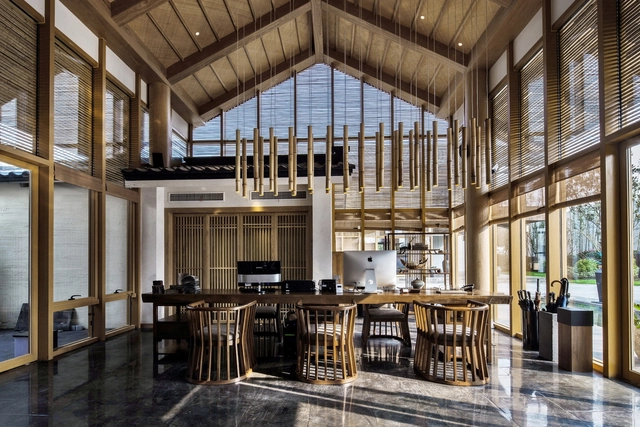
Brick Kiln Folk Inn & Museum - Interior Design / H DESIGN

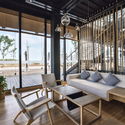
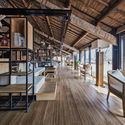
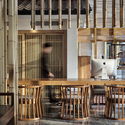
Brick Kiln Folk Inn & Museum - Interior Design / H DESIGN - Cultural Center, Beam, Table, BenchBrick Kiln Folk Inn & Museum - Interior Design / H DESIGN - Cultural Center, Deck, Beam, Door, Table, ChairBrick Kiln Folk Inn & Museum - Interior Design / H DESIGN - Cultural Center, Deck, Beam, Facade, BenchBrick Kiln Folk Inn & Museum - Interior Design / H DESIGN - Cultural Center, Lighting, Table, ChairBrick Kiln Folk Inn & Museum - Interior Design / H DESIGN - More Images+ 10