1. ArchDaily
  2. Jean Nouvel

Jean Nouvel: The Latest Architecture and News

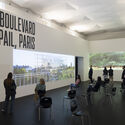
Rethinking Museums: A Conversation with Béatrice Grenier on Architecture as Cultural Policy

Subscriber Access | 

The opening of the new Fondation Cartier pour l'Art Contemporain in Paris last October sparked renewed questions around the role, form, and future of museums. As cultural institutions continue to proliferate worldwide in this digital era, the museum itself appears increasingly in need of redefinition. Rather than offering a single model or solution, Architecture for Culture: Rethinking Museums, written by architectural historian and curator Béatrice Grenier, argues for a more contextual and plural understanding of what a museum can be: an institution shaped by its environment, its public, and the specific cultural questions it seeks to address.

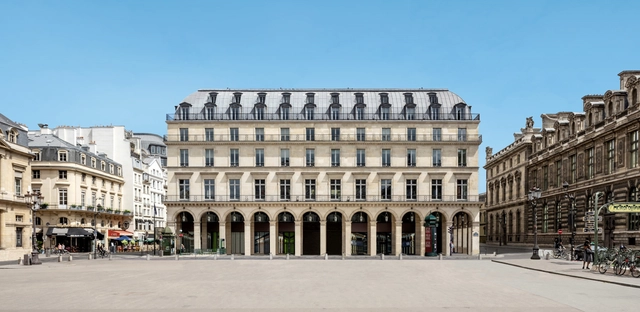
ArchDaily had the opportunity to discuss these ideas with the author against the backdrop of the Fondation Cartier's newly inaugurated home on Rue de Rivoli. Housed within a restored Haussmannian building that once accommodated the Grands Magasins du Louvre, the space has been radically reimagined by Jean Nouvel as a dynamic, transformable architecture.

Rethinking Museums: A Conversation with Béatrice Grenier on Architecture as Cultural Policy - Image 1 of 4Rethinking Museums: A Conversation with Béatrice Grenier on Architecture as Cultural Policy - Image 2 of 4Rethinking Museums: A Conversation with Béatrice Grenier on Architecture as Cultural Policy - Image 3 of 4Rethinking Museums: A Conversation with Béatrice Grenier on Architecture as Cultural Policy - Image 4 of 4Rethinking Museums: A Conversation with Béatrice Grenier on Architecture as Cultural Policy - More Images+ 11

Louvres Around the World: The Export of Museums and Architecture as a Global Brand

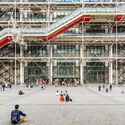
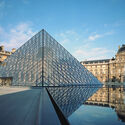
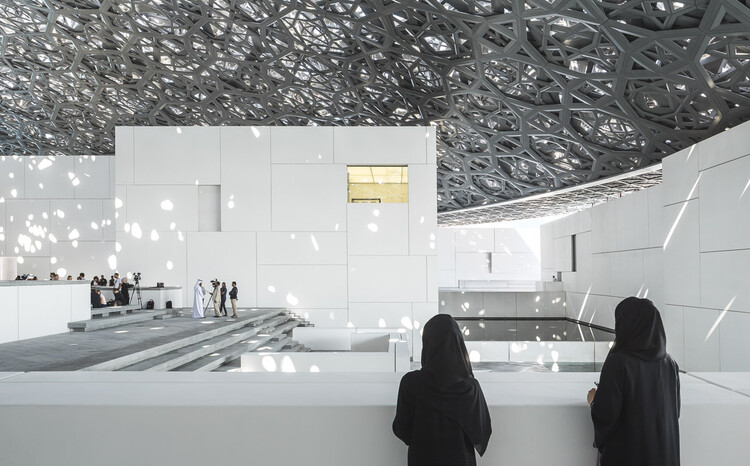
It is undeniable that, at first glance, the idea of a Louvre in Abu Dhabi or a Centre Pompidou in Brazil may seem somewhat disconcerting. The image of these museums, internationally renowned, appears in many ways inseparable from their original cultural contexts. And to some extent, it truly is. The Louvre, deeply rooted in the history of France as a former fortress and later royal residence, embodies a set of invaluable heritage values, further amplified by I. M. Pei’s iconic glass pyramid intervention in 1989. The Pompidou, meanwhile, is remembered as a historic turning point: by redefining the concept of public infrastructure through radically unconventional architecture, it marked the first time culture drew in mass audiences.

Louvres Around the World: The Export of Museums and Architecture as a Global Brand - Image 1 of 4Louvres Around the World: The Export of Museums and Architecture as a Global Brand - Image 2 of 4Louvres Around the World: The Export of Museums and Architecture as a Global Brand - Image 3 of 4Louvres Around the World: The Export of Museums and Architecture as a Global Brand - Image 4 of 4Louvres Around the World: The Export of Museums and Architecture as a Global Brand - More Images+ 8

RIBA Stirling Prize Winner and Faith Park in Albania: This Week’s Review

This week's architectural developments highlighted how design operates as a form of social and cultural infrastructure, linking care, community, and context across scales. From London's reinterpretation of the almshouse model to the transformation of urban gateways in Phnom Penh and Tirana, architecture reflected a shared interest in spaces that foster connection and adaptability. Parallel to these urban and infrastructural works, new cultural projects in Paris and Hanoi explored how museums and performance spaces can renew public institutions through material experimentation and spatial flexibility.

RIBA Stirling Prize Winner and Faith Park in Albania: This Week’s Review - Image 1 of 4RIBA Stirling Prize Winner and Faith Park in Albania: This Week’s Review - Image 2 of 4RIBA Stirling Prize Winner and Faith Park in Albania: This Week’s Review - Image 3 of 4RIBA Stirling Prize Winner and Faith Park in Albania: This Week’s Review - Image 4 of 4RIBA Stirling Prize Winner and Faith Park in Albania: This Week’s Review - More Images+ 3

Fondation Cartier Reopens in Jean-Nouvel-Designed Paris Building With Exhibition by Formafantasma

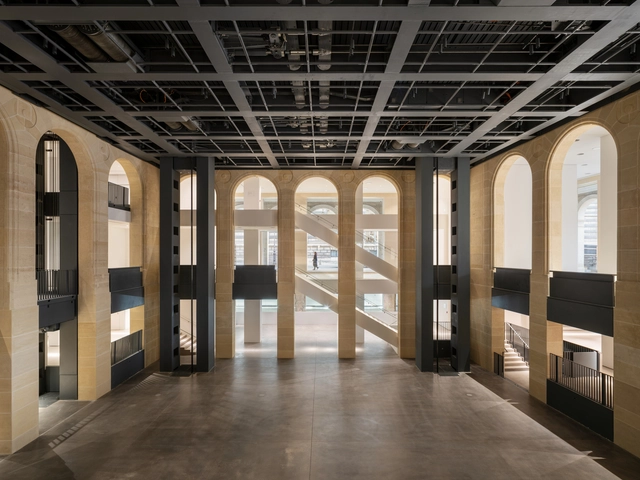
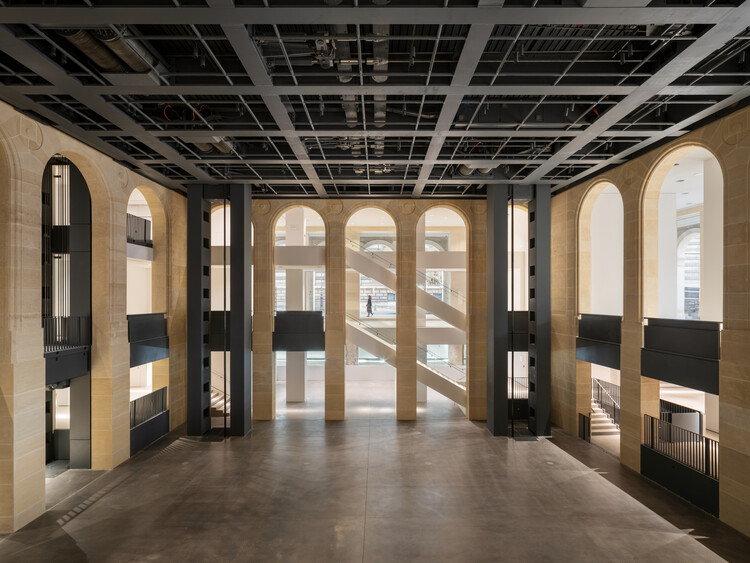
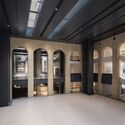
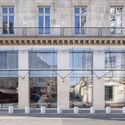
On October 25, 2025, the Fondation Cartier Pour l'Art Contemporain will open its new premises to the public with an inaugural exhibition drawn from its own Collection, entitled Exposition Générale. Located in the heart of Paris, the new space occupies a Haussmannian building that once housed the Grands Magasins du Louvre, recently reimagined by Jean Nouvel. Conceived as a dynamic architecture with five mobile platforms, the building was designed to expand the possibilities of a traditional exhibition venue. These mechanisms aim to accommodate all forms of visual expression, including photography, cinema, the performing arts, science, and craft, within a space that resonates with the urban life of Paris and engages with questions of urban planning and ecology. Within these parameters, the inaugural exhibition brings together more than 600 works by over 100 artists in a contemporary scenography designed by Formafantasma.

Fondation Cartier Reopens in Jean-Nouvel-Designed Paris Building With Exhibition by Formafantasma  - Image 1 of 4Fondation Cartier Reopens in Jean-Nouvel-Designed Paris Building With Exhibition by Formafantasma  - Featured ImageFondation Cartier Reopens in Jean-Nouvel-Designed Paris Building With Exhibition by Formafantasma  - Image 2 of 4Fondation Cartier Reopens in Jean-Nouvel-Designed Paris Building With Exhibition by Formafantasma  - Image 3 of 4Fondation Cartier Reopens in Jean-Nouvel-Designed Paris Building With Exhibition by Formafantasma  - More Images+ 36

From Yakushima to Toronto: Architecture Now Highlights New Projects Shaping Hospitality, Public Life, and Infrastructure

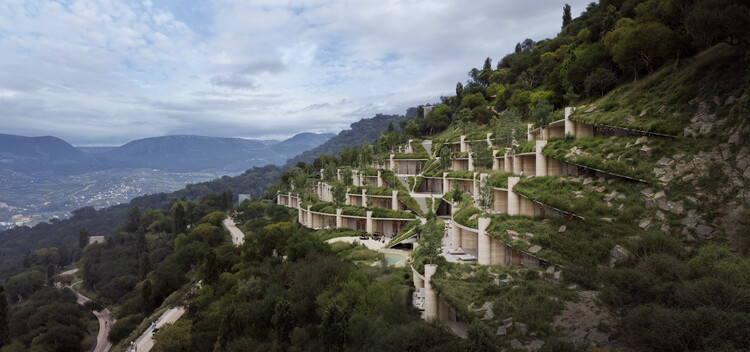
As cities and infrastructures evolve to meet shifting cultural, environmental, and social demands, new architectural projects are redefining how public spaces and civic institutions operate. This edition of Architecture Now brings together proposals spanning different contexts and scales: on Yakushima Island, Jean Nouvel embeds a boutique retreat for NOT A HOTEL into a UNESCO-listed forest landscape; in New York City, Rossetti and WSP are preparing a major renovation of Arthur Ashe Stadium to expand capacity and enhance the visitor experience; in Toronto, Diamond Schmitt and gh3* have broken ground on a mass-timber, net-zero paramedic station; and across the English Channel, Hollaway Studio is leading a transformation of LeShuttle's UK and French terminals into more seamless and sustainable gateways. Together, these projects reflect how design is being used to adapt existing systems and landscapes to new forms of public life.

From Yakushima to Toronto: Architecture Now Highlights New Projects Shaping Hospitality, Public Life, and Infrastructure - Image 1 of 4From Yakushima to Toronto: Architecture Now Highlights New Projects Shaping Hospitality, Public Life, and Infrastructure - Image 4 of 4From Yakushima to Toronto: Architecture Now Highlights New Projects Shaping Hospitality, Public Life, and Infrastructure - Image 2 of 4From Yakushima to Toronto: Architecture Now Highlights New Projects Shaping Hospitality, Public Life, and Infrastructure - Image 5 of 4From Yakushima to Toronto: Architecture Now Highlights New Projects Shaping Hospitality, Public Life, and Infrastructure - More Images+ 11

Fondation Cartier Announces Paris Relocation Plans Led by Jean Nouvel during Collateral Event at Venice Biennale 2025

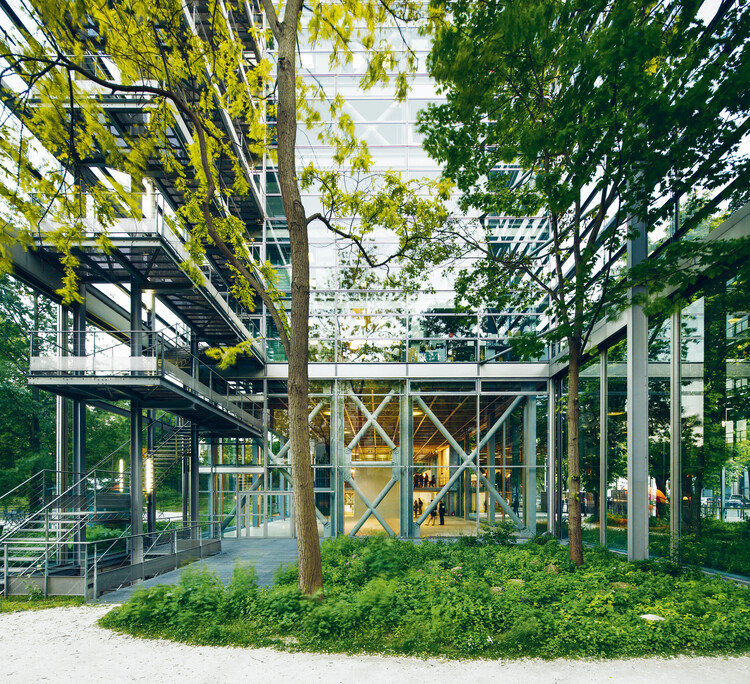
Fondation Cartier pour l'art contemporain announced plans to move into a historic building in Place du Palais-Royal in Paris. Originally built in 1855, the Haussmannian building is reimagined by architect Jean Nouvel and scheduled to open on October 25, 2025. The collaboration between Fondation Cartier and Jean Nouvel dates back to 1994 when the architect designed the "Parisian Monument," a glass and steel building on Boulevard Raspail that serves as the institution's current headquarters.

Fondation Cartier Announces Paris Relocation Plans Led by Jean Nouvel during Collateral Event at Venice Biennale 2025 - Image 1 of 4Fondation Cartier Announces Paris Relocation Plans Led by Jean Nouvel during Collateral Event at Venice Biennale 2025 - Image 2 of 4Fondation Cartier Announces Paris Relocation Plans Led by Jean Nouvel during Collateral Event at Venice Biennale 2025 - Image 3 of 4Fondation Cartier Announces Paris Relocation Plans Led by Jean Nouvel during Collateral Event at Venice Biennale 2025 - Image 4 of 4Fondation Cartier Announces Paris Relocation Plans Led by Jean Nouvel during Collateral Event at Venice Biennale 2025 - More Images+ 13

11 Collateral Events to Explore While Visiting the 2025 Venice Architecture Biennale

As one of the most important and visited contemporary architecture exhibitions worldwide, the Venice Architecture Biennale extends beyond the grounds of the Giardini and the Arsenale, aiming to engage the entire city in discussions on relevant issues, challenges, and opportunities within the architectural profession. This year's Biennale, curated by Carlo Ratti, explores the theme "Intelligens. Natural. Artificial. Collective," inviting visitors to consider how architecture, technology, and nature intersect to shape the future.

As part of this year's event, 11 collateral exhibitions organized by various national and international institutions offer a range of perspectives on topics such as sustainability, cultural landscapes, and adaptive architecture. These exhibitions, spread throughout Venice, contribute to the broader conversation on the evolving role of architecture in addressing global challenges and promoting a more sustainable and interconnected future.

11 Collateral Events to Explore While Visiting the 2025 Venice Architecture Biennale - Image 1 of 411 Collateral Events to Explore While Visiting the 2025 Venice Architecture Biennale - Image 2 of 411 Collateral Events to Explore While Visiting the 2025 Venice Architecture Biennale - Image 3 of 411 Collateral Events to Explore While Visiting the 2025 Venice Architecture Biennale - Image 4 of 411 Collateral Events to Explore While Visiting the 2025 Venice Architecture Biennale - More Images+ 7

Designing for the Performing Arts: Architecture as a Stage for Experience

Subscriber Access | 

Theaters, concert halls, and opera houses are more than just venues — they are meticulously orchestrated environments where architecture, technology, and human emotion converge. Unlike conventional buildings, these spaces must accommodate a dynamic interplay between acoustics, sightlines, stage mechanics, and audience engagement, all while maintaining an architectural identity that resonates with performers and spectators alike. Whether it is the immersive embrace of a vineyard-style concert hall or the grandeur of a proscenium theater, every design decision shapes how performances are experienced and remembered.

The recently published SET PIECES: Architecture for the Performing Arts in Fifteen Fragments by Diamond Schmitt Architects explores these complexities through case studies and reflections. Inspired by its insights, this article examines essential design considerations for performance spaces, from acoustic engineering to the evolving role of theaters in urban life.

Designing for the Performing Arts: Architecture as a Stage for Experience - Image 1 of 4Designing for the Performing Arts: Architecture as a Stage for Experience - Image 2 of 4Designing for the Performing Arts: Architecture as a Stage for Experience - Image 3 of 4Designing for the Performing Arts: Architecture as a Stage for Experience - Image 4 of 4Designing for the Performing Arts: Architecture as a Stage for Experience - More Images+ 60

Beyond Form: How Light and Shadow Define Architectural Atmosphere

Architecture is often defined by its physical form, materials, and structural elements, but light and shadow truly shape the experience of space. These elements influence perception, guide movement, and evoke emotional responses, transforming static structures into dynamic environments. Throughout history, architects have harnessed the interplay of light and shadow, using it as a fundamental design tool to create atmosphere and meaning.

Beyond Form: How Light and Shadow Define Architectural Atmosphere - Image 1 of 4Beyond Form: How Light and Shadow Define Architectural Atmosphere - Image 2 of 4Beyond Form: How Light and Shadow Define Architectural Atmosphere - Image 3 of 4Beyond Form: How Light and Shadow Define Architectural Atmosphere - Image 4 of 4Beyond Form: How Light and Shadow Define Architectural Atmosphere - More Images+ 48

Global Architects, Local Contexts: Navigating Identity in the Gulf’s Cultural Landmarks

Subscriber Access | 

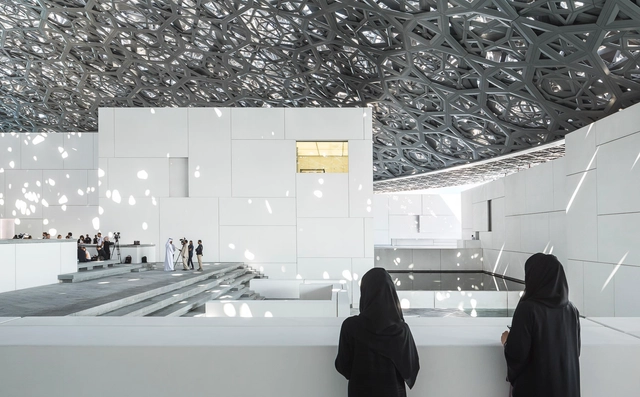
In recent years, the Gulf region has emerged as a global center for cultural and architectural development, commissioning internationally acclaimed architects to design its most high-profile museums and institutions. These projects, ranging from Louvre Abu Dhabi by Jean Nouvel to Museum of Islamic Art in Doha by I. M. Pei, are often designed by foreign architects, yet they aim to embed themselves within their context through strategies that reference the region's landscape, climate, and architectural traditions. This raises a fundamental question: What defines local architecture in the 21st century?

Global Architects, Local Contexts: Navigating Identity in the Gulf’s Cultural Landmarks - Image 1 of 4Global Architects, Local Contexts: Navigating Identity in the Gulf’s Cultural Landmarks - Image 2 of 4Global Architects, Local Contexts: Navigating Identity in the Gulf’s Cultural Landmarks - Image 3 of 4Global Architects, Local Contexts: Navigating Identity in the Gulf’s Cultural Landmarks - Image 4 of 4Global Architects, Local Contexts: Navigating Identity in the Gulf’s Cultural Landmarks - More Images+ 9

Madrid Architecture City Guide: 27 Brutalist and Contemporary Attractions to Explore in the Spanish Capital

Subscriber Access | 

Madrid, the vibrant capital of Spain, offers a blend of tradition and modernity, reflected in its diverse architectural heritage. This rich past is etched into the old façades, expansive public spaces, and historic religious institutions that define much of Madrid’s character today. The city’s continuous architectural renewal, reflected in both respectful restorations and innovative new constructions, highlights Madrid’s commitment to preserving its heritage while embracing modernity.

In the 20th century, Madrid embraced modernity, influenced by movements such as Rationalism, the International Style, and Brutalism. Today, Madrid is a showcase for contemporary design, where contemporary projects by renowned architects coexist with its historical legacy. Structures like the CaixaForum by Herzog & de Meuron and Jean Nouvel’s Reina Sofía Museum exemplify the city’s interest in architectural explorations
Madrid Architecture City Guide: 27 Brutalist and Contemporary Attractions to Explore in the Spanish Capital - Image 1 of 4Madrid Architecture City Guide: 27 Brutalist and Contemporary Attractions to Explore in the Spanish Capital - Image 2 of 4Madrid Architecture City Guide: 27 Brutalist and Contemporary Attractions to Explore in the Spanish Capital - Image 3 of 4Madrid Architecture City Guide: 27 Brutalist and Contemporary Attractions to Explore in the Spanish Capital - Image 4 of 4Madrid Architecture City Guide: 27 Brutalist and Contemporary Attractions to Explore in the Spanish Capital - More Images+ 24

Headed to the 2024 Olympics: 20 Innovative and Iconic Architectural Projects to Explore in Paris

Subscriber Access | 

In 1900, Paris hosted its first Olympic games. It had been the second city to host them after the first Olympics in Athens. It was also the year of the Exposition Universelle, where the city would again showcase how it remade itself anew in less than 30 years. To this day, Paris remains a hub for all sorts of architectural innovation and development through bold designs that affect how people live and new materials and techniques. It fascinatingly juxtaposes grandeur and monumentalism with its predominately baroque, “second empire,” and art nouveau works; while also pushing for designs that strive for social living reforms such as in Le Corbusier’s experimental works or Lacaton & Vassal’s considerate interventions.

It’s this openness to the world that attracts not only millions of visitors a year but also innovators and architects who have set up shop in Paris and made it their second home. Once again, the city reworks itself as mass construction, renovation, and restoration sites culminate all over the city to host international athletes at the 2024 Olympics.

Headed to the 2024 Olympics: 20 Innovative and Iconic Architectural Projects to Explore in Paris - Image 1 of 4Headed to the 2024 Olympics: 20 Innovative and Iconic Architectural Projects to Explore in Paris - Image 2 of 4Headed to the 2024 Olympics: 20 Innovative and Iconic Architectural Projects to Explore in Paris - Image 14 of 4Headed to the 2024 Olympics: 20 Innovative and Iconic Architectural Projects to Explore in Paris - Image 5 of 4Headed to the 2024 Olympics: 20 Innovative and Iconic Architectural Projects to Explore in Paris - More Images+ 22

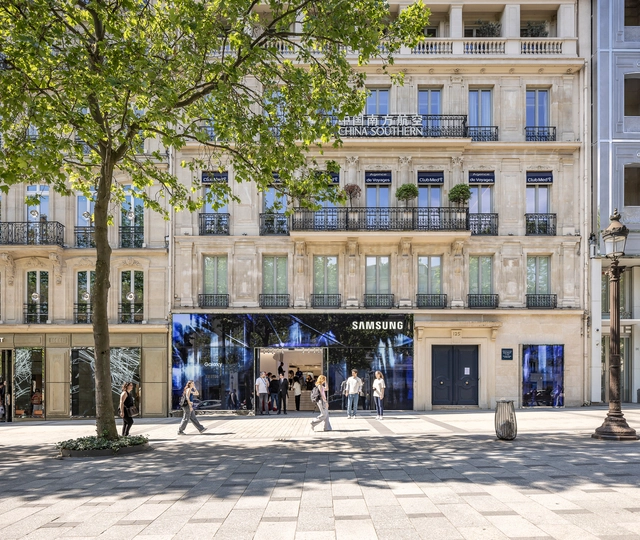
Explore Jean Nouvel's Pop-Up Store on the Champs Élysées in Paris, Through the Lens of Jad Sylla

Renowned French architect Jean Nouvel has unveiled his design for Samsung’s pop-up store on the iconic Avenue des Champs-Élysées in Paris, France. The store aims to represent the company’s role as a Worldwide Olympic Partner, offering visitors a space where they can engage with the newest mobile technologies and Olympic-related activities. The first images by architectural photographer Jad Sylla highlight Jean Nouvel’s design of the immersive retail space.

Explore Jean Nouvel's Pop-Up Store on the Champs Élysées in Paris, Through the Lens of Jad Sylla - Image 1 of 4Explore Jean Nouvel's Pop-Up Store on the Champs Élysées in Paris, Through the Lens of Jad Sylla - Image 2 of 4Explore Jean Nouvel's Pop-Up Store on the Champs Élysées in Paris, Through the Lens of Jad Sylla - Image 3 of 4Explore Jean Nouvel's Pop-Up Store on the Champs Élysées in Paris, Through the Lens of Jad Sylla - Image 4 of 4Explore Jean Nouvel's Pop-Up Store on the Champs Élysées in Paris, Through the Lens of Jad Sylla - More Images+ 6

Does Size Really Matter? Debunking the Obsession with Super Tall Buildings

Subscriber Access | 

The future Saudi tower designed by Foster + Partners is expected to reach a staggering height of two kilometers. This multibillion-dollar project, towering twice as high as the current record holder, the Burj Khalifa in Dubai, will dominate the skyline of Riyadh, accommodating offices, residences, and entertainment spaces. It forms part of a development program led by Saudi Arabia, driven by the vision of Crown Prince Mohammad bin Salman to establish the country's presence through ambitious, large-scale projects. While these super-tall towers symbolize visibility and global recognition, they face criticism for their extravagant construction costs and environmental impact.

Does Size Really Matter? Debunking the Obsession with Super Tall Buildings - Image 1 of 4Does Size Really Matter? Debunking the Obsession with Super Tall Buildings - Image 2 of 4Does Size Really Matter? Debunking the Obsession with Super Tall Buildings - Image 3 of 4Does Size Really Matter? Debunking the Obsession with Super Tall Buildings - Image 4 of 4Does Size Really Matter? Debunking the Obsession with Super Tall Buildings - More Images+ 7

Doha Architecture City Guide: 15 Contemporary Projects to Explore in the Capital City of Qatar

Subscriber Access | 

Doha is the capital of Qatar and the county’s most populated area, accommodating more people than the rest of Qatar combined. Located on the coast of the Persian Gulf, Doha is a relatively young city, founded in the vicinity of another settlement, Al Bidda, sometime during the 1820s. In recent years, the city has seen rapid population growth, an image reflected in the architectural landscape. During the 1960s and 1970s, many of the old districts in Doha were demolished to make space for new developments, while several schemes have been deployed to advocate for the preservation of the city’s cultural and architectural heritage.

In 2022, Qatar welcomed the FIFA World Cup Qatar 2022, one of the most anticipated sports events of the past year, held in an Arab country for the first time. With many stadiums built in or around Doha, the country prepared extensively for the event, yet concerns were raised due to the hot climate and the extensive adaptations needed to host a sporting event of this scale. In 2024, the city is hosting the inaugural edition of Design Doha 2024, a new Biennial showcasing over 100 Middle Eastern and North African designers, running from February 24 to August 5, 2024.

Doha Architecture City Guide: 15 Contemporary Projects to Explore in the Capital City of Qatar - Image 1 of 4Doha Architecture City Guide: 15 Contemporary Projects to Explore in the Capital City of Qatar - Image 6 of 4Doha Architecture City Guide: 15 Contemporary Projects to Explore in the Capital City of Qatar - Image 2 of 4Doha Architecture City Guide: 15 Contemporary Projects to Explore in the Capital City of Qatar - Image 3 of 4Doha Architecture City Guide: 15 Contemporary Projects to Explore in the Capital City of Qatar - More Images+ 13

Doha's Contemporary Architecture Through the Lens of Pygmalion Karatzas

Doha, the capital of Qatar, is the residence of more than 90% of the country's population, which amounts to about 1.7 million people, with over 80% being professional expatriates. In its historical past, Doha was primarily a fishing and pearl diving town, characterized by numerous traditional individual houses until the mid-1960s. Modernizing the city occurred mainly during the 1970s, although its pace slowed in the 1980s and early 1990s. However, Qatar has recently emerged as one of the world's fastest-growing economies, lending significant geostrategic importance to Doha.

The country's development vision revolves around reducing dependence on natural resources and embracing a knowledge-based economy encompassing international universities, high-tech industries, IT services, and advanced producer services. Much of the coastline, including the corniche, has been artificially constructed. Several notable areas contribute significantly to the evolving character of the city. The city’s contemporary architecture has been captured through the lens of photographer Pygmalion Karatzas.

Doha's Contemporary Architecture Through the Lens of Pygmalion Karatzas - Image 1 of 4Doha's Contemporary Architecture Through the Lens of Pygmalion Karatzas - Image 2 of 4Doha's Contemporary Architecture Through the Lens of Pygmalion Karatzas - Image 3 of 4Doha's Contemporary Architecture Through the Lens of Pygmalion Karatzas - Image 4 of 4Doha's Contemporary Architecture Through the Lens of Pygmalion Karatzas - More Images+ 38

“A Building Can Become This Organic, Soft, Beautiful Thing That You Want to Touch and Hug”: In Conversation with Chris Bosse

Chris Bosse started LAVA, Laboratory for Visionary Architecture, with his partners Tobias Wallisser and Alexander Rieck the year Watercube, the Aquatics Centre for the 2008 Beijing Summer Olympics was completed. Bosse was one of the leading designers of Watercube when he worked at PTW Architects in Sydney. Now LAVA employs about 100 people in four offices in Ho Chi Minh City, Sydney, Stuttgart, and Berlin. There are also two satellite offices in Honduras and Parma, Italy, led by former associates. Projects range from furniture to houses and hotels to master plans, urban centers, and airports in the Middle East, Central America, Europe, Australia, and Vietnam.

“A Building Can Become This Organic, Soft, Beautiful Thing That You Want to Touch and Hug”:  In Conversation with Chris Bosse - Image 1 of 4“A Building Can Become This Organic, Soft, Beautiful Thing That You Want to Touch and Hug”:  In Conversation with Chris Bosse - Image 2 of 4“A Building Can Become This Organic, Soft, Beautiful Thing That You Want to Touch and Hug”:  In Conversation with Chris Bosse - Image 3 of 4“A Building Can Become This Organic, Soft, Beautiful Thing That You Want to Touch and Hug”:  In Conversation with Chris Bosse - Image 4 of 4“A Building Can Become This Organic, Soft, Beautiful Thing That You Want to Touch and Hug”:  In Conversation with Chris Bosse - More Images+ 11

NEOM Showcases Its Designs for the Line at the 2023 Venice Architecture Biennale

At the 18th International Architecture Exhibition of La Biennale di Venezia, NEOM has unveiled the “Zero Gravity Urbanism- Principles for a New Livability” exhibition to present the concept and standards guiding the design of the Line, their proposed 170-kilometer-long linear city in north-west Saudi Arabia. The event aims to introduce to the public an alternative vision for urban planning whose compact configuration strives to become a model for the development of more efficient and sustainable cities. Prior to the opening of the exhibition, more than 20 internationally recognized architects and designers joined the design team, including Sir Peter Cook, Massimiliano Fuksas, Jean Nouvel, and Ben van Berkel. The exhibition is open from 20 May to 24 September 2023 at Abbazia di San Gregorio, Venice.

NEOM Showcases Its Designs for the Line at the 2023 Venice Architecture Biennale - Image 1 of 4NEOM Showcases Its Designs for the Line at the 2023 Venice Architecture Biennale - Image 2 of 4NEOM Showcases Its Designs for the Line at the 2023 Venice Architecture Biennale - Image 3 of 4NEOM Showcases Its Designs for the Line at the 2023 Venice Architecture Biennale - Image 4 of 4NEOM Showcases Its Designs for the Line at the 2023 Venice Architecture Biennale - More Images+ 4