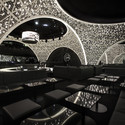
.jpg?1398657346&format=webp&width=640&height=580)
.jpg?1398657317 "© Pedro Kok")
.jpg?1398657135 "© Pedro Kok")
.jpg?1398657236 "© Pedro Kok")
.jpg?1398657209 "© Pedro Kok")
.jpg?1398657346)
-
Architects: Terra e Tuma Arquitetos Associados
- Area: 5079 m²
- Year: 2012
-
Professionals: Jz Engenharia, MINUANO ENGENHARIA


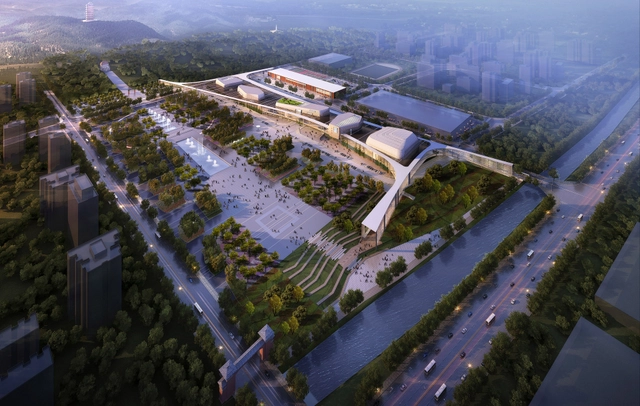
The fertile Anqiu region of China’s Shangdong Province is known locally as the land of “cultivation, stone hills, and creeks.” Thus, Little Diversified Architectural Consulting’s (LITTLE) design for Anqiu’s new cultural campus and fitness center is based upon these very elements.
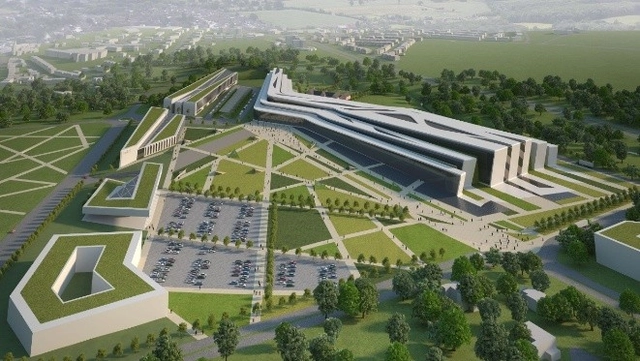
Sasanbell has been chosen to design the UK's "most sustainable facility:" the £200 million Aberdeen Exhibition & Conference Centre (AECC). The Glasgow-based company will provide a new home for the city's existing exhibition and conference center, which will be redeveloped by Cooper Cromar, freeing up space for future development and providing a sizable venue that can accommodate "large and popular events."

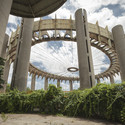
It is rare to find an architectural project whose history makes such strange bedfellows as the New York State Pavilion: a master architect and millions of exhibition patrons, roller skaters and rock stars, stray cats and Iron Man [1]. For three hours on April 22, in honor of the fifty year anniversary of the 1964-65 New York World’s Fair, the city of Queens will open the long shuttered gates to Philip Johnson’s most futuristic work.

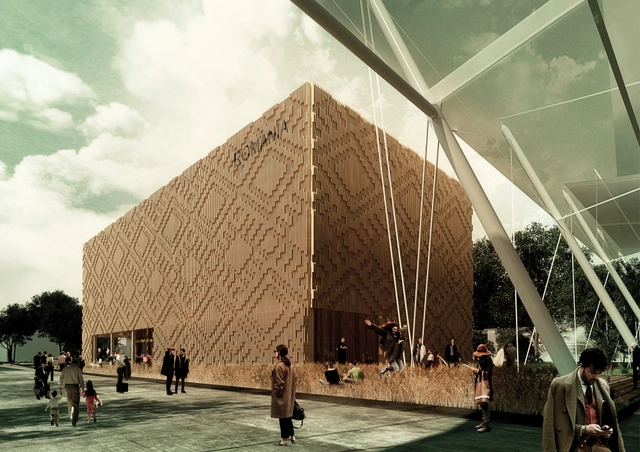
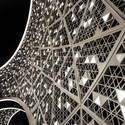
Placing sixth in the competition to design the Romanian Pavilion for the 2015 Milan Expo, Collective East Architects offered a “simple and powerful landmark” that focuses on the history of Romania’s agriculture. Serving as an “attractor and orientation mark,” the structure was conceived by repeating a traditional Romanian pattern that “transformed the pavilion into a sculptural object with a powerful national identify.” From a distance, the facade appears “introverted and impenetrable;” as viewers move closer, the building begins to expose its contents, revealing a level of detail one would expect in a “jewelry museum.”
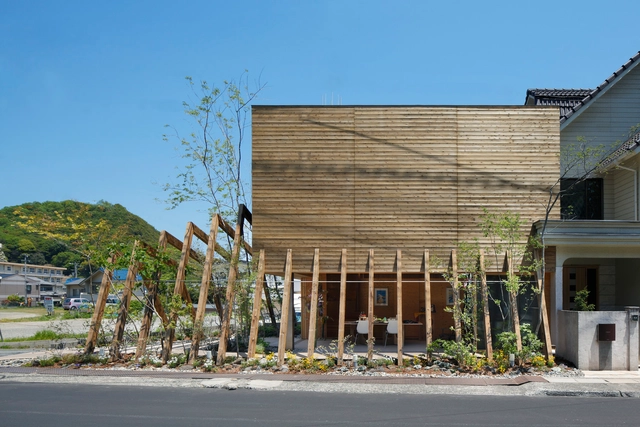
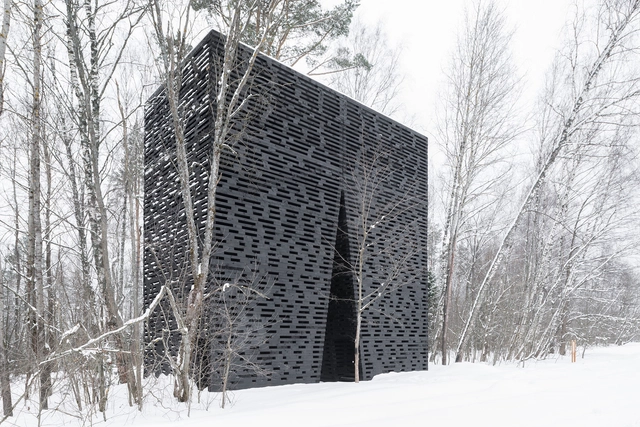

SANE architecture, an experimental studio based in Paris, have recently been recognised in the MIPIM Architectural Review Future Project Awards 2014 for the Taichung City Cultural Centre. The practice, who focus on "researching the Sane and the Insane in architecture", were tasked with imagining an architecture and an urban space unique to Taiwan's climate and the culture of Taichung, a cultural library and municipal arts museum that "synergizes" art, education and recreation.
.jpg?1396611916&format=webp&width=640&height=580)
Recently awarded first place in an invited competition, Tham & Videgård's (T&V) design for a new addition to the Krabbesholm Højskole School of Art & Design in Skive, Denmark, uses a combination of thick brick walls and barrel arched roofs to establish a strong connection to the character and spatial qualities of the existing buildings - the Four Boxes Gallery by Japanese Atelier Bow‐Wow, and a collection of new studio buildings by New York‐based MOS Architects.

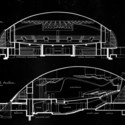
Richter Dahl Rocha & Associés' "ultramodern" SwissTech Convention Center opened its doors today. Housing a 3,000-seat modular amphitheater which can be converted from conference auditorium, to exhibition hall, to banquet room in only fifteen minutes, the convention center is the first large-scale convention hall to use EPFL's dye-sensitized solar cells (also known as Grätzel Cells).
This latest addition to the campus's northern quarter already contains a collection of commercial stores and over 500 housing units. Its construction puts the finishing touch too what has been described as a "living campus where students can now stay on campus both night and day."

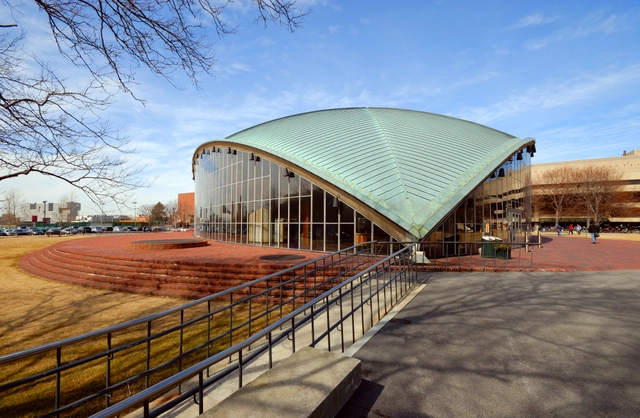
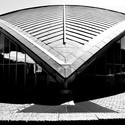
Kresge Auditorium, designed by Finnish American architect Eero Saarinen, was an experiment in architectural form and construction befitting the Massachusetts Institute of Technology’s focus on technology and innovation. This feat of sculptural engineering serves as a meeting house and is part of the cultural, social, and spiritual core of MIT’s campus. Kresge Auditorium is one of Saarinen’s numerous daring, egalitarian designs that captured the optimistic zeitgeist of Post-war America.
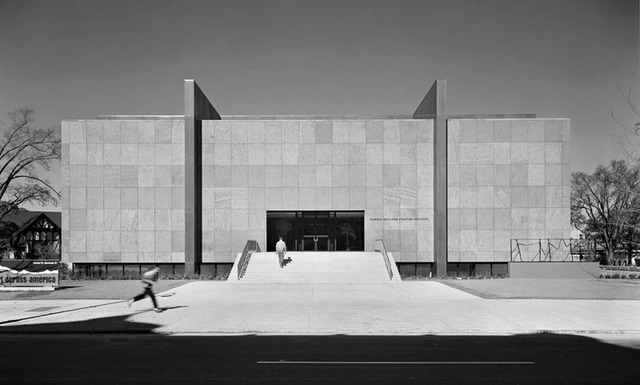
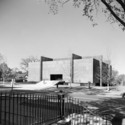
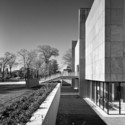
The Munson-Williams-Proctor Arts Institute is a Modern masterpiece and revolutionary precedent of American museum design. Located in Utica, New York, it was the first of many influential cultural facilities designed by Philip Johnson. Also known as the Museum of Art, the structure represents a stylistic turning point in Johnson’s career, marking the end of his loyalty to the International Style and the beginning of his experimentation with Neo-Classicism.