1. ArchDaily
  2. Conference

Conference: The Latest Architecture and News

COP30 Outcomes for the Built Environment: From Sustainable Cooling to Climate Adaptation Commitments

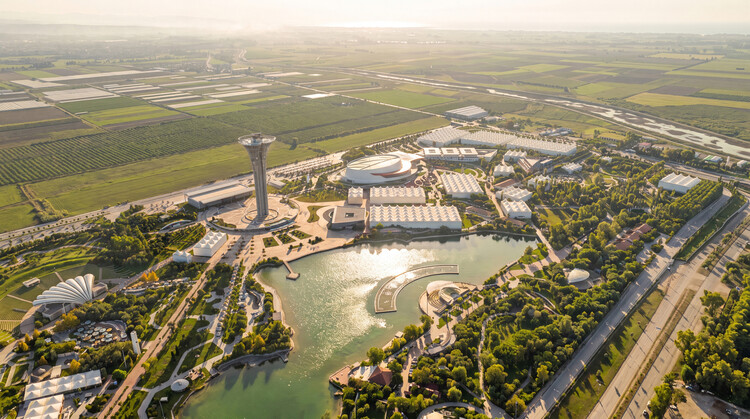
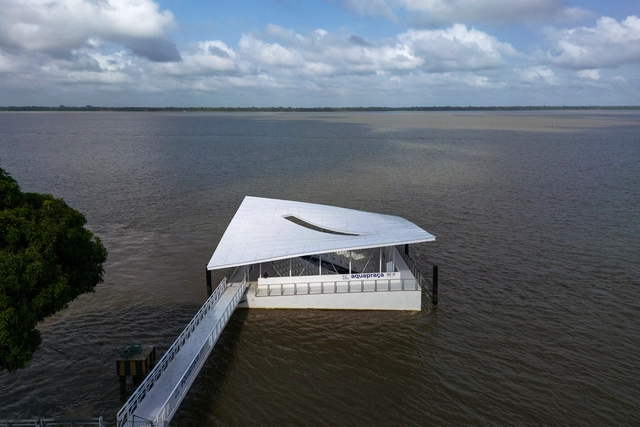
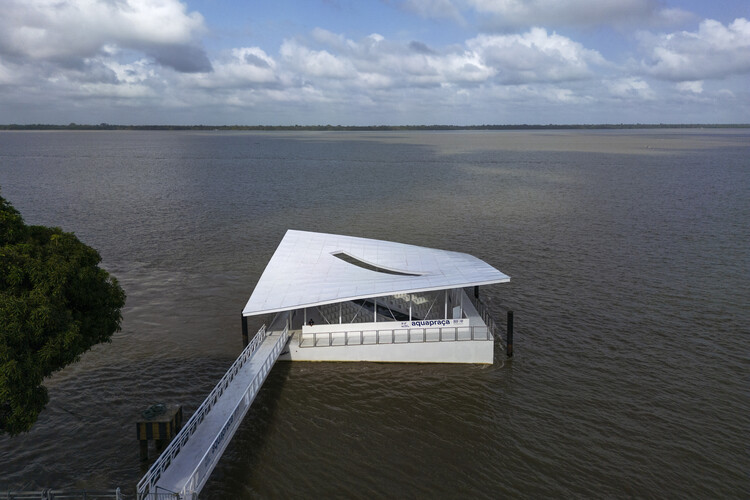
On November 21, 2025, the closing day of the 30th edition of the Conference of the Parties (COP) took place, the yearly gathering of United Nations member states to negotiate international climate agreements and assess global progress toward emissions reduction. This year, the event was held in Belém, Brazil, a port city of fewer than 1.5 million people, widely known as a gateway to Brazil's lower Amazon region. First convened in 1992, UN Climate Change Conferences (or COPs) are an international multilateral decision-making forum on climate change involving 198 "Parties" (197 countries, nearly all of them, depending on definitions of country, and the European Union). Their purpose is to assess global efforts toward the central Paris Agreement aim of limiting global warming to as close as possible to 1.5 °C above pre-industrial levels. The event brings together leaders and negotiators from member states, business figures, young people, climate scientists, Indigenous Peoples, and civil society around issues considered essential to that climate goal. This year, COP30 was marked by strong criticism of its ties to the fossil fuel industry, descriptions of agreements as fragile and insubstantial, and the struggle to move climate finance "from pledge to lifeline."

COP30 Outcomes for the Built Environment: From Sustainable Cooling to Climate Adaptation Commitments - Image 1 of 4COP30 Outcomes for the Built Environment: From Sustainable Cooling to Climate Adaptation Commitments - Image 2 of 4COP30 Outcomes for the Built Environment: From Sustainable Cooling to Climate Adaptation Commitments - Image 3 of 4COP30 Outcomes for the Built Environment: From Sustainable Cooling to Climate Adaptation Commitments - Image 4 of 4COP30 Outcomes for the Built Environment: From Sustainable Cooling to Climate Adaptation Commitments - More Images+ 12

FOAID 2024: Celebrating Innovation and Collaboration in Architecture and Design

 | Sponsored Content

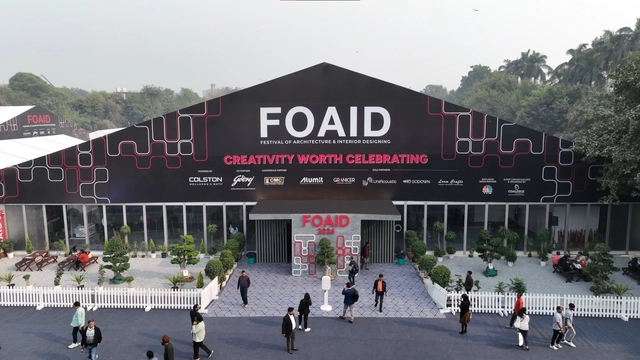
Architecture and design today are not just about constructing an urban sprawl or focusing solely on spatial design, rather they involve the integration of diverse elements and ideologies that enrich one's work and environment. This is where 'FOAID- Festival of Architecture and Interior Designing' comes in, celebrating a legacy of 11 years. This event has it all, be it architects, designers, brands, artists, or innovators from across the nation and around the globe, all united in one single platform.  With over 10,000 visitors, the event aimed to exhilarate the connected yet fragmented design world, showcasing Avant-garde design techniques and celebrating the legacy of established patrons and emerging talents in the design fraternity. Additionally, they promoted interdisciplinary networking opportunities strengthening the architectural community's impact on society. In collaboration with CNBC TV18, the event marked its marvelous presence in New Delhi on November 22nd -23rd at NSIC Ground and December 20th -21st at the Jio Conventional Center in Mumbai.

Zaha Hadid Architects Begins Construction of the Center of Mediterranean Culture in Italy

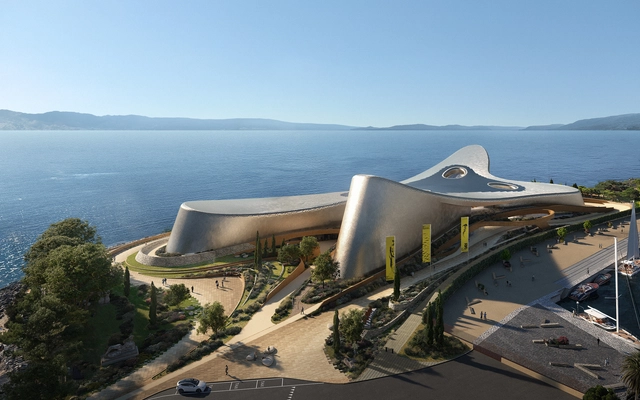
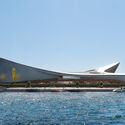
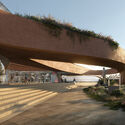
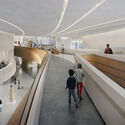
Zaha Hadid Architects have announced the breaking ground for the Centre of Mediterranean Culture in Reggio Calabria, Italy. The 24,000 square-meter structure houses diverse spaces, including a network of exhibition galleries, both permanent and temporary, capable of showcasing a wide range of displays. An integrated aquarium is a key feature, offering visitors a glimpse into the marine life of the Strait. The building also provides conference facilities, including a large auditorium suitable for performances, presentations, and industry events. Dedicated educational spaces are incorporated to support the region's schools, and visitor amenities include a bookshop and a restaurant and bar overlooking the port.

Zaha Hadid Architects Begins Construction of the Center of Mediterranean Culture in Italy - Image 1 of 4Zaha Hadid Architects Begins Construction of the Center of Mediterranean Culture in Italy - Image 2 of 4Zaha Hadid Architects Begins Construction of the Center of Mediterranean Culture in Italy - Image 3 of 4Zaha Hadid Architects Begins Construction of the Center of Mediterranean Culture in Italy - Image 4 of 4Zaha Hadid Architects Begins Construction of the Center of Mediterranean Culture in Italy - More Images+ 3

Looking Forward to COP28: Can Decisions About the Built Environment Save Us From the Climate Crisis?

The 2023 United Nations Conference of the Parties, more frequently referred to as COP28 is a joining of over 160 countries that intrinsically agree to combat harmful human impacts on the climate. The International Climate Summit takes place annually, bringing together heads of state, delegates, and representatives from various countries to negotiate actions and agreements related to climate mitigation. Last year, COP 27 was held between November 6 and November 18, 2022, in Sharm El Sheikh, Egypt. As the upcoming COP 28 in the United Arab Emirates is around the corner, it is worth looking at the conference’s impact and what to expect.

COP 28 will convene from November 30 to December 12 2023 in Dubai, United Arab Emirates. In this year’s COP28, the program will be geared towards responding to the Global Stocktake and “closing the gaps to 2023.” The COP presidency has launched a consultation on thematic areas, encouraging international stakeholders to highlight the most pressing issues that should be prioritized in COP28. The themes for this year are Technology & Innovation, Inclusion, Frontline Communities, and Finance.

Looking Forward to COP28: Can Decisions About the Built Environment Save Us From the Climate Crisis? - Image 1 of 4Looking Forward to COP28: Can Decisions About the Built Environment Save Us From the Climate Crisis? - Image 2 of 4Looking Forward to COP28: Can Decisions About the Built Environment Save Us From the Climate Crisis? - Image 3 of 4Looking Forward to COP28: Can Decisions About the Built Environment Save Us From the Climate Crisis? - Image 4 of 4Looking Forward to COP28: Can Decisions About the Built Environment Save Us From the Climate Crisis? - More Images+ 3

Beyond 2023 UIA World Congress of Architects: 9 Events to Explore in July in Copenhagen

This year, the UIA World Congress of Architects gathers professionals from the construction industry to the Danish Capital to discuss and promote more sustainable ways of practicing architecture. This edition of the congress, happening between July 2nd and 6th, is centered around the UN 17 Sustainable Development Goals, highlighted by the overarching theme “Sustainable Futures – Leave no one Behind.” The world’s largest architecture congress offers a vast program of keynote dialogues, new findings presented on the science track, Next Gen sessions, workshops, exhibitions of new materials, and political talks. The packed schedule also includes the Obel Award Talks on the theme “Wellbeing Through Architecture”, Velux Daylight Talks, and Realdania Talks.

Beyond 2023 UIA World Congress of Architects: 9 Events to Explore in July in Copenhagen  - Image 1 of 4Beyond 2023 UIA World Congress of Architects: 9 Events to Explore in July in Copenhagen  - Image 2 of 4Beyond 2023 UIA World Congress of Architects: 9 Events to Explore in July in Copenhagen  - Image 3 of 4Beyond 2023 UIA World Congress of Architects: 9 Events to Explore in July in Copenhagen  - Image 4 of 4Beyond 2023 UIA World Congress of Architects: 9 Events to Explore in July in Copenhagen  - More Images+ 7

Ursula von der Leyen and Francis Kéré Open the Bauhaus Earth Conference

The “Reconstructing the Future for People and PlanetConference, hosted by Bauhaus Earth and the Pontifical Academy of Sciences (PAS), has begun at the Casina Pio IV in the Vatican Gardens. The conference opened with a speech from Ursula von der Leyen, president of the European Commission. The extensive program brings together renowned scientists, architects, spatial planners, and policymakers to discuss the transformation of the built environment from a driver of climatic and societal crises into a force for regeneration.

Ursula von der Leyen and Francis Kéré Open the Bauhaus Earth Conference - Image 1 of 4Ursula von der Leyen and Francis Kéré Open the Bauhaus Earth Conference - Image 2 of 4Ursula von der Leyen and Francis Kéré Open the Bauhaus Earth Conference - Image 3 of 4Ursula von der Leyen and Francis Kéré Open the Bauhaus Earth Conference - Image 4 of 4Ursula von der Leyen and Francis Kéré Open the Bauhaus Earth Conference - More Images+ 1

Harvard GSD Announces Series of Online Public Events for April

Harvard GSD is presenting during the month of April 2020, an online series of talks and webinars via Zoom, where attendees can interact and submit questions. Accessible for everyone who registers, the events are also streamed live to the GSD's YouTube page.

2019 Young Architect Conference

Have you heard of architect Michael Riscica? Radical blogger, podcast host, and educator, Riscica empowers architects-in-the-making. You may have met him on one of his speaking tours where he visited over 50 cities to speak on topics like entrepreneurship and the architect exam. We even featured him as an ARE prep expert here at ArchDaily. Now, Riscica onto his latest groundbreaking venture: The Young Architect Conference.

ReSITE 2017’s “The In/Visible City” Conference Unveils the Infrastructural Heart of Urbanism

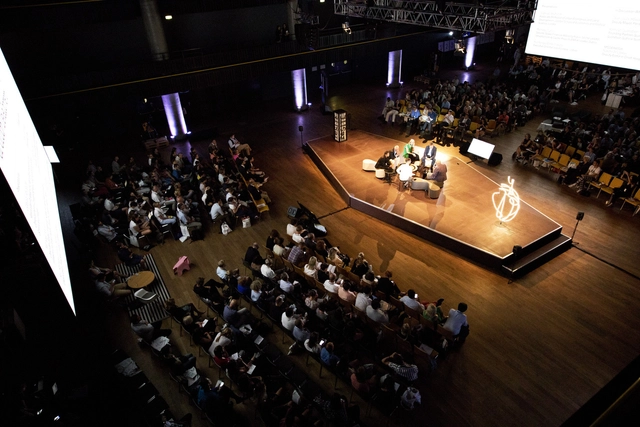
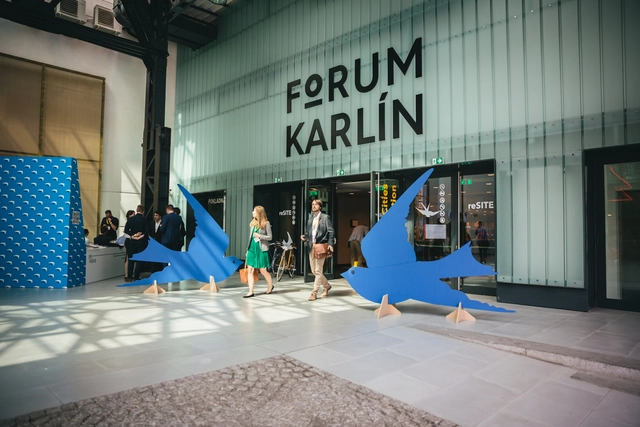
Now in its sixth year in its home city of Prague, reSITE is a conference that has consistently taken a broad view of urban issues, bringing together the largest concentration of the world’s top architects, urbanists, urban planners, landscape architects, and economists under umbrella topics such as Cities in Migration (2016), The Sharing City (2015), and Cities and Landscapes of the New Economy (2014). However, when it comes to events like this, such broad-ranging ambition can be a double-edged sword, flattening and obscuring the nitty gritty details of complex issues. Perhaps reflecting a concern that cities and the challenges they face be seen in full, reSITE 2017’s chosen theme was In/Visible City.

That particular lens reflects a shift in recent years for events such as this to bring into focus that which has typically remained firmly out of view: infrastructure. An allusion to the technical was manifest in the conference’s visual identity: a human heart, with pipe-like arteries and vegetation growing in between the cracks. The heart is to the body like infrastructure is to the city – but just as the body is much more than its circulatory system, the infrastructure cities depend upon is not limited to the obvious, billion-dollar construction projects that make headlines. Urban infrastructure spans all scales and numerous disciplines, ranging from design details to the small print in city policy. In/visible City brought forth the invisible features that give shape to the visible city demonstrating that cultural vitality, social fabric and citizen participation are infrastructural as well.

Norman Foster Foundation Includes Aravena, Ive and Other Leading Names in Their 2017 "Future is Now" Conference

Subscriber Access | 
Norman Foster Foundation Includes Aravena, Ive and Other Leading Names in Their 2017 "Future is Now" Conference - Image 4 of 4
© Norman Foster Foundation

Last month the Norman Foster Foundation, created to promote "interdisciplinary thinking and research to help up-and-coming architects, designers and urbanists to anticipate the future," coincided the opening of its new Madrid-based headquarters with an international conference. Future is Now pulled together a broad collection of professionals—including Sir Jonathan Ive, Marc Newson, Olafur Eliasson, Maya Lin, Alejandro Aravena, and Luis Fernández-Galian—who addressed an audience of 1,800 (including 1,100 students) in the Spanish capital's Royal Theater.

Watch the conference in its entirety, or read a summary, after the break.

Considering the Airport Terminal of Tomorrow

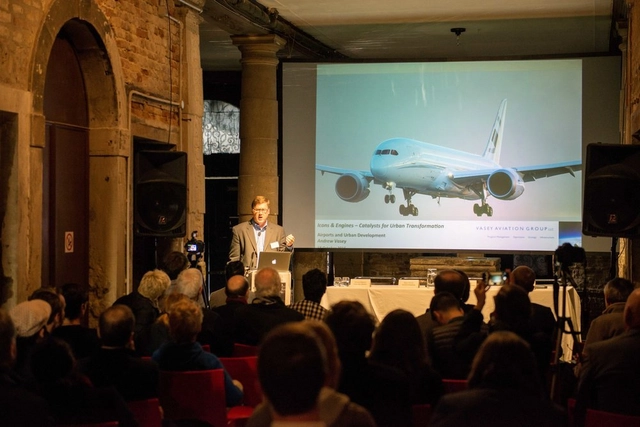
Aerial Futures, Grounded Visions: Shaping the Airport Terminal of Tomorrow was a two-day symposium held in October 2016 as part of the European Cultural Center's collateral event at the 2016 Venice Biennale. It encouraged discussion about the future of air travel from the perspectives of architecture, design, technology, culture and user experience. The event featured presentations and discussions by the likes of airport architect Curtis Fentress, Nelly Ben Yahoun, Donald Albrecht, Director of the Museum of the City of New York; Anna Gasco, post-doctoral researcher at the ETH-Future Cities Laboratory in Singapore; Jonathan Ledgard, co-founder of the Droneport Project; and Ashok Raiji, Principal at Arup New York.

Considering the Airport Terminal of Tomorrow - Featured ImageConsidering the Airport Terminal of Tomorrow - Image 1 of 4Considering the Airport Terminal of Tomorrow - Image 2 of 4Considering the Airport Terminal of Tomorrow - Image 3 of 4Considering the Airport Terminal of Tomorrow - More Images

Conference: 'Research on Display: The Architecture Exhibition as Model for Knowledge Production'

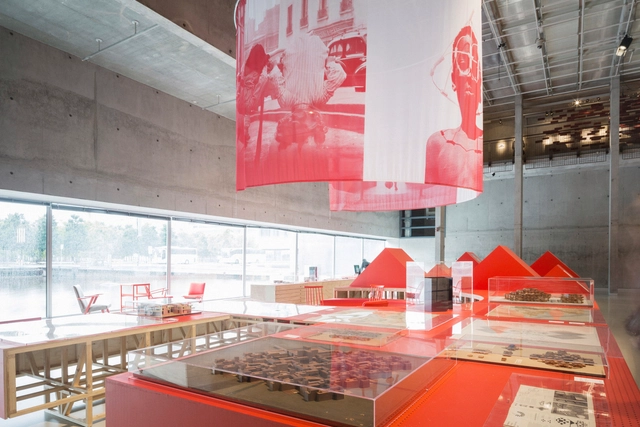
The Jaap Bakema Study Centre's second annual conference, entitled Research on Display: The Architecture Exhibition as Model for Knowledge Production, will begin next month in Delft and Rotterdam (The Netherlands). Featuring presentations and discussions from members of universities around the world—including Ghent, Valencia, London, Warsaw, Paris, Michigan, Yale, Oslo and Zürich—the two-day programme seeks to examine what it means to curate architectural research.

Call for Sessions: SAH 2017 Annual International Conference

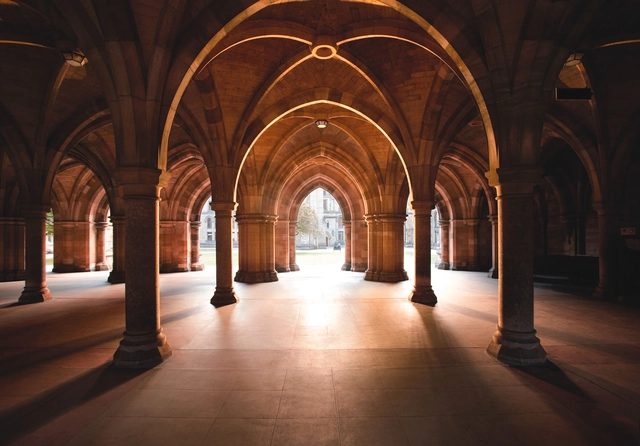
At its 2017 Annual International Conference in Glasgow, Scotland, SAH will offer a total of 36 paper sessions. The Society invites its members, including graduate students and independent scholars, representatives of SAH chapters, and partner organizations, to chair a session at the conference. As SAH membership is required to chair or present research at the Annual International Conference, non-members who wish to chair a session will be required to join SAH at the time of submitting a session proposal.

Society of Architectural Historians 2016 Annual International Conference

The SAH 2016 Annual International Conference will take place in Pasadena/Los Angeles, April 6-10, with the theme New Local/Global Infrastructures. The conference will engage participants from around the world with the rich, evolving legacy of the region’s built environment. With the scheduled completion of the Metro Expo Light-Rail Line west to Santa Monica in early 2016, Pasadena will be connected to downtown LA and the rest of Los Angeles County. This infrastructure, building on historic right-of-ways, will provide new ways to see the broad range of the region’s architecture and urbanism.

Monocle's Inaugural Conference In Lisbon Asks: What Is Quality Of Life?

Monocle, a briefing on global affairs, business, culture and design, was founded by in 2007 by Tyler Brûlé, the former Editor-in-Chief of Wallpaper*. With over thirty correspondents working around the world, the magazine also has local bureaux in Tokyo, New York City, Hong Kong, Zürich, Toronto, Istanbul and Singapore. This month saw the publication host their inaugural international conference, centering on the enduring theme that has preoccupied the magazine since launch: Quality of Life.

Set against the backdrop of Portugal's capital, Lisbon, the event was hosted by Brûlé alongside editors Andrew Tuck, Robert Bound, Sophie Grove and Steve Bloomfield. The opinions of twenty-three internationally renowned speakers―including Martin Roth (Director of London's Victoria & Albert Museum), Taco Dibbits (of Amsterdam's Rijksmuseum) and Brazilian architect Isay Weinfeld, alongside the Mayors of Oslo and Porto―were keenly listened to by 160 delegates who had traveled from across the world. The points for discussion allowed for a breadth of discourse that spanned housing and urbanism, to explorations of the 'high street' and the significance of the museum in the contemporary city. The thematic scope of these conversations made them accessible, inspirational and, more importantly, both relevant and widely applicable.

Monocle's Inaugural Conference In Lisbon Asks: What Is Quality Of Life? - Featured ImageMonocle's Inaugural Conference In Lisbon Asks: What Is Quality Of Life? - Image 1 of 4Monocle's Inaugural Conference In Lisbon Asks: What Is Quality Of Life? - Image 2 of 4Monocle's Inaugural Conference In Lisbon Asks: What Is Quality Of Life? - Image 3 of 4Monocle's Inaugural Conference In Lisbon Asks: What Is Quality Of Life? - More Images

"Sculpting the Architectural Mind" at Pratt Institute

On March 6 and 7, New York's Pratt Institute will host "Sculpting the Architectural Mind," a conference exploring the connection between "Neuroscience and the Education of an Architect."

Examining the past and potential role of applied neuroscience within architectural education, the conference will touch on topics such as design cognition and the effect of digital media production. "Sculpting the Architectural Mind" is both analytical and speculative, searching for new means of integrating digital tools into the design process and questioning what effects such an approach would have upon the built environment. The themes will be explored over four sessions spaced over the conference's two days.

Ban, Kimmelman, Others Speak at "Cities for Tomorrow"

Subscriber Access | 

On April 21st, ArchDaily tweeted about watching keynote speaker Shigeru Ban kick of the Cities for Tomorrow conference in New York. In his first appearance since winning the Pritzker Prize, he addressed how we should approach urban planning and development today with architecture critic Michael Kimmelman. To watch videos - of Ban as well as speakers such as Vishaan Chakrabati, Shaun Donovan, and Janette Sadik-Kahn discussing the future of our cities - click here.

Harvard University's "Putting Public Space in its Place"

Who should design public spaces? Should they even be designed at all? Can public space make a meaningful contribution to solving the world’s environmental problems? How should the success of a public space be measured?