1. ArchDaily
  2. Computational Design

Computational Design: The Latest Architecture and News

Facing the Age of Robots? Material Innovation in Architectural Structures

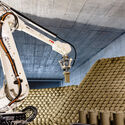
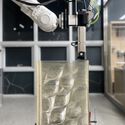
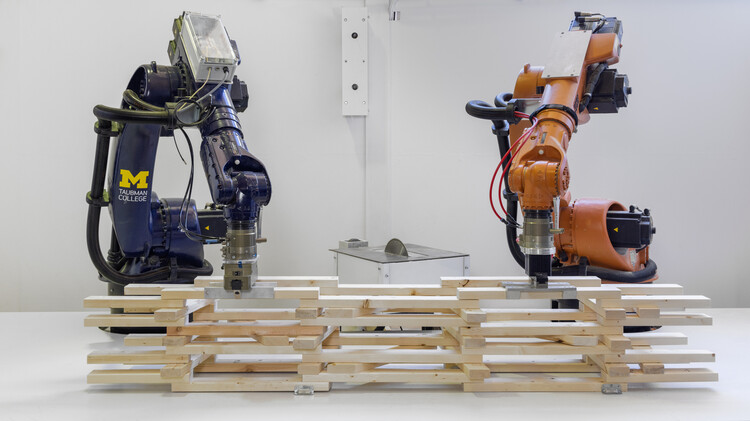
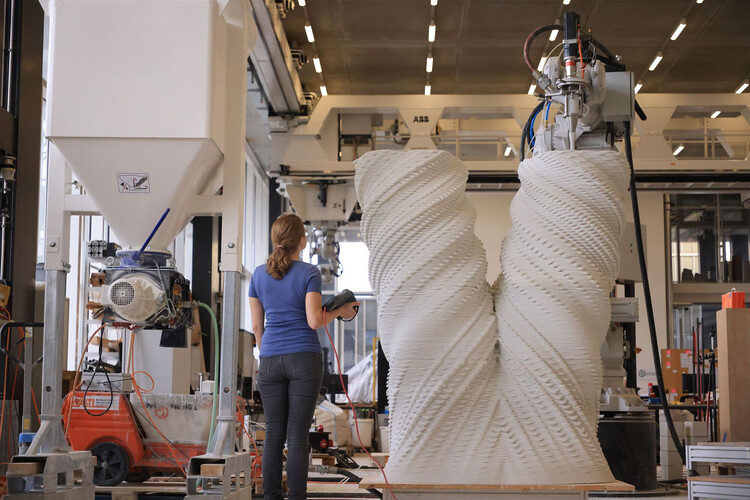
By exploring the art of robotics in construction, advances in architectural technologies are increasingly shaping multiple aspects of human life. From robotic arms and drones to robots that move across large surfaces and even 3D printing robots, their use in construction is accelerating research and the development of new working methods, as well as structural and material experimentation. In collaboration with multiple disciplines and spanning various facets of architecture, the role of robots in the contemporary landscape demonstrates a potential that extends beyond merely automating processes or reducing construction times and costs. This raises the question: Are we building architecture to serve technology, or technology to serve architecture?
Facing the Age of Robots? Material Innovation in Architectural Structures - Image 1 of 4Facing the Age of Robots? Material Innovation in Architectural Structures - Image 2 of 4Facing the Age of Robots? Material Innovation in Architectural Structures - Image 3 of 4Facing the Age of Robots? Material Innovation in Architectural Structures - Image 4 of 4Facing the Age of Robots? Material Innovation in Architectural Structures - More Images+ 17

Error 404: Architectural Memory in the Age of Algorithms

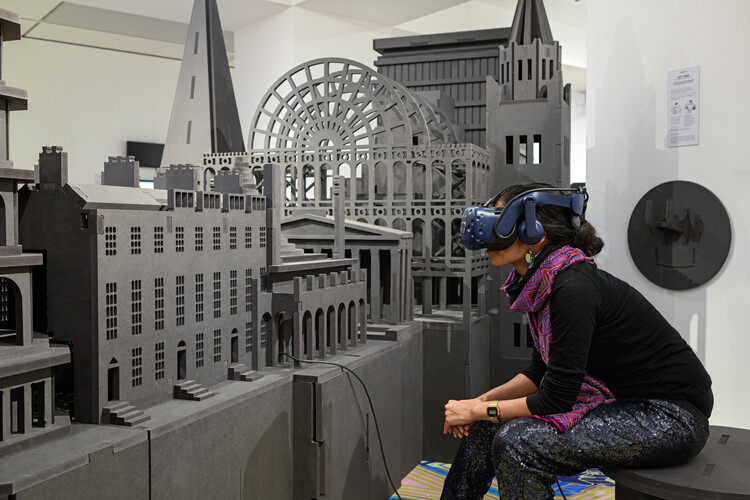
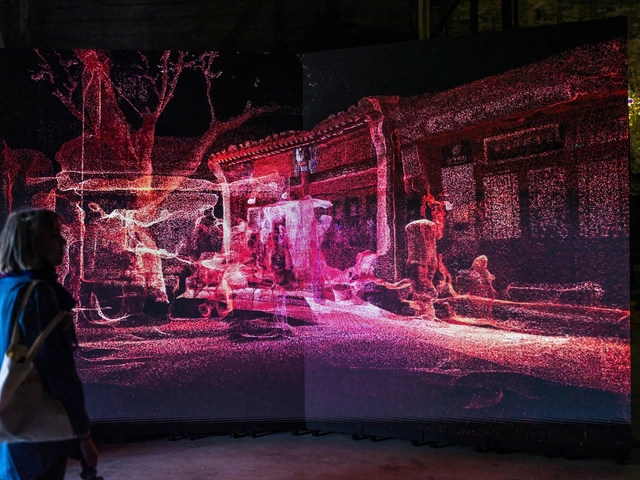
Before the digital turn, architecture's memory was largely tangible. It lived in the weight of drawings, the patina of models, and the thickness of books. To preserve architecture meant to preserve its traces, the documents, sketches, and photographs through which buildings could be remembered long after their material form had changed or disappeared. The modern architectural archive, as it developed in the 20th century, was both a refuge and a device of legitimacy. Institutions such as the Canadian Centre for Architecture, Casa da Arquitectura, or the Deutsches Architekturmuseum were built upon the conviction that to preserve architecture was to preserve its documents.

However, these archives didn't merely store knowledge. They determined what counted as architecture, who belonged to its canon, and how history would be told. To archive is to edit the past — to decide what enters, what is omitted, and how it will be interpreted. The archive, as theorised by Michel Foucault and later by Jacques Derrida, is never neutral; it is an instrument of power, a space that selects and excludes. In architecture, these dynamics are especially evident as they record the visible while silencing what falls outside their categories. The act of collecting has always been, implicitly, an act of judgment.

Error 404: Architectural Memory in the Age of Algorithms - Image 1 of 4Error 404: Architectural Memory in the Age of Algorithms - Image 2 of 4Error 404: Architectural Memory in the Age of Algorithms - Image 3 of 4Error 404: Architectural Memory in the Age of Algorithms - Image 4 of 4Error 404: Architectural Memory in the Age of Algorithms - More Images+ 15

Compute Isn’t Weightless: AI Infrastructure and the Architecture of the City

As artificial intelligence continues to disrupt sectors of the economy and reshape entire industries, institutions and individuals alike are bracing—and rapidly adapting—to the changes that machines seem to hold over our heads. Yet the more precise pressure is not simply AI altering the way people work and live, but the business models and investment logics of the companies developing these systems: the concentration of capital, the new requirements for compute, the race for compartmentalized talent, and the infrastructural footprint needed to sustain it. In the Greater Bay Area—anchored by Guangzhou, Shenzhen, and Hong Kong—this dynamic is especially pronounced. Government-led initiatives are actively accelerating the industry's growth, with policy and planning mechanisms beginning to translate an ostensibly intangible field into physical form: zoning updates, earmarked land, and the emergence of AI-oriented building types, from research laboratories to large-scale data centers.

Compute Isn’t Weightless: AI Infrastructure and the Architecture of the City - Image 1 of 4Compute Isn’t Weightless: AI Infrastructure and the Architecture of the City - Image 2 of 4Compute Isn’t Weightless: AI Infrastructure and the Architecture of the City - Image 3 of 4Compute Isn’t Weightless: AI Infrastructure and the Architecture of the City - Image 4 of 4Compute Isn’t Weightless: AI Infrastructure and the Architecture of the City - More Images+ 23

Kumamoto Exhibition Explores Shoei Yoh’s Pioneering Timber Structures and Computational Design

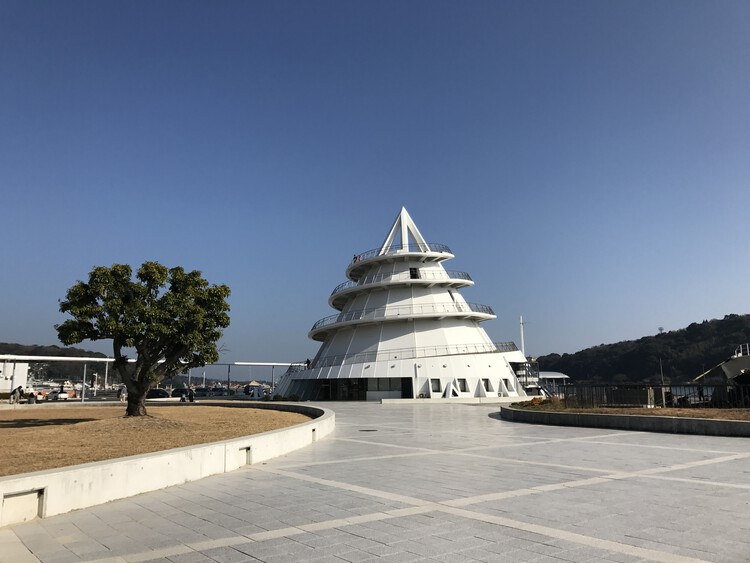
The Contemporary Art Museum of Kumamoto and the Shoei Yoh Archive at Kyushu University are honoring the late Japanese architect Shoei Yoh with an exhibition on view at the museum through March 9. The architect, who passed away on January 8, 2026, was born in Kumamoto in 1940 and, throughout his career, worked across product design, interiors, and architecture. He is recognized as a pioneer of contemporary timber construction and for his early contributions to computational design. The exhibition revisits his projects in Kumamoto through drawings and models from the Shoei Yoh Archive at Kyushu University.

Kumamoto Exhibition Explores Shoei Yoh’s Pioneering Timber Structures and Computational Design - Image 1 of 4Kumamoto Exhibition Explores Shoei Yoh’s Pioneering Timber Structures and Computational Design - Image 2 of 4Kumamoto Exhibition Explores Shoei Yoh’s Pioneering Timber Structures and Computational Design - Image 3 of 4Kumamoto Exhibition Explores Shoei Yoh’s Pioneering Timber Structures and Computational Design - Image 4 of 4Kumamoto Exhibition Explores Shoei Yoh’s Pioneering Timber Structures and Computational Design - More Images+ 19

The Machine in the Age of Collective Practice

Subscriber Access | 

This article is part of our new Opinion section, a format for argument-driven essays on critical questions shaping our field.

Every architectural epoch has been defined by its instruments. The compass, the drawing board, the camera, and the computer have each altered how architects think and produce. Yet the current moment feels qualitatively different. As artificial intelligence and generative systems enter daily workflows, tools cease to be passive extensions of the architect's hand and begin to operate as semi-autonomous agents. They propose, optimize, and simulate, producing outcomes that are, at times, beyond the author's full anticipation.

The Machine in the Age of Collective Practice - Image 1 of 4The Machine in the Age of Collective Practice - Image 2 of 4The Machine in the Age of Collective Practice - Image 3 of 4The Machine in the Age of Collective Practice - Image 4 of 4The Machine in the Age of Collective Practice - More Images+ 17

Designing With Living Systems: Discover the Works of Yong Ju Lee Architecture

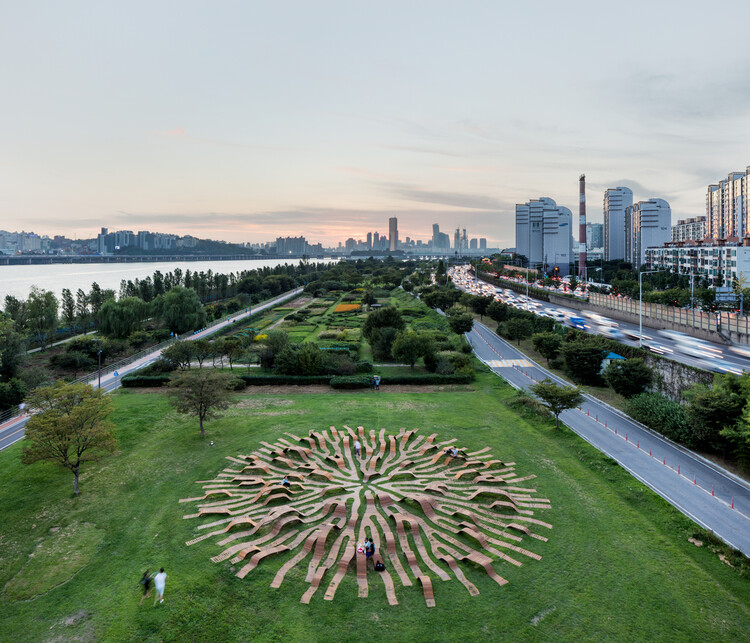
What does it mean to practice ecological responsibility beyond performance metrics or carbon calculations? How can fabrication become a design method rather than a final outcome? Founded in Seoul, Yong Ju Lee Architecture is a practice led by architect and researcher Yong Ju Lee. Across installations, research-driven proposals, and cultural projects, the studio positions architecture as an experimental discipline rooted in making: a process in which design emerges from material behavior, prototyping, and fabrication logic as much as from drawing or representation. Bridging professional practice and academia, his work consistently expands the architectural toolkit through computational design, experimental material research, and an evolving commitment to ecology as a responsibility and a design driver. In 2025, the studio was selected as a winner of the ArchDaily Next Practices Awards.

Designing With Living Systems: Discover the Works of Yong Ju Lee Architecture - Image 1 of 4Designing With Living Systems: Discover the Works of Yong Ju Lee Architecture - Image 2 of 4Designing With Living Systems: Discover the Works of Yong Ju Lee Architecture - Image 3 of 4Designing With Living Systems: Discover the Works of Yong Ju Lee Architecture - Image 4 of 4Designing With Living Systems: Discover the Works of Yong Ju Lee Architecture - More Images+ 21

ATN Summit 2026: From an Online Platform to a New Architecture and Technology Conference

 | Sponsored Content

Founded by Oliver Thomas, the ATN Summit is the first flagship conference of the Archi-Tech Network, marking five years since the platform began as a grassroots initiative to share real-world architectural knowledge. Taking place on March 18–19, 2026, in London, the ATN Summit brings together architects, technologists, and industry innovators to explore how emerging technologies are reshaping architectural practice. Designed as a high-production, ideas-driven event, the Summit reflects ATN's evolution from an informal online conversation into a global platform actively engaging with the future of the built environment.

Computational Soundscapes: Sculpting the Visual and Invisible Dimension

 | Sponsored Content

What defines a space first when entering: the sound or the visual impression? Architecture is often communicated through structure and surfaces, yet one of its most essential components moves unseen through the air: sound. It shapes how a space feels long before a wall or ceiling is noticed. Computational design brings these dimensions together, allowing architects and designers to create unique structures where acoustics and aesthetics inform one another rather than exist in parallel. By leveraging advanced algorithms, complex design processes transform into intuitive, accessible solutions that shape bespoke acoustic and visual highlights for every project. This approach combines parametric logic with material innovation, balancing efficiency, sustainability, and expressive design in equal measure.

The Architect as a Scientist: New Materials Emerging Between Science and Design

What is architecture? For some, its traditional role is to bring together imagination, technical knowledge, and problem-solving, allowing architects to design and construct while balancing ideas with the means to realize them. From the stone and wood of early buildings to the steel and concrete of the 20th century, each era demanded not only an understanding of form but also of the properties and potential of the materials in use. This grasp of materials has always been a core part of the creative process, though its scope was limited by the know-how and technologies available.

Over time, that balance has begun to shift. Architects have moved from merely using materials to actively designing them, applying scientific principles and experimenting with biological, chemical, and computational processes. This evolution has expanded the possibilities of architecture, intersecting nature, technology, and art, while pushing the role of the architect into a more experimental, science-driven dimension, where the manipulation and creation of materials becomes central to the creative act rather than merely a means to achieve forms or structures.

The Architect as a Scientist: New Materials Emerging Between Science and Design - Image 1 of 4The Architect as a Scientist: New Materials Emerging Between Science and Design - Image 2 of 4The Architect as a Scientist: New Materials Emerging Between Science and Design - Image 3 of 4The Architect as a Scientist: New Materials Emerging Between Science and Design - Image 4 of 4The Architect as a Scientist: New Materials Emerging Between Science and Design - More Images+ 11

Architecture in the Age of Platforms: What Role Does Software Play in Practice Today?
Subscriber Access | 

How many software tools and platforms are involved today in developing a contemporary project? From designing a single-family house to a public library, relying on just one or two programs is no longer common. Instead, multiple tools combine, overlap, and interact throughout various stages, including analysis, design, rendering, coordination, and construction. This widespread use of software in the virtual world reflects not only the technical complexity of today's practice but also a more subtle yet equally significant shift: software has become less a specific tool and more an environment that accompanies and even challenges the process.

From Smart to Intelligent: Evolution in Architecture and Cities

"The limits of our design language are the limits of our design thinking". Patrik Schumacher's statement subtly hints at a shift occurring in the built environment, moving beyond technological integration to embrace intelligence in the spaces and cities we occupy. The future proposes a possibility of buildings serving functions beyond housing human activity to actively participate in shaping urban life.

From Smart to Intelligent: Evolution in Architecture and Cities  - Image 1 of 4From Smart to Intelligent: Evolution in Architecture and Cities  - Image 2 of 4From Smart to Intelligent: Evolution in Architecture and Cities  - Image 3 of 4From Smart to Intelligent: Evolution in Architecture and Cities  - Image 4 of 4From Smart to Intelligent: Evolution in Architecture and Cities  - More Images+ 2

Vernacular Building and AI: Can Data Alone Bridge the Gap?

As artificial intelligence (AI) becomes increasingly embedded in society, it's essential to pause and reflect on the foundations that sustain it—and the dimensions to which it extends. At the heart of AI's learning are datasets, whose structure and content shape how these systems interpret and respond to the world. This reliance creates a deep interdependence—one that not only informs AI's capabilities but also defines its potential blind spots. In light of this, we must ask: What forms of understanding might this process exclude, especially those not easily captured in digital form?

Vernacular Building and AI: Can Data Alone Bridge the Gap? - Image 1 of 4Vernacular Building and AI: Can Data Alone Bridge the Gap? - Image 2 of 4Vernacular Building and AI: Can Data Alone Bridge the Gap? - Image 3 of 4Vernacular Building and AI: Can Data Alone Bridge the Gap? - Image 4 of 4Vernacular Building and AI: Can Data Alone Bridge the Gap? - More Images+ 15

Towards an Architecture of Many Intelligences: How Collective Knowledge Shapes the Built Environment

As architecture navigates a rapidly changing world shaped by ecological urgency, social transformation, and technological acceleration, the notion of intelligence is shifting. No longer confined to individual cognition or artificial computation, intelligence can emerge from cultural memory, collective practices, and adaptive systems. In this broader sense, architecture becomes a field of convergence, where natural, artificial, and social intelligences intersect to offer new ways of designing and building.

Vernacular traditions embed generations of environmental knowledge, often transmitted through materials, construction techniques, and spatial logics finely tuned to local conditions; participatory platforms expand decision-making to wider communities to take part in shaping their environments, redistributing agency in the design process; and computational processes simulate and respond to complex data in real time bringing the capacity to analyse, simulate, and respond to complex variables — whether environmental, social, or behavioural — offering new forms of adaptability.

Towards an Architecture of Many Intelligences: How Collective Knowledge Shapes the Built Environment - Image 1 of 4Towards an Architecture of Many Intelligences: How Collective Knowledge Shapes the Built Environment - Image 2 of 4Towards an Architecture of Many Intelligences: How Collective Knowledge Shapes the Built Environment - Image 3 of 4Towards an Architecture of Many Intelligences: How Collective Knowledge Shapes the Built Environment - Image 4 of 4Towards an Architecture of Many Intelligences: How Collective Knowledge Shapes the Built Environment - More Images+ 25

From AI to Artisans: How MEAN* Merges Computational Design with Middle Eastern Craftsmanship

Named one of ArchDaily's Best New Practices in 2024, MEAN* (Middle East Architecture Network) is redefining the architectural landscape of the region by merging computational design, digital fabrication, and material research with local heritage. Founded in 2016, the studio takes a forward-thinking approach, developing site-specific architectural solutions that balance technological innovation with cultural continuity. Their work spans projects of various scales, from experimental furniture like the Mawj Chair to urban-scale interventions such as The Adaptive Majlis, a digitally fabricated reinterpretation of traditional cooling and social spaces. By integrating advanced tools like parametric design, AI, and 3D printing with local materials, MEAN* is crafting a new architectural language that reflects both the aspirations of the future and the depth of the past.

From AI to Artisans: How MEAN* Merges Computational Design with Middle Eastern Craftsmanship - Image 1 of 4From AI to Artisans: How MEAN* Merges Computational Design with Middle Eastern Craftsmanship - Image 2 of 4From AI to Artisans: How MEAN* Merges Computational Design with Middle Eastern Craftsmanship - Image 3 of 4From AI to Artisans: How MEAN* Merges Computational Design with Middle Eastern Craftsmanship - Image 4 of 4From AI to Artisans: How MEAN* Merges Computational Design with Middle Eastern Craftsmanship - More Images+ 5

The Timeless Appeal of Modernism in Technology and Digital Architecture

Modernism, a movement that sought to break away from traditional forms and embrace the future, laid the groundwork for many technological and digital advancements in contemporary architecture. As the Industrial Revolution brought about mass production, new materials, and technological innovation, architects like Le Corbusier, Walter Gropius, and Mies van der Rohe championed the ethos of "form follows function" and a rational approach to design. Their principles resonate in the digital age, where computational design and high-tech materials redefine form and construction.

The 20th century's modernist ideals — efficiency, simplicity, and functionality — created a foundation for architects to experiment with structural clarity and material honesty. High-tech architecture, which emerged in the late 20th century, evolved from these principles, merging modernism's clean lines with advanced engineering and technology. This paved the way for parametricism and algorithm-driven design processes, revolutionizing architecture and enabling complex forms previously thought impossible.

The Timeless Appeal of Modernism in Technology and Digital Architecture - Image 1 of 4The Timeless Appeal of Modernism in Technology and Digital Architecture - Image 2 of 4The Timeless Appeal of Modernism in Technology and Digital Architecture - Image 3 of 4The Timeless Appeal of Modernism in Technology and Digital Architecture - Image 4 of 4The Timeless Appeal of Modernism in Technology and Digital Architecture - More Images+ 45

“Suddenly, You Step into the Landscape through the House”: In Conversation with Ben Van Berkel of UNStudio

In 1993 a young professional couple with two toddlers and a large suburban lot in Naarden, a town less than half an hour's drive southeast of Amsterdam, approached Ben van Berkel to design an unusual house. They envisioned it as progressive and innovative in every way possible. More than that, they wanted a kind of building that "would be recognized as a reference in terms of renewal of the architectural language." Before settling on the architect, they spoke to several candidates, including Rem Koolhaas. They chose van Berkel who five years earlier, together with his then-wife Caroline Bos co-founded their eponymous practice, because as he told me, "I went to the site and studied it carefully and already had ideas about what I called the four quadrants of the landscape. I knew what kind of house it would be. I could see clearly where different rooms would go, how they would be shaped, and how they would relate to each other." The couple couldn't resist. Yet, there would be no rush on the project which took five years to complete, most time was invested in its design, going through many iterations and refinements, all based on the Möbius loop.

“Suddenly, You Step into the Landscape through the House”: In Conversation with Ben Van Berkel of UNStudio - Image 9 of 4“Suddenly, You Step into the Landscape through the House”: In Conversation with Ben Van Berkel of UNStudio - Image 1 of 4“Suddenly, You Step into the Landscape through the House”: In Conversation with Ben Van Berkel of UNStudio - Image 2 of 4“Suddenly, You Step into the Landscape through the House”: In Conversation with Ben Van Berkel of UNStudio - Image 4 of 4“Suddenly, You Step into the Landscape through the House”: In Conversation with Ben Van Berkel of UNStudio - More Images+ 25

Computational Design in India: Dialogues between Modern and Vernacular Form

Subscriber Access | 

India's global identity has developed alongside its aspirations for a unique architectural future. Over time, the country's architectural landscape has evolved from vernacular traditions to foreign influences, from post-colonial revivals to modern digital expressions. Computational design has played an influential role in shaping contemporary styles, empowering homegrown architectural firms to experiment with form and structure.

Computational Design in India: Dialogues between Modern and Vernacular Form - Image 1 of 4Computational Design in India: Dialogues between Modern and Vernacular Form - Image 2 of 4Computational Design in India: Dialogues between Modern and Vernacular Form - Image 3 of 4Computational Design in India: Dialogues between Modern and Vernacular Form - Image 4 of 4Computational Design in India: Dialogues between Modern and Vernacular Form - More Images+ 5

Construction Begins on World's Largest 3D Printed Structure in Switzerland

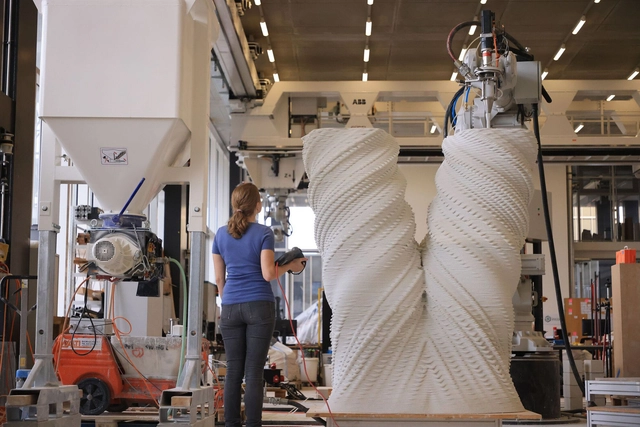
Construction has just begun on the Tor Alva, or the White Tower, the world’s largest 3-D printed tower. Designed by architects Michael Hansmeyer and Benjamin Dillenburger and printed with concrete by the technology university ETH Zurich, 8 out of 32 structural columns have been completed. Nestled in the village of Mulegns in the Swiss Alps, the White Tower is designed as a venue for music and theater events. Standing at 30 meters, the design features 32 distinct Y-shaped columns, each boasting a pattern of textured details.

Construction Begins on World's Largest 3D Printed Structure in Switzerland - Image 1 of 4Construction Begins on World's Largest 3D Printed Structure in Switzerland - Image 2 of 4Construction Begins on World's Largest 3D Printed Structure in Switzerland - Image 3 of 4Construction Begins on World's Largest 3D Printed Structure in Switzerland - Image 4 of 4Construction Begins on World's Largest 3D Printed Structure in Switzerland - More Images+ 18