1. ArchDaily
  2. Collaborative

Collaborative: The Latest Architecture and News

Architecture that Empowers Communities: The Stories Behind Francis Kéré’s Projects

Subscriber Access | 

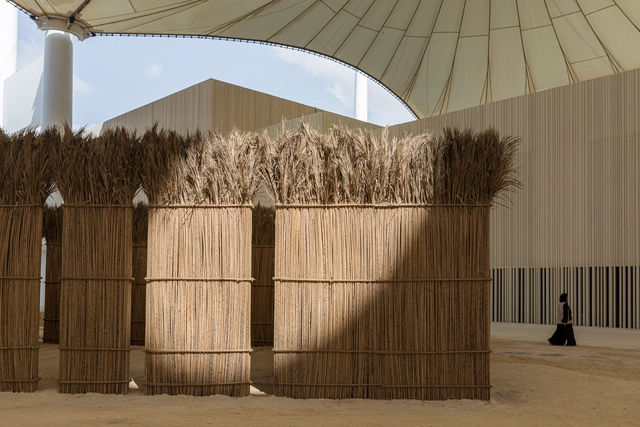
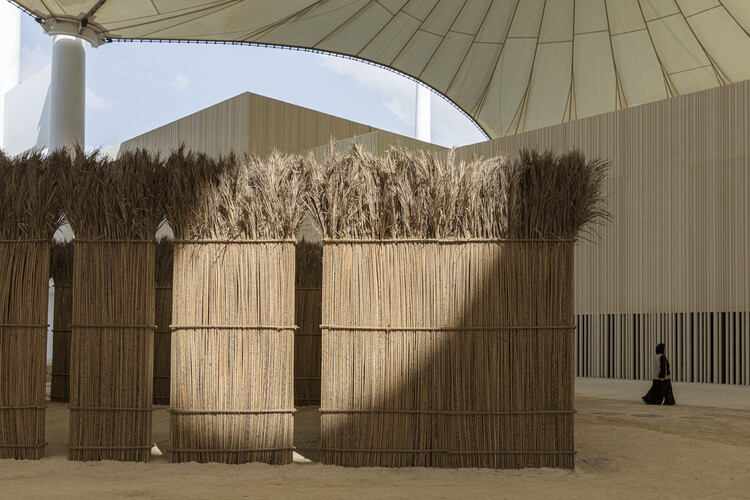
"My only concern is that my work must have a positive impact on the communities in which it is embedded," states Francis Kéré in his book Francis Kéré: Building Stories. His own life story, the context in which he was raised, and the experiences he has lived through all shape his approach to architecture. It is a commitment that extends to people and the places they call home—one that values materiality, collective learning, and the exchange of knowledge. Discovering the stories behind projects such as Primary School in Gando and Naaba Belem Goumma Secondary School inspires reflection on how to design spaces that truly serve humanity.

Francis Kéré's story begins in a village in sub-Saharan Africa and extends across many places. Gando was the setting of his first education, where he absorbed the essence and principles that later shaped the core values of his career alongside influences from other cultures. The structure of Gando is formed by different families who organize themselves, according to established customs, within courtyards scattered across the savanna. Growing up in this remote village in the Burkina Faso savanna fosters a strong sense of community, made tangible by the understanding that each resident of every courtyard is part of the life of the whole.

Architecture that Empowers Communities: The Stories Behind Francis Kéré’s Projects - Image 1 of 4Architecture that Empowers Communities: The Stories Behind Francis Kéré’s Projects - Image 2 of 4Architecture that Empowers Communities: The Stories Behind Francis Kéré’s Projects - Image 3 of 4Architecture that Empowers Communities: The Stories Behind Francis Kéré’s Projects - Image 4 of 4Architecture that Empowers Communities: The Stories Behind Francis Kéré’s Projects - More Images+ 25

Who Owns Public Space? Three Active Models of Shared Management Shaping Urban Commons in Europe and New York

Public space is often understood as belonging to no one in particular, collectively accessible yet institutionally maintained, yet a growing number of initiatives are challenging this assumption by testing shared management and distributed ownership models. In Paris, Adoptez un banc introduces a sponsorship-based approach, allowing individuals and groups to support temporarily and symbolically claim responsibility for historic public furniture without compromising its collective use. Elsewhere in the city, community gardens operating under the Main Verte framework demonstrate a self-managed model, in which public and private landowners retain ownership while delegating day-to-day control to citizen associations for food production and shared use. In New York, Common Corner represents a third pathway, based on institutional collaboration and participatory design, where public agencies, nonprofits, designers, and residents co-produce public space within a public housing context. Taken together, these three cases suggest that care, authorship, and responsibility can be distributed across citizens and institutions, producing more resilient, locally grounded urban environments.


Beyond the Lone Architect: Beatriz Colomina on Gender, Media, and Collaboration

Subscriber Access | 

Architecture has long been framed as the work of singular visionaries, yet Beatriz Colomina, a leading theorist, historian, and curator, challenges this notion, arguing that architecture is inherently a collaborative endeavor. She critically examines how the myth of the lone genius—almost always depicted as male—has erased the contributions of countless women and entire teams involved in the design process. For Colomina, rethinking architecture means recognizing the complexities of collective work and dismantling the historical biases that have shaped the discipline's narratives.

“Architecture is a Work of Generosity:” In Dialogue with Colectivo C733, Winners of Obel Award 2024

Subscriber Access | 

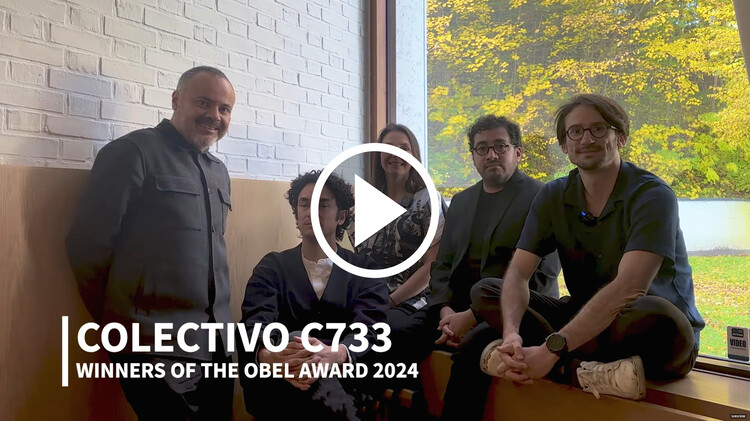
Recognized for completing 36 distinct yet cohesive public projects across Mexico in just 36 months, Colectivo C733 showcases the impact of collaborative design on public spaces and communities. The 36 projects were part of a national effort to revitalize vulnerable urban and rural areas in Mexico, earning them the 2024 Obel Award focused on the theme of "Architectures With". The team behind the designs, Colectivo C733, is a collaborative group formed by the joint offices of architects Gabriela Carrillo (Taller Gabriela Carrillo), Carlos Facio, and José Amozurrutia (TO), along with Eric Valdez (Labg), and Israel Espin. In a recent conversation with ArchDaily's Editor-in-Chief, Christele Harrouk, the collective discussed their approach to public architecture, the process of integrating diverse voices, and remaining flexible to the challenges of local conditions.

“Architecture is a Work of Generosity:” In Dialogue with Colectivo C733, Winners of Obel Award 2024 - Image 1 of 4“Architecture is a Work of Generosity:” In Dialogue with Colectivo C733, Winners of Obel Award 2024 - Image 2 of 4“Architecture is a Work of Generosity:” In Dialogue with Colectivo C733, Winners of Obel Award 2024 - Image 3 of 4“Architecture is a Work of Generosity:” In Dialogue with Colectivo C733, Winners of Obel Award 2024 - Image 4 of 4“Architecture is a Work of Generosity:” In Dialogue with Colectivo C733, Winners of Obel Award 2024 - More Images+ 11

Designing with Empathy: Architecture for Social Equity

Architecture has long been understood as a powerful tool for shaping the physical environment and social dynamics within it. However, its potential to foster social equity is often overlooked. Empathy-driven design invites architects to approach their work not only as creators of space but as facilitators of human connection and community well-being. This approach centers on understanding people's lived experiences, struggles, and aspirations — particularly marginalized communities — and responding to their needs through thoughtful, inclusive architecture. It goes beyond aesthetics and functionality, instead focusing on creating spaces fostering dignity, accessibility, and social equity. By prioritizing empathy, architects can design environments that uplift communities, address disparities, and create inclusive spaces that promote positive societal change in a tangible, human-centered way.

Designing with Empathy: Architecture for Social Equity - Image 1 of 4Designing with Empathy: Architecture for Social Equity - Image 2 of 4Designing with Empathy: Architecture for Social Equity - Image 3 of 4Designing with Empathy: Architecture for Social Equity - Image 4 of 4Designing with Empathy: Architecture for Social Equity - More Images+ 13

Sumayya Vally on Incorporating Diverse Knowledge in Contemporary Architecture: The Obel Award 2024 Theme

Subscriber Access | 

Sumayya Vally, architect, curator, and founder of Counterspace architecture office, joins the jury for the 2024 Obel Award. This international architectural prize, organized by the Henrik Frode Obel Foundation, honors projects that significantly impact people and the planet. The 2024 theme, "Architecture WITH," invites a re-examination of the architectural profession, emphasizing collaborative and co-creative processes that integrate diverse bodies of knowledge into the core of design. Vally's perspective on redefining architectural roles aligns with the theme's focus on non-hierarchical, co-creative approaches.

Sumayya Vally on Incorporating Diverse Knowledge in Contemporary Architecture: The Obel Award 2024 Theme - Image 1 of 4Sumayya Vally on Incorporating Diverse Knowledge in Contemporary Architecture: The Obel Award 2024 Theme - Image 2 of 4Sumayya Vally on Incorporating Diverse Knowledge in Contemporary Architecture: The Obel Award 2024 Theme - Image 3 of 4Sumayya Vally on Incorporating Diverse Knowledge in Contemporary Architecture: The Obel Award 2024 Theme - Image 4 of 4Sumayya Vally on Incorporating Diverse Knowledge in Contemporary Architecture: The Obel Award 2024 Theme - More Images+ 5

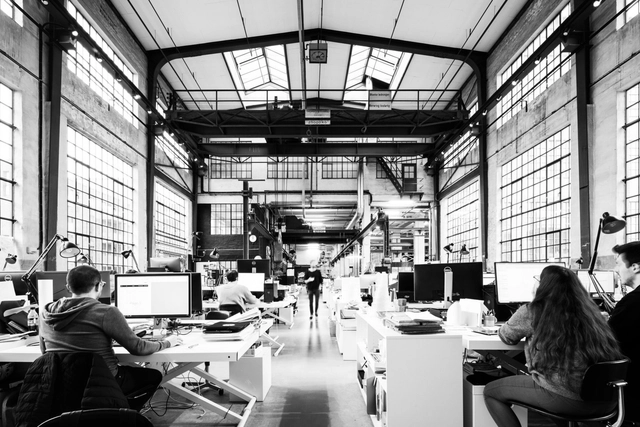
Democratizing Architecture Practices: Restructuring Firms

Subscriber Access | 

Discontent among employees in architecture firms is at an all-time high, demonstrated in the push for architectural unionization in the US in response to the lack of overall well-being in the profession. This discontent can be largely attributed to the inherently exploitative nature of the regular top-down architectural firm structures, fostering a disconnect between the direction firms take and the people working to make it possible. In these, leadership often takes on projects beyond the firm's financial capacity, with the expectation of underpaid staff taking on the brunt of the work through unpaid overtime. In these structures, employees are not to be a voice guiding the firm but to be profited off of. So, what are ways to address this disconnect? Is it time to restructure firms to give architects more agency? What are ways to create non-hierarchical firm structures?

Democratizing Architecture Practices: Restructuring Firms - Image 1 of 4Democratizing Architecture Practices: Restructuring Firms - Image 2 of 4Democratizing Architecture Practices: Restructuring Firms - Image 3 of 4Democratizing Architecture Practices: Restructuring Firms - Image 4 of 4Democratizing Architecture Practices: Restructuring Firms - More Images

The Bridge Between Conceptual Design and BIM: A Real-Time Collaborative Platform to Optimize Building Design

 | Sponsored Content

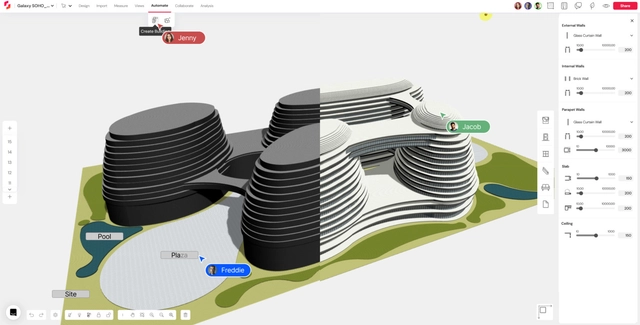
In the ever-changing world of design and construction, the tools at architects’ disposal have remained the same for decades. With its ability to deeply understand how architects design, Snaptrude has emerged as a collaborative 3D building design tool that incorporates smart, parametric modeling, live building information, easy real-time collaboration, and offers strong interoperability with other BIM tools like Revit.

By analyzing its wide variety of features, we showcase how Snaptrude empowers the design process to operate faster, smarter, and more collaboratively.

Exploring the Bay State Cohousing Model: A Unique Approach to Multi-Family Housing

Subscriber Access | 

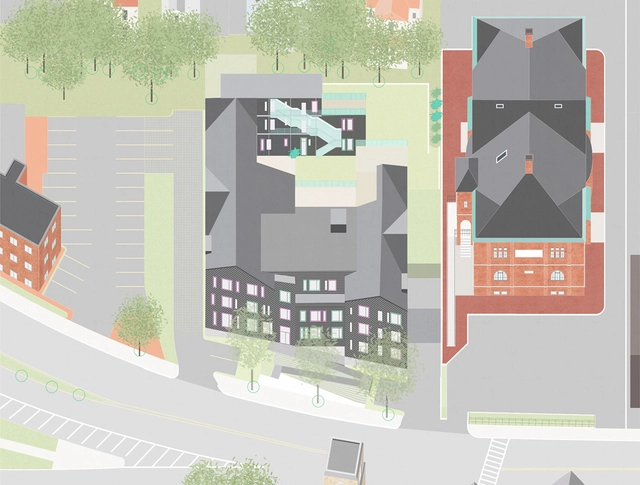
In Greater Boston's city of Malden, Massachusetts, an inter-generational community of thirty households hired an architecture firm and collectively designed their cohousing community. Responding to the cohousing community's request for collective living in an urban setting, French2D designed a typology-challenging building with individual residential units connected by a framework of shared spaces. The result is a 48,700 sqft unique and colorful type of multi-family housing. It is one of a growing number of cohousing projects in the United States.

Exploring the Bay State Cohousing Model: A Unique Approach to Multi-Family Housing - Image 1 of 4Exploring the Bay State Cohousing Model: A Unique Approach to Multi-Family Housing - Image 2 of 4Exploring the Bay State Cohousing Model: A Unique Approach to Multi-Family Housing - Image 3 of 4Exploring the Bay State Cohousing Model: A Unique Approach to Multi-Family Housing - Image 4 of 4Exploring the Bay State Cohousing Model: A Unique Approach to Multi-Family Housing - More Images+ 3

The Second Studio Podcast: Interview with Mark Bullivant

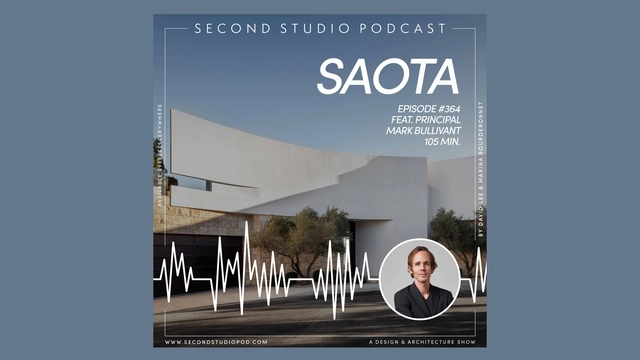
The Second Studio (formerly The Midnight Charette) is an explicit podcast about design, architecture, and the everyday. Hosted by Architects David Lee and Marina Bourderonnet, it features different creative professionals in unscripted conversations that allow for thoughtful takes and personal discussions.

A variety of subjects are covered with honesty and humor: some episodes are interviews, while others are tips for fellow designers, reviews of buildings and other projects, or casual explorations of everyday life and design. The Second Studio is also available on iTunes, Spotify, and YouTube.

This week David and Marina of FAME Architecture & Design are joined by Architect Mark Bullivant, Principal of SAOTA to discuss his background; attending architecture school in South Africa; working on projects across continents; the differing roles of contractors in different areas of the work; their collaborative approach; leadership and management of a large office; the various types of projects they work on; and more!

The Second Studio Podcast: Interview with Mark Bullivant - Image 1 of 4The Second Studio Podcast: Interview with Mark Bullivant - Image 2 of 4The Second Studio Podcast: Interview with Mark Bullivant - Image 3 of 4The Second Studio Podcast: Interview with Mark Bullivant - Image 4 of 4The Second Studio Podcast: Interview with Mark Bullivant - More Images+ 7

UNStudio and BIG Invest in Virtual Design Platform SpaceForm

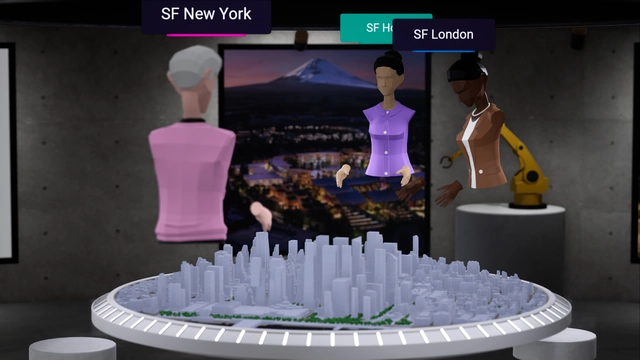
UNStudio and Bjarke Ingels Group have partnered up with Squint/Opera to develop SpaceForm, a virtual, cloud-based platform that facilitates design, review and collaboration processes for architects and developers. The new virtual workspace explicitly developed for the architecture and construction industry aims to fill a gap by creating a viable and sustainable way of collaborating and designing remotely across global teams, thus reducing the need for travel.

UNStudio and BIG Invest in Virtual Design Platform SpaceForm - Image 1 of 4UNStudio and BIG Invest in Virtual Design Platform SpaceForm - Image 2 of 4UNStudio and BIG Invest in Virtual Design Platform SpaceForm - Image 3 of 4UNStudio and BIG Invest in Virtual Design Platform SpaceForm - Image 4 of 4UNStudio and BIG Invest in Virtual Design Platform SpaceForm - More Images+ 2

Egyptian Pavilion at the 2021 Venice Biennale Sheds the Light on Local Egyptian Laborers

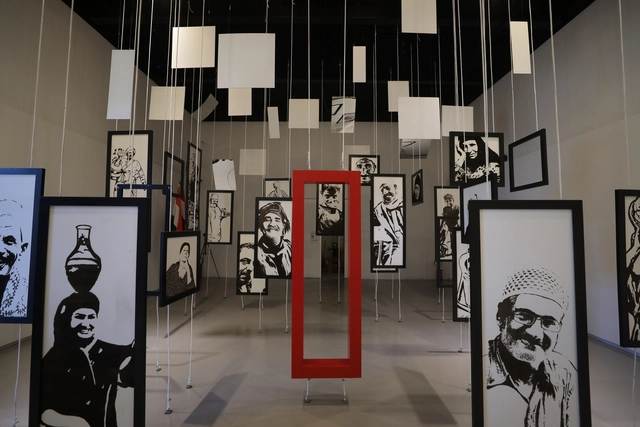
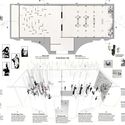
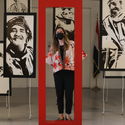
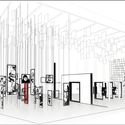
Titled "The Blessed Fragments", the Egyptian Pavilion at the 17th International Architecture Exhibition – La Biennale di Venezia, sheds the light on local Egyptian laborers and their value to the community, in a space designed with optical illusion fragments. Curated by Algorithm Architecture's Mostafa Rabea Abdelbaset, Mohamad Riad Alhalaby, Amr Allam, and Ahmed Essam, the pavilion will be on display at the Giardini from May 22nd until November 21st, 2021.

Egyptian Pavilion at the 2021 Venice Biennale Sheds the Light on Local Egyptian Laborers - Image 1 of 4Egyptian Pavilion at the 2021 Venice Biennale Sheds the Light on Local Egyptian Laborers - Image 2 of 4Egyptian Pavilion at the 2021 Venice Biennale Sheds the Light on Local Egyptian Laborers - Image 3 of 4Egyptian Pavilion at the 2021 Venice Biennale Sheds the Light on Local Egyptian Laborers - Image 4 of 4Egyptian Pavilion at the 2021 Venice Biennale Sheds the Light on Local Egyptian Laborers - More Images+ 5

Exploring New Forms of Collaboration Through Do-It-Together (DIT) Architecture

Subscriber Access | 

In our previous article, Why the New Do-It-Together (DIT) Architecture has Radical Potential, we uncovered a new practice that focuses on ‘we’, not ‘me’; celebrates collaboration, not competition; mobilizes human connections, not transactions.