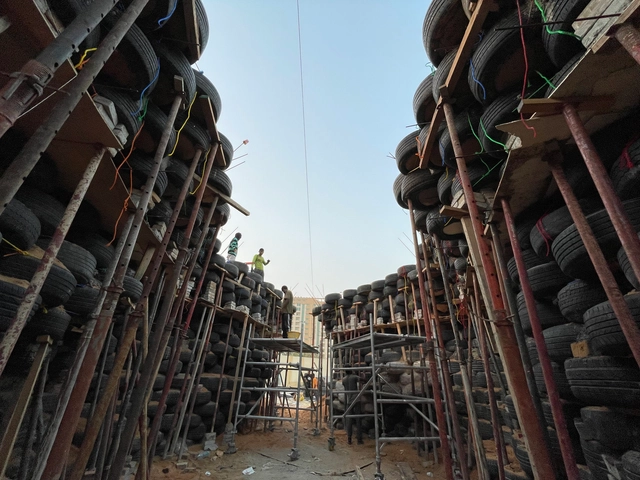
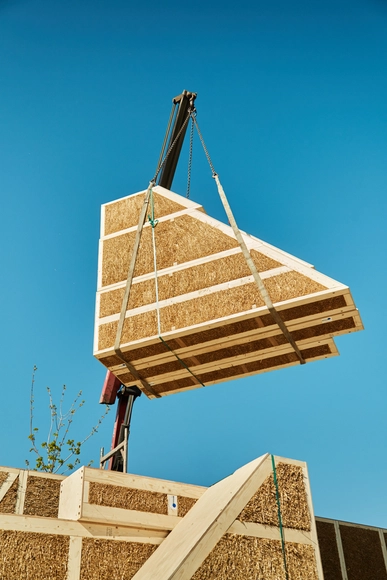
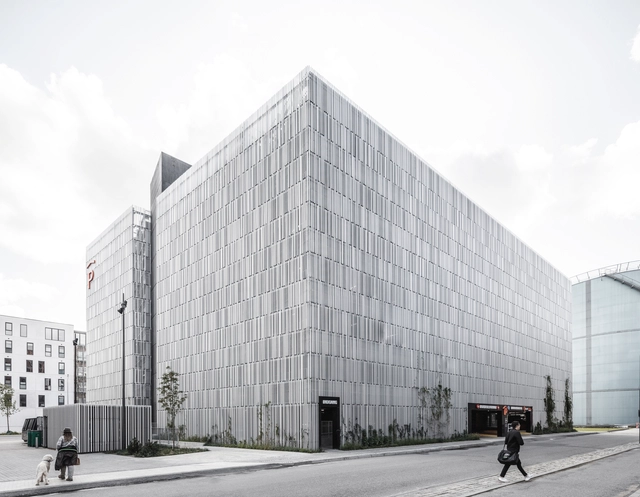
Today, interconnected and fast-paced lifestyles, future mobility trends and constant material innovation puts pressure on a slow-moving building industry. How can architecture keep up with this trend? Following dynamic and nomadic lifestyles, architects must explore new structural systems that should be able to reach multiple locations, as well as be adaptable and reusable in the future. By applying revolutionary technology for circular, scalable components and carbon-negative buildings, UrbanBeta –a spatial innovation studio designing strategies, building concepts, predictive tools and platforms for creating transformative spaces– has developed BetaPort, a robotic construction system powered by artificial intelligence and automation.
Based on the principles of a circular economy, Urban Beta and BetaPort create a sustainable construction plan, ready to grow and change over time. The studio conceives sustainable on-demand architecture systems for flexible buildings based on a kit of parts.
Videos
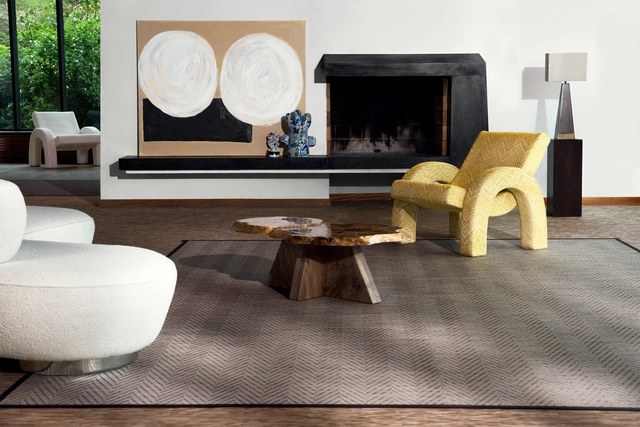
Turning waste into beautiful flooring. Image Courtesy of Bolon
In contemporary architecture, recycling has evolved from a desirable to an unavoidable necessity. This change is mainly due to the growing climate crisis, accentuated by the constant presence of waste (for which no use has been found beyond the initial one).
This approach has stimulated the creation of innovative materials to reuse waste in various contexts. A notable example is the case of woven flooring and rugs, where Bolon took a step forward in 1949 by transforming textile waste into stylish products. Since then, they have continued to innovate in materials, fusing the traditional flooring branch with sustainable creative design.
https://www.archdaily.com/1014951/walk-on-waste-weaving-waste-into-stylish-floorings-and-rugsEnrique Tovar
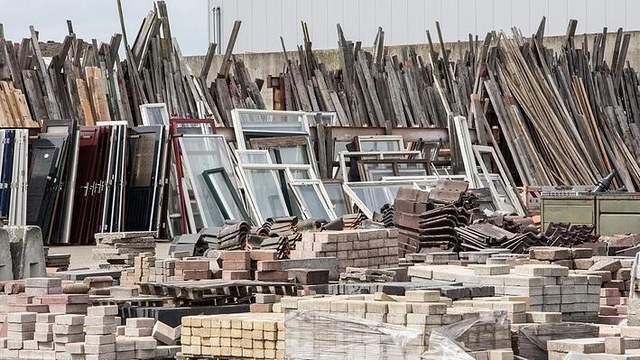
For a long time, the construction industry has followed a linear process - extract raw materials, build structures, demolish them, and then dispose of the garbage in landfills. This approach has serious negative effects on the environment and society and is inherently unsustainable. Reconsidering traditional methods and workflows requires support from all stakeholders and a sense of urgency proclaimed by authorities. In the United States, city organizations have begun to implement new policies to keep construction waste out of landfills and support circular practices. Several cities like Seattle and Pittsburgh, have started implementing deconstruction ordinances that require older buildings to be carefully deconstructed rather than demolished. How might their key provisions influence circular practices in the country?
The principles of the circular economy have been most influential and applicable to the construction industry. Emphasizing the efficient use of resources, models around reuse and recycling of components and materials are increasingly being pioneered by global architecture practices. The concept of "design for disassembly" has emerged as an innovative approach especially in the case of building facades. Striking a balance between the demands for new infrastructure and the transition towards sustainability requires a review of traditional facade design throughout its lifecycle.
Videos
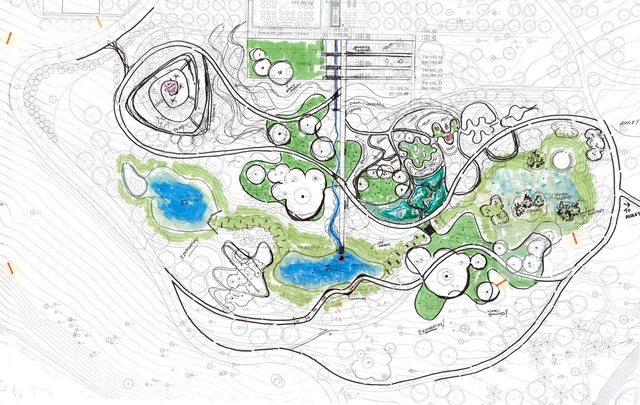
Sketch of Bonnet Springs Park / Sasaki. Image Courtesy of Sasaki
“Landscape architects have started conversations about embodied carbon. There is a realization that we can no longer ignore the grey parts,” said Stephanie Carlisle, Senior Researcher, Carbon Leadership Forum and the University of Washington, during the first in a series of webinars organized by the ASLA Biodiversity and Climate Action Committee.
The grey parts are concrete, steel, and other manufactured products in projects. And the conversations happening are laying the foundation for a shift away from using these materials. The landscape architect climate leaders driving these conversations are offering practical ways to decarbonize projects and specify low-carbon materials.
Cortesia de Programa Rolex de Mestres e Discípulos
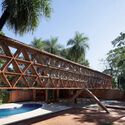
Born in Brazil and educated in Paraguay, Gloria Cabral is an architect who early on learned that home can be many places—or none at all. Guided by a comprehensive understanding of the geography, culture, and social conditions of the places she designs, she has left her mark on buildings and artistic installations constructed in various locations, from Assumption to Venice.
Besides her interest in the specificities of the places where she operates, Gloria focuses on resource economy and material reuse — a trending theme that Gloria has championed for over fifteen years. We had the opportunity to speak with the architect about her experiences in Paraguay and Brazil, some of her works involving recycled brick, and her insights into architecture and sustainability.
A vital aspect of a circular economy lies in shifting our view of waste. Labeling an item "waste" implies voiding its value and ending its useful role in a traditionally linear economy. While the item might be out of sight and out of mind, its life continues in the landfill. This shift in perspective regarding waste means opening our minds to the opportunity that the abundance of junk presents. These designers and architects have managed to not only effectively reclaim discarded objects but also to make them look precious, imbuing them with new meaning and value through their careful curation.
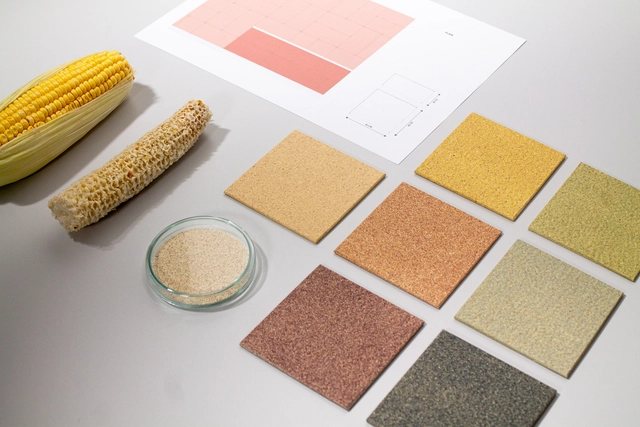
The practice of upcycling –present in a variety of industries from fashion to construction– not only revitalizes discarded items, adding new values and functions, but also contributes to turning them into valuable resources. Adopting the spirit of the circular economy by harnessing agricultural waste such as corn cobs, rice straw, and sugar cane bagasse for building materials marks a fundamental shift towards sustainable practices, promoting a closed-loop system that minimizes waste and optimizes resource efficiency.
CornWall®, developed by StoneCycling, is a pioneering innovation in this regard. Inspired by the need to shift to a bio-based economy, it incorporates a transformative solution that addresses the pressing concerns of the construction industry's environmental impact. It is a wall-finishing material made from plant biomass, obtained mainly from the cores of regionally sourced corn cobs. This organic waste is widely available and is usually destined for fermentation, burning as biomass, or becoming simple organic waste. We spoke to Ward Massa from StoneCycling to better understand this material.
Buildings that are designed to layer stories and memories, evoke a sense of aspiration, define cultural narratives, and build a national identity will always be important in all societies. When buildings have this power to shape communities, make an impact on a city’s image, and change the course of socio-economic growth, then they can be identified as iconic. Though the term “iconic” is subjective, it is one that pushes the boundaries of architecture in any context. It calls for spatial originality, proposes innovative material technology, and necessitates a radical socio-economic investment to be realized.
However, since the economies of developing countries in the global south cannot meet the requirements of these architectural structures, is there a more suitable socio-economic model for monumental structures in this context? Can the incremental principles of small adaptable changes and growth be applied to the finite iconic aspiration of this architecture?
Of Palm / Abdalla Almula. Image Courtesy of Abdalla Almula
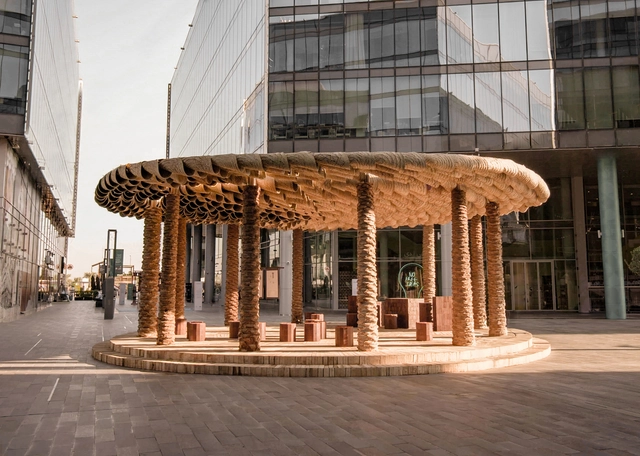
Happening between November 7 and 12, Dubai Design Week 2023 brought together over 500 designers, architects, and creative practitioners to explore the relationship between traditional practices and emerging technologies in an effort to create more environmental sustainability and design-led social impact solutions. As one of the most important cultural events in the Middle East, the festival brings forward a wide offering of installations, artworks, and immersive experiences, all exploring important topics of eco-friendly design.
This year’s interventions and installations drew inspiration from the region’s natural ecosystems as well as local traditions and craftsmanship while merging these practices with innovative technologies, biomaterial explorations, and reimagined ways of practicing. Across the interventions, a recurring motif emerges, that of celebrating Middle Eastern heritage and engaging productively with vernacular practices.
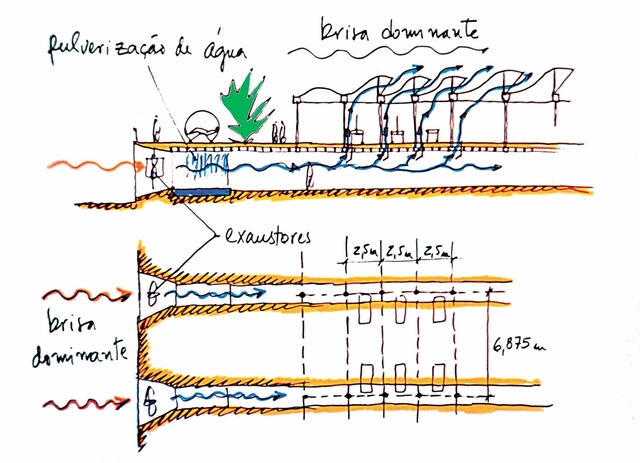
Design of the ventilation system at the Sarah hospital / João Filgueiras Lima (Lelé). Image via Concrete
Architecture is a transdisciplinary field. It incorporates principles and knowledge from several other disciplines to ensure a built structure functions as intended. This fundamentally involves considering the context in which a building is placed, including its immediate surroundings, such as neighboring structures, local biodiversity, and climate. Essentially, architecture only exists within a particular context. When we expand this context to a broader scale, it becomes what we commonly refer to as the "environment."
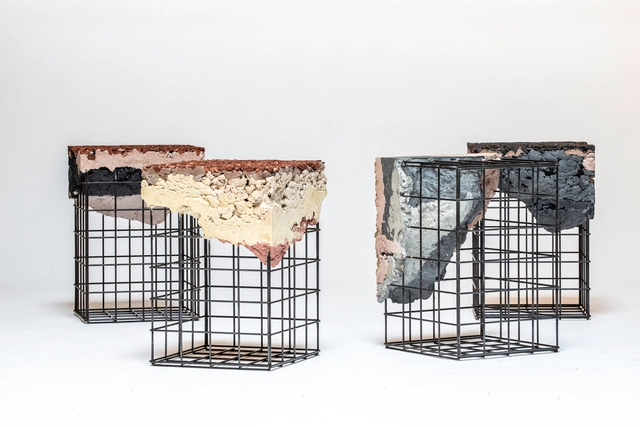
Irene Roca’s “Appropriating the grid” project is born out of the contemporary ruins of our current construction processes. An exploration of the waste that is generated and the legal complexities of discarding this waste awakened a sense of urgency and creativity in the architect, resulting in a collection that molds and re-formulates construction waste into versatile interior design objects.
https://www.archdaily.com/963957/materials-are-being-produced-according-to-fictitious-demand-in-conversation-with-irene-rocaDaniela Porto
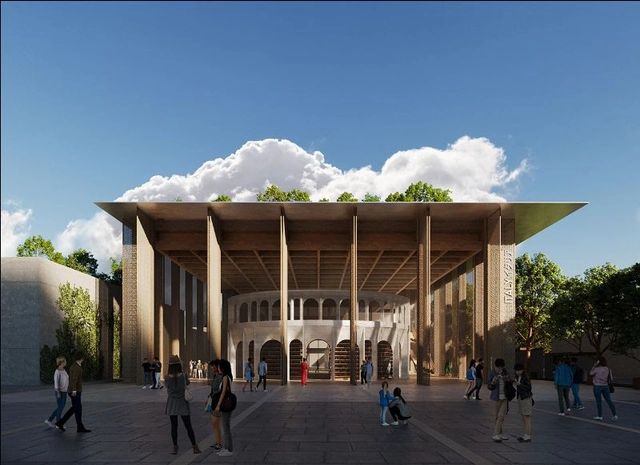
Mario Cucinella Architects has just revealed the design of the Italian Pavilion for Expo Osaka 2025. Envisioned as a dynamic entity, the pavilion aims to foster knowledge and innovation through the interplay of different generations and cultures. It will serve as a collaborative repository of Italian expertise, encompassing artistic, scientific, entrepreneurial, and social experiments. The display is designed around Italy's cultural treasures and aims to highlight, deconstruct, and then reinterpret them in a contemporary manner.
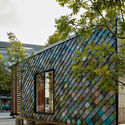
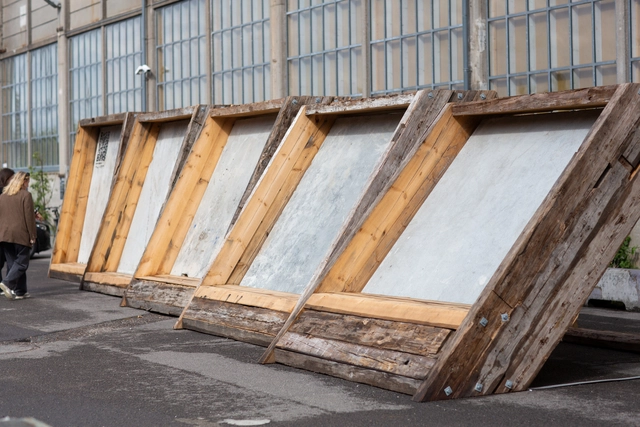
Developed by GXN for the 2023 UIA World Congress of Architects in Copenhagen, The (P)RECAST Pavilion explores the possibility of reusing precast concrete elements from existing buildings to promote circularity and reduced carbon emissions in the construction industry. The pavilion showcases salvaged concrete elements alongside 200-year-old timber beams, highlighting their aesthetic and structural value. Following the same motivation but through a different approach, MEE Studio has developed The Regenerative Cabin. Located in Copenhagen, the structure explores the applied use of regenerative biogenic materials to reduce the carbon emissions associated with the building materials.
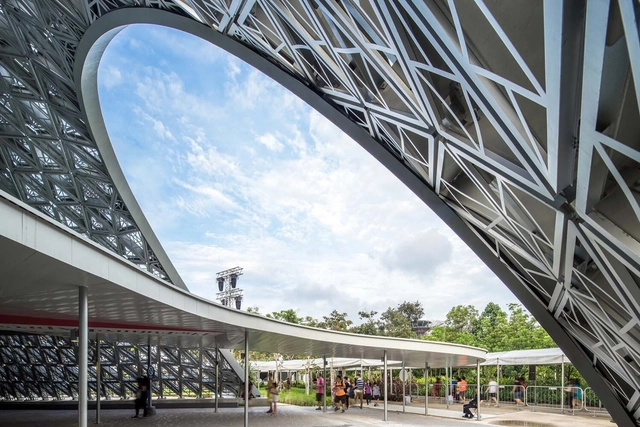
Last week, the President*s Design (P*DA) Award chose 8 winning recipients for its 2023 edition. The award that honors designers making a transformative and positive impact on the lives of Singapore’s society and the broader global community recognized Henning Larsen, BIG, and the Singapore Pavilion for Expo 2020 Dubai.
The P*DA presented two categories: Designer of the Year and Design of the Year. Organized jointly by the DesignSingapore Council and the Urban Redevelopment Authority (URA), the biennial award was given to two “Designer of the Year” and six “Design of the Year” recipients. Beyond the excellence of their design execution, the honorees demonstrated a genuine sense of purpose and mission that is consistent with P*DA's core values. The outstanding designs of this year tackle fundamental and systemic issues like consumerism and circularity, dementia and caregiving, climate change and sustainability, and show how Singapore is developing its best design practices that are applicable to enhancing lives worldwide.
Cities are a canvas for architectural creativity and the dynamism of urban life. In recent years, they have taken on an additional role: that of living laboratories for innovative architecture and urban design. International cities have become experimental grounds for architectural technology, sustainable practices, and human-centered design principles to be tested and refined. This paradigm shift has not only transformed the physical aspects of urban environments but has also redefined the relationship between architecture, community, and the built environment.
Almost two decades ago, in the downtown corridor of Columbus, Ohio, the century-old landmarked Lazarus Building underwent an extensive renovation to save the department store and restore it to its former glory. Sixty million dollars went into its restoration and transformation into a retail and office complex. During the construction, workers recycled nearly 5,000 pounds of steel, 2,000 pounds of concrete, and significant amounts of carpeting, ceiling tiles, and various wood- keeping 22,000 pounds of debris out of Ohio’s landfills. They also saved more than $25 million dollars by implementing this rigorous recycling process.