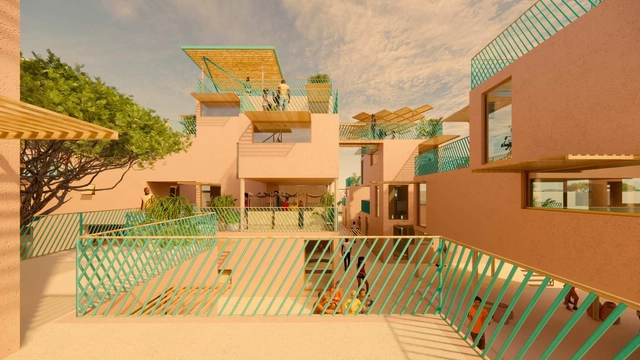
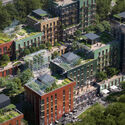
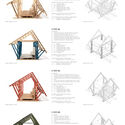
Render of affordable homes created out of plastic waste. Image Courtesy of Othalo
A lot of people around the world would agree that we are currently in a climate emergency. The IPCC report, released last year, makes for difficult reading. Practitioners in the built environment have taken to direct climate action, with organizations such as ACAN and Architects Declare fostering carbon literacy and calling for designers to re-evaluate how they practice.
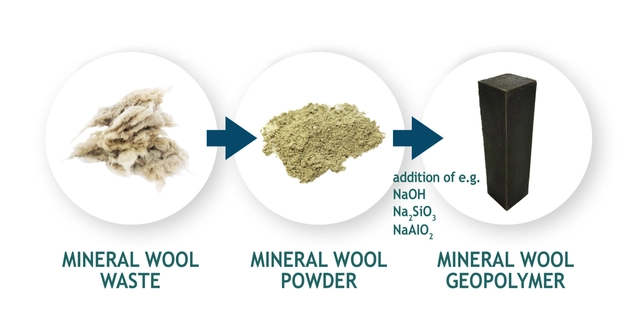
When approaching the process of recycling building materials, there are a number of obstacles to achieving a comprehensive and effective result. First, careless demolition can make the process very complex, as products with different recycling products are often mixed. In addition, not all materials can be efficiently recycled or processed, as many still need expensive or overly complex processes. But the construction industry, being a huge contributor to waste production and greenhouse gas emissions, has also developed multiple new technologies to improve its practices. This is the case of the WOOL2LOOP project, which seeks to solve one of the biggest challenges in applying a circular approach to construction and demolition waste.
While circular economy is often discussed in relation to the architectural object through the lens of material recycling, design for disassembly, and material passports, the framework is most fully enacted at the neighbourhood and city scale. Whether it is visions of circular communities that hint at some level of self-sufficiency or policies set in motion by cities, urban-scale projects exemplify the guiding principles of the circular economy, providing a glimpse into what a fully-fledged version of it might look like. The following explores the strategies used in circular urban environments, from architecture and construction materials to energy production, waste management and food production, as well as the processes and operations that govern these designs, providing insights into the conditions that inform circularity.
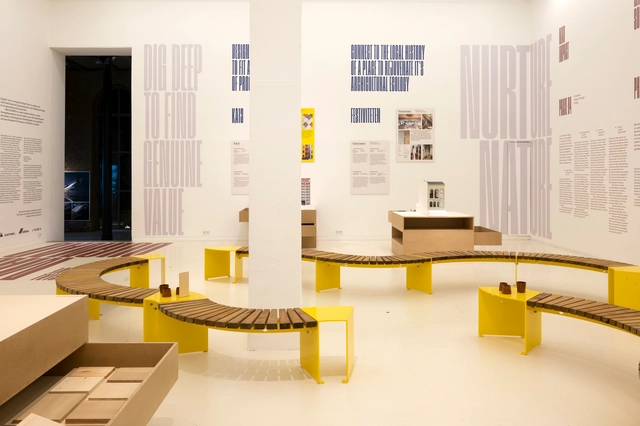
In a new exhibition at AEDES Architecture Forum in Berlin, Norwegian architecture firm Mad arkitekter showcases four examples of sustainable architecture, stressing the importance of collaboration and cross-disciplinary for achieving climate goals. On view through until March 10, Mad About Dugnad – Work Together, Build Better echoes the Norwegian tradition of "dugnad", which refers to community solidarity towards achieving a common goal, a key concept in creating solutions for a sustainable future.
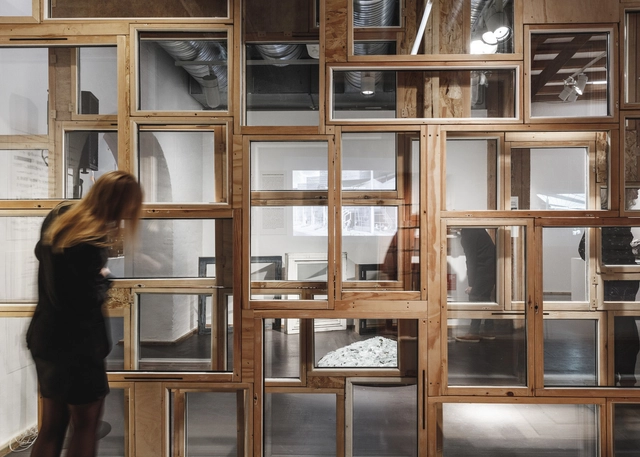
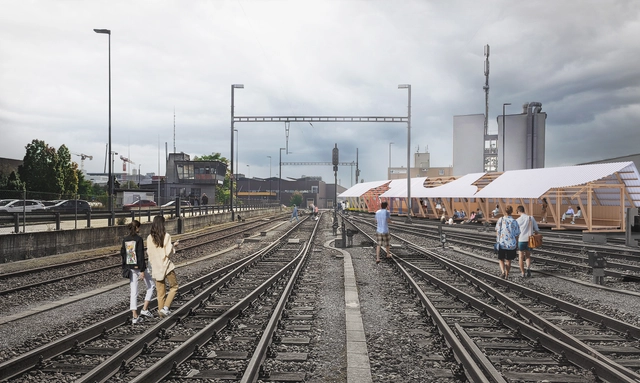
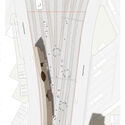
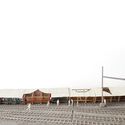
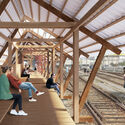
The new biennial event Architekturwoche Basel (AWB) will debut this May as a platform for discussing architecture and urban development through the lens of sustainable construction and the circular economy. The inaugural edition also marks the launch of the first Basel Pavilion, a temporary structure meant to showcase new possibilities for environmentally-friendly building practices. The winning design, “Loggia Basileana”, created by architecture practice isla, is made of reused building components and features a series of modules that form a continuous pedestrian passageway along the train tracks on the Dreispitz site.
Much has been said about circularity in the construction industry. Inspired by nature, the circular economy works in a continuous process of production, resorption and recycling, self-managing and naturally regulating itself, where waste can turn into supplies for the production of new products. It is a very interesting concept, but it faces some practical difficulties in everyday life, whether in the demolition / disassembly process, or in the correct disposal of materials and waste; but mostly due to the lack of technologies available to recycle or give new use to construction materials. About 40% of all waste generated on Planet Earth comes from civil construction, and a good part of it could be recycled. Concrete is an especially important material because of its large carbon footprint in production, its ubiquity and massive use, and also because of the difficulty of recycling or reusing it.
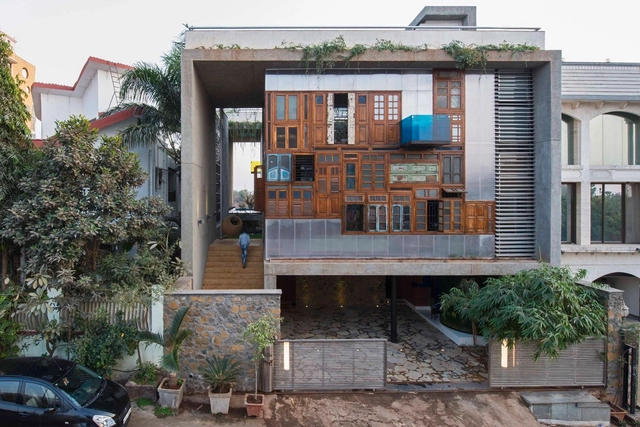
Casa Collage / S+PS Architects. Image Cortesia de S+PS Architects
Reform and adaptation of spaces represent a significant parcel of projects ordered to architecture firms, and reuse of preexisting structures is not newness. Functions and needs change over time, therefore adaptations are required to meet new demands. However, no matter how much the maintenance of a building is, in most cases, preferred in economic and ecological sense to its demolition and a new construction from the beginning, the logic of the reuse of a space does not usually extend to its parts that become, thus, rubble.
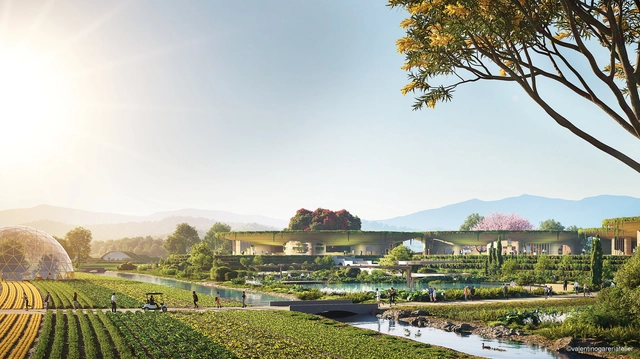
Valentino Gareri Atelier has been selected to design the pilot project for a circular economy village model that aims to redefine urban sprawl through sustainability and diverse programming. Comprising eight residential hamlets with co-working and entertainment spaces, The Spiral Village will be created using emerging 3D printing methods and will foster circularity through a waste-to-resources hub, a diverse regenerative agricultural system, a sustainable water management system and renewable energy.
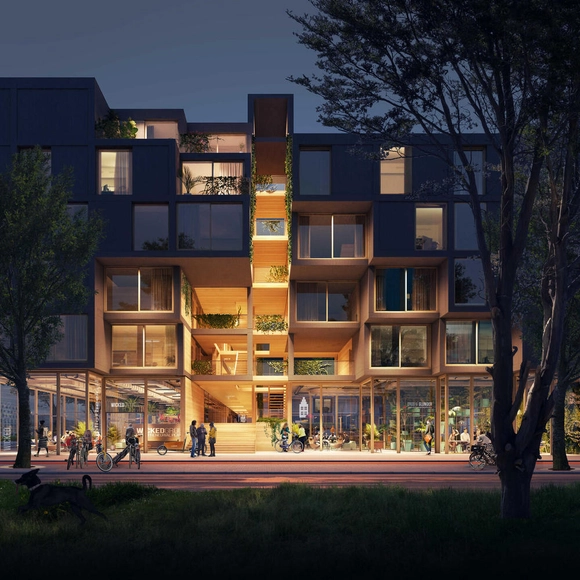
The first wooden housing modules of Juf Nienke, a new circular prefabricated timber housing project by SeARCH, RAU, and DS landscape architects, has been installed in Amsterdam. The project will feature 61 rental homes made entirely of wood, and will sit at the entrance of Centrumeiland, a newly raised piece of land on Lake IJmeer that features 1500 housing units. It is set to be one of the most sustainable apartment buildings in the Netherlands, incorporating an innovative cross-laminated timber construction and utilizing recycled materials.
Pablo van der Lugt is an architect, author and speaker. His research focuses on the potential of materials such as bamboo and mass timber for the construction sector, and their positive impacts on the world. “Throughout my professional career both in university (including my PhD research on the carbon footprint of engineered bamboo and wood) and industry the past 15 years I have found there are many misconceptions about these materials which hamper their large scale adoption. For this reason I ‘translated’ my research findings into two contemporary books for designers and architects about the potential of bamboo: Booming Bamboo, and engineered timber: Tomorrow’s Timber. They aim to dispel these myths and show the incredible potential of the latest generation of biobased building materials in the required transition to a carbon neutral, healthy and circular built environment.” We recently had the opportunity to talk with him about these topics. Read more below.
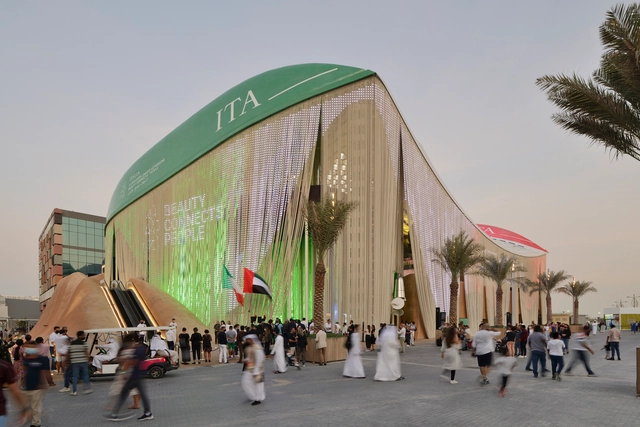
CRA-Carlo Ratti Associati and Italo Rota Building Office, along with Matteo Gatto and F&M Ingegneria designed the Italian Pavilion at the Expo 2020 Dubai with a focus on reconfigurable architecture and circularity. The architects used orange peel, coffee ground, algae, and sand as construction materials, along with recycled plastic for the façade's ropes and boat hulls for the roof. The architectural design of the pavilion and the materials used create a natural climate mitigation system that substitutes for air conditioning.
The Finnish Pavilion for Expo 2020 Dubai showcases the country's deep connection with nature and sustainability, contributing to its high quality of life. Titled "Snow Cape", the pavilion designed by JKMM Architects subtly evokes Finnish natural settings through materiality and atmosphere while embodying the principles of circular economy championed by the Nordic country. The structure with its tent-like entrance creates a point of commonality, reminding of Finland's nomadic heritage, as well as the Arabic text.
Too often buildings end up as waste at the end of their lifecycle. How can the built environment move towards a circular economy, and in turn, reimagine how valuable materials are tracked and recycled? Looking to address this issue, material passports are one idea that involves rethinking how materials are recovered during renovation and demolition for reuse. The result is when a building is ready to be demolished, it becomes a storage bank for useful materials.
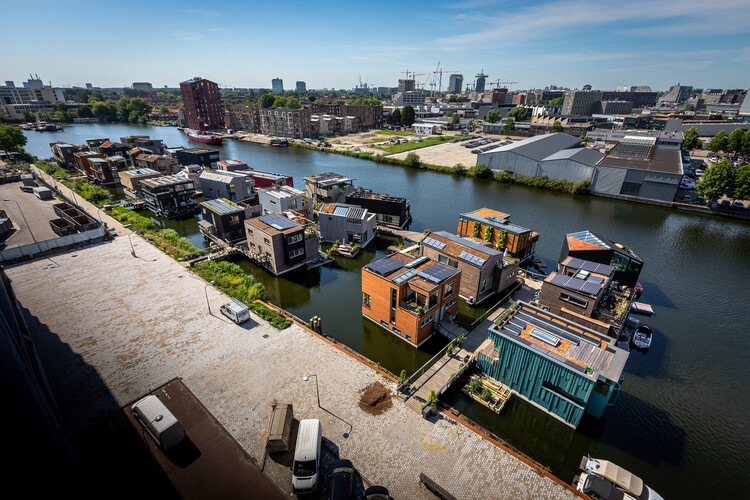
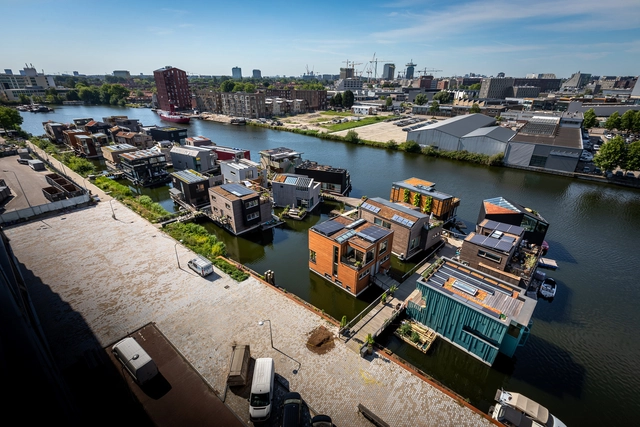
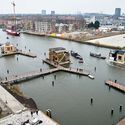
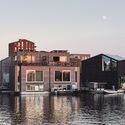
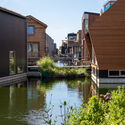
Schoonschip is Amsterdam’s innovative circular neighbourhood, a community-driven project set to become a prototype for floating urban developments. With a masterplan designed by Dutch architecture practice Space&Matter, the project comprises 46 dwellings across 30 water plots connected by a jetty and features decentralised and sustainable energy, water and waste systems. With the last of its buildings completed this year, the development showcases a valid adaptation strategy in the face of climate change and rising sea levels.
A circular economy is an economic system aimed at eliminating waste and the continual use of resources. Looking beyond the current take-make-waste extractive industrial model, a circular economy aims to redefine growth, focusing on positive society-wide benefits. It entails gradually decoupling economic activity from the consumption of finite resources and designing waste out of the system. Underpinned by a transition to renewable energy sources, the circular model builds economic, natural, and social capital.
With the inauguration of the 17th Venice Architecture Biennale, 60 nations from across the world showcased unique solutions to the question of “How will we live together”. Neither the pandemic nor its repercussions got in the way of the curators' creative process. Instead, they took it as a factor to explore how the notion of 'living together' has changed over the past year, and how they can reimagine better built environments. ArchDaily had the opportunity to meet with architect Wael Al Awar, one of the co-curators of the UAE Pavilion, to discuss how the pavilion's innovative material came to be and what it means for the future of architecture.
The concept of “decarbonization” has been in vogue recently in political speeches and global environmental events, but it has not yet gained enough attention in the field of architecture to profoundly change the way we design and construct the world of tomorrow. Buildings are currently responsible for 33% of global energy consumption and 39% of greenhouse gas emissions, indicating that architects must play a significant role if we are to stop or reverse climate change. With carbon acting as a universally agreed upon metric with which the greenhouse gas emissions of a building can be tracked [1], one of the most important ways through which this goal can be achieved is therefore the decarbonization of buildings.
https://www.archdaily.com/938866/urgent-issue-10-strategies-to-decarbonize-architectureLilly Cao
Making material recycling commonplace within the architectural field would require a top-down approach in adapting the industry’s processes and standards to create a suitable framework for the task. However, individual endeavours are bringing about change within the profession, pushing for a reconsideration of architecture’s relationship to waste. This article looks at some of the initiatives that are spearheading the transition towards a common practice of material recycling.






















.jpg?1620086762&format=webp&width=640&height=580)