1. ArchDaily
  2. Cinema

Cinema: The Latest Architecture and News

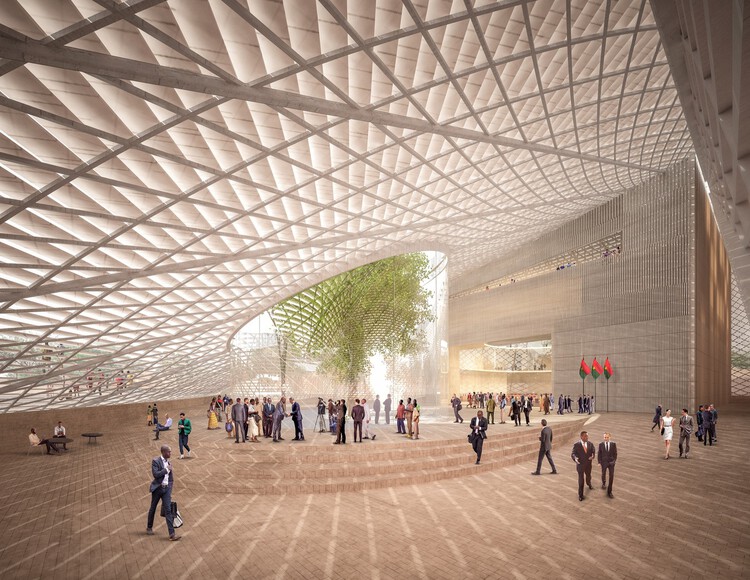
Studio NEiDA Designs The Falcon Cinema in Ghana, a Community Art Centre Dedicated to African Film

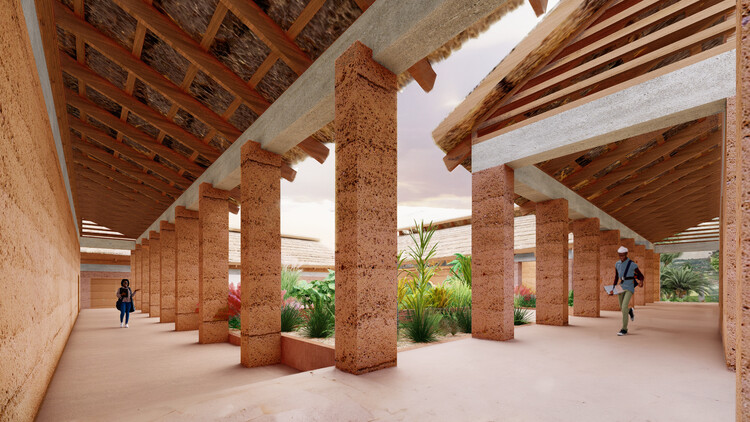
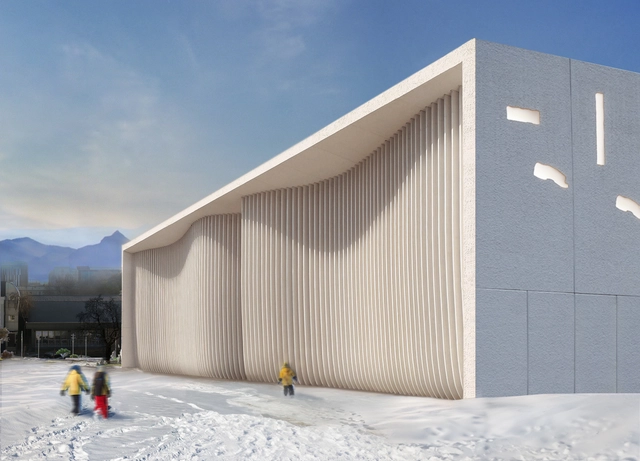
Designed by Studio NEiDA, The Falcon Cinema is a community and art centre located in Berekuso, Ghana, commissioned by film curator and Founding Director Jacqueline Nsiah. The cinema's mission is to create a home for cineastes to preserve Africa's cinematic legacy while hosting critical and creative thinking about contemporary filmmaking on the continent, designed and curated with a pan-African approach. The programme includes a 250-seat and a 150-seat screening room, a restaurant, an archive, communal spaces, an education hub, and an outdoor cinema. A second compound is planned for a future phase, to house living quarters for filmmakers in residence. Still in the design phase, the project started in 2024 and is expected to be completed in 2027.

Studio NEiDA Designs The Falcon Cinema in Ghana, a Community Art Centre Dedicated to African Film - Image 1 of 4Studio NEiDA Designs The Falcon Cinema in Ghana, a Community Art Centre Dedicated to African Film - Image 2 of 4Studio NEiDA Designs The Falcon Cinema in Ghana, a Community Art Centre Dedicated to African Film - Image 3 of 4Studio NEiDA Designs The Falcon Cinema in Ghana, a Community Art Centre Dedicated to African Film - Image 4 of 4Studio NEiDA Designs The Falcon Cinema in Ghana, a Community Art Centre Dedicated to African Film - More Images+ 8

Material Culture and Heritage in Contemporary Cinema Architecture

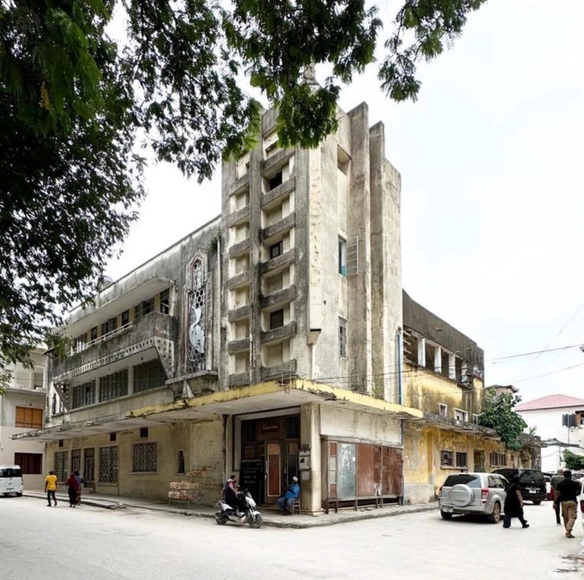
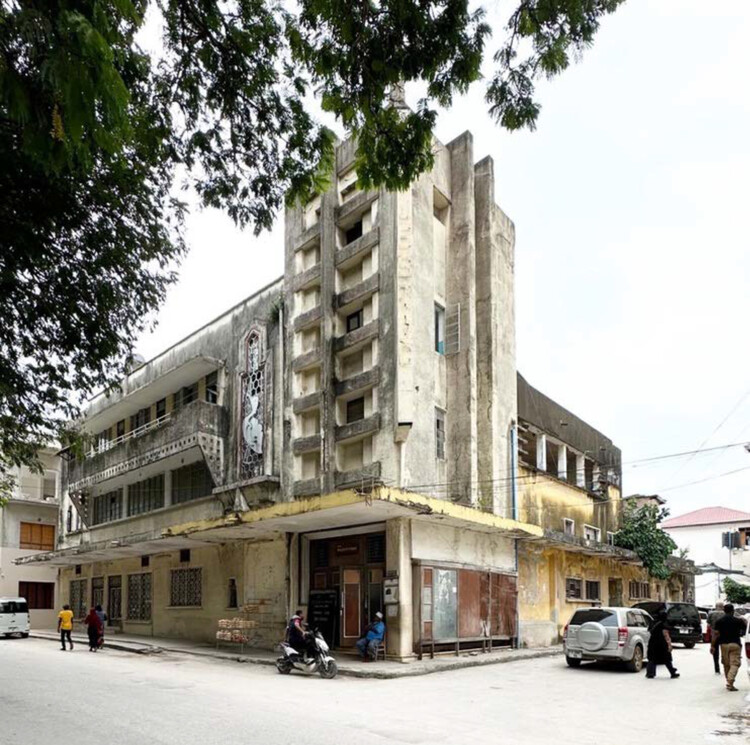
Over the years, cinema architecture has continually reinvented itself. From cinematic experiences that engage multiple senses to material technologies that reinterpret the aesthetics of past eras, the concept of the movie theater has enabled the recovery, revitalization, and renewal of numerous obsolete, ruined, or even historically protected spaces. Just as the Majestic Cinema reflects an important community function in Zanzibar, Tanzania, many twentieth-century buildings have found in adaptive reuse an opportunity to restore and preserve cultures, memories, and traditions that remain meaningful to their communities.

Material Culture and Heritage in Contemporary Cinema Architecture - Image 1 of 4Material Culture and Heritage in Contemporary Cinema Architecture - Image 2 of 4Material Culture and Heritage in Contemporary Cinema Architecture - Image 3 of 4Material Culture and Heritage in Contemporary Cinema Architecture - Image 4 of 4Material Culture and Heritage in Contemporary Cinema Architecture - More Images+ 25

Historic Entertainment Venues in Oxford, Valparaíso, and Osaka Reflect Growing Pressures on Cultural Infrastructure

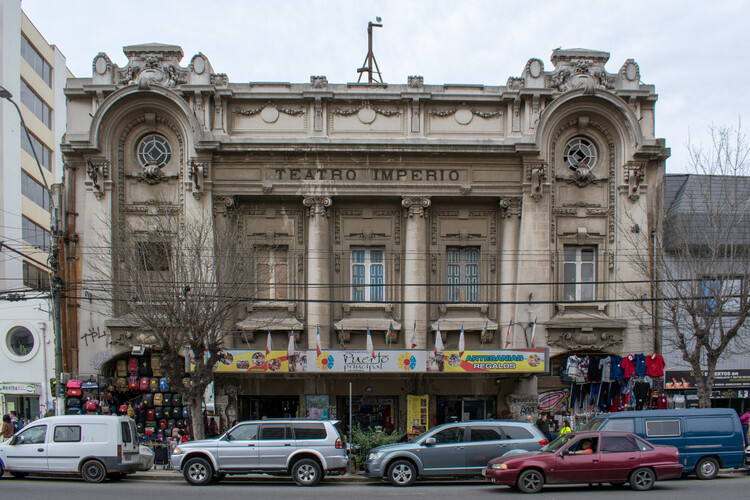
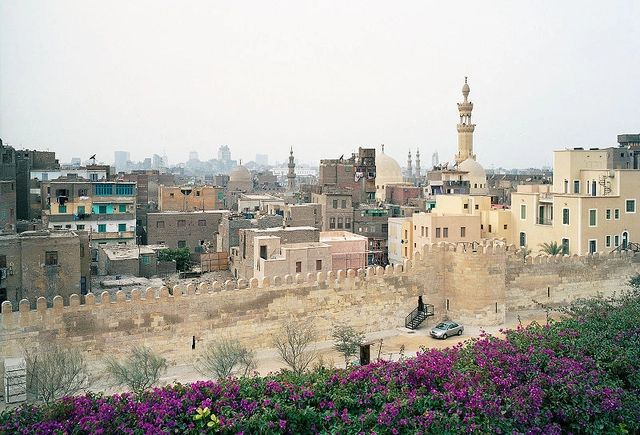
Between 2005 and 2021, French photographers Yves Marchand and Romain Meffre developed a long-term project titled Theaters. Recently exhibited at KYOTOGRAPHIE 2026, the work documents a phenomenon that continues to unfold gradually around the world: the decline of infrastructure originally designed for public entertainment in the early twentieth century. Theaters, cinemas, and performance venues that once accompanied the modernization of cities are increasingly being abandoned, repurposed, or "left suspended as hybrid ruins." This process is often associated with the growing individualization of cultural consumption, from the widespread adoption of television to the rise of the streaming industry, as well as the impact of the COVID-19 pandemic on cultural institutions. Below are three cases located in England, Chile, and Japan that illustrate different stages in this transformation, while also highlighting community-led efforts to preserve modern cultural heritage.

Historic Entertainment Venues in Oxford, Valparaíso, and Osaka Reflect Growing Pressures on Cultural Infrastructure - Image 1 of 4Historic Entertainment Venues in Oxford, Valparaíso, and Osaka Reflect Growing Pressures on Cultural Infrastructure - Image 2 of 4Historic Entertainment Venues in Oxford, Valparaíso, and Osaka Reflect Growing Pressures on Cultural Infrastructure - Image 3 of 4Historic Entertainment Venues in Oxford, Valparaíso, and Osaka Reflect Growing Pressures on Cultural Infrastructure - Image 4 of 4Historic Entertainment Venues in Oxford, Valparaíso, and Osaka Reflect Growing Pressures on Cultural Infrastructure - More Images+ 1

20th Century Design in Flux: ArchDaily’s May Editorial Focus

"The story of architecture is not wrong," argued Lesley Lokko in her introduction to the Venice Architecture Biennale 2023, "but it is incomplete." For most of the 20th century, architectural history spoke in one tongue: a singular, dominant narrative centered on a handful of movements, names, and cities, whose reach and influence appeared universal precisely because alternative voices were rendered inaudible. Design movements, however, rarely traveled intact across borders. They were frequently absorbed, resisted, reinterpreted, and transformed depending on geography, politics, economy, climate, and available materials. What arrived in one place as doctrine became, somewhere else, something entirely different.

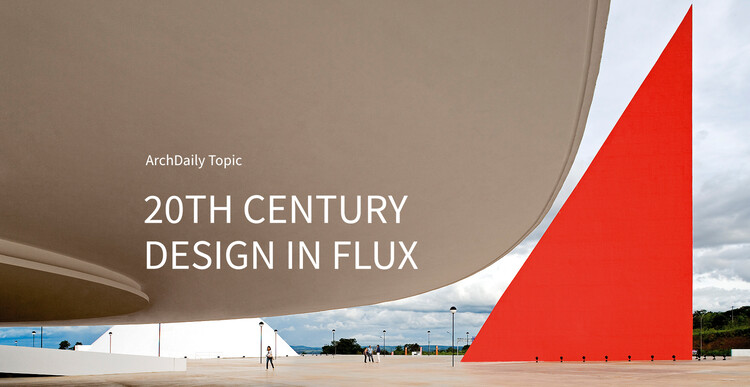
This month, ArchDaily explores 20th Century Design in Flux: A Global Reinterpretation of Architectural History, a topic that traces the century's design languages not as a single canon but as a constellation of evolving, intersecting, and continually reinvented trajectories. The theme challenges the assumption that regional and non-Western architectures were merely derivative — positioning them instead as sites of active reinterpretation, where global ideas were filtered through local materials, climates, labor, and cultural practices to produce something entirely distinct.

20th Century Design in Flux: ArchDaily’s May Editorial Focus - Image 1 of 420th Century Design in Flux: ArchDaily’s May Editorial Focus - Image 2 of 420th Century Design in Flux: ArchDaily’s May Editorial Focus - Image 3 of 420th Century Design in Flux: ArchDaily’s May Editorial Focus - Image 4 of 420th Century Design in Flux: ArchDaily’s May Editorial Focus - More Images+ 5

From Ruin to Cultural Hub: The Transformation of Zanzibar's Majestic Cinema

Subscriber Access | 

In historic Stone Town, the main city in Zanzibar, Tanzania, the story of one cinema building and its imminent restoration is reflective of the city's history and the narrative of cinemas generally. The early twentieth century saw the advent of cinema construction, peaking in mid-century, before declining against competition with multiplexes and home television. While many were demolished or irreparably altered, many also lay abandoned, like time capsules for a bygone era. They are a snapshot of the architecture styles and methods of their time, acting as a reminder of their role in their communities. Restoring and adapting a cinema like the Majestic is a recognition of its heritage and community value.

From Ruin to Cultural Hub: The Transformation of Zanzibar's Majestic Cinema - Image 1 of 4From Ruin to Cultural Hub: The Transformation of Zanzibar's Majestic Cinema - Image 2 of 4From Ruin to Cultural Hub: The Transformation of Zanzibar's Majestic Cinema - Image 3 of 4From Ruin to Cultural Hub: The Transformation of Zanzibar's Majestic Cinema - Image 4 of 4From Ruin to Cultural Hub: The Transformation of Zanzibar's Majestic Cinema - More Images+ 11

Independent Heritage Documentation: How Digital Tools and Photogrammetry Are Reshaping Preservation Efforts

Subscriber Access | 

The use of technology has become vital in the documentation and conservation of heritage, especially in difficult or urgent circumstances. After many landmarks of the historic city of Palmyra were destroyed during Syria's war in 2015, conservators built three-dimensional digital models of the destroyed city to aid its future reconstruction. The destruction of the Buddhas of Bamiyan in Afghanistan in 2001 with very little prior documentation prompted action in the documentation of vulnerable monuments, such as the establishment of CyArk. More recently, detailed digital surveys and a heritage BIM model were essential in the restoration of Notre-Dame Cathedral in Paris after it was devastated by fire in 2019.

Independent Heritage Documentation: How Digital Tools and Photogrammetry Are Reshaping Preservation Efforts - Imagen 1 de 4Independent Heritage Documentation: How Digital Tools and Photogrammetry Are Reshaping Preservation Efforts - Imagen 2 de 4Independent Heritage Documentation: How Digital Tools and Photogrammetry Are Reshaping Preservation Efforts - Imagen 3 de 4Independent Heritage Documentation: How Digital Tools and Photogrammetry Are Reshaping Preservation Efforts - Imagen 4 de 4Independent Heritage Documentation: How Digital Tools and Photogrammetry Are Reshaping Preservation Efforts - More Images+ 10

Asif Khan Reimagines Soviet-Era Cinema as Kazakhstan’s First Independent Cultural Hub

British architect Asif Khan has just unveiled the transformation of a Soviet-era cinema in Almaty, Kazakhstan, into the Tselinny Center of Contemporary Culture, a multifunctional venue designed to support the growth of Kazakh and Central Asian creatives. The project, which began in 2018, is set to open in April and will feature spaces for art exhibitions, performances, film screenings, workshops, and more. Once complete, the Tselinny Center will mark Kazakhstan's first independent cultural institution.

Asif Khan Reimagines Soviet-Era Cinema as Kazakhstan’s First Independent Cultural Hub - Image 1 of 4Asif Khan Reimagines Soviet-Era Cinema as Kazakhstan’s First Independent Cultural Hub - Image 2 of 4Asif Khan Reimagines Soviet-Era Cinema as Kazakhstan’s First Independent Cultural Hub - Image 3 of 4Asif Khan Reimagines Soviet-Era Cinema as Kazakhstan’s First Independent Cultural Hub - Image 4 of 4Asif Khan Reimagines Soviet-Era Cinema as Kazakhstan’s First Independent Cultural Hub - More Images+ 2

Filmmaker David Lynch, Master of Surrealism, Passes Away at 78

Filmmaker David Lynch, renowned for his surreal and influential works like Blue Velvet and Twin Peaks, passed away at age 78. Lynch's nearly 50-year career was marked by distinctive, stylized films often featuring surreal elements and fragmented narratives. He received numerous accolades, including a Golden Lion for lifetime achievement and an honorary Oscar. His career began with painting and experimental animation before transitioning to filmmaking, culminating in iconic films and the groundbreaking television series Twin Peaks. His impact extended beyond the silver screen; his unique manipulation of space and atmosphere profoundly influenced architectural discourse.

Filmmaker David Lynch, Master of Surrealism, Passes Away at 78 - Imagen 1 de 4Filmmaker David Lynch, Master of Surrealism, Passes Away at 78 - Imagen 2 de 4Filmmaker David Lynch, Master of Surrealism, Passes Away at 78 - Imagen 4 de 4Filmmaker David Lynch, Master of Surrealism, Passes Away at 78 - Imagen 3 de 4Filmmaker David Lynch, Master of Surrealism, Passes Away at 78 - More Images

Eileen Gray Through the Lens: Film Sheds Light on the Architect and Her Vision of Modernism

Subscriber Access | 

A journey through the legacy of Eileen Gray and her most famous house in the French Riviera, "E.1027 – Eileen Gray and the House by the Sea," by directors Beatrice Minger and Christoph Schaub, invites viewers into the layered legacy of the pioneering Irish architect and her unique vision of modernism. Designed in the late 1920s, the villa not only embodies Gray's architectural genius but also bears the shadow of an uneasy narrative involving Le Corbusier and Jean Badovici. Through their docufiction, Minger and Schaub illuminate Gray's groundbreaking work and critique the prevailing narratives of male dominance in modernist history.

Eileen Gray Through the Lens: Film Sheds Light on the Architect and Her Vision of Modernism - Image 1 of 4Eileen Gray Through the Lens: Film Sheds Light on the Architect and Her Vision of Modernism - Image 2 of 4Eileen Gray Through the Lens: Film Sheds Light on the Architect and Her Vision of Modernism - Image 3 of 4Eileen Gray Through the Lens: Film Sheds Light on the Architect and Her Vision of Modernism - Image 4 of 4Eileen Gray Through the Lens: Film Sheds Light on the Architect and Her Vision of Modernism - More Images+ 2