Bruce Damonte

BROWSE ALL FROM THIS PHOTOGRAPHER HERE

A New Centre Pompidou in Seoul and the UN House of No Waste (HØW) Competition Winners: This Week’s Review

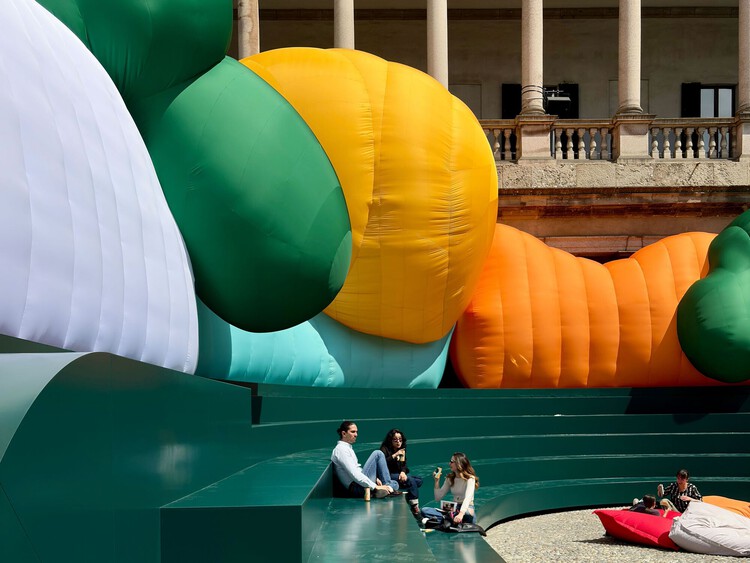
Observed annually on April 22, International Mother Earth Day frames this week's architectural discourse through an urgent call to rethink the relationship between the built environment and natural systems, foregrounding themes such as urban rewilding, the restoration of aquatic ecosystems, and the integration of ancestral knowledge into contemporary design practices. On another note, the opening of Salone del Mobile.Milano 2026 and Milan Design Week 2026 seek to reinforce the global relevance of design as a platform for exchange and experimentation, activating the city of Milan through a network of exhibitions and installations that engage both industry and public audiences. Among the announcements of award-winning architectural projects this week, the United Nations' House of No Waste (HØW) Competition highlights emerging architectural responses to climate and resource challenges. The awarded projects demonstrate scalable strategies for reducing material waste and embodied carbon while promoting adaptable, socially responsive, and resource-conscious public infrastructure.

A New Centre Pompidou in Seoul and the UN House of No Waste (HØW) Competition Winners: This Week’s Review - More Images+ 36

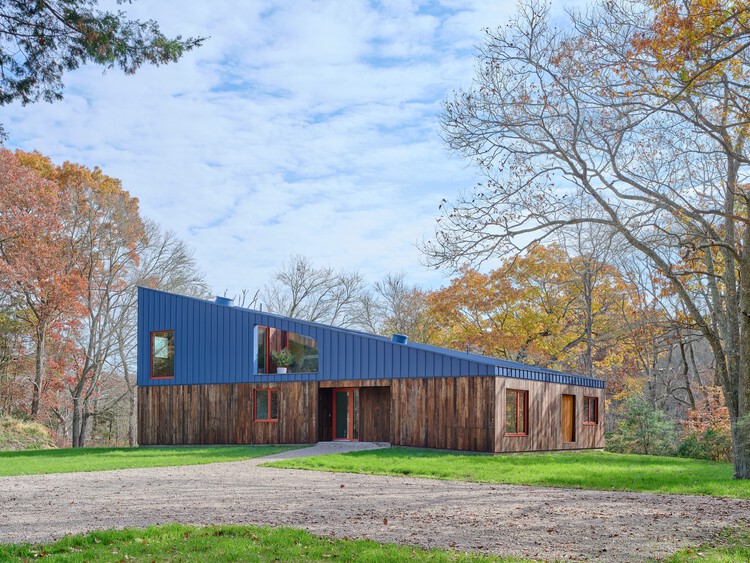
Riverhouse / WORKac

Riverhouse / WORKac - More Images+ 12

Hopkinton, United States
  • Architects: WORKac
  • Area Area of this architecture project Area:  3200 ft²
  • Year Completion year of this architecture project Year:  2025

Form, Function, and Funding: The High-Tech Urbanism of San Francisco

Subscriber Access | 

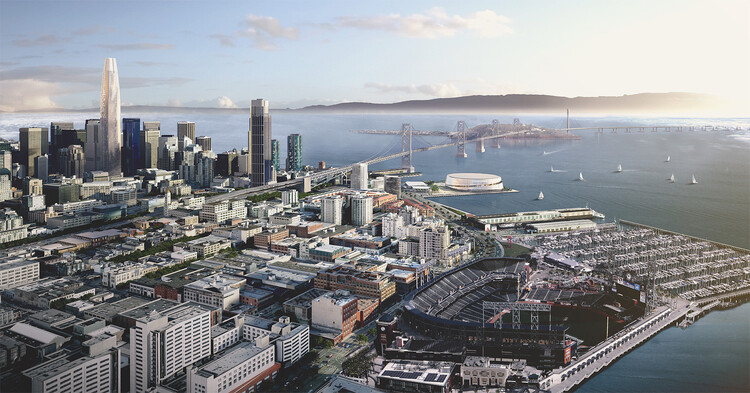
San Francisco is a city that has always remade itself under pressure. Its Victorian streetscapes have survived seismic retrofits and glass towers, its neighborhoods defined as much by change as by its resistance to change. But no force in the city's history has reshaped the built environment as completely, or as quickly, as the technology economy. What began in the postwar sprawl of Silicon Valley migrated north and inscribed its logic onto the skyline and the lives of residents. The result of this logic is an architectural culture of considerable technical refinement and refined material palettes, yet one that remains largely indifferent to the existing population.

The cost of indifference is measurable and mounting. San Francisco must accommodate more than 82,000 additional housing units by 2031 under California's Regional Housing Needs Allocation framework, in a city where median rent already ranks among the highest of any American metropolitan area. Teachers, healthcare workers, and service employees are actively displaced by a real estate market calibrated to a single sector's income levels rather than the city's largest workforce.

Form, Function, and Funding: The High-Tech Urbanism of San Francisco - More Images+ 25

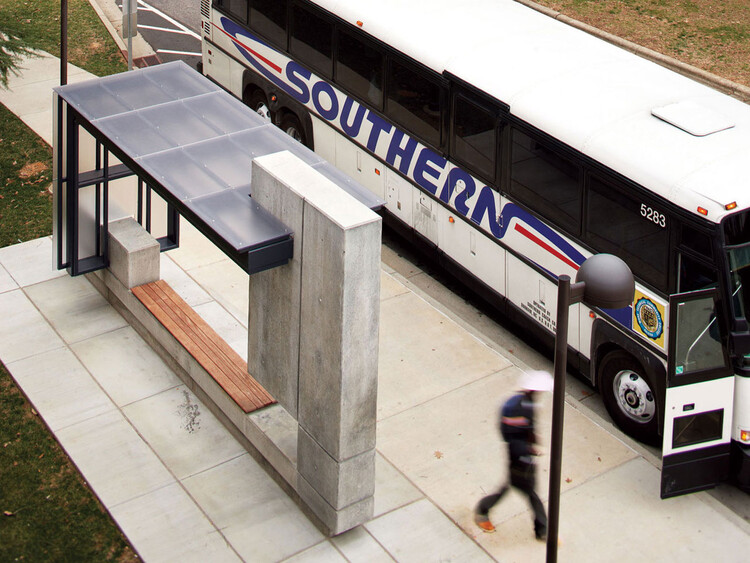
Rural Transportation Hubs: Infrastructure Design, Access, and Regional Mobility

Subscriber Access | 

The future of transportation hubs in the United States will not be defined by iconic metropolitan airport terminals and expansive central train stations. Rural communities contain the majority of the nation's road miles, carry nearly half of all truck vehicle miles traveled, and originate two-thirds of rail freight. These realities position rural transportation hubs as vital regional access points and distribution centers that shape national mobility outside models of urban extensions.

Rural transportation hubs in the United States are essential civic and logistical anchors whose success cannot be measured against urban metrics. Instead of replicating transport hubs of dense urban typologies, designers are developing architectural models that reflect rural realities: dispersed populations, freight-dominant infrastructure, modest multimodality, safety challenges, and social access needs. In many rural regions, a modest airport terminal sustains economic viability, a rail transfer facility connects resource-based industries to national markets, and a regional bus depot provides access to employment, education, and essential services.

Rural Transportation Hubs: Infrastructure Design, Access, and Regional Mobility - More Images+ 44

Experimentation, Learning, and Evolution in Architectural Design: Get to Know WORKac

Subscriber Access | 

WORKac is a New York-based firm founded in 2003 by Amale Andraos and Dan Wood. The firm has always believed in "the power of architecture and design to engage in environmental and social concerns, and to create new possibilities for the future." In that sense, the firm's principals define their approach to architecture as a constant evolution. For them, it is a continuous process of learning, questioning, and relearning, which is nurtured through the firm's engagement in local culture, climates, and histories, as well as discourse in the fields of ecology, landscape, and urbanism. In this way, they are able to bring these topics together with a focus on public, cultural, and civic projects that aim to reinvent how people live, work, and experience the world.

Experimentation, Learning, and Evolution in Architectural Design: Get to Know WORKac  - More Images+ 6

Edwin M. Lee Apartments / LMS Architects

Edwin M. Lee Apartments  / LMS Architects - More Images+ 16

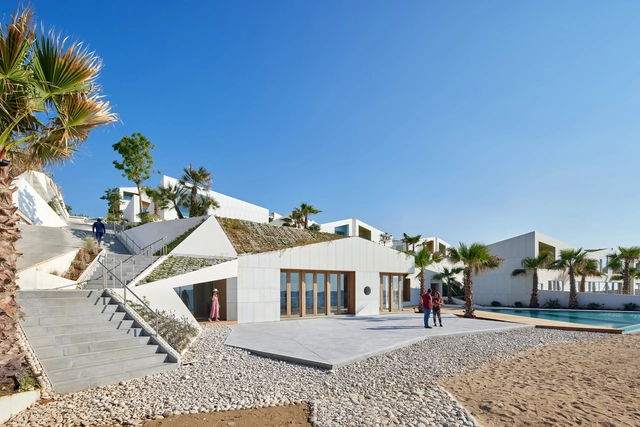
Marea Residential Complex / WORKac

Marea Residential Complex / WORKac - More Images+ 10

  • Architects: WORKac
  • Area Area of this architecture project Area:  19000
  • Year Completion year of this architecture project Year:  2021
  • Manufacturers Brands with products used in this architecture project
    Manufacturers:  Hansgrohe, Vitrocsa, Duravit, Grohe, iGuzzini, +18
  • Professionals: Proal, Green Studios

Walker Hall Graduate Student Center / LMS Architects

Walker Hall Graduate Student Center / LMS Architects - More Images+ 29

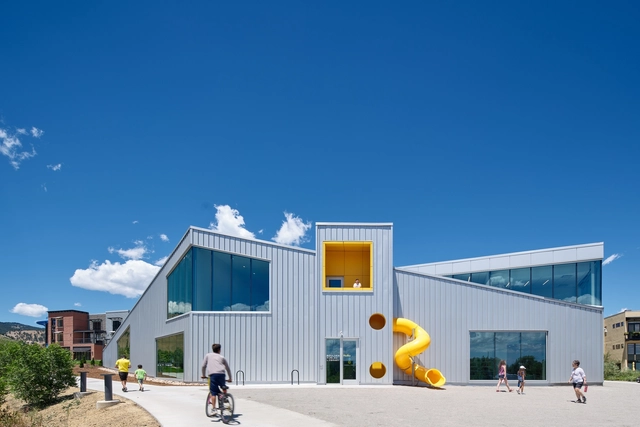
North Boulder Library / WORKac

North Boulder Library / WORKac - More Images+ 22

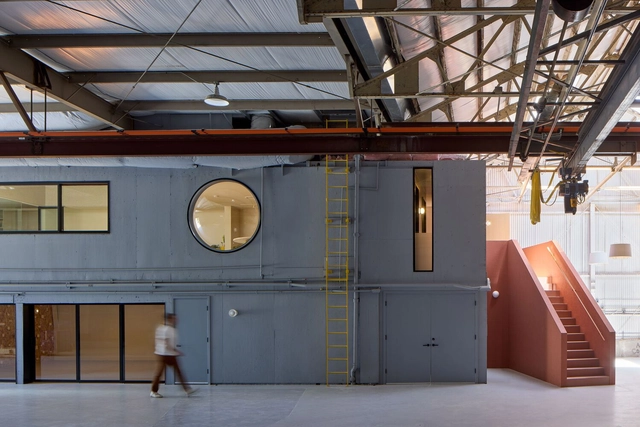
Crane Cove Warehouse / Obata Noblin Office

Crane Cove Warehouse / Obata Noblin Office - More Images+ 24

  • Area Area of this architecture project Area:  10750 ft²
  • Year Completion year of this architecture project Year:  2024

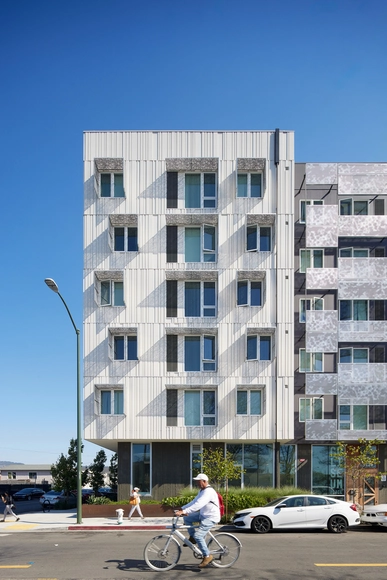
Coliseum Place Affordable Housing / David Baker Architects

Coliseum Place Affordable Housing  / David Baker Architects - More Images+ 16

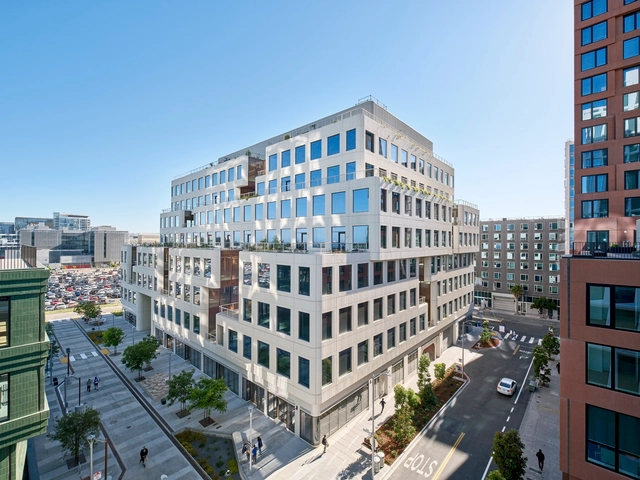
Mission Rock Building B / WORKac

Mission Rock Building B / WORKac - More Images+ 34

World Architecture Day 2024: Mobilizing the Next Generation for Urban Transformation

On the first Monday of October, World Architecture Day offers an opportunity to reflect on the role that architecture plays in shaping our world and our communities. Established by the International Union of Architects (UIA) in 1986, this day was designated as a basis for the ongoing discussions on innovations in architectural practice, new approaches to the ever-changing role of architects and designers, and the varied responses to emerging concerns.

As in previous editions, UIA sets a central yearly theme to guide these conversations. This year, the theme of World Architecture Day 2024, "Empowering the Next Generation to Participate in Urban Design," opens up multiple interpretations, contemplating the impact of urban design on the next generation, as well as highlighting the impact and contributions of young architects in shaping the cities of tomorrow. This year's event aims to address crucial challenges faced by the urban environments and their impact on the next generations. The focus is on creating cities that are not only greener and more environmentally friendly but also inclusive, catering to the diverse needs of various groups in society.

World Architecture Day 2024: Mobilizing the Next Generation for Urban Transformation - More Images+ 14

Nueva School Science and Environmental Center / LMS Architects

Nueva School Science and Environmental Center / LMS Architects - More Images+ 25

Crest Guesthouse / Mork-Ulnes Architects

Crest Guesthouse / Mork-Ulnes Architects  - More Images+ 14

San Anselmo, United States
  • Area Area of this architecture project Area:  411 ft²
  • Year Completion year of this architecture project Year:  2023
  • Manufacturers Brands with products used in this architecture project
    Manufacturers:  Hansgrohe, Duravit, Blanco, Cembrit, Daltile, +2

Are For-Profit Developments Consistent With the Values of a Public University?

This article was originally published on Common Edge.

I am by no means an expert on public-private partnerships. But for about 10 years, as the University of California Berkeley’s campus planner and then campus architect, I watched these developments play out in higher education—sometimes from a front-row seat, sometimes as a participant. During that time, this strategy, promoted with great enthusiasm and optimism, was touted as the answer to whatever problem arose. And yet the definition of a public-private partnership was slippery. The concept itself seemed to be all things for all people, depending on what was needed, who was recommending it, and what equivalents (if any) existed outside the university. The bandwagon continues to play today, making it ever more important to nail down the pros and cons of this development strategy, not only for colleges and universities, but for all public decision-making.

Are For-Profit Developments Consistent With the Values of a Public University? - More Images

Building 12 / Perkins&Will

Building 12 / Perkins&Will - More Images+ 27

  • Architects: Perkins&Will
  • Area Area of this architecture project Area:  230000 ft²
  • Year Completion year of this architecture project Year:  2022
  • Manufacturers Brands with products used in this architecture project
    Manufacturers:  cove.tool

Arctic Architecture: 17 Projects that Explore Different Heating Techniques in Interior Spaces

Subscriber Access | 

Some of the most picturesque projects are those built in the mountains; the rustic cabin wrapped with a floor-to-ceiling glass panel that overlooks the snow-covered trees. Visually, the architecture exudes an enchanting feeling, but is it truly a habitable space? When houses are built on an elevation of 3,000 meters, installing a fire element alone is not efficient or sustainable. Spaces on such altitudes or particular geographic locations require to be treated thoroughly, beginning with the architecture itself. Whether it's through hydronic in-floor heating systems or wall-mounted chimneys, this interior focus explores how even the most extreme winter conditions did not get in the way of ensuring optimum thermal comfort.

Arctic Architecture: 17 Projects that Explore Different Heating Techniques in Interior Spaces - More Images+ 16