1. ArchDaily
  2. heating

heating: The Latest Architecture and News

On the International Day for Clean Energy: How Local Initiatives Respond to the Spatial Impacts of Energy Production

January 26 marks the International Day for Clean Energy, an initiative aimed at raising awareness and mobilizing action for an inclusive transition from fossil fuels, such as coal, oil, and natural gas, to power generation systems with lower greenhouse gas emissions and fewer pollutants. The term "clean" signals a fundamental shift away from extractive, finite, and exhaustible energy sources toward systems based on renewable resources or on capturing energy embedded in natural processes. In a world grappling with climate change, clean energy plays an important role in reducing emissions and expanding access to reliable power. However, being labeled "clean" does not exempt these systems from the impacts associated with their production, deployment, and commercialization. In this context, architectural knowledge related to space, materiality, and habitation becomes relevant for supporting a transition toward energy systems that are sustainable over time. As stated by the United Nations, the science is clear: to limit climate change, reliance on fossil fuels must end, and buildings must be heated, lit, and electrified through clean, accessible, affordable, sustainable, and reliable power sources.

On the International Day for Clean Energy: How Local Initiatives Respond to the Spatial Impacts of Energy Production - Image 1 of 4On the International Day for Clean Energy: How Local Initiatives Respond to the Spatial Impacts of Energy Production - Image 2 of 4On the International Day for Clean Energy: How Local Initiatives Respond to the Spatial Impacts of Energy Production - Image 3 of 4On the International Day for Clean Energy: How Local Initiatives Respond to the Spatial Impacts of Energy Production - Image 4 of 4On the International Day for Clean Energy: How Local Initiatives Respond to the Spatial Impacts of Energy Production - More Images+ 7

Timeless Vernacular Wisdom for Tomorrow's Cold-Climate Buildings

Subscriber Access | 

Vernacular construction technologies are based on centuries of practical wisdom, refined through countless trials and errors. This process eliminates all irrelevant aspects, creating highly efficient and simple systems that are intrinsically adapted to the local climate and resources. These methods demonstrate how to conserve heat with minimal energy, offering valuable insights for modern buildings, promoting energy efficiency, and environmental harmony. In this article, we have already covered traditional passive cooling techniques, such as Persian wind towers and Arab mashrabiya. Now, we turn our focus to strategies applicable to cold climates, exploring effective solutions for heat retention and space heating.

Geothermal Energy: Using the Earth to Heat Buildings and Generate Electricity

Subscriber Access | 

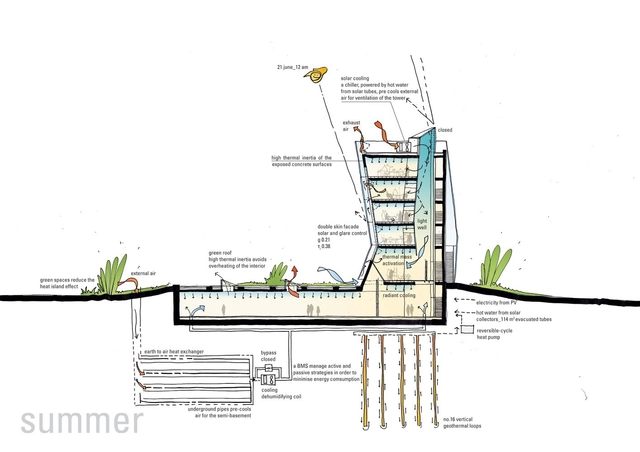
Unlike the air, the temperature in the subsoil varies very little during the year or according to geographical position. A few meters below the surface, the ground temperature is between about 10 to 21°C (50 to 70°F) depending on the region. Dig deeper, and the temperature increases between 20 to 40 degrees centigrade per km, reaching the Earth's core, which approaches 5000 °C. In fact, thinking about how we inhabit a sphere that is orbiting through space with a glowing center can be distressing for some. However, it may be helpful to learn that using Earth's forming energy to generate electricity is a sustainable and efficient way that is already common in some countries. At the same time, we can also take advantage of the mild temperature found a few meters under the ground to acclimatize buildings, whether in hot or cold climates.

Arctic Architecture: 17 Projects that Explore Different Heating Techniques in Interior Spaces

Subscriber Access | 

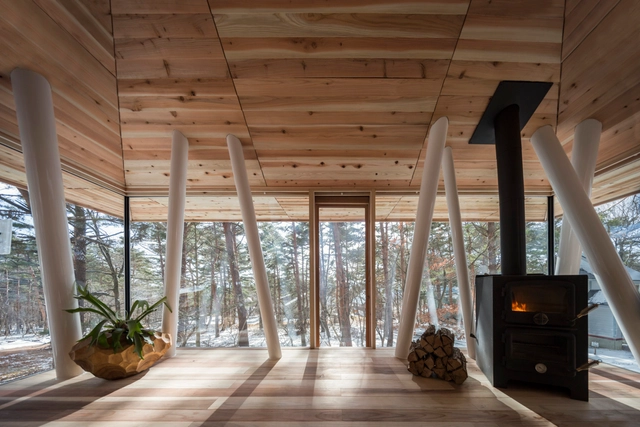
Some of the most picturesque projects are those built in the mountains; the rustic cabin wrapped with a floor-to-ceiling glass panel that overlooks the snow-covered trees. Visually, the architecture exudes an enchanting feeling, but is it truly a habitable space? When houses are built on an elevation of 3,000 meters, installing a fire element alone is not efficient or sustainable. Spaces on such altitudes or particular geographic locations require to be treated thoroughly, beginning with the architecture itself. Whether it's through hydronic in-floor heating systems or wall-mounted chimneys, this interior focus explores how even the most extreme winter conditions did not get in the way of ensuring optimum thermal comfort.

Arctic Architecture: 17 Projects that Explore Different Heating Techniques in Interior Spaces - Image 1 of 4Arctic Architecture: 17 Projects that Explore Different Heating Techniques in Interior Spaces - Image 2 of 4Arctic Architecture: 17 Projects that Explore Different Heating Techniques in Interior Spaces - Image 3 of 4Arctic Architecture: 17 Projects that Explore Different Heating Techniques in Interior Spaces - Image 4 of 4Arctic Architecture: 17 Projects that Explore Different Heating Techniques in Interior Spaces - More Images+ 16

What Are Clerestory Windows and Their Spatial Advantages in 24 Projects

Subscriber Access | 

Not nearly as complex an architectural typology as the word suggests, a ‘clerestory’ is a simple – if lexically loose – a portmanteau of ‘clear’ and ‘story’. Denoting a section of the wall that contains windows or cavities above eye level. The word is often assumed to have a religious context. Clerestories historically appeared at the upper levels of Roman churches, Hebrew temples, and early Christian architecture after all. And the earliest references we have to the feature come from religious texts.

Today, religious structures are often typified by the light their high windows allow to stream in, both figuratively and literally, from a higher source. At the CES Chapel in Taiwan, for example, ‘light diffuses through the glass clerestory and brightens the apse throughout the day,’ explains JJP Architects & Planners, about an interior design concept driven by natural lighting, ‘the chapel is filled with a spiritual aura, with a bright cross projected deep into the space.’

What Are Clerestory Windows and Their Spatial Advantages in 24 Projects - Image 1 of 4What Are Clerestory Windows and Their Spatial Advantages in 24 Projects - Image 2 of 4What Are Clerestory Windows and Their Spatial Advantages in 24 Projects - Image 3 of 4What Are Clerestory Windows and Their Spatial Advantages in 24 Projects - Image 4 of 4What Are Clerestory Windows and Their Spatial Advantages in 24 Projects - More Images+ 30

How Does Radiant Floor Heating Work?

Subscriber Access | 

Caius Sergius Orata is credited, by Vitruvius, with inventing the hypocaust. The word, from the Latin hypocaustum, in a literal translation, means access from below. The hypocaust is a raised floor system on ceramic piles where, at one end, a furnace—where firewood is burned uninterruptedly—provides heat to the underground space, which rises through walls constructed of perforated bricks. Hypocausts heated, through the floor, some of the most opulent buildings of the Roman Empire (including some residences) and, above all, the famous Public Baths.

With a similar function, but in the East, there existed the ondol. It is estimated that it was developed during the Three Kingdoms of Korea (57 BC-668 AD), but researchers point out that the solution was used long before that. The system also manipulated the flow of smoke from agungi (rudimentary wood stoves), rather than trying to use fire as a direct heat source like most heating systems. It even caught the attention of Frank Lloyd Wright, as pointed out in this article, who adapted the system to use it in heating homes in the United States and in his important Imperial Hotel in Tokyo. How do radiant floor heating systems currently work?