As the new year kicks off, we're taking a look ahead to the projects we're most looking forward to in 2022. With a mix of cultural and commercial programs, the designs are located across five continents, with many under construction for multiple years. Designed across a wide range of scales, they represent a mix of interconnected landscapes, museums, and new skyscrapers.
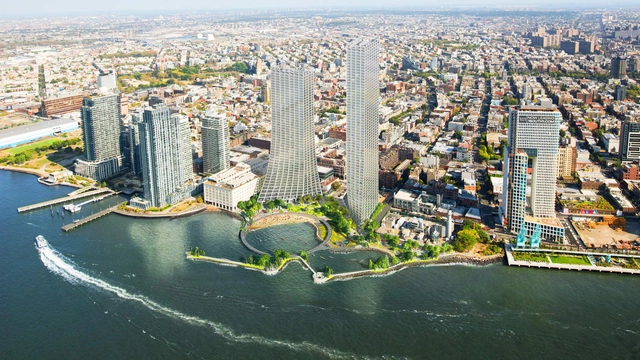
Courtesy of Bjarke Ingels Group and James Corner Field Operations
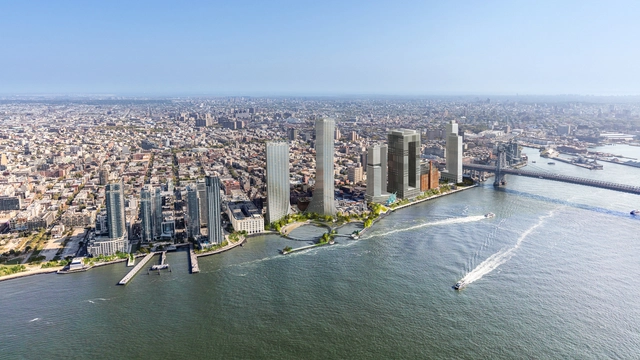
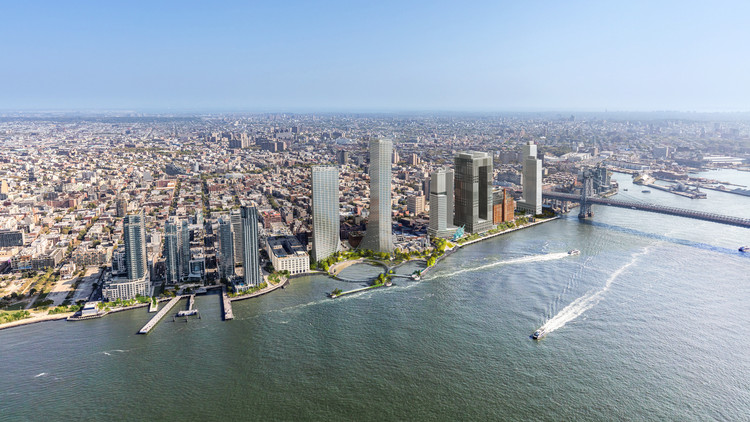
After more than two years of ongoing conversations with residents, stakeholders, and entrepreneurs, the New York City Council has finally approved the River Ring master plan of the Williamsburg waterfront project. The revised proposal, developed by Two Trees Management with designs by Bjarke Ingels Group and James Corner Field Operations, includes more than 150 additional units of affordable senior housing, an environmental benefits fund, and dedicated YMCA community space "to enhance the connectivity of the public waterfront, reinstate natural habitats, elevate the standard for urban waterfront resiliency, and transform the way New Yorkers interact with the East River".
Bjarke Ingels Group and A-Lab have unveiled their design of Oslo Science City, a new innovation district in Norway's capital that aims to create a physical framework for Norway’s innovation environment of estimated 150,000 scientists, students, entrepreneurs, and contribute to the country’s transition to renewable energy. The district aims to be a net zero emission area that operates on renewable energy and circular economic principles, as well as zero emission solutions during development and operation.
In this week's reprint from the Architect's Newspaper, author Patrick Sisson tackles the implication and participation of communities in New York in shaping their built environment, especially their waterfront. He also asks about the roles of representation and if "the city’s community boards and Uniform Land Use Review Procedure act more like gatekeepers than catalysts for equitable development?" especially that a lot of new developments are labeled as housing projects.
Artificial intelligence is transforming how we design and build. By 2050, the effects of AI adoption will be widely felt across all aspects of our daily lives. As the world faces a number of urgent and complex challenges, from the climate crisis to housing, AI has the potential to make the difference between a dystopian future and a livable one. By looking ahead, we're taking stock of what's happening, and in turn, imagining how AI can shape our lives for the better.
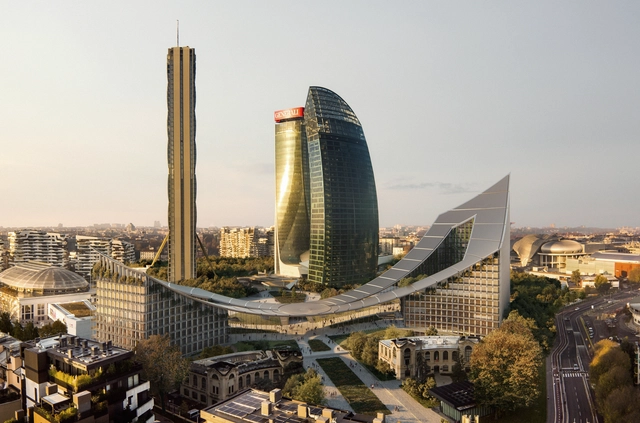
Work on Bjarke Ingels Group's gateway for Milan's CityLife district has officially commenced. The new-generation office building marks the completion of the CityLife area in the Italian city, an urban regeneration project that has been restored to provide a livable environment characterized by sustainability, improved quality of life, and all-inclusive services. The structure is set to "stand as a new paradigm for the offices of the future, as the outcome of a new idea of workplace based on innovative design solutions that put quality of life at the center and redefine the concept of sustainability".
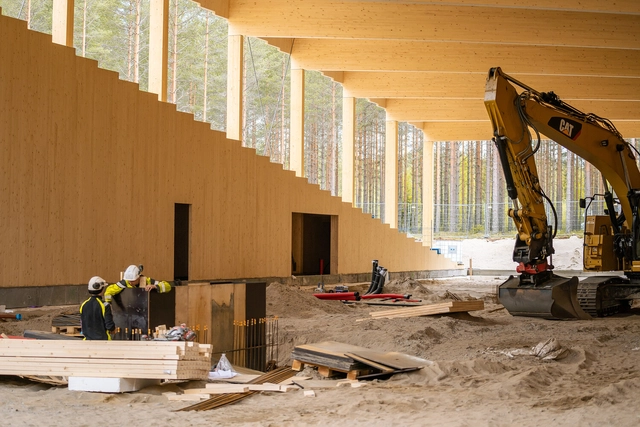
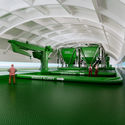
Construction is underway at Vestre's new facility designed by BIG, set to become the world's most sustainable furniture factory through carbon-neutral fabrication processes and the use of renewable energy. Called the Plus and placed within the Norwegian forest, the project will be an example of efficient manufacturing, using Industry 4.0 solutions, while also developing Magnor as a tourist destination through its attractive design.
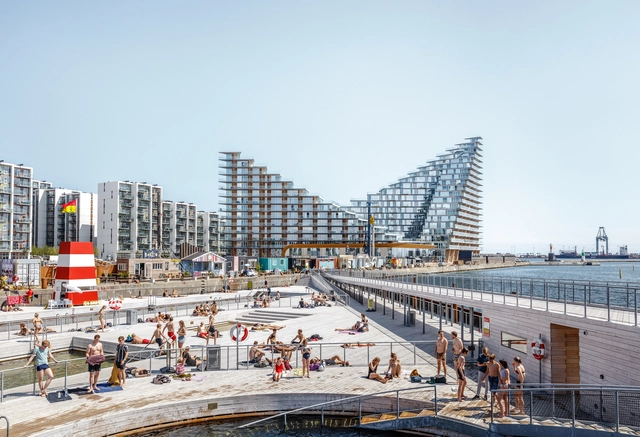
AARHUS, Image by Rasmus Hjortshoj . Image Courtesy of BIG
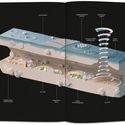
"The future is already here, it's not just very evenly distributed". Starting off with this William Gibson quote, BIG’s latest publication Formgiving looks at the past and present in order to determine the future. Talking of predictions that aren’t so far down the road, but rather than could occur in 5, 10, or 50 years, the book seeks to “give form to the future”, or to what has not taken shape yet.
ArchDaily had to chance to interview Kai-Uwe Bergmann, Partner at BIG-Bjarke Ingels Group, and discuss not only the firm’s latest manuscript but the trilogy of publications: Yes is More, an “Archicomic on Architectural Evolution”, Hot to Cold an “Odyssey of Architectural Adaptation”, and Formgiving, an “Architectural Future History”.
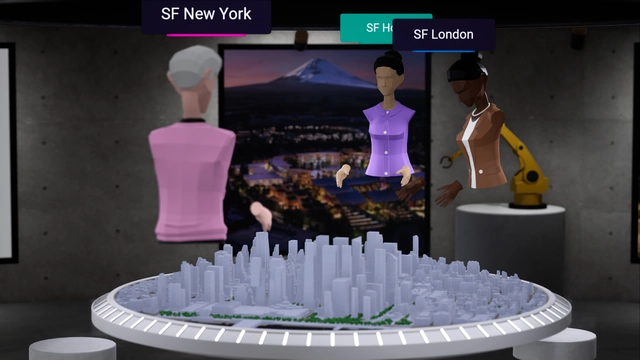
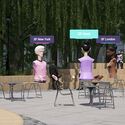
UNStudio and Bjarke Ingels Group have partnered up with Squint/Opera to develop SpaceForm, a virtual, cloud-based platform that facilitates design, review and collaboration processes for architects and developers. The new virtual workspace explicitly developed for the architecture and construction industry aims to fill a gap by creating a viable and sustainable way of collaborating and designing remotely across global teams, thus reducing the need for travel.
If we ever wonder what the future could look like, all we have to do is take a look into our past, and observe how far we have come since thousands, a hundred, or even ten years ago. Life was radically different back then and it will be just as different in the future. And since we are well aware that the future merely resembles the present, we have the possibility to shape our future the way we want to. TASCHEN's latest BIG book installment Formgiving. An Architectural Future History explores the past, present, and future, drawing a timeline of the built environment from taking shape to giving form.
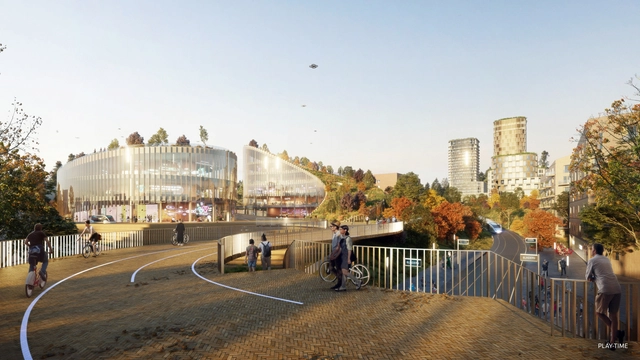
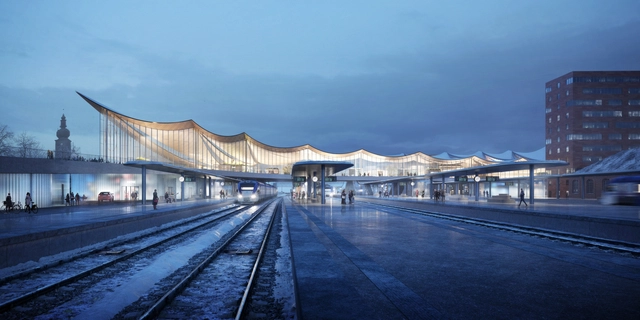
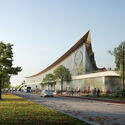
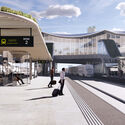
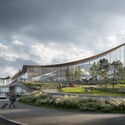
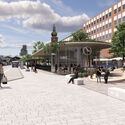
Bjarke Ingels Group has unveiled the final design for Västerås Travel Center, a transport infrastructure hub bringing together multiple travel modes within one cohesive architectural object. The project's defining feature is a light, undulating roofscape unfolding across the various complex elements of the program that make up the urban node, creating a new landmark for one of Sweden's largest cities.
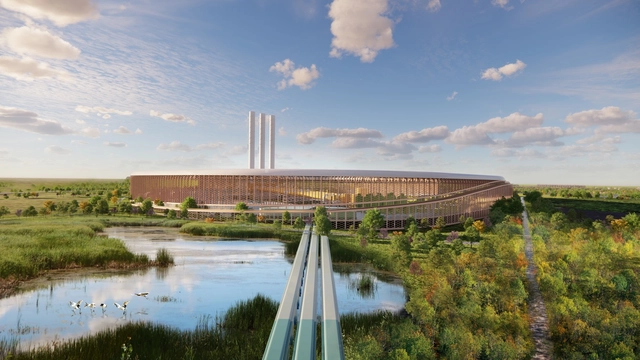
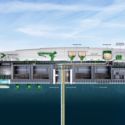
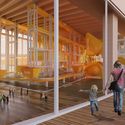
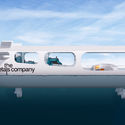
Award-winning architecture firm Bjarke Ingels Group has collaborated with lower-impact battery metals developer The Metals Company to reimagine a traditional metal production facility in a new contemporary and sustainable context. The firm designed a circular zero-solid-waste metallurgical plant that includes manufacturing, processing, and storage facilities, along with offices, visitor centers, and innovation facilities.
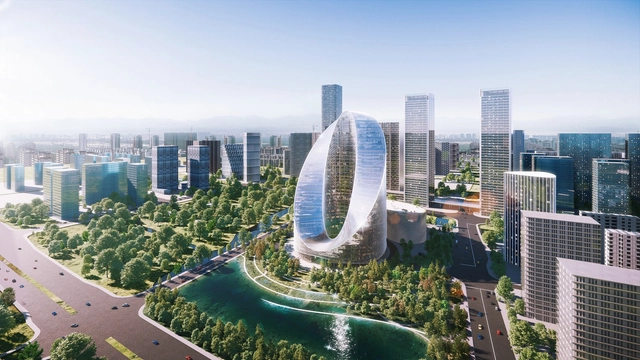
Nestled in the heart of Yuhang District, Bjarke Ingels Group’s design for the new OPPO R&D Headquarters, China’s largest smartphone company, combines aesthetics and innovative technology in a building that will be an environmental, economical, and socially sustainable hub for innovation.
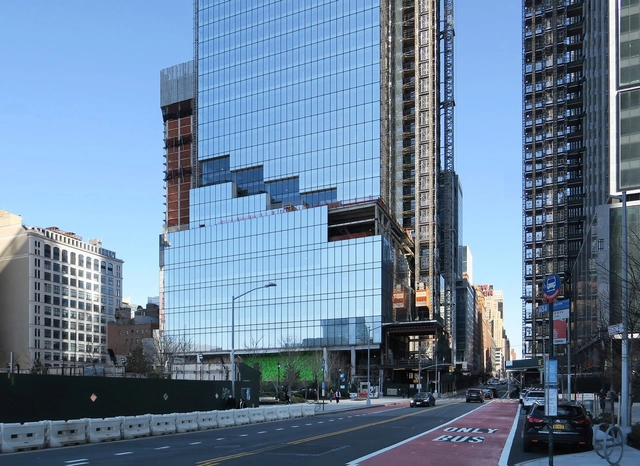
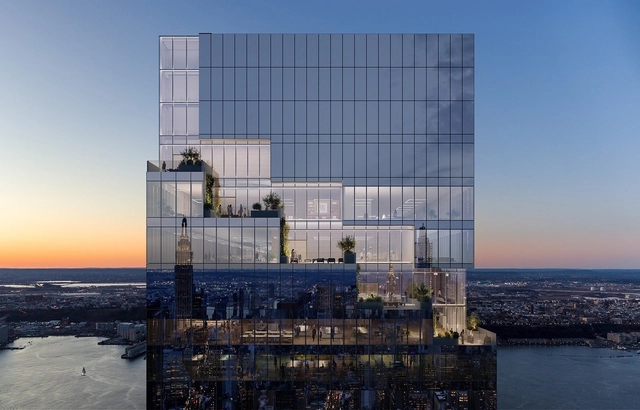
The new "Spiral" skyscraper by Bjarke Ingels Group has topped out at Hudson Yards in New York City. Rising 66 stories, the project towers over 1,000 feet tall with a series of stepped, landscaped terraces that wrap the building. With over 2.8 million square feet of office space and ground floor retail once complete, the tower will feature open floor plans with views across the Financial District and the surrounding cityscape.
Sou Fujimoto. Image Courtesy of Sou Fujimoto Architects
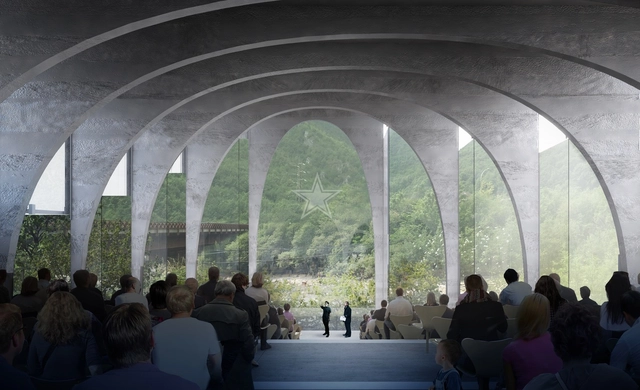
After MAD’s Wormhole Library, the city of Haikou revealed a pavilion by Sou Fujimoto Architects. Scheduled for the end of spring, the ribbon-like white pavilion with an accessible roof will be one of the first public waterfront interventions to be completed in the spring of 2021. Shaping the future of Haikou city and Hainan Free Trade Port, the master plan of 16 permanent destinations re-imagines the future of coastal living.
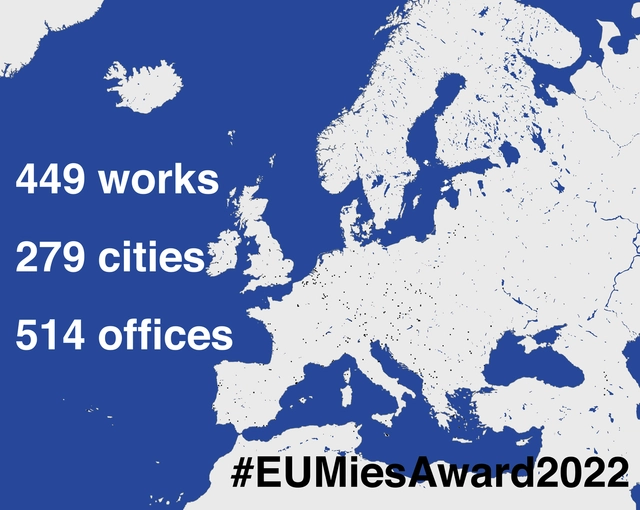
The European Union Prize for Contemporary Architecture, the Mies van der Rohe Award has just announced the first 449 works competing in its 2022 edition. Selected from 279 cities in 41 countries, the projects have been nominated by European independent experts, the national architecture associations, and the Prize Advisory Committee.
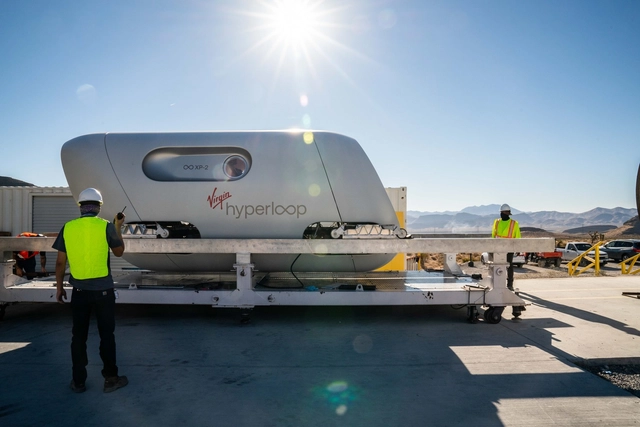
Making history, Virgin Hyperloop’s Pegasus pod carried its first passengers in the Nevada desert. Designed by BIG-Bjarke Ingels Group and Kilo Design, Pegasus or XP-2 is a new vehicle typology for an autonomous transportation system to achieve hyperloop travel at the speed of over 1,000km/hour, the fastest form of land-based travel.

































.jpg?1613464686&format=webp&width=640&height=580)
.jpg?1613464615 "Sou Fujimoto. Image Courtesy of Sou Fujimoto Architects")
.jpg?1613464611 "Sou Fujimoto. Image Courtesy of Sou Fujimoto Architects")
.jpg?1613465267 "MAD- Wormhole Library. Image © SAN")
.jpg?1613465249 "MAD- Wormhole Library. Image © SAN")
.jpg?1613464686)