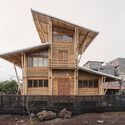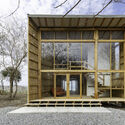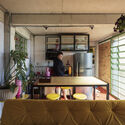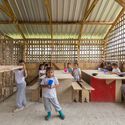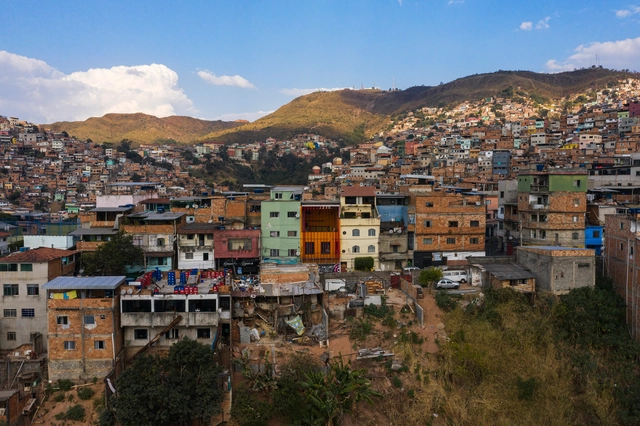
Multifaceted and full of complexities, the scenario of architecture and urbanism in Latin America reveals nuances and specific challenges in the face of the issues faced by the various countries, such as social inequality, violence, and rapid urban growth. In this context, architectural practice plays a relevant role in the construction of possible and adequate solutions for each reality, highlighting the importance of reaffirming local references and narratives in this process. In the face of the hegemony established especially by North America and Europe, which often marginalizes Latin American architectural and urban achievements, especially those that are not even considered as such, the appreciation of this diversity and complexity becomes imperative for any thought and intervention regarding the region. Below, we have selected six interviews that help us understand the architecture of Latin America, and that contribute to a more contextualized and sensitive approach to its needs, potential, and richness. Emilio Lopez: Latin American architecture is experimenting with geography and resources Emilio López is an architect from the Pontifical Catholic University of Ecuador and holds a master's degree in the History and Theory of Architecture from the Polytechnic University of Catalonia. He affirms that he still lives in Ecuador, a territory with one of the world's greatest biodiversities. He points out that the geography, plants, climates, and cultures of the country are great stimuli, and he sustains that with architecture comes the possibility of immersion and blending with the environment, allowing oneself to be transformed by the other. He says that the strength of architecture lies in being a product of the immersive affection that implies rethinking its relationship with resources and the world in which it lives. Gabriela de Matos and Paulo Tavares: We seek to expand architecture from other stories and cultures Questioning the canonical history of architecture and shedding light on spatial practices long invisibilized is what Gabriela de Matos and Paulo Tavares propose. "It is our way of shaking things up," comment the curators, who turn their attention to ancestral ways of dealing with the earth, aiming at fairer and more comprehensive present and future possibilities. Addressing the earth in all the meanings that the word carries, the curators superimpose issues related to soil and territory with planetary issues, proposing an approach between reparations and decoloniality - emerging in the Brazilian context - with broad topics such as decarbonization and the environment, decisive in the contemporary global debate. Sergio Ferro: In our construction field, the only way out would perhaps be to "brush history against the grain" Sergio Ferro is a Brazilian architect, artist, historian, and architecture critic who, due to his political activism during the military dictatorship, was imprisoned and exiled to France in the 1970s. Throughout his career, he observed and intervened in the spaces of civil construction production, developing a critique of the production of plastic arts and architecture based on the construction process and its agents: the construction site, technologies, materials, and the builder. Taller General: Our definition of architecture is collectively shaped Taller General is a meeting point where Martín Real and Florencia Sobrero, among other members and collaborators, gather daily to do what they are passionate about: channeling their creativity through architecture, merging all aspects that shape their lives, from activism to teaching. Based in Ecuador, the team undergoes changes according to the needs of the projects and, most of the time, expands, with a collaborative work that allows sharing different perspectives, opinions, and practices, enriching the environment and generating results that would be unimaginable individually. EseColectivo: The minimum we consider in our exercise is not to waste ESEColectivo is an architecture studio composed of Belén Argudo, José de la Torre, Santiago Granda, and Pablo Silva based in Quito, Ecuador. Their interests focus on experimenting with alternative building materials, with an emphasis on technologies and logic. In their conception process, they seek to reconcile sustainable low-impact strategies with the specific needs and limitations of each project so that their results are heterogeneous and different in terms of the type of methodological and technical approach. Coletivo Levante: We experience a coexistence that brings forth affections, dialogues, values, and aspirations for an inclusive and participatory transformation Focused on the development of architecture projects in slums and outskirts, the action of Coletivo LEVANTE has shown great sensitivity to the characteristics and particularities of these contexts. According to the group, "the recognition of what already exists and is attributed with values lived and conquered by the residents of the favelas - landscape, constructions, identities, and relationships" is what they seek as the raw material of the projects. The Coletivo team is currently formed by Alan Franca, Amanda Castilho, Anna Lobato, Fernando Maculan, Marcos Franchinni, Nattalia Bom Conselho, Giovanna Camisassa, Helder Machado, Kdu dos Anjos, Maria Soalheiro, Marina Vilela, Matheus Angel, Pedro Assis, Rafael Yanni, and Ricardo Lobato. However, as the works of LEVANTE have shown, the network of professionals, suppliers, partners, and collaborators is extensive and expands beyond the collective itself, proving to be a valuable factor for the realization of their projects.