1. ArchDaily
  2. Arup

Arup: The Latest Architecture and News

Westminster Council Approves Heatherwick's Garden Bridge Plans

Update: Today Westminster Council approved the Garden Bridge proposals - the second of three required approvals - with councillors voting 3-1 in favour of the bridge. Though London Mayor Boris Johnson still has to officially rule on the plans, it is almost certain that he will ultimately give the go-ahead to the project as he has previously voiced his support for the idea. The following article was originally published on November 13th, after Lambeth Council granted the bridge its first approval.

Lambeth Council has awarded planning permission for the Garden Bridge, Thomas Heatherwick and Arup's planned crossing of the Thames which has been proposed and supported by actress Joanna Lumley. The approval is the first in a series that the bridge needs to become a reality, with Westminster City Council and London mayor Boris Johnson still needing to sign off on the project, according to the Architects' Journal.
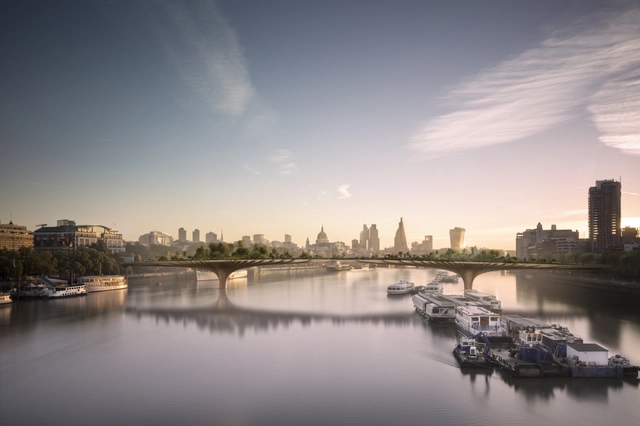

Is Heatherwick's Garden Bridge "Nothing But A Wasteful Blight"?

After a fortnight of highs and lows for Thomas Heatherwick and British celebrity Joanna Lumley's campaign for a garden bridge stretching across London's River Thames, Rowan Moore of The Observer has meticulously described the project as "nothing but a wasteful blight." Although he acknowledges that support for the bridge "has been overwhelming," he argues that Heatherwick - though an "inventive and talented product designer" - has a past record in large scale design which "raises reasonable doubts about whether his bridge will be everything now promised."

Garden Bridge Plans Face Fresh Attack After Initial Planning Permission

After gaining the first in a series of required planning approvals last week, Thomas Heatherwick's highly controversial Garden Bridge proposal has once again come under fire from a variety of opponents, with campaign group Thames Central Open Space (TCOS) dubbing it a "luvvies' folly," and the Guardian's architecture critic Oliver Wainwright saying that it is "not in fact a bridge – in the sense of being a public right of way across the river – but another privately managed tourist attraction, on which £60m of public money is to be lavished."

Much of this new assault is the result of the 46 conditions which came with Lambeth Council's recommendation to grant the bridge planning approval, which as BD Online uncovered, include closing the bridge between 12 and 6am, a ban on cycling, and a restriction of group sizes to 8 people or fewer, unless booked in advance.

Five Teams Shortlisted To Design Bristol Arena

Five practices have been shortlisted to put forward designs for the Bristol Arena, a cultural and sporting hub which is set to have a 12,000 seating capacity and is due to open towards the end of 2017. The city's Mayor, George Ferguson (who is himself an architect-turned-politician), has said that "we now have five very capable and talented design teams with a wealth of experience between them drawing up proposals" that will contribute to the regeneration of the city's Temple Quarter Enterprise Zone (a site close to Temple Meads Station). The five shortlisted multi-disciplinary design teams are consortiums experienced in delivering major cultural venues in the UK or overseas. A team led by Populous, who completed the London 2012 Olympic Stadium, are running in collaboration with Feilden Clegg Bradley, who were shortlisted for the 2014 RIBA Stirling Prize. They are competing against teams led by Grimshaw and Wilkinson Eyre, who recently installed a cable-car across London's Millennium Dome.

See details of the five teams after the break.

Video: Jan Wurm and Lukas Verlage Discuss Arup’s “Solarleaf”

In this video from Zumtobel Group, Jan Wurm of Arup Deutschland GmbH and Lukas Verlage, CEO of Colt International GmbH, discuss the unique technological developments in “Solarleaf,” which recently won first prize in the Zumtobel Group Award’s Applied Innovations category. In addition to functioning as an effective shading system, this façade system uses solar panels to produce energy from algae to provide a new source of sustainable energy.

Video: Jan Wurm and Lukas Verlage Discuss Arup’s “Solarleaf”  - Image 1 of 4

Architects Envision Buoyant "Thames Deckway" for London Cyclists

On the heels of Mayor Boris Johnson’s announced plan to construct an 18-mile protected bike lane by March 2016, architect David Nixon and artist Anna Hill have released their vision for relieving London’s congested streets with a floating “Thames Deckway” for cyclists. The proposal, though just in its preliminary design phase, claims the river Thames is currently a missed opportunity that could serve as a major travel artery for cyclists. If constructed, the £600 million project would run east-west for seven miles along the river’s southern bank, from Battersea to Canary Wharf, and harness it’s own energy through solar, tidal and wind power. Nixon and Hill have founded the River Cycleway Consortium in support of the project, which includes Arup and Hugh Broughton Architects.

Elemental, Arup, and Studio Tamassociati Win Zumtobel Awards for Innovation

Elemental, Arup, and Studio Tamassociati Win Zumtobel Awards for Innovation - Featured Image
Courtesy of Massimo Grimaldi and Emergency ngo

Jury chairman Winy Maas has announced three projects by Arup, Studio Tamassociati and Elemental as winners of the 2014 Zumtobel Group Awards. With a goal to promote innovations for sustainability and humanity in the built environment, the awards represent three categories: Applied Innovations, Buildings and Urban Developments & Initiatives. This year’s winners were selected from 15 nominees, shortlisted from a competitive pool of 356 submissions.

The winning projects are marked by their innovative and ground-breaking character: “The voting to find the number one project was very close in all three categories, because in each case we were able to choose from among a large number of heterogeneous projects of high quality," Described Maas. "One key criterion for the jury this year was the innovation factor, both in a technical sense and with a view to planning and participation processes as well as ecological and social challenges.”

See the winning projects, after the break.

Video: First Look Inside Rogers Stirk Harbour + Partner's "Cheesegrater"

Subscriber Access | 

In a short film for The Guardian Lead Architect and Partner of Rogers Stirk Harbour + Partners, Graham Stirk, tours Robert Booth around the almost-complete Leadenhall Building. The building is referred to as a relative of it's neighbour, Lloyds of London, which was completed by Richard Rogers's practice in 1986. Leadenhall, dubbed the "Cheesegrater" due to its angled façade, is twice the height of Lloyds and is considered to be the physical manifestation of the evolution of Rogers' architectural and tectonic language. Although less "structurally showy" than its counterpart, the building is still unconventionally bold when it comes to structural expression.

Arup Engineers Explain: How the MoMA PS1 YAP Winners Grew Ten Thousand Mushroom Bricks

Subscriber Access | 

This year's MoMA PS1's Young Architects Program opens tomorrow (you can see the schedule of events here). Find out how the innovative winning design (a tower of fungal bricks), by The Living's David Benjamin, was tested and built with this article, originally posted on as "Engineering a mushroom tower".

Soft, spongy, and delicious on pizza, mushrooms have approximately as much to do with structural engineering as alligators or lawnmowers. Or so we thought, until architect David Benjamin of New York firm The Living walked into our offices with a brick grown from fungi.

This brick was the key to his concept for an entry to MoMA PS1’s Young Architects Program competition. Every year, the museum commissions a designer to build a centerpiece for its popular outdoor Warm Up concert series.

If architectural design competitions are where brave, innovative ideas rise to the top, The Living’s mushroom tower (official name: Hy-Fi) checked all the right boxes. In addition to the novelty factor, mushroom bricks offer a host of sustainability benefits. The raw materials needed to produce them — mushrooms and corn stalks (waste material from farms) that the spores feed on — are as eco-friendly as they come. Bricks can be grown in just five days, and the process produces no waste or carbon emissions. When the structure is taken down at the end of the summer, they can be composted and turned into fertilizer.

The Dutch Royal Picture Gallery at The Hague to Reopen Following Extensive Renovation

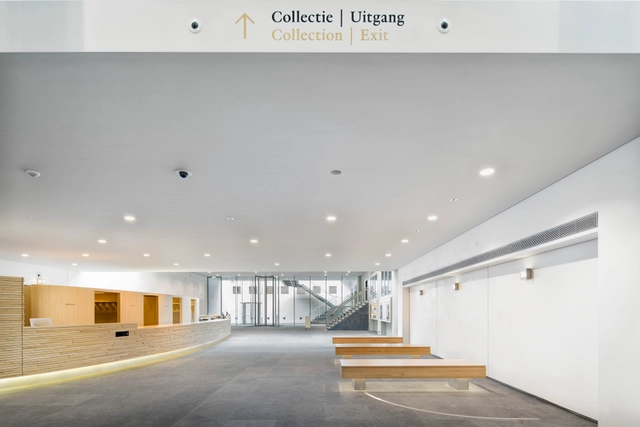
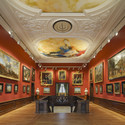
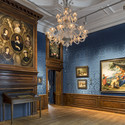
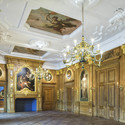
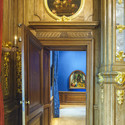
The Mauritshuis, a Dutch 17th century city palace in The Hague, will reopen this week following a large scale renovation and extension designed by Hans van Heeswijk with servicing and fire engineering undertaken by Arup. Similar to Amsterdam's Rijksmuseum, which reopened after a ten year restoration and remodelling in 2013, the Mauritshuis Royal Picture Gallery exhibits one of the finest collections of Dutch Golden Age paintings including Johannes Vermeer's Girl With a Pearl Earring. Alongside a large scale renovation, Hans van Heeswijk have also extended the galleries with new exhibition spaces, an auditorium and educational spaces.

The Dutch Royal Picture Gallery at The Hague to Reopen Following Extensive Renovation - Image 16 of 4The Dutch Royal Picture Gallery at The Hague to Reopen Following Extensive Renovation - Image 17 of 4The Dutch Royal Picture Gallery at The Hague to Reopen Following Extensive Renovation - Image 20 of 4The Dutch Royal Picture Gallery at The Hague to Reopen Following Extensive Renovation - Image 21 of 4The Dutch Royal Picture Gallery at The Hague to Reopen Following Extensive Renovation - More Images+ 19

Arup's Latest Solar Panels Produce Energy From Algae

Arup's Latest Solar Panels Produce Energy From Algae - Image 1 of 4
A view behind the BIQ House Solarleaf panels. Image via GOOD. Image

Architects have been experimenting with the potential of building envelopes for years. Now, Arup has an interesting, Zumtobel Group Award-nominated proposal: the Solarleaf bioreactor. Developed in collaboration with SSC Strategic Science Consult GmbH and Colt International GmbH, this thin, 2.5 x .07 meter panel, when attached to the exterior of a building, is capable of generating biofuel - in the form of algae - for the production of hot water. More efficient than electricity and more sustainable than wood, algae is ideal kindling for producing heat, especially since it can be grown on-site. Moreover, the water in which the algae grows also collects solar energy, providing an additional supply of heat. More details on this sustainable innovation, after the break.

Arup Develops 3D Printing Technique for Structural Steel

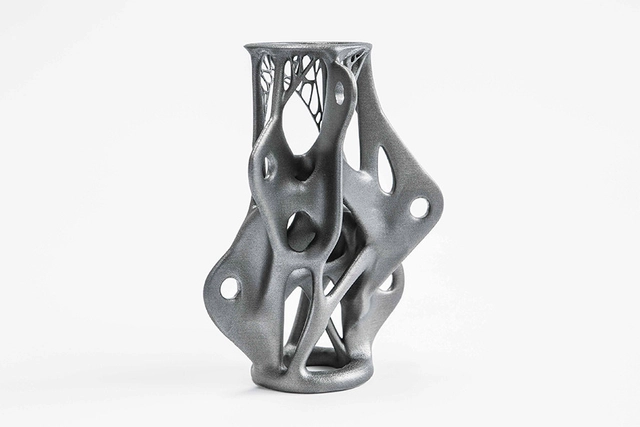
A team lead by Arup has developed a method of designing and 3D Printing steel joints which will significantly reduce the time and cost needed to make complex nodes in tensile structures. Their research is being touted as "a whole new direction for the use of additive manufacturing" which provides a way of taking 3D printing "firmly into the realm of real-world, hard hat construction."

Aside from creating more elegant components which express the forces within each individual joint - as you can see in the above photo - the innovation could potentially reduce costs, cut waste and slash the carbon footprint of the construction sector.

Read on for more on this breakthrough.

Designing for Sound In Our Everyday Spaces

In this interesting article in the New York Times, Allison Arieff highlights the often unconsidered importance of sound in architecture (outside of theaters and museums at least). She profiles the work of Acoustic Engineers at ARUP who have begun to work inschools and hospitals, taking into account the effects poor sound environments can have on us in our everyday lives. You can read the full article here.

Rogers Stirk Harbour Unveils Design for Venezuela's National Football Stadium

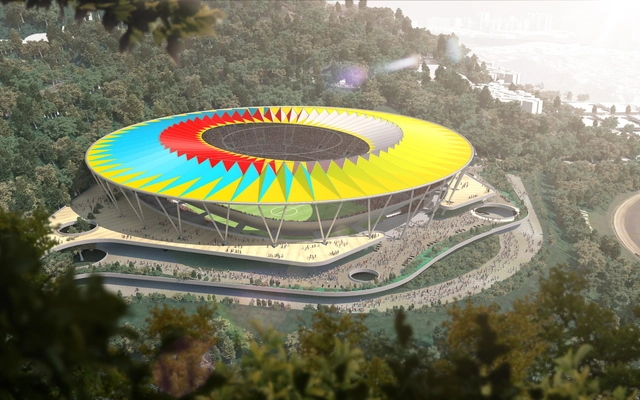
Following our recent news that confirmed Rogers Stirk Harbour + Partners (RSHP) will oversee the design and construction of two new stadiums within Caracas' Hugo Chavez Park, details have emerged regarding the Estadio Nacional de Fútbol de Venezuela. Designed by RSHP, in collaboration with Arup and Schlaich Bergermann und Partners, the project will be the practice’s first ever football stadium.

Arup to Collaborate with Henning Larsen on European Spallation Source

Iwan Baan on Light and the Louvre Lens

Most architects are familiar with the work of Iwan Baan, the eminent photographer who has documented some of the most famous buildings of our time. But what you may not know is that Baan had not originally intended to photograph architecture. Had it not been for a chance meeting with Rem Koolhaas, things may have turned out quite differently.

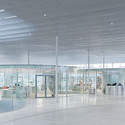
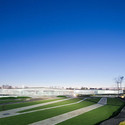
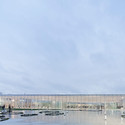
In the video above, Baan speaks with ERCO at the Louvre Lens, a SANAA-designed offshoot of the Paris Louvre located in a small mining town in the north of France. As he traipses around the museum's campus, he speaks about everything from his approach to photography (one that is less wrapped up in architecture than you might think) to the importance and transformative properties of light .

Iwan Baan on Light and the Louvre Lens - Featured ImageIwan Baan on Light and the Louvre Lens - Image 1 of 4Iwan Baan on Light and the Louvre Lens - Image 2 of 4Iwan Baan on Light and the Louvre Lens - Image 3 of 4Iwan Baan on Light and the Louvre Lens - More Images+ 4

White Arkitekter Wins FAR ROC Design Competition

Stockholm-based White Arkitekter, along with partners ARUP and Gensler, has been announced as the winner of the two-phase “For a Resilient Rockaway” (FAR ROC) design competition in New York. Selected from a shortlist of four and an international pool of 117, White Arkitekter’s “untraditional” proposal aims to transform an 80-acre shoreline site in the Rockaways into a resilient and affordable community through a series of small interventions that can be tested, adjusted, or redesigned overtime during the development process.

Three Arup Specialists Share Their Vision of The Future of Healthcare Design

Subscriber Access | 

This interview was originally posted on Arup Connect and titled "Global perspectives on the future of healthcare design".

In the last few decades, rapid advances in both medical and consumer technologies have created revolutionary possibilities for every aspect of healthcare, from prevention to diagnosis to treatment and beyond. From DNA-based preventative care to digital appointments with doctors thousands of miles away, the future holds enormous potential for improving longevity and quality of life for people around the world.

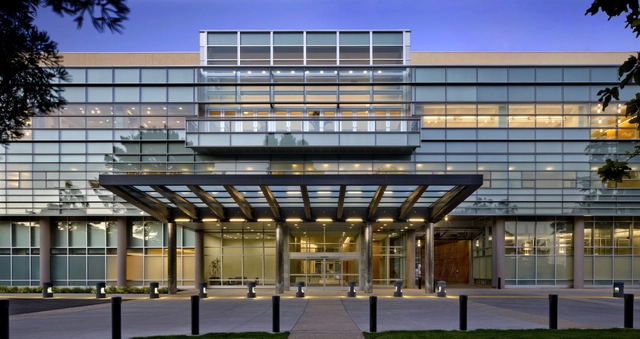
These dynamics present significant challenges for designers working to shape a built environment that will meet healthcare needs both today and in the future. We spoke with Arup experts from around the globe — Phil Nedin, who heads the firm’s global healthcare business from London; Bill Scrantom, the Los Angeles-based healthcare leader for North and South America; and Katie Wood, who recently relocated from Australia to Toronto to build the Canadian practice — to learn more.