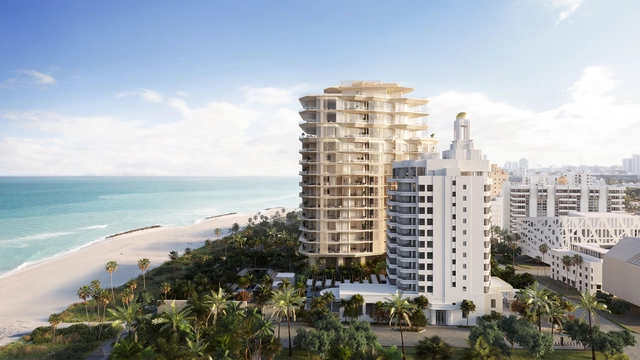
Japan-based architectural office Kengo Kuma and Associates has unveiled the design for what will become the studio’s first residential tower in the United States. Located on the oceanfront of Miami Beach, the 18-story structure will accommodate private condominiums for hospitality brand Aman. The project is adjacent to the Versailles building, a 1940s Art Deco hotel currently under restoration by architect Jean-Michel Gathy. The Art Deco architecture of Miami’s Faena district has a unique rhythm, which, according to the architect, was translated into the geometry of the new building through its vertical and horizontal lines.
The luxury hotel, as an architectural typology, is distinctive. In effect, it's a self-contained community, a building that immerses the well-off visitor into their local context. Self-contained communities they might be, but these hotels are also vessels of the wider socioeconomic character of a place, where luxury living is often next door to informal settlements in the most extreme examples of social inequality.
As the largest city in the United States, New York City is one of the most diverse and vibrant cities in the world, recognized by many as the center for global media, culture, fashion art, and finance. The city was founded in 1624 by settlers from the Dutch Republic and has since grown into “the city that never sleeps”.
While almost every style of architecture exists in New York City, the metropolis is most well known for its skyscrapers, both in historical styles such as Neoclassical and Art Deco and in their varied contemporary expressions. The first building to bring the world's tallest title to New York was the New York World Building, in 1890. Later, New York City was home to the world's tallest building for 75 continuous years, starting with the Park Row Building in 1899.
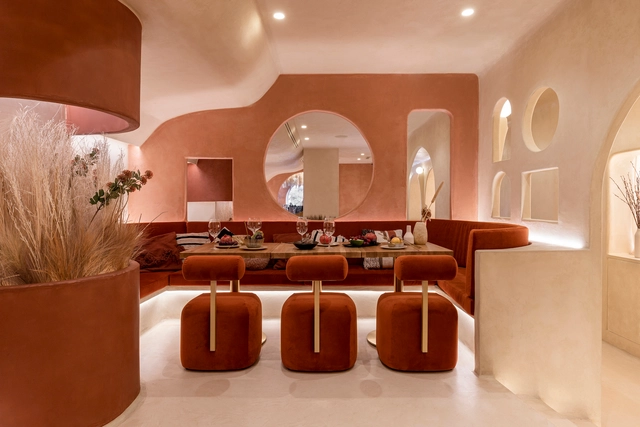
"The details are not the details. They make the design." – Charles Eames. Creating attractive spaces that anticipate the needs of users relies on several factors: scale, circulation, functionality, and comfort. However, the past few decades have proved that the visual appeal of a project is also greatly important, and can make or break the interior space. In this interior focus, we will explore the aesthetic side of interior design, looking at popular styles across the world and how architects and designers use elements such as color, furniture, accessories, and finishes to define their spatial identity.
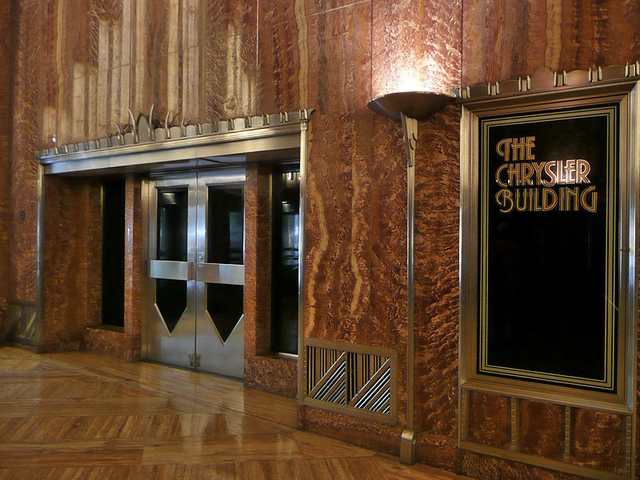
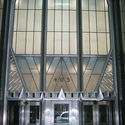
The Chrysler Building interior, Manhatten, New York . Image Courtesy of Dorff / Wikicommons CC BY-SA 3.0
Art Deco or Arts Décoratifs originated in the 1920's, following the Exposition Internationale des Arts Décoratifs et Industriels Modernes held in Paris (1925). However, it wasn’t until the 1930’s that the movement gained momentum across both Europe and the US, broadening Art Deco to cover all elements of decorative art including furniture, interior design, jewelry and architecture. Its popularity stems from its unique origins. Rather than a design movement driven by political or philosophical forces, it was created for the desire of glamorous and alluring change, a reflection of the golden age in Hollywood and a widespread economic boom.
Characterized by its decadence, rich application of color, and geometrical shapes, the movement is dramatically influenced by the discovery of the artifacts of ancient civilizations, and the introduction and admiration of the automobile. A movement heavily influenced by aspects in vogue it sought to create a form of luxury modernism, a step away from a more traditional architecture. It put an emphasis on handcrafted and individually designed elements, rarely to be mass produced.
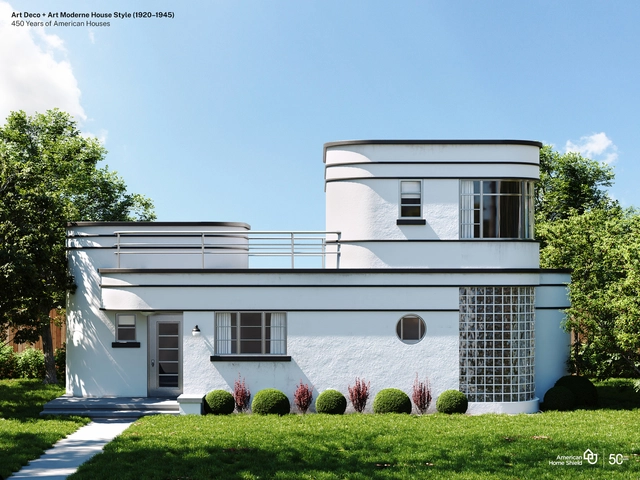
Art Deco + Art Moderne (1920–1945). Image Cortesía de American Home Shield
The history of architecture is made up of demographic, cultural, and social changes. In its relatively short history, American architecture has evolved with changes in the country, representing the catalog of various cultural influences that make up the United States as a whole. Many elements of American home design have remained intact over the past 450 years, reflecting longstanding American traditions and values that have stood the test of time.
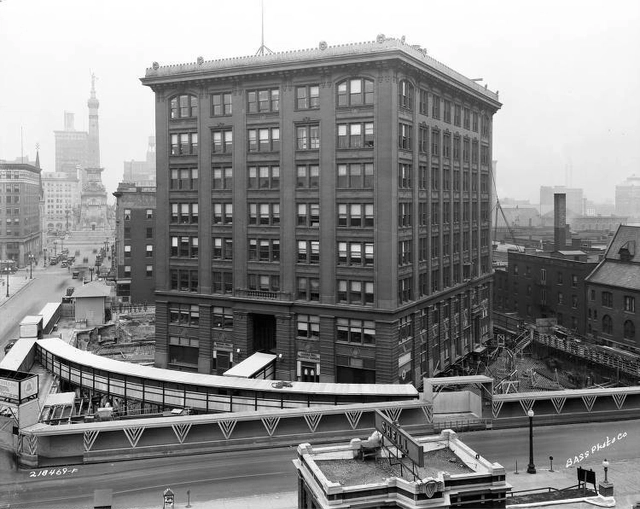
In November 1930, in Indiana, United States, one of the great feats of modern engineering was executed: a team of architects and engineers moved an 11,000-ton (22-million pound) telephone exchange without ever suspending its operations either basic supplies for the 600 employees who worked inside.
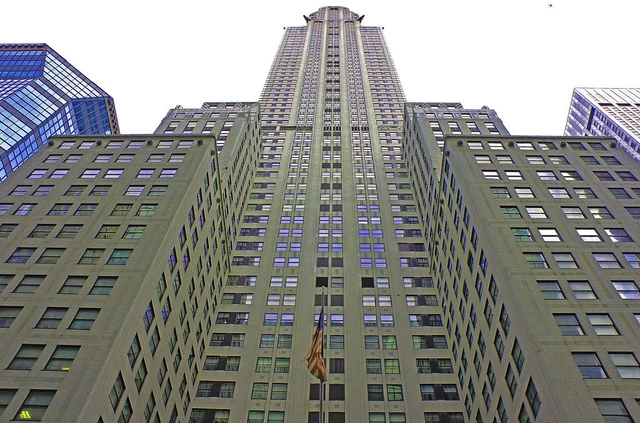
"Chrysler Building NYC NY" by dog97209 is licensed under CC BY-NC-ND 2.0
Art Deco architecture derives from a style of visual arts of the same name that emerged in Europe in the 1920s, which also influenced the movie industry, fashion, interior design, graphic design, sculpture, painting, and other forms of art, in addition to architecture. The milestone of this style was the International Exhibition of Modern Decorative and Industrial Arts held in Paris in 1925, from which it took its name.
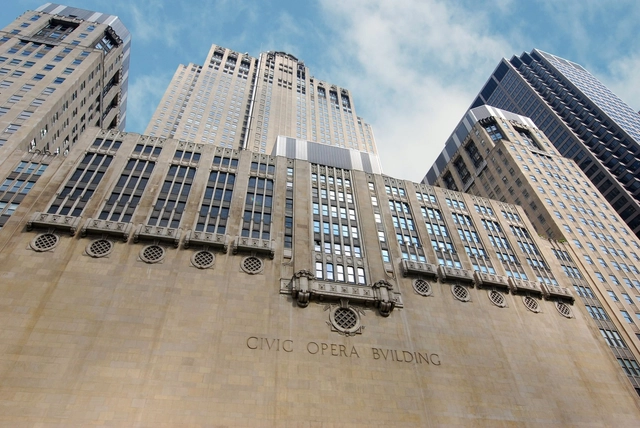
Learn about Art Deco—the opulent architectural style from the 1920s and 1930s—with CAC docent Mike McMains on this live, 45-minute virtual tour in downtown Chicago on May 5 or 10.
Northern Ireland-based architect John Donnelly has launched a studio dedicated to the production of finely-detailed plaster-cast architectural models exploring the diverse built environment of Belfast, Northern Ireland. “Model Citizen” was founded to promote public understanding and appreciation of the architecture and craftsmanship present in Irish cities, manifesting as an ongoing series of intricate sculptures.
Model Citizen sees its sculptures, available for closer inspection here, as a “mechanism to emphasize the beauty and significance of our built heritage,” translating art deco, brutalist, and internationalist styles into tangible, tactile sculptural objects that can be held, felt, and explored.
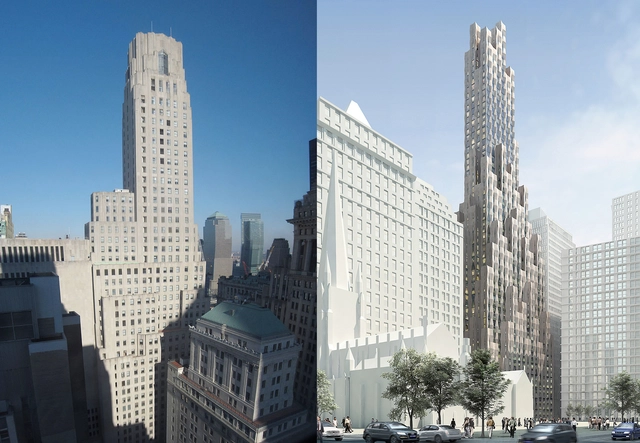
One Wall Street, before and after. Images: left, Via Wikimedia in public domain; right, Courtesy of Hollwich Kushner
The New York Timesrecently reported that over 40% of the buildings on the island of Manhattan wouldn’t be granted construction permits in 2017. Most of the culprits date back to the early 20th century when attitudes towards density, ceiling heights, column placement, and general living standards were different. This begs the question: what would modern iterations of New York’s signature structures look like today? Billed by the practice as “an obsessive-compulsive study of the city we love” HWKN’s New(er) York is a peculiar experiment that tackles this hypothetical.
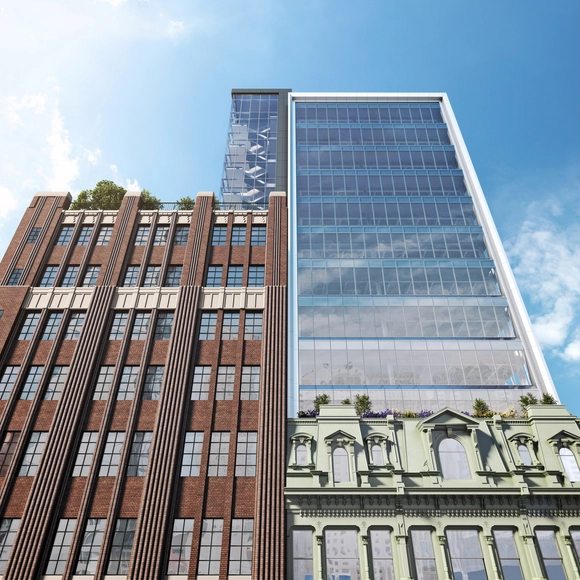
Plans have been announced by Tishman Speyer for "The Wheeler", a glassy new addition above downtown Brooklyn’s iconic Macy’s store on Fulton Street. The design is a collaboration between Shimoda Design Group and Perkins Eastman, and incorporates 10 stories of dynamic office and mixed-use space that will sit atop the existing department store.
Paying homage to the renowned 19th century Brooklyn developer Andrew Wheeler, the new offices will come complete with 16 foot ceiling heights, an acre of combined outdoor terrace gardens and decks, an amenity floor, and 360,000 square feet of rentable space, all while capturing the surrounding views of Lower Manhattan, the Brooklyn Bridge, the Statue of Liberty and New York harbour from its vantage point above the existing architecture.
The "architectural pilgrimage" is much more than just everyday tourism. Studying and admiring a building through text and images often creates a hunger in architects, thanks to the space between the limitations of 2D representation and the true experience of the building. Seeing a building in person that one has long loved from a distance can become something of a spiritual experience, and architects often plan vacations around favorite or important spaces. But too often, architects become transfixed by a need to visit the same dozen European cities that have come to make up the traveling architect's bucket list.
The list here shares some sites that may not have made your list just yet. Although somewhat less well known than the canonical cities, the architecture of these six cities is sure to hold its ground against the world's best. The locations here make ideal long weekend trips (depending of course on where you are traveling from), although it never hurts to have more than a few days to really become immersed in a city. We have selected a few must-see buildings from each location, but each has even more to offer than what you see here—so don't be afraid to explore!
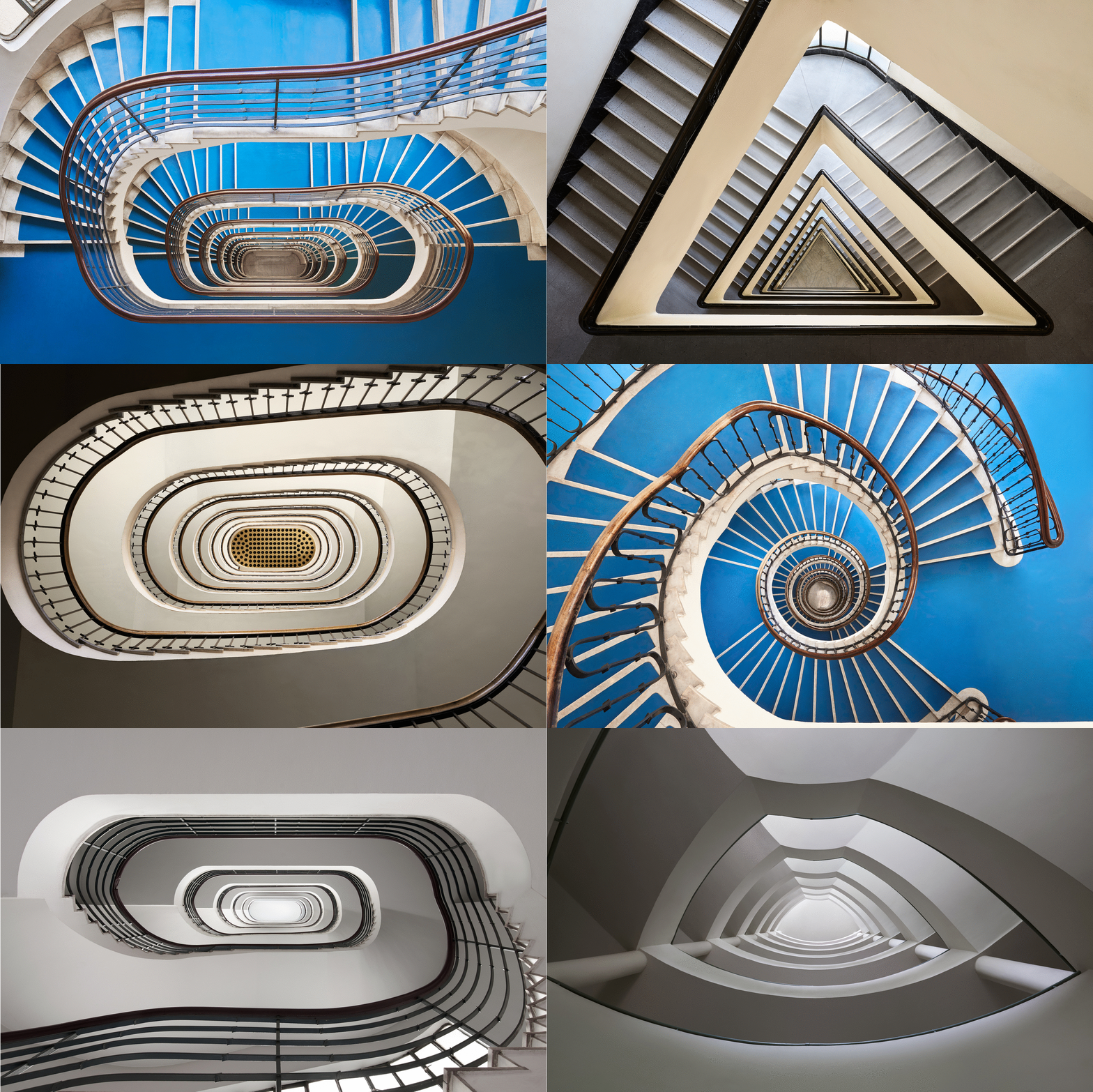
Fine arts and commercial photographer Balint Alovits has released Time Machine, his latest photo series documenting Art Deco and Bauhaus staircases throughout Budapest, Hungary.
Shown from the same central perspective, the photographs “create a new dimension by splitting space and time, staying within the visual limits of the project’s concept, while the perception of the architectural details evokes the idea of infinity.”
“I have always liked Art Deco and Bauhaus buildings,” said Alovits. “Whenever I step into one of these caracoles, I feel a certain pulling energy looking up from the bottom or down from the top. I wanted to collect and showcase all the different shapes and colors that these stairways feature.”
As long as there have been buildings mankind has sought to construct its way to the heavens. From stone pyramids to steel skyscrapers, successive generations of designers have devised ever more innovative ways to push the vertical boundaries of architecture. Whether stone or steel, however, each attempt to reach unprecedented heights has represented a vast undertaking in terms of both materials and labor – and the more complex the project, the greater the chance for things to go awry.
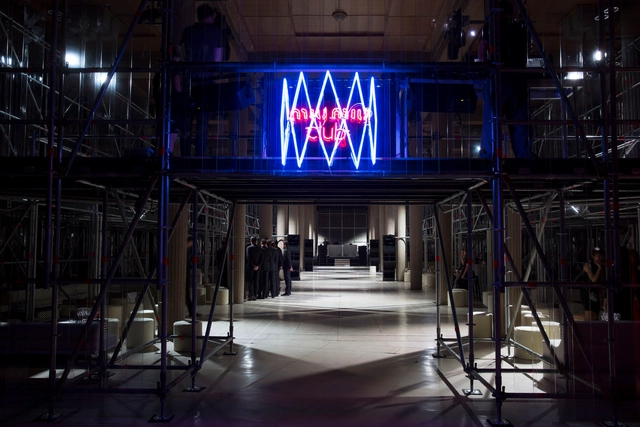
On Saturday, July 4, designer Prada and AMO—a research studio subset of OMA architecture—hosted The Miu Miu Club, a pop-up event, featuring dinner, a fashion show, and several musical performances in Paris, France.
Inside of the 1937 art deco Palais d-Iena, Paris’ current CESE government offices, the one-night event was held in the Hypostyle, using a scaffolding ring to create a “room within a room.” Strip lighting, metal grids, PVC sheets, and arrangements of luxurious furniture were also used to enhance the space.
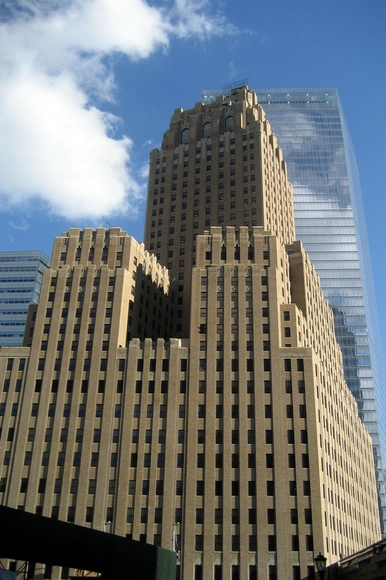
No architect played a greater role in shaping the twentieth century Manhattan skyline than Ralph Thomas Walker, winner of the 1957 AIA Centennial Gold Medal and a man once dubbed “Architect of the Century” by the New York Times. [1] But a late-career ethics scandal involving allegations of stolen contracts by a member of his firm precipitated his retreat from the architecture establishment and his descent into relative obscurity. Only recently has his prolific career been popularly reexamined, spurred by a new monograph and a high-profile exhibit of his work at the eponymous Walker Tower in New York in 2012.
This article comes courtesy of Charlotte Neilson, the author of the fascinating design blog Casting Architecture. Her column, Through the Lens, will look at architecture and production design in TV and film.
The categorisation of period architecture generally remains firmly in the realm of the professional or amateur enthusiast - let’s face it, you can go through life without knowing the difference between a Corinthian and Ionic column without too much inconvenience. Oddly, however, most people are able to name a few of the main features of Art Deco architecture fairly easily - the curved corners, stylised forms, the use of bakelite and chrome, the transport motifs.
It’s interesting that this period is so much more familiar to us, considering it spanned quite a short timeframe compared to other architectural styles; the Arts and Crafts and Art Noveau movements, for example, which both occurred in a similar time frame to Art Deco, are much less known to the wider community.
It’s possible of course that Art Deco is just more omnipresent because of its universal appeal, or its uniqueness, but I think most of the credit should go to Monsieur Hercule Poirot.
Learn more about Agatha Christie’s contribution to Art Deco, after the break...





















.jpg?1552010046&format=webp&width=640&height=580)



.jpg?1552010046)