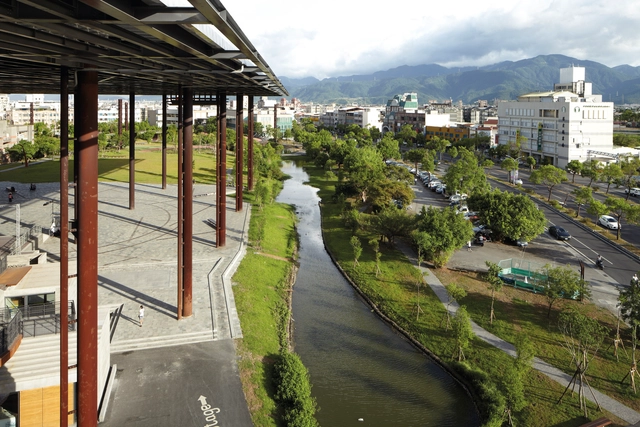
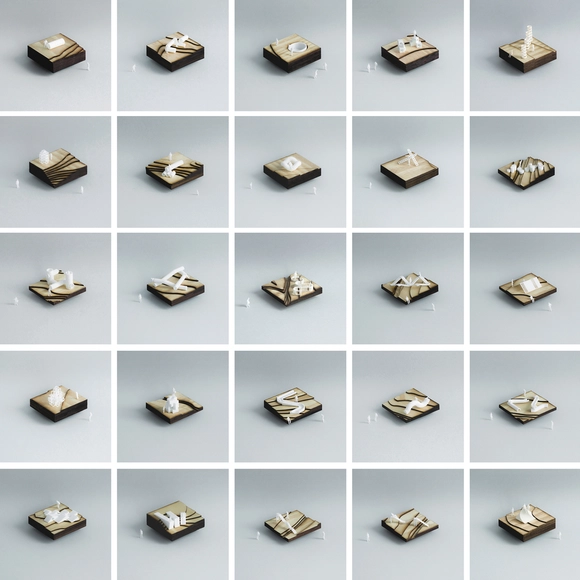
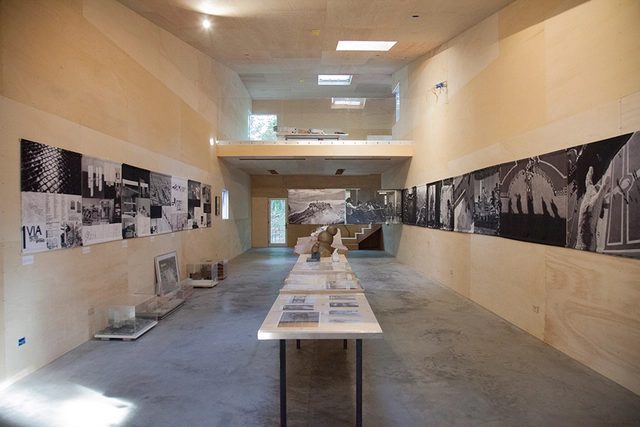
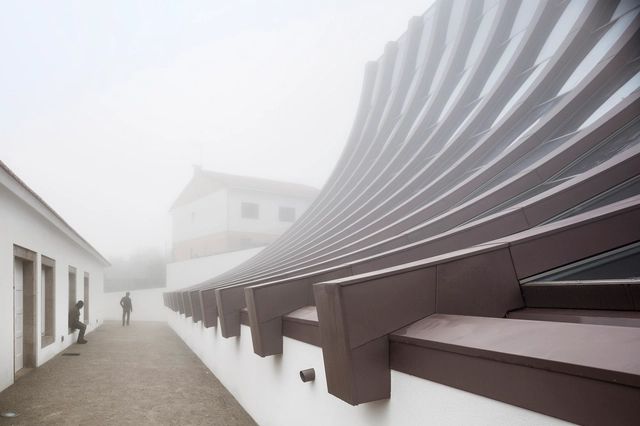
Taiwan proposes that architecture can transform a place, and to represent this idea, the work of Sheng-Yuan Huang and his practice, Fieldoffice, were chosen for the Taiwan Exhibition at La Biennale di Venezia in 2018, entitled Living with Sky, Water, and Mountain: Making Places in Yilan. Sheng-Yuan and Fieldoffice demonstrated that the notion of making places is more than building a physical space, but is equally about establishing a linkage between people, as well as people and their environment.
Alessandro Martinelli explores Sheng-Yuan and his colleagues at Fieldoffice as the avant-garde of a new architectural movement in his book, The City Beyond Architecture, which seeks to produce a new form of collective living through the lens of design and culture, touching on what the design culture of the majority of future urbanization could become. In the following, we will discuss Shen-Yuang's impact on Taiwanese architecture as he spearheaded the call to integrate and imagine public spaces that inhabited the capacity to structure a particular landscape to provide both social spaces and a sense of identity to its occupants.
The problem with being a deliberative writer is that pretty much everything has already been penned by the time you’re ready to write about something. Such is the case with the 2021 ChicagoArchitecture Biennial (CAB): The Available City. There have been several well-written, insightful essays about the CAB by Zach Mortice, Anjulie Rao,Marianela D’Aprile, and others, so it would be foolish to travel the landscape they have so expertly traversed. Instead, I’m offering a trip through this edition of the CAB, which concluded a successful and significant run on Saturday, down a road less traveled.
https://www.archdaily.com/974746/breaking-the-dead-paradigm-for-design-exhibitionsCraig L. Wilkins
Vladimir Belogolovsky talks with Mexican-American architect Francisco Gonzalez-Pulido on his exhibition 30 Projects/30 Years/30 Stories now on view at the Museo Metropolitano in Monterrey, Mexico.30 Projects/30 Years/30 Stories, a large retrospective on the work of Mexican-American architect Francisco Gonzalez Pulido, was opened on June 18 at the Museo Metropolitano in Monterrey, Mexico. The exhibition will remain on view until September 21.
Among the most renowned and well-established offices in the world, OMA - Office for Metropolitan Architecture, founded in the 1970s by Rem Koolhaas, Elia Zenghelis, Madelon Vriesendorp, and Zoe Zenghelis, is definitely part of the pantheon of the most famous. Curiously, although it receives large commissions and has already built several emblematic works in different countries, the office is often associated with an approach that is less focused on architectural design, going beyond the strict limits of the disciplinary field and encompassing other areas of practice.
Responding to “How will we live together” in 115 different ways, the 2021 Venice Architecture Biennale welcomed, physically, the large public, on May 22nd, 2021. Opening up furthermore to the world, the timeless yet context-sensitive theme engendered a collective imaginary, highlighting a world that would rather come together than stay apart. Building an architectural narrative of the present that reflects on a resilient future, the interrogation, first asked in 2019, gained more relevance with the pandemic that paused the world for a while. With a lot of optimism and love for the craft, the architectural exhibition opened its doors to a longing public and revealed recurring qualities in the showcased interventions.
"When we enter the restroom, we are never alone. Instead, we are entangled in a network of bodies, infrastructures, ecosystems, cultural norms, and regulations". Although restrooms are often overlooked facilities that cater to the needs of individuals, they are, however, spaces where gender, religion, race, hygiene, health, and the economy are defined and expressed. For the 17th International Architecture Exhibition at La Biennale di Venezia, Matilde Cassani, Ignacio G. Galán, Iván L. Munuera, and Joel Sanders designed two pavilions that exhibit how restrooms are political architectures, serving as battlegrounds for the world's disputes.
Alterity is essential to human development. If deprived of a variety of stimuli, the brain is unable to develop, losing plasticity and deteriorating like an atrophied muscle. This reasoning is widely accepted when it comes to social relations or cognitive and physical activities. But what about the stimuli promoted by the built environment?
https://www.archdaily.com/956140/the-city-as-a-tile-based-gameMarina Oba, Daniela Moro e Gabriel Tomich
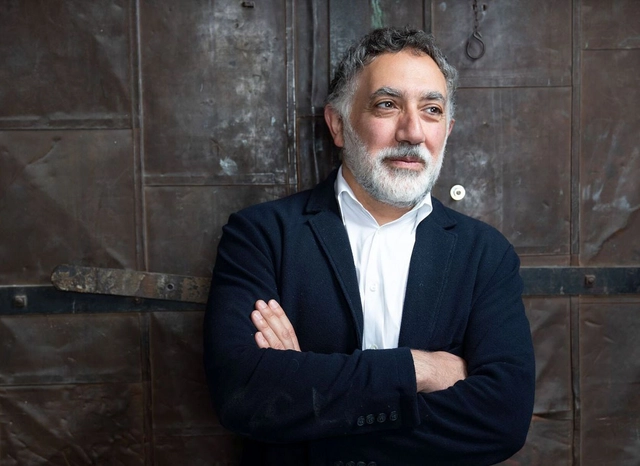
In the second part of his interview with Archdaily, Hashim Sarkis reflects on the future of architecture as he tackles the timeless question of the 2021 Venice Biennale. The curator of the Biennale, which proposes the question of “How Will We Live Together?”, discusses the role of the profession in the midst of all these new paradigms, stating that “Architects do change the world […] by creating […] wish images for what the world could be”.
In this feature, the curator of the anticipated biennale and dean of MIT School of Architecture and Planning presents his views on the evolution of Architecture, and the new directions the academic world should take, to reflect “the complexity of the urban problems of today”. Sarkis also brings up Beirut, discussing reconstruction approaches, civil society, and the exasperating notion of resilience.
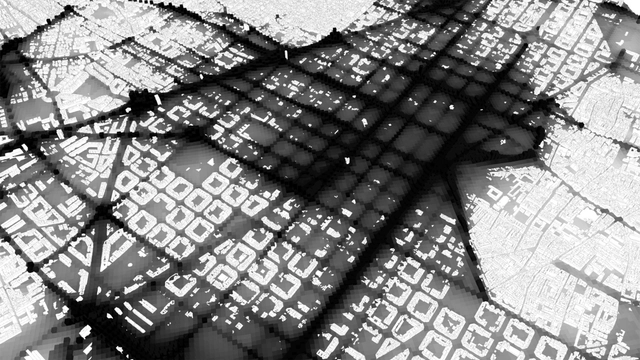
Cartography of Barcelona redrawn by air pollution. Image Courtesy of 300.000 Km/s
Catalonia in Venice - air/aria/aire, part of the Collateral Event of the Biennale Architettura 2021, is an exhibition curated by architect Olga Subirós, commissioned by the Institut Ramon Llull, with the participation of 300.000 Km/s, an urbanism studio in macro data-based strategic planning. Reflecting on the central theme of the Biennale “How will we live together?” the project investigates the role of architecture and urbanism within the context of the climate emergency and the public health crisis.
Bodybuilding, SO – IL and Ana Prvački, L’air pour l’air, Chicago, 2017. Photograph by Laurian Ghinitoiu
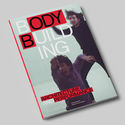
Six months after the release of the namesake book during the latest installment of the biennial, PERFORMA has launched Bodybuilding, which features thirty-five architecture studios who engage with performativity.
Is architecture a period or a comma? Are built forms hermetic bodies or catalysts for action? PERFORMA curator Charles Aubin and architect Carlos Mínguez Carrascor, published Bodybuilding: Architecture and Performance, during the most recent installment of the PERFORMA 19 biennial in New York City last November. Noticing a lack of a comprehensive, multigenerational survey on the subject, the duo’s interest in investigating the ways architects engage with performance goes as far back as a symposium they co-organized at the Performa 17 Hub in 2017. The book, which features essays by Mabel O. Wilson and Bryony Roberts, Lluís Alexandre Casanovas Blanco, and Victoria Bugge Øye, seeded the fundamental approaches now deeply rooted in the online exhibition: the impact of movement on systematic urbanization, the body’s relationship to buildings and monuments, and architecture’s role in action, be it physical or sociopolitical.
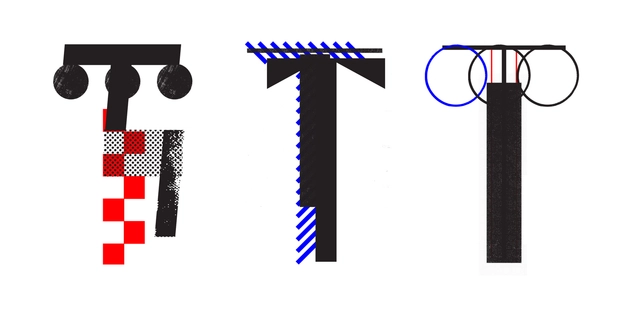
Architect and educator Astra Zarina wasn’t just the teacher of Tom Kundig, Ed Weinstein, and Steven Holl (who designed ‘T’ Space); she was also an advocator for public spaces, cohesive urbanity, and the communities that these attributes fostered. ‘T’ Space’s newest exhibit Rome and the Teacher, Astra Zarina celebrates Zarina’s life and teachings in the context of recognizing overlooked pedagogical figures, particularly women. A recent article by Metropolis Magazine describes this exhibit in detail and with it, Zarina’s own life story.
https://www.archdaily.com/922753/t-spaces-new-exhibit-celebrates-the-overlooked-history-of-an-influential-female-architect-and-educatorLilly Cao
Since 2007, Lisbon Architecture Triennale has been developing its mission as a non-profit organization fostering debate, thinking and practice in Architecture. The large number of activities initiated throughout its 10 years of existence is the best witness to this commitment.
https://www.archdaily.com/921450/details-about-lisbon-triennale-2019Pedro Vada
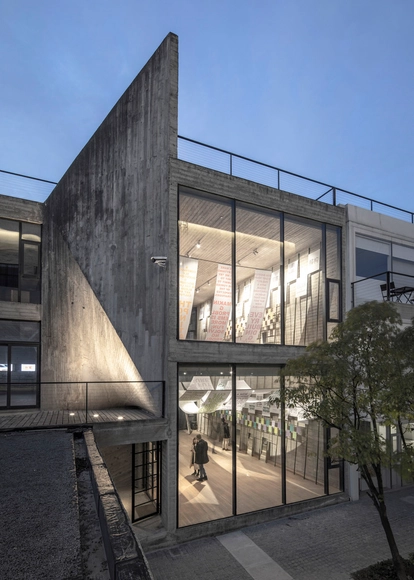
I Am Interested in Seeing the Future is an architectural exhibition, that, contrary to what you might expect, includes no models and no drawings. Instead, as soon as visitors arrive, they find themselves surrounded by text. The wall facing the entrance is covered by an installation of single words on posters, interview transcripts on colored paper, and mirrors that reflect the sentences on flimsy scrolls arcing down from the ceiling.
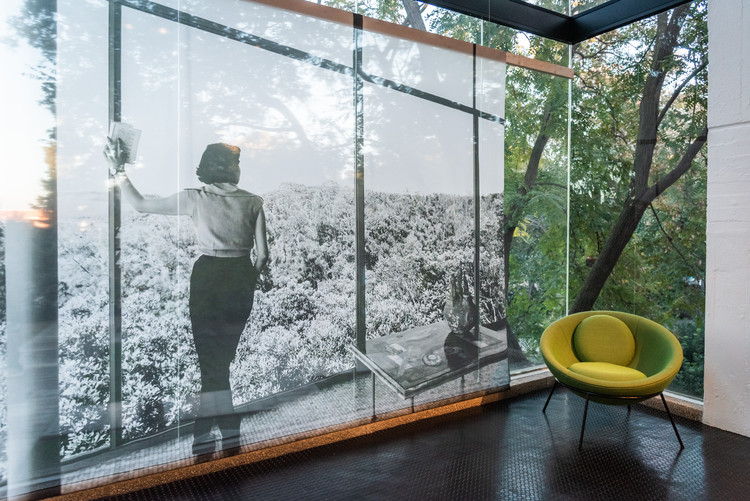
The Fundació Joan Miró presents Lina Bo Bardi Drawing, the first exhibition to focus specifically on the role of drawing in the life and work of the Italian-born Brazilian architect.
The exhibition features a carefully selected collection of a hundred drawings from the Instituto Lina Bo e P. M. Bardi, bearing witness to the importance of drawing in all the stages of Bo Bardi’s multifaceted career. The project has been curated by another architect, Zeuler Rocha Lima - also an artist, researcher, and international expert on Bo Bardi - with support from the Fundació Banco Sabadell.
Videos
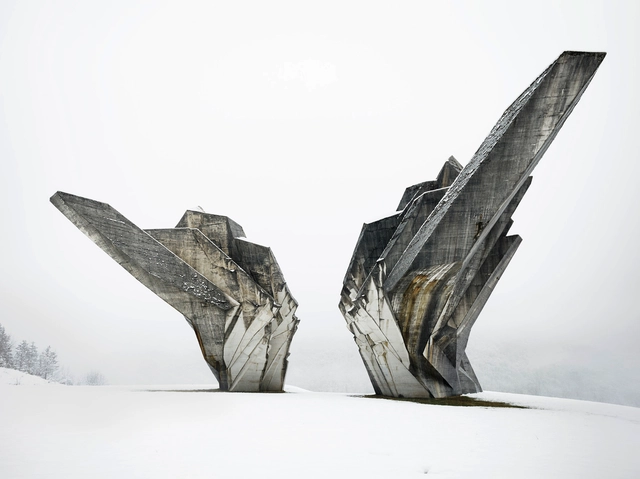
Miodrag Živković, Monument to the Battle of Sutjeska, 1965-71, Tjentište, Bosnia and Herzegovina. View of the western exposure. Photo: Valentin Jeck, commissioned by The Museum of Modern Art, New York, 2017.
With the exhibition soon coming to an end, Martino Stierli (Chief Curator of Architecture and Design at MoMA) and Vladimir Kulic (Guest Curator and Architecture Historian) have presented a 7-minute-long video guiding viewers through the highlights of the exhibition.
https://www.archdaily.com/908777/an-expert-guide-through-momas-toward-a-concrete-utopia-architecture-in-yugoslavia-1948-nil-1980Niall Patrick Walsh




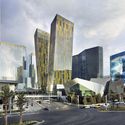

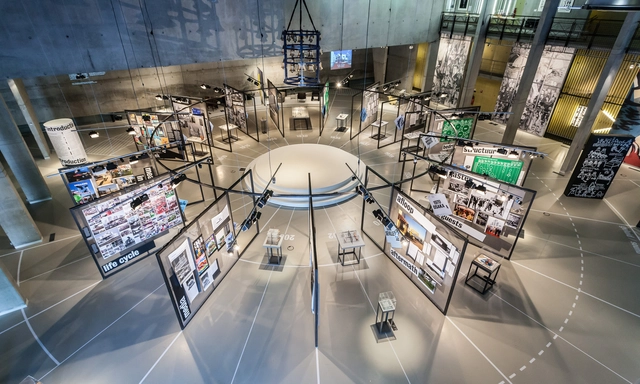
_OMA.jpg?1558539068 "Knoll Celebrates Bauhaus. © OMA / Photography by Fred Ernst")


.jpg?1622015464&format=webp&width=640&height=580)
.jpg?1622029620 "Argentina: La casa infinita by Gerardo Caballero. Image © Laurian Ghinitoiu")
.jpg?1622015439 "Germany: 2038. The New Serenity by 2038. Image © Laurian Ghinitoiu")
.jpg?1622015472 "Mexico: Desplazamientos / Displacements by Isadora Hastings, Mauricio Rocha, Elena Tudela. Image © Laurian Ghinitoiu")
.jpg?1622015529 "Spain: Uncertainty by Domingo Jacobo González Galván, Sofía Piñero Rivero, Andrzej Gwizdala, Fernando Herrera Pérez. Image © Laurian Ghinitoiu")
.jpg?1622015464)
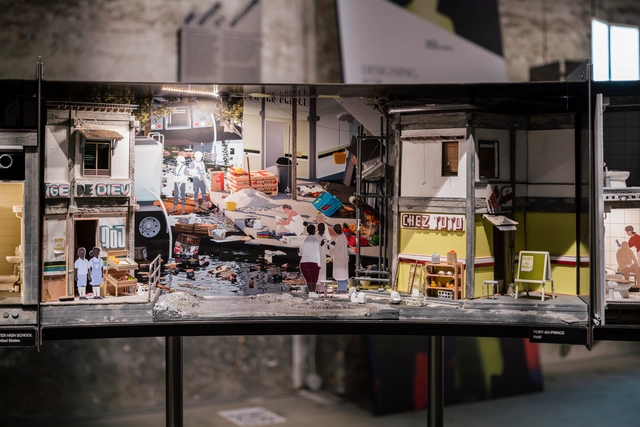










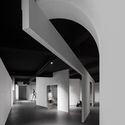
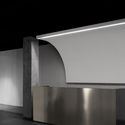
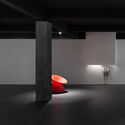
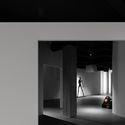



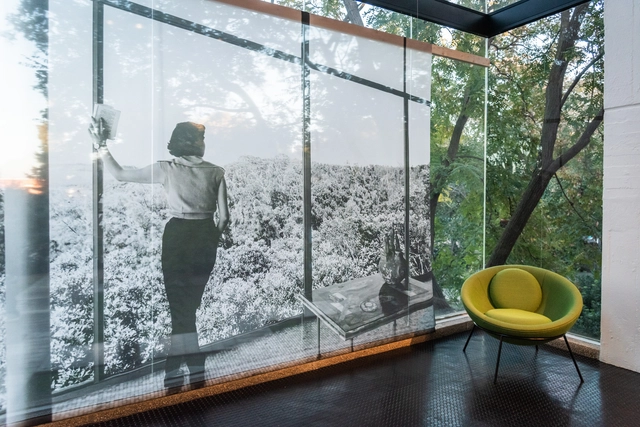
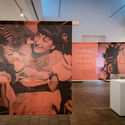
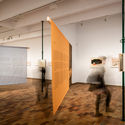
.jpg?1550503634 "© Instituto Lina Bo e P. M. Bardi. Image Courtesy of Fundació Joan Miró, Barcelona")
_jpeg_copy.jpg?1550503683 "© Instituto Lina Bo e P. M. Bardi. Image Courtesy of Fundació Joan Miró, Barcelona")