Snarkitecture’s “Fun House” has opened at the National Building Museum in Washington DC, an interactive exhibition forming part of the museum’s Summer Block Party series of temporary structures created inside its historic Great Hall.
The role of the architect—and even architecture itself—in society today is changing. A lack of interest in critical social issues from a profession that holds such high responsibility within a community is a problem that should no longer be avoided.
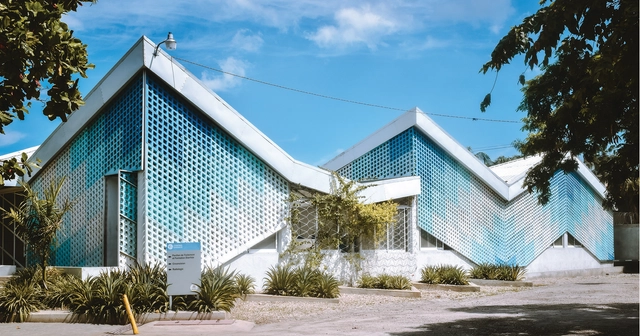
In an exhibit currently on show at the Center for Architecture and Design in Seattle titled "In the Public Interest," Garrett Nelli Assoc. AIA challenges the profession of architecture to establish a focus on more community-engaged design. With the help of the 2017 AIA Seattle Emerging Professionals Travel Scholarship, Nelli traveled to Los Angeles, rural Alabama, Haiti, Italy and New Orleans, all the while analyzing how the built environment has the ability to influence social change.
Read on for an edited interview with Nelli about his research and how you can begin to implement elements into your design practice to help promote social change in your own communities.
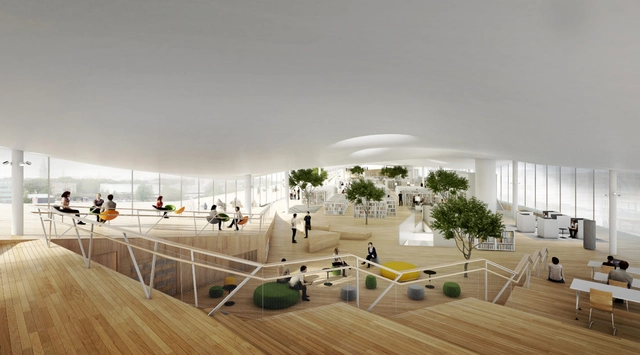
As part of our 2018 Venice Architecture Biennale coverage we present the proposal for the Finnish Pavilion. Below, the participants describe their contribution in their own words.
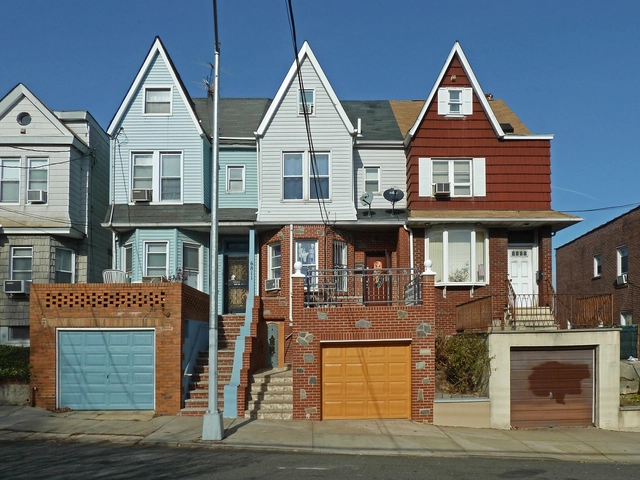
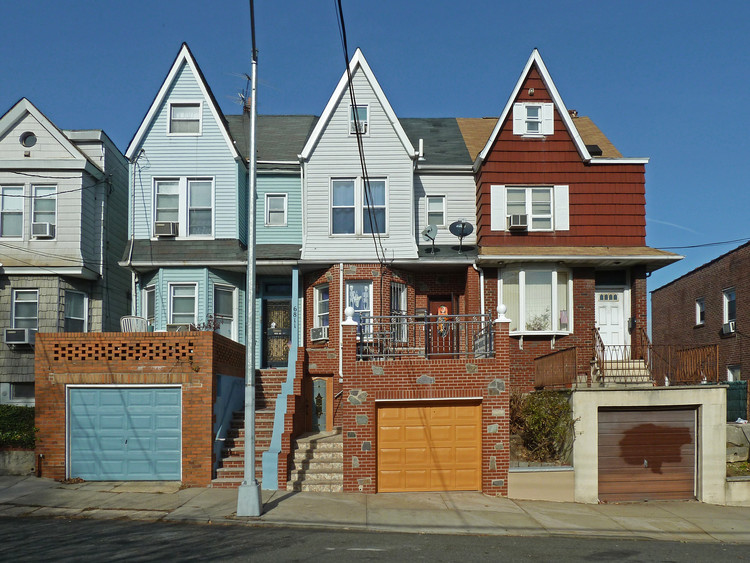
Queens, NY is one of the most diverse places in the world, so it should be no surprise that it’s residences reflect that diversity. From the Architectural League of New York comes Rafael Herrin-Ferri’s exhibition “All the Queens Houses.” An architect and artist, Herrin-Ferri compiled 273 photographs of homes in Queens. The ever growing photographic survey conveys themes of identity, differentiation, and adaptation.
This article originally appeared on guggenheim.org/blogs under the title "Nine Guggenheim Exhibitions Designed by Architects," and is used with permission.
Exhibition design is never straightforward, but that is especially true within the highly unconventional architecture of Frank Lloyd Wright’s Guggenheim Museum. Hanging a painting in a traditional “box” gallery can be literally straightforward, whereas every exhibition at the Guggenheim is the reinvention of one of the world’s most distinctive and iconic buildings. The building mandates site-specific exhibition design—partition walls, pedestals, vitrines, and benches are custom-fabricated for every show. At the same time, these qualities of the building present an opportunity for truly memorable, unique installations. Design happens simultaneously on a micro and macro scale—creating display solutions for individual works of art while producing an overall context and flow that engages the curatorial vision for the exhibition. This is why the museum’s stellar in-house exhibition designers all have an architecture background. They have developed intimate relationships with every angle and curve of the quarter-mile ramp and sloping walls.


.jpg?1530894708&format=webp&width=640&height=580)
.jpg?1530894765 "© Noah Kalina")
.jpg?1530894696 "© Noah Kalina")
.jpg?1530894809 "© Noah Kalina")
.jpg?1530894821 "© Noah Kalina")
.jpg?1530894708)