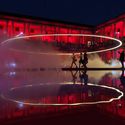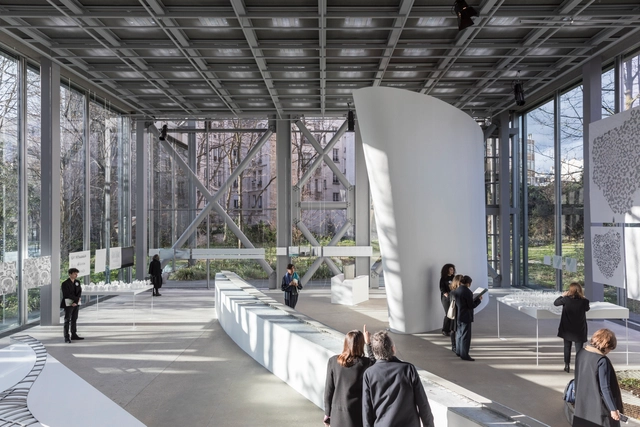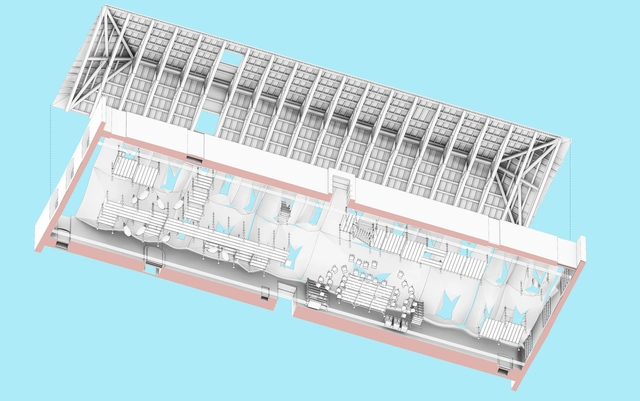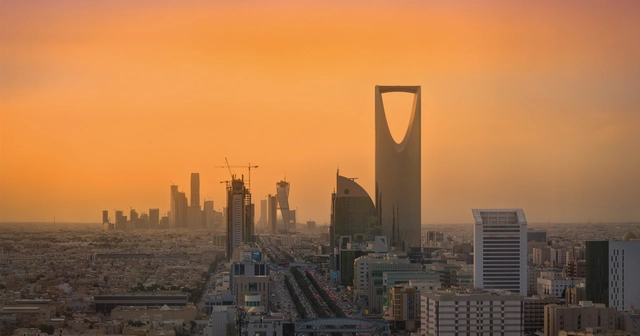
'Future Cites' exhibition was recently inaugurated at the Future Design Arts Centre in Chengdu, examining how the work of Zaha Hadid Architects has redefined urban landscapes around the world. The monographic show highlights the trends and innovations shaping contemporary urbanism and traces the ideas and concepts that defined ZHA's body of work. The exhibition displays the office's ongoing research and various urban design approaches, presented through visualizations, architectural models and video projections.
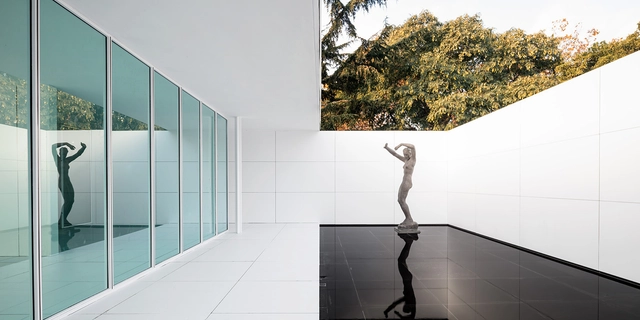
In 1929, Ludwig Mies van der Rohe and Lilly Reich design the German National Pavilion for the 1929 Barcelona International Exhibition. The official reception for the exhibition was held there, presided over by King Alfonso XIII and the German authorities. From then on, the story is well known to everyone. A symbolic work of the Modern Movement, the Pavilion has been extensively studied and interpreted, and has inspired the work of several generations of architects.
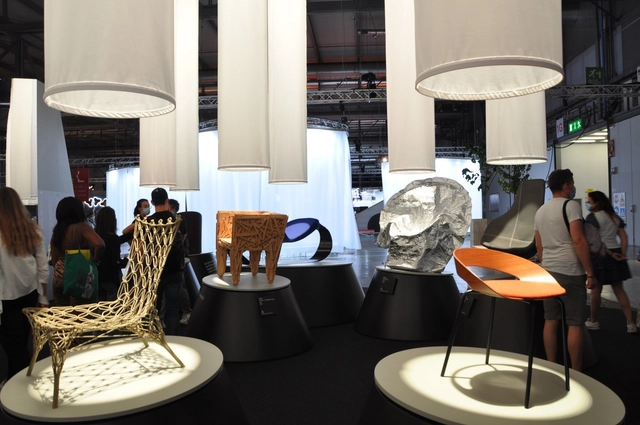
The 60th edition of Salone del Mobile.Milano has been postponed and will now take place from the 7th till the 12th of June 2022. The decision was taken by the Board of Federlegno Arredo Eventi, in agreement with Fiera Milano, who voted to postpone the event from April 2022 to June 2022.
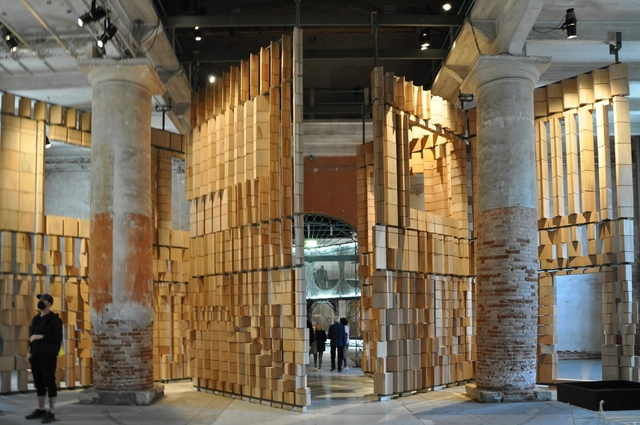
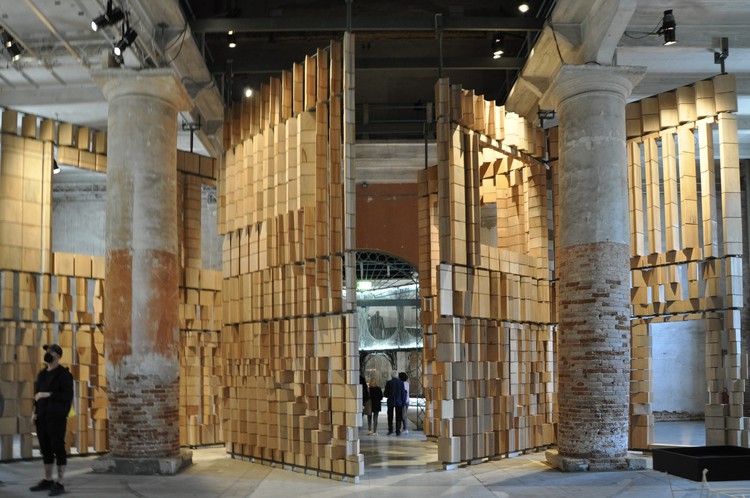
Other than the contribution of national participations, the 2021 Venice Architecture Biennale invites architects and researchers to exhibit their work between the Central Pavilion at the Giardini, the Arsenale, and Forte Marghera, seeking to answer the general theme of “How will we live together?”, set by curator Hashim Sarkis. With 113 Participants from 46 countries, and an increased representation from Africa, Latin America, and Asia, these architectural contributions underline worldwide and contextual challenges as well as present multidisciplinary and inventive solutions.
The 17th International ArchitectureExhibition, running from 22 May to 21 November 2021, divides these projects amongst the following titles: Co-Habitats, Stations, Among Diverse Beings, As New Households, As Emerging Communities, Across Borders, and As One Planet, How Will We Play Together? After having explored the recurring qualities observed in the national pavilions, this feature highlights the rest of the interventions through the lens of Laurian Ghinitoiu.
After being shut down for more than a year, museums across the world are beginning to show signs of reopening. Most architecture and design events that were scheduled for 2020 have been pushed a year or two, depending on the severity of the pandemic in their respective regions. But while museums are open to the public once again, administrators have installed numerous precaution measures to ensure the safety of visitors and curators, and to avoid potential re-closures.
As international travels have been revived by government officials, and tourism is expected to recover gradually, read on to discover 18 museums and exhibitions that have begun welcoming visitors into their exhibition spaces as of May 2021, and the procedures required from the attendees before and during visitations.
Scheduled originally from August to November 2020, the 17th Venice Architecture Biennale was postponed, like every other event this year, and will be held from May 22nd to November 21st, 2021, due to the pandemic. Questioning “How will we live together?” the original statement of curator Hashim Sarkis, called upon architects “to imagine spaces in which we can generously live together”. Relevant today more than ever, with the current worldwide circumstances, the theme of the Biennale is in fact the focus of interest of the global scene.
After having discussed “How will we live together?” in 2019 with Hashim Sarkis in Venice, ArchDaily had the chance to open the debate once more and re-examine the question of the Architecture Biennale. In a two-part interview, the architect tackles the theme, the Biennale, the present situation, and the future.
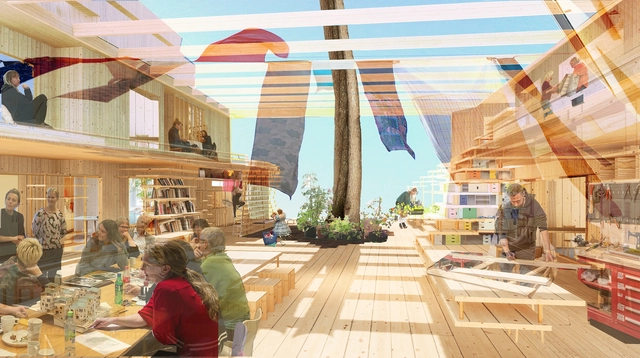
The Nordic Pavilion at the 17th International ArchitectureExhibition of the Venice Biennale will be transformed into an experimental cohousing project by architects Helen & Hard, supported by a curatorial team from the National Museum of Norway. Responding to the theme of How will we live together? the intervention “will present a framework for designing and building communities based on participation and sharing”.
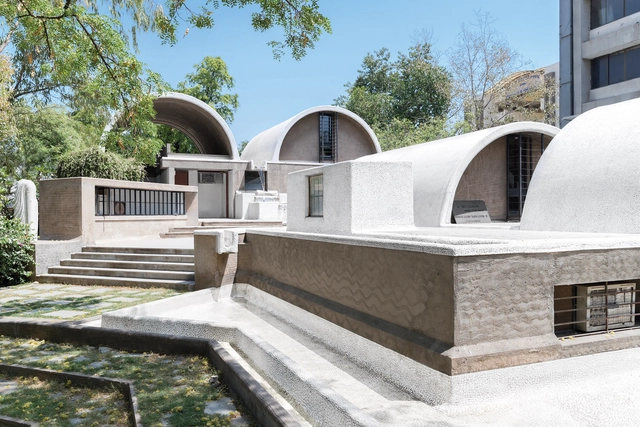
Wrightwood 659, a private institution located in Chicago’s Lincoln Park neighborhood, will host the first U.S. Exhibition of Indian architect, urbanist, and 2018 Pritzker Prize winner Balkrishna Doshi. Running from September 9 till December 12, 2020, the retrospective entitled Balkrishna Doshi: Architecture for the People, is the first display devoted to the works of the laureate, outside of Asia.
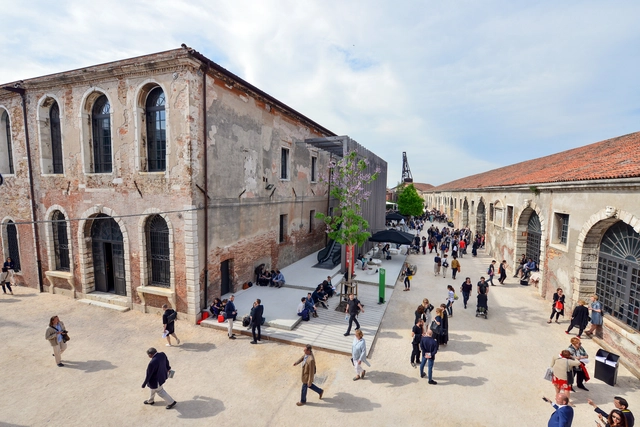
Arsenale_Photo by Andrea Avezzù. Image Courtesy of La Biennale di Venezia
The 17th International Architecture Exhibition, organized by La Biennale di Venezia will be open to the public from the 23rd of May till the 29th of November 2020. Entitled How will we live together? and curated by Hashim Sarkis, the exhibition’s pre-opening will take place on the 21st and the 22nd of May, while the awards ceremony and inauguration will be held on the 23rd of May 2020.
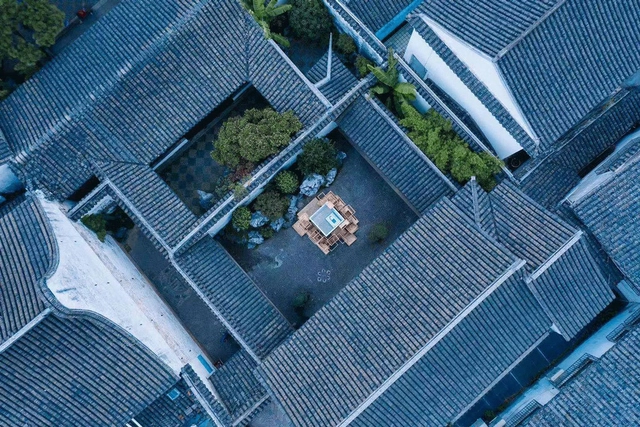
"Mater of the waterless" Brian Li Zhang - TeamMinus
The project curated by Luca Molinari Studio, opened to the public on the 28th of October in Suzhou at the Master of the Nets Garden. The curatorial project aims to create a place where best contemporary culture and the strongest tradition can dialogue.
Please join us to celebrate and support the graduating students of the Bachelor and Master of Architecture at UNSW. The exhibition is a celebration of the creative, technological and innovative explorations of this generation of emerging architects. Fresh and inspiring, ARCH-EX demonstrates the exciting prospects for the future of the profession.

Since graduating from the Cooper Union School of Architecture in 1996, Vladimir Belogolovsky has crossed disciplinary boundaries by transitioning from practicing architecture to becoming an exhibition curator and critic to evolving as a conceptual installation artist in his pursuit of continuously scrutinizing two fundamental questions – what is an exhibition and what is architecture?
The Athens Architecture Club seeks to resurrect the historical architecture clubs of the 19th century, functioning as an “open forum, an infrastructural framework, and support platform for architects, artists, and writers to discuss, challenge and enrich a dialogue among practitioners and scholars.
https://www.archdaily.com/900323/drawings-by-tchoban-holl-and-calatrava-among-stunning-entries-for-the-first-athens-architecture-club-exhibitionNiall Patrick Walsh
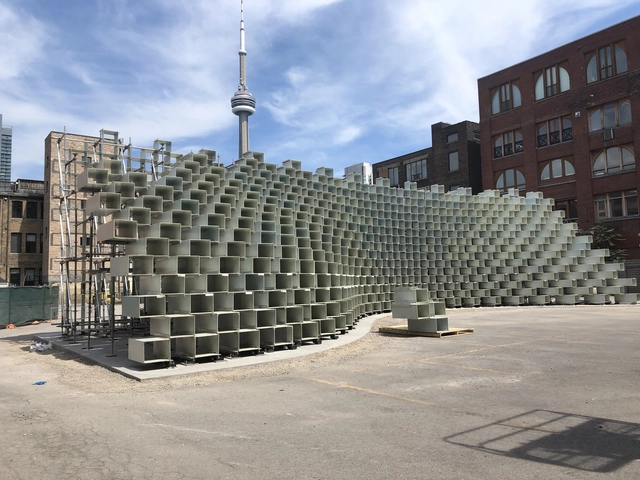
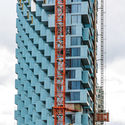
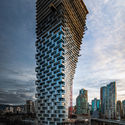
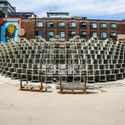
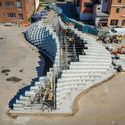
The two BIG-designed structures, located on opposite coasts, have both been recognized for their architectural innovation. The LEED-Platinum Vancouver House was awarded the World Architecture Festival’s Future Building of the Year in 2015, while the “unzipped wall” is the first Serpentine Pavilionto embark on a multi-city tour of this kind, before ultimately landing in a permanent home on the Vancouver waterfront.
https://www.archdaily.com/899563/bigs-relocated-serpentine-pavilion-nears-completion-in-toronto-as-landmark-tower-tops-out-in-vancouverNiall Patrick Walsh
Berislav Šerbetić and Vojin Bakić. Monument to the Uprising of the People of Kordun and Banija. 1979–81. Petrova Gora, Croatia. Exterior view. Photo: Valentin Jeck, commissioned by The Museum of Modern Art, 2016
The Museum of Modern Art (MoMA) is set to open a new exhibition exploring the architecture of the former country of Yugoslavia. Toward a Concrete Utopia: Architecture in Yugoslavia, 1948–1980 will be the first exhibition in the United States to honor the peculiar architecture of the former socialist nation.
More than 400 drawings, models, photographs, and film reels culled from an array of municipal archives, family-held collections, and museums across the region will be presented to an international audience for the first time. Toward a Concrete Utopia will feature works by many of Yugoslavia's leading architects. It will explore "large-scale urbanization, technological experimentation and its application in everyday life, consumerism, monuments and memorialization, and the global reach of Yugoslav architecture."
“Today, design has become a form of inquiry, power, and agency,” say Jan Boelen and Deniz Ova, curator and director of the 2018 Istanbul Design Biennial. “It has become vaster than the world itself, permeating all layers of everyday life.” Their curatorial statement for the 4th Istanbul Design Biennial, which opens later this year themed with the title “A School of Schools,” seeks to explore how design education, and education in general, can evolve and adapt in a new age of artificial intelligence.
The team is determined that the Biennial should not read as a two-year scheduled event, but should “reinvent itself and become a productive, process-orientated platform for education and design to research, experiment, and learn in.” The team is undoubtedly well equipped for the challenge.
https://www.archdaily.com/894670/jan-boelen-and-deniz-ova-curators-of-the-2018-istanbul-design-biennial-discuss-the-future-of-design-educationNiall Patrick Walsh
Future Space / Peter Pichler Architecture. Image Courtesy of Peter Pichler Architecture
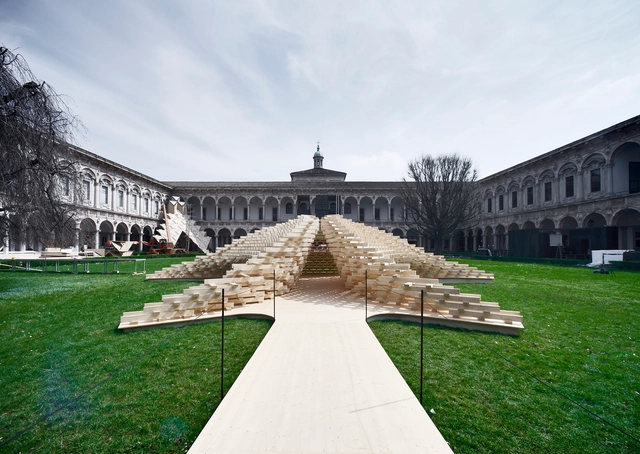
The 2018 Milan Design Week is now underway, a festival which this year is expected to attract over 300,000 visitors. Every year, the festival brings together a wide range of practitioners and design companies resulting in unusual yet fascinating collaborations and installations.
Below, we have compiled a list of collaborations to look out for throughout the week, including investigations into water, healthcare, and micro-living.
Throughout the spring and summer of 2018, the Palazzo Strozzi in Florence, Italy will host a new site-specific project seeking to further our understanding of ecology, and the relationship between humans and the natural world. “The Florence Experiment” will connect internal and external spaces of the famed Renaissance palace through two separate experiences: an intertwined set of 65-foot-high (20-meter-high) slides, and a “live analysis” of the impact of human emotion on plant growth.
The Florence Experiment has been devised by German artist Carsten Höller and plant neurobiologist Stefano Mancuso, with the vision of turning the Palazzo Strozzi’s façade and courtyard into engaging areas of scientific and artistic experiment. Inspired by the Renaissance alliance between art and science, the project aims to create a new awareness of the way we see, understand, and interact with plant life.