1. ArchDaily
  2. Architecture Essays

Architecture Essays: The Latest Architecture and News

The Paradox of Sustainable Architecture: Durability and Transience

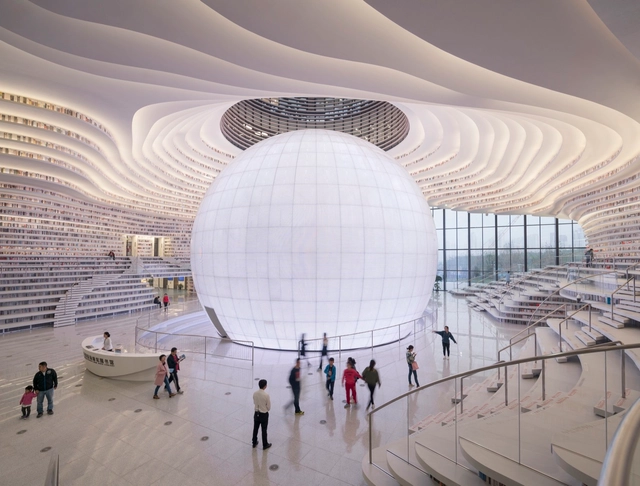
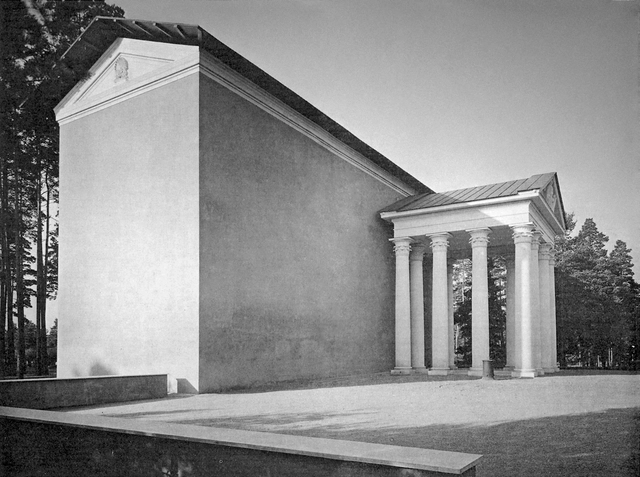
To convey the might and prestige of their empire, the Romans constructed enduring architecture as symbols of their long-lasting reign. Emperors employed grand public works as assertions of their status and reputation. Conversely, Japanese architecture has long embraced ideas of change and renewal, evident in the ritualistic rebuilding of Shinto shrines. A practice, known as shikinen sengu, is observed at Ise Jingu, where the shrine is purposefully dismantled and reconstructed every twenty years. Across the world, philosophies around permanence and impermanence pervaded architectural traditions. Amidst the climate crisis, how do these tenets apply to modern architectural design?

The Paradox of Sustainable Architecture: Durability and Transience - Featured ImageThe Paradox of Sustainable Architecture: Durability and Transience - Image 3 of 4The Paradox of Sustainable Architecture: Durability and Transience - Image 1 of 4The Paradox of Sustainable Architecture: Durability and Transience - Image 2 of 4The Paradox of Sustainable Architecture: Durability and Transience - More Images

The Impact of AI Tools on Architecture in 2024 (and Beyond)

In 2022, a wider audience gained access to unexpectedly powerful AI tools, including Stable Diffusion, Midjourney, and DALL-E 2 for text-to-image generation, as well as the human-like chatbot OpenGPT.

One year later, pundits, organizations, and governments have stated these technologies will pose profound risks to society and humanity—from automation-spurred job loss to disrupting democratic processes to the automatization of weapons.

Architecture and Communication: Dissemination, Curators and Architecture News

In 1999, Birgit Lohmann and Massimo Mini co-founded designboom, self-proclaimed as the "first online architecture and design magazine." Seven years later, Facebook transitioned from Ivy League universities to massive audiences, while the first tweet was posted on formerly-known Twitter. Sixteen years have passed since these milestones.

While 16 years may be a short period in architecture, digital media and social networks are far from being considered emergent in the history of the internet. In fact, they form the core of the current Web 2.0 model, characterized by a dual interaction between content producers and consumers: sharing, liking, remixing, and reposting.

Indeed, the speed and magnitude of the transformations that digital media have undergone, and in turn, driven, provide the opportunity to begin documenting the history of the digital era and its impact on architecture.

Creating Architectural Value through Aesthetics

Humans try very hard to make the inexplicable understood. Our spirituality becomes religion. Fairness becomes law. And what delights us becomes aesthetics, and aesthetics are dumbed down to “style” in fine arts and architecture. The description, then definition, of aesthetics enables us to judge, and hopefully, control what thrills us: "Styles may change, details may come and go, but the broad demands of aesthetic judgement are permanent". -- Roger Scruton

But the instant delight we sometimes feel when we hear, taste, think or see parts of our experience is unreasoned in its apprehension. We try to create value in our outcomes by defining them beyond experience – that is aesthetics.

Copycat: Why Is Copying a Style Bad for Cities?

CopyCat is the act of emulating something that's already been created and using it in a different context. Copycats can exist in music, arts and design; but they are not exactly a design inspiration or a style reference, but rather a literal copy with almost no modification of the original work.

In architecture, it is as if you were inspired by an emblematic work from another space-time and placed it somewhere unconnected with the original roots of the work-style.

The Space Age Aesthetic: Influencing Architecture and Interiors

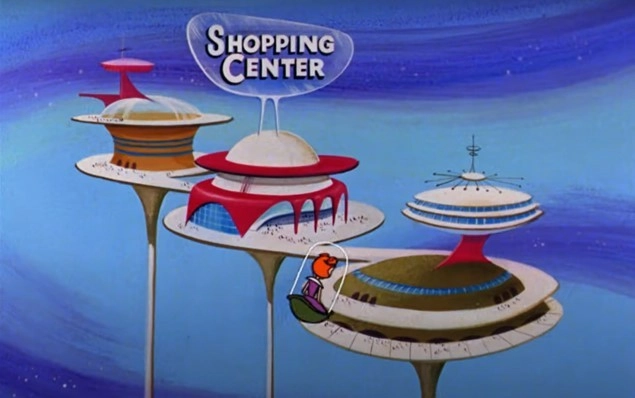
The dawn of nuclear power, dramatic advances in rocketry, and the desire to be the first to put men into space and on the moon, kick-started an era known as the ‘Space Age’. Upon the closure of WW2, both the Soviets and the Allies found themselves in a state of antagonism, as they both began to struggle to make advancements in space exploration before the other, a race for space. The era would give way to rapid advancements in technology and huge accomplishments including the moon landing in 1969. The Space Age aesthetic completely changed the way designers visualized the new world and left a dramatic impression on architecture and interiors. A new vision of futurism and prosperity.

The Space Age Aesthetic: Influencing Architecture and Interiors - Image 1 of 4The Space Age Aesthetic: Influencing Architecture and Interiors - Image 2 of 4The Space Age Aesthetic: Influencing Architecture and Interiors - Image 3 of 4The Space Age Aesthetic: Influencing Architecture and Interiors - Image 4 of 4The Space Age Aesthetic: Influencing Architecture and Interiors - More Images+ 1

Why Francis Kéré Won the Pritzker Prize?

Why Francis Kéré Won the Pritzker Prize? - Image 1 of 4
Francis Kéré, 2022 Pritzker Prize Laureate . Image © Lars Borges

Last Tuesday, March 15, Francis Kéré became the first African architect to win the Pritzker Prize, the most important award in the architecture discipline.

The election of Kéré is not only symbolic in a time of identity demands, where the institutions that make up the mainstream are required to more faithfully represent the social, cultural, and sexual realities that make up our societies, but it also confirms the recent approach of the Pritzker Prize jury.

Why Francis Kéré Won the Pritzker Prize? - Image 2 of 4Why Francis Kéré Won the Pritzker Prize? - Image 3 of 4Why Francis Kéré Won the Pritzker Prize? - Image 5 of 4Why Francis Kéré Won the Pritzker Prize? - Image 6 of 4Why Francis Kéré Won the Pritzker Prize? - More Images+ 3

Architecture as Sexual Technology

Subscriber Access | 

By defining sexuality as one of several sexual technologies, Michel Foucault has expanded our understanding of sex. This way, the relationship between architecture and the body is shaped not only by the built object, with its various spatial mechanisms for the production of bodies, but also by thinking, in the form of academic discourse. And vice versa, since gender and sexuality also impact architectural theory. One way or another, these relationships are very rich and capable of expanding our knowledge about architecture and the creation of generic sexed bodies.

Before “Colonial” There Was Immigrant Architecture in North America

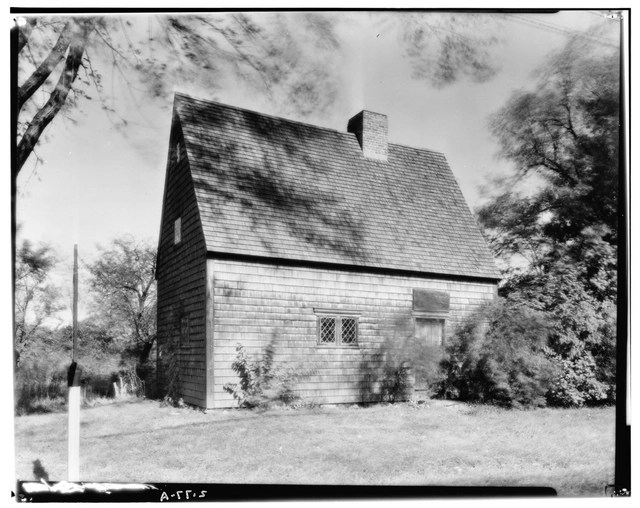
There is an architecture of the migrant. It is survivalist, built with what is available, made as quickly as possible, with safety as its core value. Americans romanticize that architecture as “Colonial”: simple timber buildings, with symmetric beginnings, infinite additions, and adaptations. But “Colonial” architecture is not what was built first by the immigrants to a fully foreign land 400 years ago. Like all migrant housing, time made it temporary and forgotten.

Queer Looks On Architecture: From Challenging Identity-Based Approaches To Spatial Thinking

A growing number of theorists and practitioners have been discussing the impact of gender and race on the profession and theory of architecture. Issues linked to the relationship between the built environment, sexual orientation, and gender identity, however, remain particularly understudied, perhaps because of their relative invisibility and less clearly identifiable discriminatory consequences. Moreover, they are also completely neglected by design theory in the Francophone world. This article partially remedies the situation.

Architecture Out of the Closet

Architecture can be many things, also queer. Alongside many other transgressing words that carry different meanings and perspectives, this term triggers new insights into society and questions how we create architecture and urban planning projects, including their programs and activities. If there is any statement about how architecture should be done, if there is any conviction about what it represents, we wish here to avoid knowing what it is and be able to question its traditions to broaden the profession, its meanings, and social representation.

Living On the Edge: Why We’re Attracted to Places Where the Manmade Abuts the Natural

This article was originally published on Common Edge as "Living on the Edge."

I am on the edge. Not emotionally or psychologically—although this could be the case—but literally, physically, spatially, geographically. As I write this, I am sitting on the balcony of a hotel room in Miami Beach, overlooking the Atlantic Ocean. Behind me is the whole State of Florida and, indeed, the entire North American continent. In front of me: the boardwalk, a narrow beach, and then a lot of water—and not much else between here and Mauritania, a distance of more than 4,400 miles.

"As Long as There Are Human Beings and their Challenges, There Will Be Architecture": In Conversation with Ole Bouman

Subscriber Access | 

Believing firmly that "architecture is [...] too important to leave solely to architects", Ole Bouman embarked on diverse activities throughout his three decades of work, reflecting on “architecture, not so much as the art or technique of making buildings, but architecture as the intelligent way to organize our lives on earth, and infuse it with purpose”.

After having shared Bouman's essay Finding Measure, ArchDaily had the chance to discuss with Design Society’s founding director his thoughts on the role of architecture, the current challenges of the world, the digital revolution, and many other thought-provoking topics.

"As Long as There Are Human Beings and their Challenges, There Will Be Architecture": In Conversation with Ole Bouman - Image 1 of 4"As Long as There Are Human Beings and their Challenges, There Will Be Architecture": In Conversation with Ole Bouman - Image 2 of 4"As Long as There Are Human Beings and their Challenges, There Will Be Architecture": In Conversation with Ole Bouman - Image 3 of 4"As Long as There Are Human Beings and their Challenges, There Will Be Architecture": In Conversation with Ole Bouman - Image 4 of 4As Long as There Are Human Beings and their Challenges, There Will Be Architecture: In Conversation with Ole Bouman - More Images+ 17

"Architecture not Exclusively for Architects": Ole Bouman on Finding Measure

Subscriber Access | 

“We can all be designers” states Ole Bouman, one of the most influential figures in the world of Architecture. Implicated in the contemporary architectural discourse, the founding director of Design Society, in Shenzhen, China has introduced, since the 1990s, many design concepts, founded culture brands, and took on institutional roles all over the world.

Previously the director of the NAi - Netherlands Architecture Institute and the creative director of the Urbanism/Architecture Bi-City Biennale of Shenzhen/Hong Kong, the Dutch-German historian, writer, publisher, photographer, curator, lecturer, and practitioner in design and architecture, has gathered three decades of work in a platform, highlighting the interaction “between a life and history unfolding”. Read on to discover Ole Bouman’s Finding Measure essay, extracted from his website, and stay tuned for ArchDaily’s exclusive interview with Design Society’s founding director, discussing present and future, and tackling the role of architecture, the current challenges of the world, the digital revolution and many other thought-provoking topics.

The Precarious State of the Mom-and-Pop Store

This article was originally published on Common Edge.

Few businesses in the United States are regarded with more fondness than mom-and-pop retailers. There’s an “all’s right with the world” quality about owner-run shops that meet a neighborhood’s everyday needs and, through repeated face-to-face exchanges, help people feel they’re members of a mutually supportive community. And yet for a long time, mom-and-pop stores have been under stress. In the half-century after 1950, cars shifted much of United States’s retailing to unwalkable roadside strips and winnowed the ranks of neighborhood-scale mom-and-pops. In the past two decades, the burgeoning of the internet has intensified the pressure on brick-and-mortar retail, a situation worsened by the pandemic.

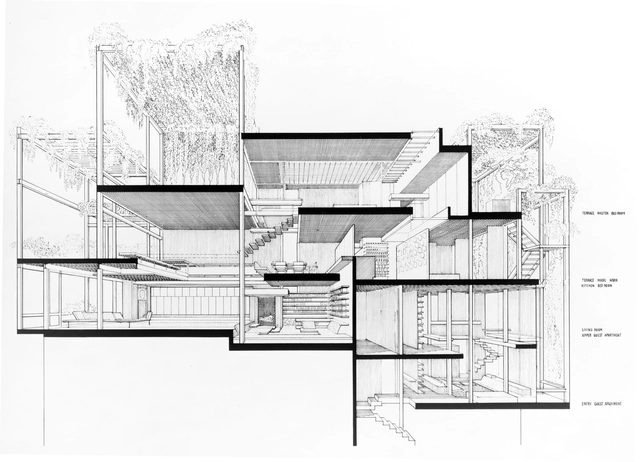
The Chase Residence: The History Behind One of Texas' Most Radical Houses

The following text is excerpted from John S. Chase — The Chase Residence (Tower Books, 2020) by architect and University of Texas professor David Heymann and historian and Rice University lecturer Stephen Fox. Richly illustrated with archival materials and new drawings, the book is the first devoted to Chase, who was the first Black licensed architect in Texas. The study is divided into two parts, with Heymann examining the personal, social, and architectural significance of Chase’s own Houston house and Fox describing Chase’s architectural career.

This excerpt draws on Heymann’s analysis and highlights the first incarnation of the Chase Residence (Chase substantially altered its architecture in 1968). It places great emphasis on the house’s remarkable courtyard, a modernist innovation, and a singular statement about domestic living at the time. New section, elevation, and perspective drawings prepared for the book help illustrate the ingenuity of the house’s configuration. Finally, the excerpt was selected in part to honor Drucie (Rucker) Chase, who passed away in January of 2021.

The Case for a Feeling Architecture

This article was originally published on Common Edge.

My mother is a psychologist, so our family talks a lot about emotion. More specifically, we discuss the experience of emotion, because, as she  likes to remind me and my sisters, “We don’t think our feelings—we feel them, in our bodies.” According to my mother, it’s this experience of emotion that gives our lives a sense of meaning and vitality; as a result, her work isn’t about intellectual insight or abstract theories, but rather about giving her patients a new experience of themselves in the world.

Tech, Class, Cynicism, and Pandemic Real Estate

It didn’t take long for the coronavirus pandemic to inspire both cutting-edge architectural design solutions and broad speculation about future developments in the field. Many of the realized innovations have been contracted by or marketed to the real estate sector. But as firms compete to provide pandemic comforts to rich tenants, the COVID-19 technology that directly affects working-class communities is mostly limited to restrictive measures that fail to address already-urgent residential health hazards or administrative conveniences for developers that allow them to circumvent public scrutiny. These changes had been long-planned, but they have found a new license under the pretext of coronavirus precaution. In terms of “corona grifting,” this sort of thing takes the cake.