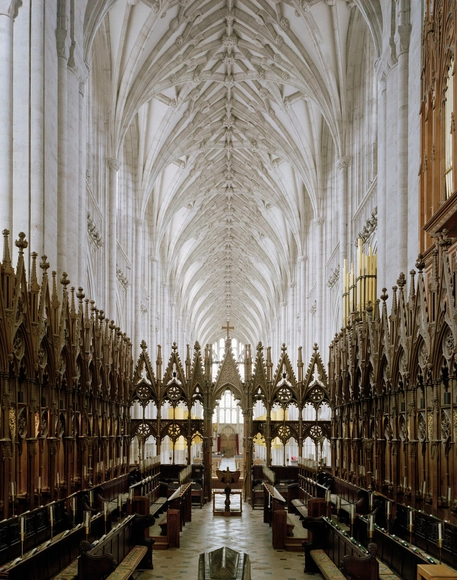
Using only natural light to document English cathedrals can turn into a logistical and technical challenge. However, Peter Marlow's photography has resulted in a remarkable series of iconic spiritual sites whose contemplative atmosphere is rarely accessible to others. Looking east with the camera towards the nave as the dawn light streamed through the main window opens a purist and mystical perspective to the time when these sacred structures were erected.
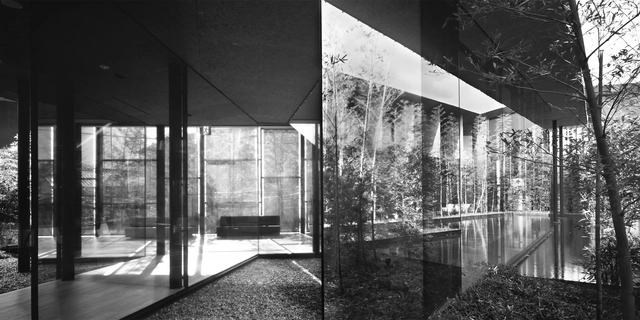
Architecture has always been considered a fixed entity in contrast to the ever-shifting appearance of Nature. Photography has dutifully followed this concept of immobility by trying to fix the ‘eternal’ presence of architecture as a memorable icon. In historical terms then, architecture and landscape coexisted in the humanistic continuum of inside and outside space to which Modernism aspired, as "extensions of man", in incidental and uncanny relationships of adjacency and reflectivity. My intention through my photography has been to change this perception.
The tenth edition of the Architectural PhotographyAwards has announced its shortlist, selected from entries from 64 different countries. The photographs are divided into six categories: Exterior, Interior, Sense of Place, Buildings in Use, Mobile, with Bridges being this year’s theme, and Portfolio, focusing on the theme of Transport Hubs. The photographs will be displayed at the World Architecture Festival (WAF) Lisbon in Portugal from 30th November - 2nd December. The winners, two per category, will be announced by the end of the festival.
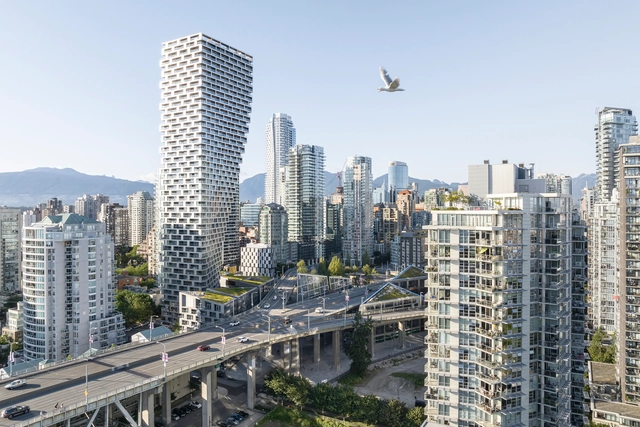
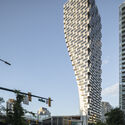
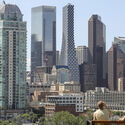
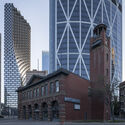
BIG – Bjarke Ingels Group has released a photo series of the Vancouver House and the Telus Sky towers, captured for the first time since their opening in 2020 during the pandemic. In a sort of "yin and yang," both skyscrapers are shaped by a curvilinear silhouette that involves the surrounding like a giant curtain revealing the building to the skyline.
The 220-meter-tall Telus Sky tower, and the 149 meters high Vancouver House, accommodate mixed-use offices and residential spaces, with connections to cycling and pedestrian pathways in their platforms. Moreover, both hold the highest level of Energy and Environmental Design. Vancouver House is the city's first LEED Platinum building, and TELUS in Calgary now occupies the largest LEED Platinum footprint in North America, with 70,725 square meters.
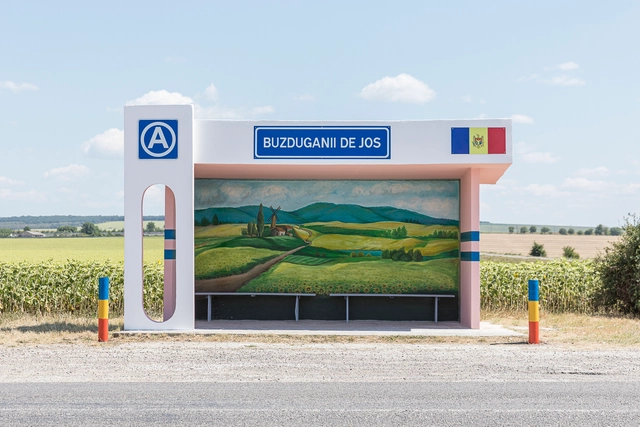
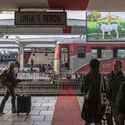
LINIA, a project signed by VICE VERSA Association, is a photographic installation exploring and documenting the stories, and the collective mindset of the territories near one of the most fragile, yet rigid lines in today’s context: the line separating NATO from non-NATO nations. The project, initiated by Dorin Ștefan Adam and Laurian Ghinițoiu, is on display at the Timișoara train station, in Romania, and it represents one of the main exhibitions of the Timișoara 2022 Architecture Biennale, which ran from 23 September to 23 October 2022. The schedule of LINIA has been extended however to remain open to the public until April 23.
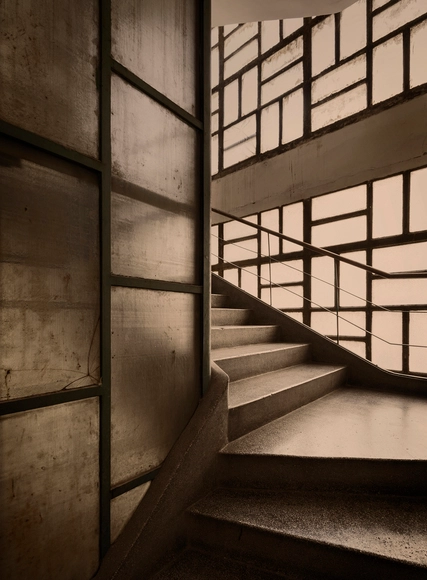
A city of electric architectural diversity – Belgrade’s Modernist structures give the Serbian capital a unique character. The grey of Belgrade’s Brutalist concrete is one of the city’s architectural signatures, existing in both complex volumetric facades and monolithic rectilinear forms. But while a plethora of architectural appraisals has been conducted on the external qualities of brutalist structures in Belgrade and beyond, photographic documentation of Belgrade’s brutalist interiors is relatively rare – something that photographer Inês d’Orey has sought to change in her most recent exhibition.
Architectural photography has historically been a male-dominated genre, as has architecture itself and the construction industry in general. But this scene is changing fast. Some of the most relevant names in architectural photography in the world are now women, and Brazil is no different. When facing gender barriers – one of the main difficulties being exposure to public space at unusual times, carrying valuable equipment, as photographer Ana Mello has already stated in an interview – these professionals are breaking paradigms and immortalizing the works with their sharp and sensitive eyes.
In a new show at Kunst Haus Wien in Vienna, the Austrian artist continues his investigation of architecture where few civilians tread.
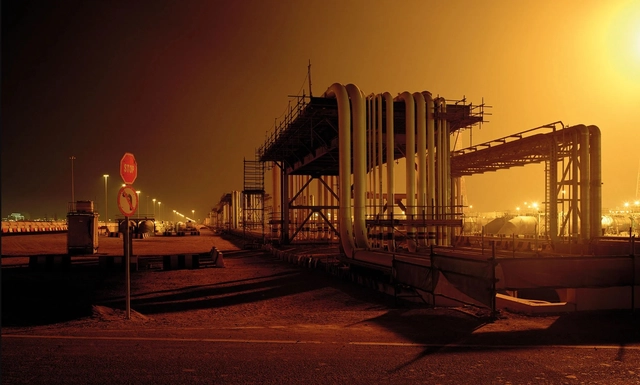
Gregor Sailer’s quest for unusual structures and buildings takes him to some of the most extreme reaches of human civilization — from military field exercise centers in the USA and Europe to a mining center near Chuquicamata in the Atacama Desert to Arctic snow fields.
In a recent photo series, Paul Clemence turns his lens toward Bjarke Ingels Group's (BIG) Hôtel des Horlogers, located in the Swiss Village of Le Brassus in Switzerland. Previously known as Hôtel de France, which opened in 1857, Audemars Piguet reimagined the project. BIG, an international studio known for avant-garde architecture and experimentation, continues to see this claim to its end through the design of a compact structure made up of five floors, with its rooms connected in a single zig-zag path. Designed in collaboration with the Swiss design firm, CCHE, a futuristic structural form featuring layers of long ramps was assembled for Audemars Piguet's vision of a luxury hotel.
On August 19th, the world photography day is celebrated, a fundamental tool for the imagery record of our society. If, on the one hand, photography is the protagonist in dialogues that involve architecture and the city, portraying historical moments and enhancing buildings, on the other hand, it guides us through the context and backstage of the moment, eternalizing the process.
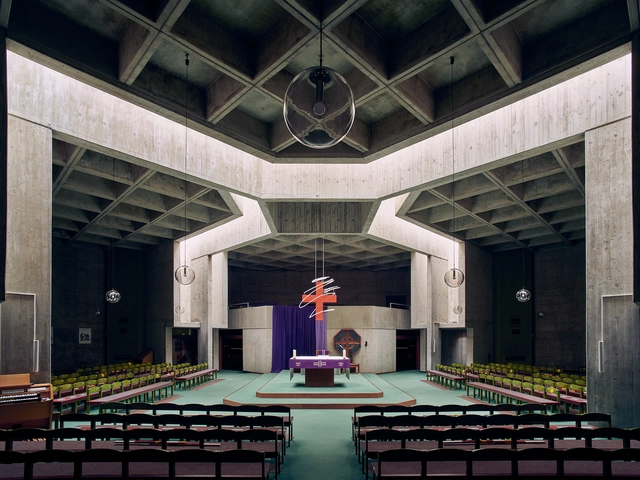
If one were asked to picture a Catholic Church, the first image to come to mind would probably resemble a medieval gothic cathedral with buttresses, pointed arches, and a spire pointing toward the sky. On second thought, many more styles could easily be identified as catholic architecture: the simple yet grandiose structures of the Romanesque or maybe the ornate styles of Baroque and Rococo. An image more difficult to associate with sacred architecture is that of Modernism. The Roman Catholic Church is a particularly conservative establishment. Modernism, on the other hand, is revolutionary; it is rational, functional, and technical; it rejects ornaments and embraces innovation. Surprisingly, in the years after the end of the Second World War, places of worship defied expectations. Blocks of concrete, raw materials, angular shapes, and exposed structures have all been employed to break from tradition and create churches that barely resemble a church. This article will explore Modernist mid-century Church architecture with the support of images from Jamie McGregor Smith.
The Second Studio (formerly The Midnight Charette) is an explicit podcast about design, architecture, and the everyday. Hosted by Architects David Lee and Marina Bourderonnet, it features different creative professionals in unscripted conversations that allow for thoughtful takes and personal discussions.
A variety of subjects are covered with honesty and humor: some episodes are interviews, while others are tips for fellow designers, reviews of buildings and other projects, or casual explorations of everyday life and design. The Second Studio is also available on iTunes, Spotify, and YouTube.
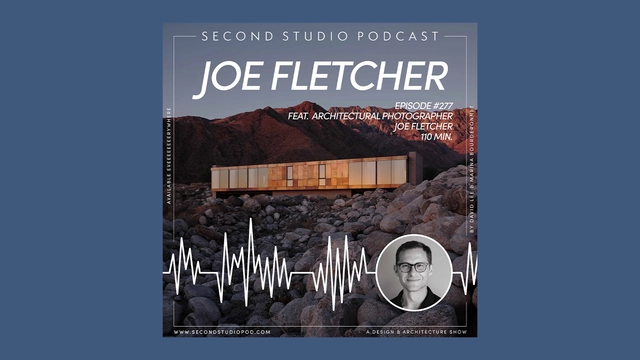
This week David and Marina are joined by Joe Fletcher, Architectural Photographer to discuss his transition from painting to photography; his experience with a formalized education in photography; how an architectural photographer can influence architects and architecture; his process; the distillation of architecture through photography; why photogenic buildings are not always comfortable to be in; and more.
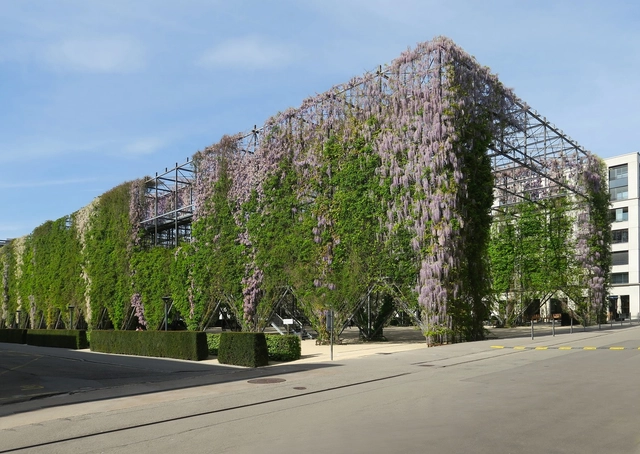
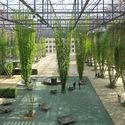
Paul Clemence’s capture of Zürich’s MFO Park is an evocative photo series for Archi-photo, demonstrating the juxtaposition between the metal shell of the man-made and the wild nature of the park itself. Vines intertwining themselves upon the skeleton of the structure create an attractive destination, replenishing the brownfield land and replacing it with a renewed and captivating image.
Zürich’s MFO park is a vibrant parkscape in Switzerland, previously a site used for around a century by the Oerlikon Machine Works (MFO). Saturated with construction debris and pollution during a long period of industrialization, it has been transformed into a green paradise with the nearby wooded Oerliker Park brimming with ash trees. Offering a diverse area of open space it is available to the public for a wide range of activities and events, with the presence of ‘Park House’, a large open hall, and trellis enveloped with climbing vegetation.
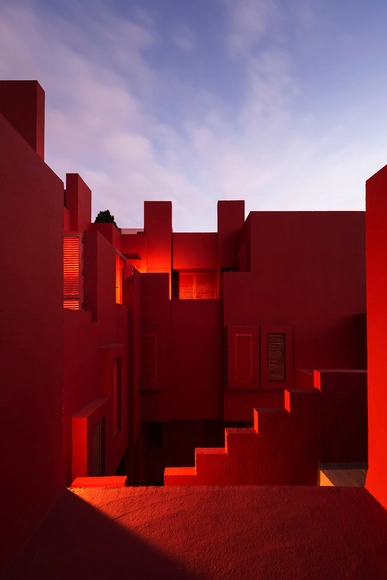
‘La Muralla Roja’ When the sun goes down III, is an evocative new Photo series by Andrés Gallardo. 5 years after initially visiting Ricardo Bofill’s creation, Gallardo revisited with the intention of creating a totally contrasting series, capturing the complex through sunset, the night and into sunrise. With regard to the fact that there are not many photographs in circulation during the night-time period, Gallardo set out to capture the complex during twilight, with the placid roll of the waves against the seafront.
‘La Muralla Roja’ translated as ‘The Red Wall’ is a vibrant housing project in Spain’s Calpe. Casbah is a term often mentioned in regards to this particular project, suggesting Bofill himself drew upon North African Arabic themes for his inspiration. Casbah refers to a citadel or castle, a walled central area of a town or city upon the traditional quarter. The Mediterranean complex mimics this built-up realm, with an entanglement of walkways, stairs, balconies, and bridges interlocking in harmonious effect.
Designed by Herzog & de Meuron, Tate Modern’s Switch House was Tate Modern’s latest extension in 2016, radical in form and surface, yet intimately relative to the vast building to which it joins, which opened as London’s foremost modern art gallery in 2000. Shot recently by Bahaa Ghoussainy, the building that opened in 2016, is a model for museums in the 21st century.
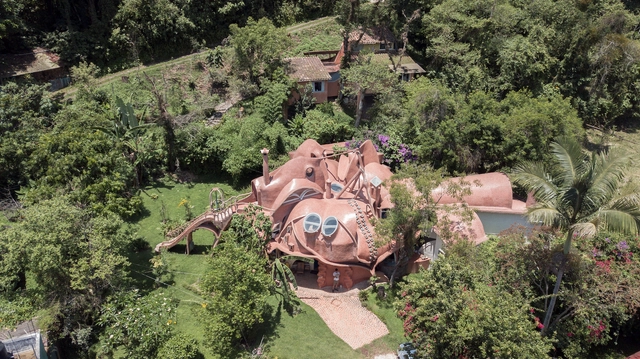
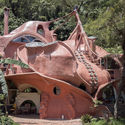
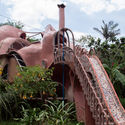
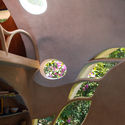
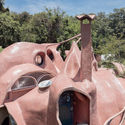
The "Casa de los Milagros" (House of Miracles), located in the cloudy forest on the outskirts of Xalapa, Veracruz and designed by Mexican architect Danilo Veras Godoy, is a space conceived with organic forms, earth, unexpectedly shaped openings and mosaic glass in different shades. It was designed to meet the needs of Rosalinda Ulloa, a single mother who would live there with her two young children. It was built in stages, starting in 1995, and was completed in 2002, with some changes being made between then and 2006.






























.jpg?1645645621&format=webp&width=640&height=580)