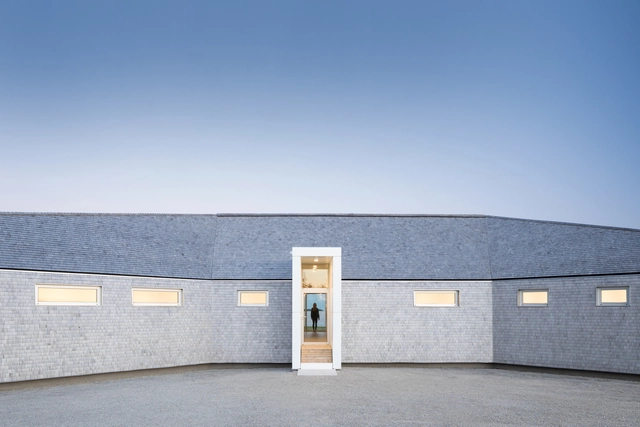
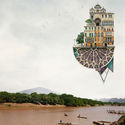
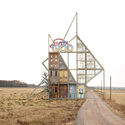
Matthias Jung's "Houses" series depicts finely stitched architectural facades against the picturesque landscapes of Northern Germany to create surreal architecture. Commencing as a childhood pastime in his father's photo lab, his passion for collaging has evolved into his career as a designer and artist.
In recent years, social media (especially Instagram) has become an extremely important tool in the field of architecture. Instagram has become the go-to visual platform for showcasing a wide variety of architectural typologies and styles, city views, and stunning edifices that often go unnoticed. While these buildings may seem ordinary to the everyday passerby, they become objects of art for not only architects but those who stop to take notice of their design.
Below we have selected 13 Instagram accounts dedicated to highlighting facades and walls from around the world, showcasing the diversity of our cities.
Andres Gallardo's ongoing Urban Geometry series captures unique forms, colors, and shadows of modern architecture of various cities. The project is a personal one for Gallardo, as it has been a long-term photo series that has accompanied him throughout his journey in becoming a professional photographer, displaying his development and evolution as he captures the architectural beauty of cities such as Beijing, Helsinki, Seoul, and Copenhagen.
Below is the Copenhagen chapter of the series, a visual poem that allows us to see the city in new ways. Through flowing line and bright bursts of color, Gallardo displays an almost surreal version of the city, where the jagged forms and smooth curves of its modern architecture have replaced human presence.
In a world rapidly transitioning toward primarily digital content creation, more and more people are beginning to experiment with various digital media. There is undoubtedly an intimate relationship between architecture and photography, and many architects enjoy experimenting with taking pictures, both of their own work and of their surrounding environment. But how do you know if you have the right gear needed to start off on the right foot? And more importantly, how can you get the most out of your equipment?
In honor of World Photography Day this month, we have put together a helpful guide to get started with lenses for architectural photography. This guide will specifically highlight the best lenses (for both DSLR and mobile) to use for your shots and why.
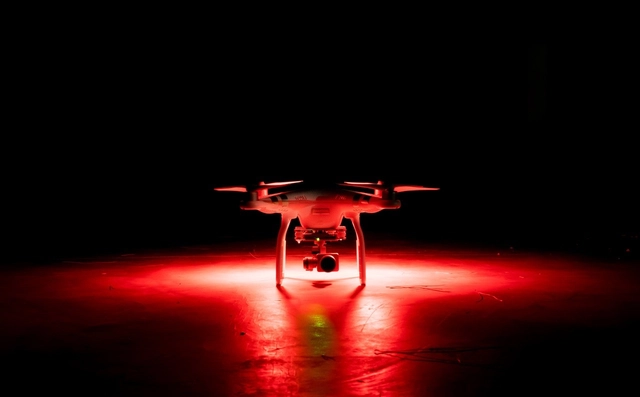
Drone photography has been one of the biggest advancements in aerial photography and cinematography. Drones began making a huge impact on filmmaking in the early 2000s, but vast advancements in aerial and camera technology have dramatically increased the use of and demand for aerial footage in nearly every industry focused on digital content.
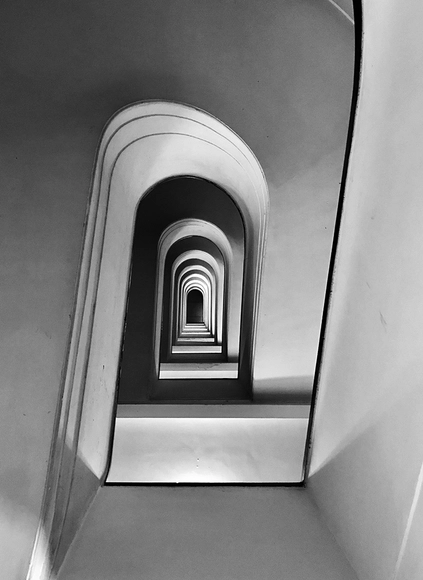
First Prize: Photography by Massimo Graziani, Italy. Image Courtesy of IPPAWARDS
The iPhone Photography Awards (IPPAWARDS) has announced the winners of the 2018 edition of the annual competition. Founded in 2007, the same year as the release of the first iPhone, IPPAWARDS is the first and longest running iPhone photography competition. Now in its 11th year, the awards continue to select the best images taken by iPhone, iPad or iPod touch from a variety of categories including Landscape, Animals, People, Still Life and Architecture.
This year’s architecture category was won by Massimo Graziani from Italy for a shot “Rampage,” taken at the Via Allegri in Rome. Second prize was awarded to KuangLong Zhang from China with an image of one of the oldest mosques in Iran, while third prize went to Nasra Al Sharji from Oman with an early-morning shot of the Burj Khalifa in Dubai.
https://www.archdaily.com/898570/the-best-architectural-iphone-photos-of-2018-revealed-by-ippawardsNiall Patrick Walsh
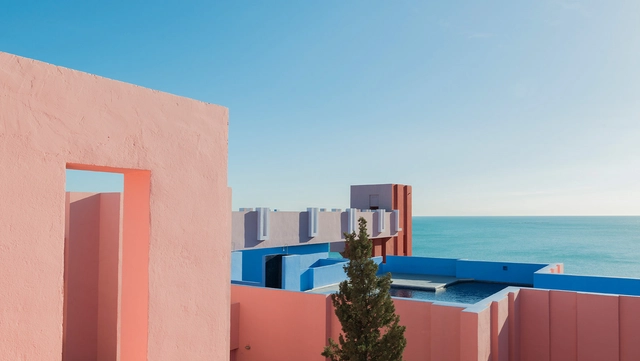
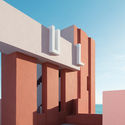
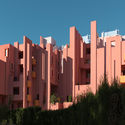
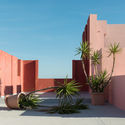
In recent years, the 1968 development has extended its popularity beyond architectural circles, having been featured in the music video for Martin Solveig’s hit “Do It Right.” Gallardo’s photoset, which you can see below or on his website, zooms in on the sharp, clean-cut, vibrant form of the development, informed partly by shadows cast from the hot Mediterranean sun. Despite the somewhat exact and pristine nature of the development, Gallardo also captures details of human habitation and everyday life, such as plants, vehicles, and furniture.
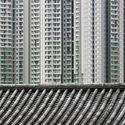
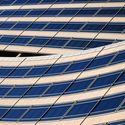
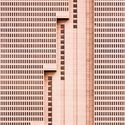
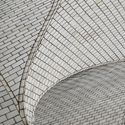
In his ongoing study, Nikola Olic - a Serbian photographer based in Dallas, Texas - focuses on “architectural photography and abstract structural quotes that reimagine their subjects in playful, dimensionless and disorienting ways.” Often isolating elements of a facade, which obscures the viewer's sense of scale and perspective, Olic provides short descriptions of each image, acting as a “demystifying tool” and reminding us of the everyday nature of his subject matter. In the third collection shared with ArchDaily, the photographs are taken in Dallas, Fort Worth, Las Vegas, New York, Los Angeles, Long Beach, and Hong Kong.
A decade ago, a wave of striking architecture invaded major Chinese cities as the country prepared for the 2008 Beijing Olympics and 2010 Shanghai World Expo. Internationally renowned architects proposed and developed over-the-top structures, which soon became new symbols of the country. These iconic buildings helped mark Beijing and Shanghai as the major entry points to China, but as time progressed, the phenomenon spread to other, lesser-known Chinese cities. As these "second tier" cities thrived, their governments wanted to improve living standards and develop their own trademark, resulting in new theaters, stadiums, schools, and office towers.
Having focused on Beijing and Shanghai in his first series of photographs, Kris Provoost has continued his "Beautified China" series with a deeper look at buildings in 12 Chinese cities throughout the country, from Harbin to Hong Kong. The project continues under the same premise: 20 minimalist photos taken over the past 8 years of striking architecture built in the last decade.
Architectural photographer Iwan Baan recently honored 2018 Pritzker Prize Laureate Balkrishna (B.V.) Doshi. It has been a little over a month since the Pritzker jury selected the Indian architect as the latest winner, and his work still remains popular within the online world. The genuine materiality and intricate spatial experience associated with Doshi's work are captured by Baan in multiple projects across India. Baan's Instagram (@iwanbaan), which has nearly 120K followers, acts as "a diary of travels with the iPhone."
Read on to see some of Baan's images (some posts have multiple images, so be sure and use the left and right arrows to see the full set of pictures).
There's an old, weary tune that people sing to caution against being an architect: the long years of academic training, the studio work that takes away from sleep, and the small job market in which too many people are vying for the same positions. When you finally get going, the work is trying as well. Many spend months or even years working on the computer and doing models before seeing any of the designs become concrete. If you're talking about the grind, architects know this well enough from their training, and this time of ceaseless endeavor in the workplace only adds to that despair.
Which is why more and more architects are branching out. Better hours, more interesting opportunities, and a chance to do more than just build models. Furthermore, the skills you learn as an architect, such as being sensitive to space, and being able to grasp the cultural and societal demands of a place, can be put to use in rather interesting ways. Here, 3 editors at ArchDaily talk about being an architect, why they stopped designing buildings, and what they do in their work now.
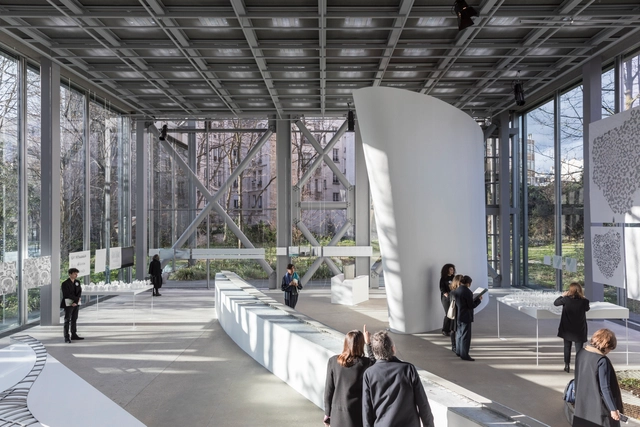
From March 30 to June 10, 2018, the Fondation Cartier pour l'art contemporain will host Junya Ishigami's exhibition, Freeing Architecture. This is the first major solo exhibition that the Fondation Cartier in Paris has devoted to an architect, and fitting that it would lend itself to an important and singular figure of Japan's young architecture scene.
Ishigami - winner of the Golden Lion award at the Venice Biennale in 2010 - has instilled this conceptual body of work with his trademark flair: calm, free fluidity, with bright tones and playful curves. The projects in the exhibition range from large scale models to films and drawings, and when placed in the context of the exhibition, they bring to life Jean Nouvel's iconic building as well.
Laurian Ghinitoiu gives us a glimpse inside the exhibition ahead of the opening day tomorrow. His photos reveal the lightness and ethereal quality of Ishigami's hand.
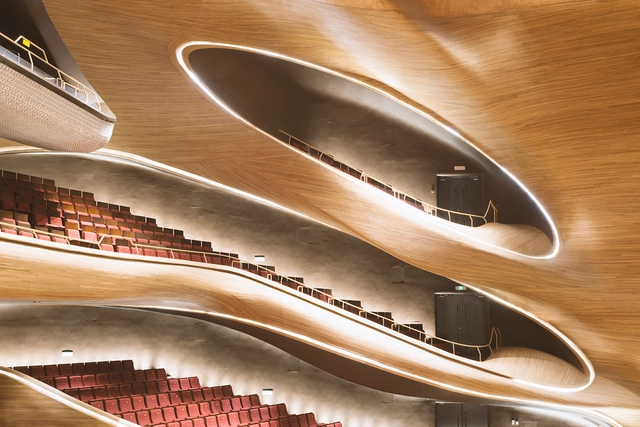
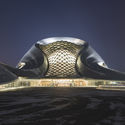
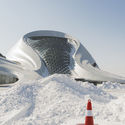
Andres Gallardo, a self-taught photographer from Spain, captures the poetry and theatricality of MAD Architects' Harbin Opera House in a series of photos which display the building's undulating interiors and the sense of ethereal calm it takes on through the night—and through the snowstorm that took place between Gallardo's two photoshoots.
A winner of ArchDaily's Building of the Year Awards in 2016, the Harbin Opera House is inspired by the frozen wilderness of its surrounds and is saturated in local identity, culture, and art. The sculpted forms seem to grow and emerge from the snow, leading one into its poetic stillness within. Gallardo's photo series highlights the beauty in its stillness, as if the serpentine forms of the architecture have been frozen in time and are waiting to move once more.
The Shenzhen International Energy Mansion is the main headquarters of the Shenzhen Energy Company in China. In designing the building, Bjarke Ingels Group (BIG) paid special attention to one feature: the building's facade. The firm knew that in such a tropical climate, using a traditional curtain wall glass envelope would overheat the buildings and make people crank up their air conditioners. What BIG came up with in their winning design, and what is now the building's most defining feature, is a folded, origami-like facade. This facade provides high insulation and diffuses incoming sunlight, while reflecting the strongest rays onto solar panels.
Laurian Ghinitoiu points his lens towards this uncommon facade design and places the skyscraper within the lively metropolitan context of Shenzhen, China.
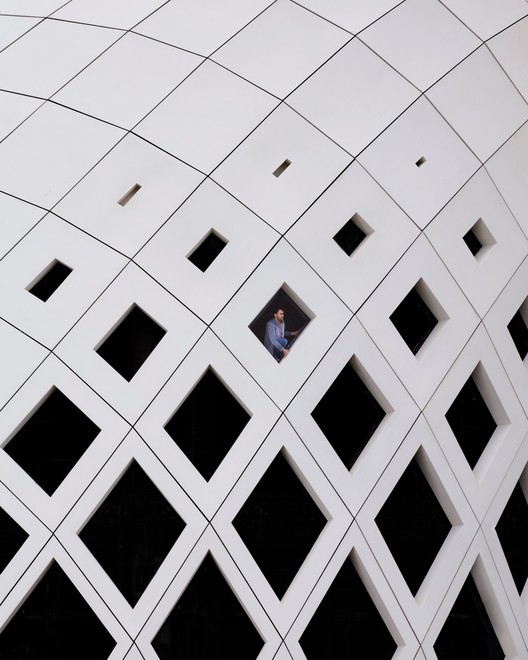
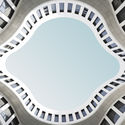
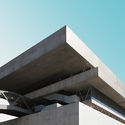
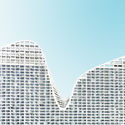
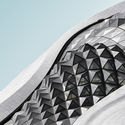
Amorepacific, Korea's largest beauty company, occupies a site in the centre of Seoul, Korea. Their headquarters was designed by David Chipperfield Architects as a single clear volume, with large urban openings and a central void. In the middle of a bustling downtown landscape, the building strikes a bright, open figure.
The Amorepacific HQ took three years to complete and opened in 2017. The firm described the building as "abstract and gestural," with hanging gardens that provide dramatic views over the city and the mountains in the distance. The design echoes aspirations of mediating between local and global, private and public, collective and individual, formal and informal. Laurian Ghinitoiu captures the identity of this dynamic headquarters.
Is there an aspect, a recurring mark, that reveals a difference in the way that male and female architecture photographers see the world? This is, perhaps, one of those rhetorical questions often used as an argument to shed light on works produced by women and for which there is no precise answer.
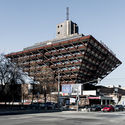
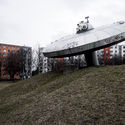
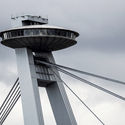
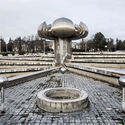
The history of Slovakia is riddled with political unrest and unwanted occupation, with the Slovak people having repeatedly been denied a voice throughout history. In the years following World War I, Slovakia was forced into the common state of Czechoslovakia; the territory was dismembered by the Nazi regime in 1938 and occupied by the Nazis for most of the Second World War, before being eventually liberated by Soviet and Romanian forces in 1945. Over the next four decades of communist rule—first by communists within Czechoslovakia itself and then later by the Soviet Union—the architecture of Slovakia came to develop into a unique form of sci-fi postmodernism that celebrated the shift in industrial influence at the time.
Photographer Stefano Perego has documented the Slovakian architecture from the 1960s–80s and has shared some of his photos with ArchDaily.


















.jpg?1521233754&format=webp&width=640&height=580)
.jpg?1521233888 "© Laurian Ghinitoiu")
.jpg?1521233745 "© Laurian Ghinitoiu")
.jpg?1521233769 "© Laurian Ghinitoiu")
.jpg?1521233903 "© Laurian Ghinitoiu")
.jpg?1521233754)
.jpg?1521224014)
.jpg?1521223950 "© Laurian Ghinitoiu")
.jpg?1521223961 "© Laurian Ghinitoiu")
.jpg?1521224085 "© Laurian Ghinitoiu")
.jpg?1521224100 "© Laurian Ghinitoiu")
.jpg?1521224014)