1. ArchDaily
  2. Anna Heringer

Anna Heringer: The Latest Architecture and News

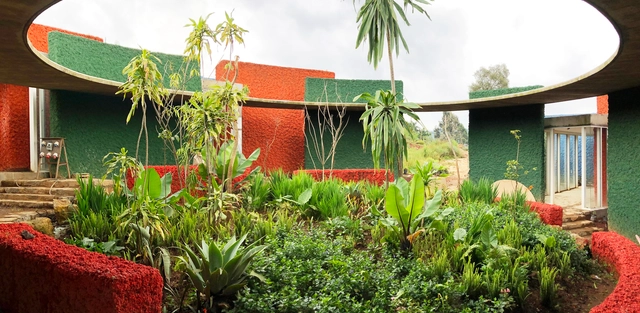
Understanding Soft Architecture: The Shift from Monument to Moment

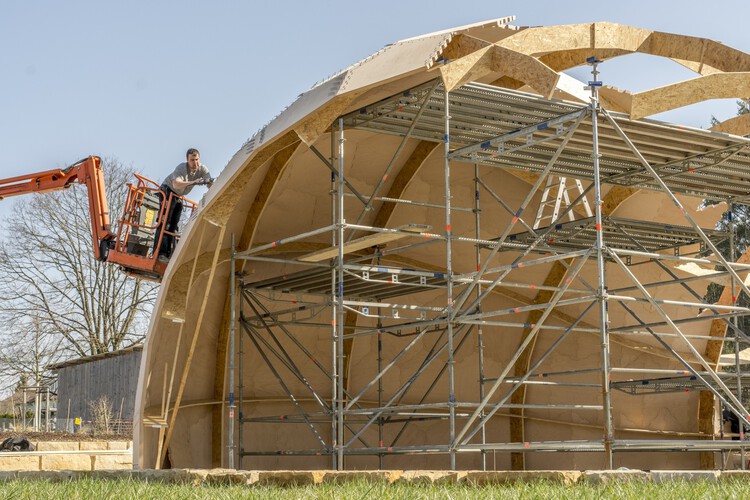
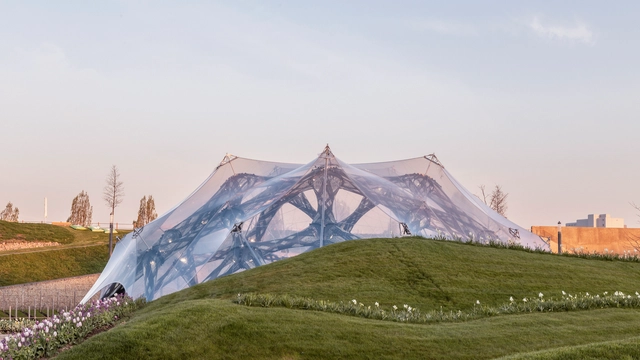
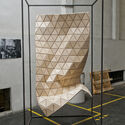
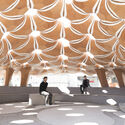
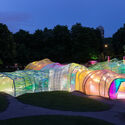
In recent years, architecture has increasingly embraced adaptability, flexibility, and responsiveness as core design principles. This evolution reflects a shift from traditional notions of static, permanent structures to dynamic environments that can adjust to changing needs and conditions. Central to this transformation is the concept of "soft architecture", which leverages pliable materials and innovative systems to create spaces that are functional, sustainable, and user-centric. Soft architecture takes shape through membranes that breathe, façades that move, structures that inflate or fold, and surfaces that bend rather than break. It involves designing for transformation — not only in how a building performs environmentally, but also in how it can accommodate shifting functions, user interactions, or temporary occupations. This approach to building challenges traditional notions of durability and control, proposing instead a more responsive and open-ended architecture. It reflects a growing awareness that buildings, like the societies they serve, must be able to evolve.

Understanding Soft Architecture: The Shift from Monument to Moment - Image 1 of 4Understanding Soft Architecture: The Shift from Monument to Moment - Image 2 of 4Understanding Soft Architecture: The Shift from Monument to Moment - Image 3 of 4Understanding Soft Architecture: The Shift from Monument to Moment - Image 4 of 4Understanding Soft Architecture: The Shift from Monument to Moment - More Images+ 53

Towards an Architecture of Many Intelligences: How Collective Knowledge Shapes the Built Environment

As architecture navigates a rapidly changing world shaped by ecological urgency, social transformation, and technological acceleration, the notion of intelligence is shifting. No longer confined to individual cognition or artificial computation, intelligence can emerge from cultural memory, collective practices, and adaptive systems. In this broader sense, architecture becomes a field of convergence, where natural, artificial, and social intelligences intersect to offer new ways of designing and building.

Vernacular traditions embed generations of environmental knowledge, often transmitted through materials, construction techniques, and spatial logics finely tuned to local conditions; participatory platforms expand decision-making to wider communities to take part in shaping their environments, redistributing agency in the design process; and computational processes simulate and respond to complex data in real time bringing the capacity to analyse, simulate, and respond to complex variables — whether environmental, social, or behavioural — offering new forms of adaptability.

Towards an Architecture of Many Intelligences: How Collective Knowledge Shapes the Built Environment - Image 1 of 4Towards an Architecture of Many Intelligences: How Collective Knowledge Shapes the Built Environment - Image 2 of 4Towards an Architecture of Many Intelligences: How Collective Knowledge Shapes the Built Environment - Image 3 of 4Towards an Architecture of Many Intelligences: How Collective Knowledge Shapes the Built Environment - Image 4 of 4Towards an Architecture of Many Intelligences: How Collective Knowledge Shapes the Built Environment - More Images+ 25

Pioneering Change: The Obel Award Recognizes Transformative Innovations Since 2019

The Obel Award is an international prize seeking to highlight unconventional and original initiatives within the architectural profession. Supported by the Henrik Frode Obel Foundation, each annual award is centered around a specific theme. By exploring a different challenge of the built environment each year, the award remains open to a wide range of solutions and architectural innovations, honoring those contributions that have a positive impact on both people and the planet.

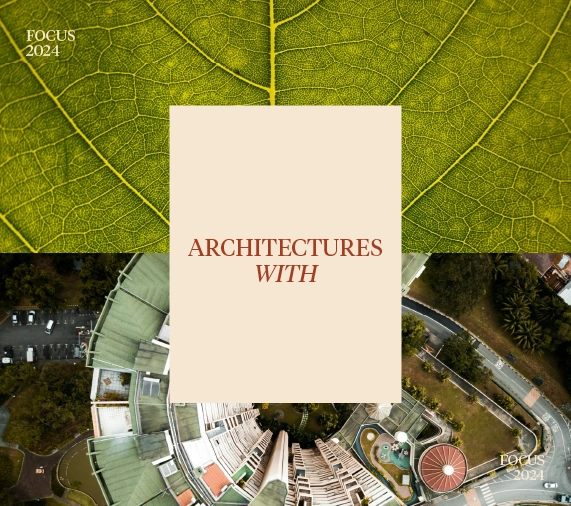
"Architectures WITH," the recently announced theme of the 2024 edition, explores participatory design, co-creation, and interdisciplinary collaboration, challenging traditional roles in architecture to foster inclusive, adaptable environments. It aims to empower all stakeholders and enhance collective intelligence in architecture.

Pioneering Change: The Obel Award Recognizes Transformative Innovations Since 2019 - Image 1 of 4Pioneering Change: The Obel Award Recognizes Transformative Innovations Since 2019 - Image 2 of 4Pioneering Change: The Obel Award Recognizes Transformative Innovations Since 2019 - Image 3 of 4Pioneering Change: The Obel Award Recognizes Transformative Innovations Since 2019 - Image 4 of 4Pioneering Change: The Obel Award Recognizes Transformative Innovations Since 2019 - More Images+ 2

The Obel Award Announces Theme for its 6th Cycle, the 2024 Edition

The Obel Award is an international prize for architectural achievement presented annually by the Henrik Frode Obel Foundation. Each year, the jury selects a specific theme and grants an award to a promising solution. For the 2024 edition, the prize that honors architectural contributions that positively impact both people and the planet will be focused on “Architecture With”.

Previous emphasis included Adaptations, Emissions, Cities, Mending, and Well-being. In 2023, the fifth cycle recognized ‘Living Breakwaters’ in New York, a green infrastructure project off the shore of Staten Island, by SCAPE Landscape Architecture and its founder Kate Orff. In 2022, the Obel was awarded to Seratech, a carbon-neutral concrete solution, in 2021, the concept of the 15-minute city received the prize for its value in creating sustainable and people-centric urban environments, and in 2020, Studio Anna Heringer was acknowledged for Anandaloy, in Bangladesh, an unconventional, multifunctional building that hosts a therapy center for people with disabilities on the ground floor and a textile studio on the top floor producing fair fashion and art. Finally, in its first edition, fixated on well-being, the Obel Award was granted to the Art Biotop Water Garden project in Tochigi, Japan, by Junya Ishigami & Associates.

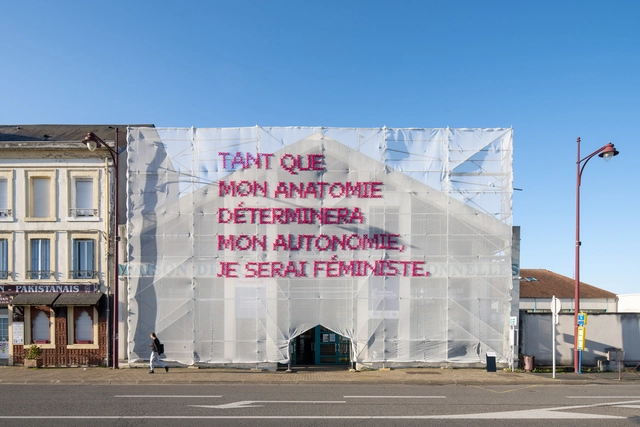
"Infinite Freedom, A World for a Feminist Democracy" Opens at the 2022 Biennale of FRAC in France

The 2022 Biennale of FRAC in the Centre-Val De Loire Region, France, is exhibiting the work of 55 women for its third edition entitled Infinite Freedom, A World for a Feminist Democracy. The fair showcases pieces from the Center Pompidou and the Cité de l'architecture et du Patrimoine collection and brings special guests such as architect Anna Heringer and Journalist and Director Rokhaya Diallo. From September 2022 to January 1st, 2023, female artists, architects, and politicians will gather to discuss and create a new definition of inclusive and plural democracy in the city, architecture, design, and art.

"Infinite Freedom, A World for a Feminist Democracy" Opens at the 2022 Biennale of FRAC in France - Image 1 of 4"Infinite Freedom, A World for a Feminist Democracy" Opens at the 2022 Biennale of FRAC in France - Image 2 of 4"Infinite Freedom, A World for a Feminist Democracy" Opens at the 2022 Biennale of FRAC in France - Image 3 of 4"Infinite Freedom, A World for a Feminist Democracy" Opens at the 2022 Biennale of FRAC in France - Image 4 of 4Infinite Freedom, A World for a Feminist Democracy Opens at the 2022 Biennale of FRAC in France - More Images+ 16

In Times of Need: Architects Stepping Up in Humanitarian Crisis

Subscriber Access | 

Hard times bring people together. In recent years we have seen how collective work can be a driving force to help those affected by natural or man-made disasters. After a disaster or displacement, a safe physical environment is often essential. Therefore, the need for coordination becomes a key factor in assisting people in times of need.

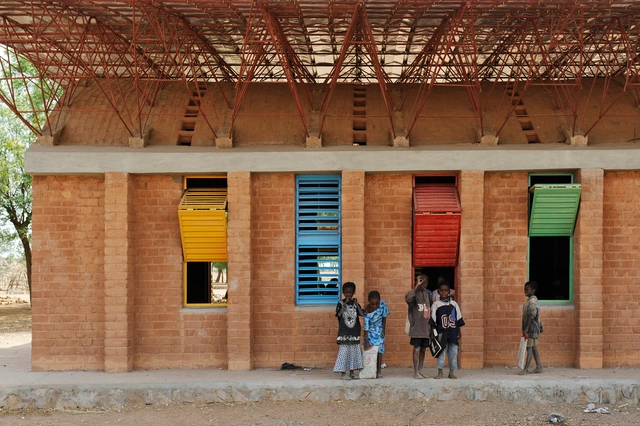
Architects, as "Shelter Specialists", play an important role in creating safe and adequate environments, whether it is individual housing, public buildings, schools, or emergency tent camps. But as architect Diébédo Francis Kéré says, "When you have nothing and you want to convince your community to believe in an idea, it may happen that everybody starts working with you, but you need to keep fighting to convince them."

In Times of Need: Architects Stepping Up in Humanitarian Crisis - Image 1 of 4In Times of Need: Architects Stepping Up in Humanitarian Crisis - Image 2 of 4In Times of Need: Architects Stepping Up in Humanitarian Crisis - Image 3 of 4In Times of Need: Architects Stepping Up in Humanitarian Crisis - Image 4 of 4In Times of Need: Architects Stepping Up in Humanitarian Crisis - More Images+ 25

An Architectural Language Shaped by Sustainability

An Architectural Language Shaped by Sustainability - Featured Image
Taisugar Circular Village / Bio-architecture Formosana. Image © Studio Millspace

With its quantifiable objectives and measurable performance, sustainability often passes as a technological challenge. Its primary language is that of data, equipment, and engineered systems, most often translated into a hyper-technologized layer hidden within a design upholding pre-existing aesthetic norms. As architecture is the image of society at one moment in time, how does the focus on sustainability translate into architectural language, further legitimatizing the efforts to establish an equitable relationship with the environment? Architecture serves as an expression of attitudes, and since sustainability has become a fundamental value, it is worth looking at whether or not it has produced an aesthetic transformation.

An Architectural Language Shaped by Sustainability - Image 1 of 4An Architectural Language Shaped by Sustainability - Image 2 of 4An Architectural Language Shaped by Sustainability - Image 3 of 4An Architectural Language Shaped by Sustainability - Image 4 of 4An Architectural Language Shaped by Sustainability - More Images+ 1

10 World Renowned Architects Give Advice to the Upcoming Generation

Renzo Piano, Tatiana Bilbao, Alejandro Aravena, Bjarke Ingels, Anupama Kundoo, Anna Heringer, Anne Lacaton, Norman Foster, and Frank Gehry were interviewed by Louisiana Channel to advise the upcoming generation of architects on the role of the architect in the 21st century. The architects share insights on how to become architects and what they envision would help the youth create a better world.

"Sustainability Is A Synonym Of Beauty": In Conversation With Anna Heringer

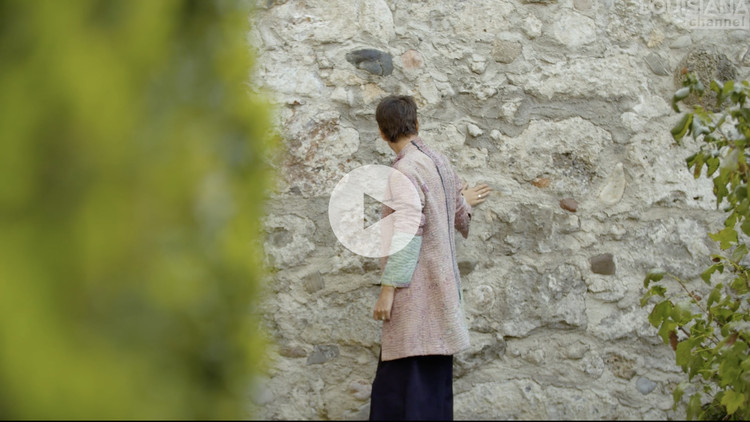
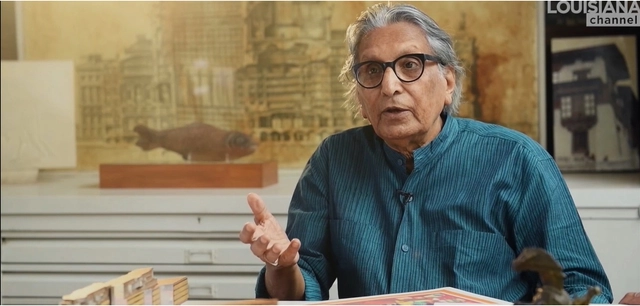
Talking to the Louisiana Channel, German architect Anna Heringer outlines the way she works and her multi-disciplinary approach to architectural practice. Growing up in a small town at the Austrian-Bavarian border close to Salzburg - Heringer spent a year living and working in Bangladesh at the age of 19, a place that is now home to a majority of her office's projects. Heringer describes herself as a mix of things in addition to being an architect, describing herself as an activist and a development worker - using her creativity to explore ideas in a variety of forms and media.

"Sustainability Is A Synonym Of Beauty": In Conversation With Anna Heringer - Image 1 of 4"Sustainability Is A Synonym Of Beauty": In Conversation With Anna Heringer - Image 2 of 4"Sustainability Is A Synonym Of Beauty": In Conversation With Anna Heringer - Image 3 of 4"Sustainability Is A Synonym Of Beauty": In Conversation With Anna Heringer - Image 4 of 4Sustainability Is A Synonym Of Beauty: In Conversation With Anna Heringer - More Images+ 3

What is Architecture? Insights from Peter Cook, Anna Heringer, Moon Hoon, and Greg Lynn

Subscriber Access | 

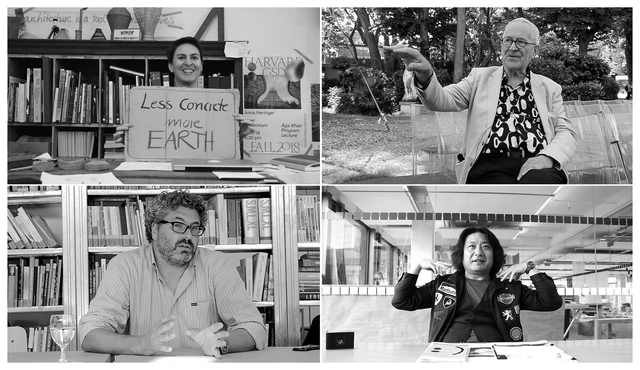
Simple in form but complex in substance, “What is Architecture?” remains an existential question for a lot of architecture students and young professionals. In an attempt to define this ever-changing interrogation and expose the different visions out there, the interview series: WIA – What is architecture? asks four, straightforward, questions to world-leading architectural designers and thinkers. Seeking to uncover their opinion on what architecture is and what it can do, these short videos reveal responses to “What is architecture? What can architecture do? What is your architectural position? and What is your design method?”.

ArchDaily has collaborated with WIA to release every week, 4 of these conversations, and to invite you to take on the challenge and answer these questions. This first feature, shares insights into the thoughts and personality of Peter Cook, Anna Heringer, Moon Hoon, and Greg Lynn.

7 Louisiana Channel Interviews Exploring the Architecture, Thoughts and Design Values of Renowned Architects

As a platform for the Louisiana Museum of Modern Art, Louisiana Channel has been stimulating conversations around architecture, art, and the creative world at large. The architecture series provides fascinating insights into the thought process of distinguished architects and their work. Discover seven of the most inspiring interviews created over the past year, discussing a wide array of subjects from exemplary projects, to cities, to architects' design philosophy.

“Good Looking Architecture is Not Enough”: In conversation with Anna Heringer

Subscriber Access | 

In a recent interview by Louisiana Channel, German architect Anna Heringer talks about the recently inaugurated Anandaloy centre in Bangladesh, a social space which became a catalyst for local development. The architect shares her commitment to sustainability and touches on the importance of the transfer of know-how to local communities through participatory building processes.

19 Emerging Firms Design Prototype Houses for Living Among Nature

Subscriber Access | 
19 Emerging Firms Design Prototype Houses for Living Among Nature - Image 1 of 4

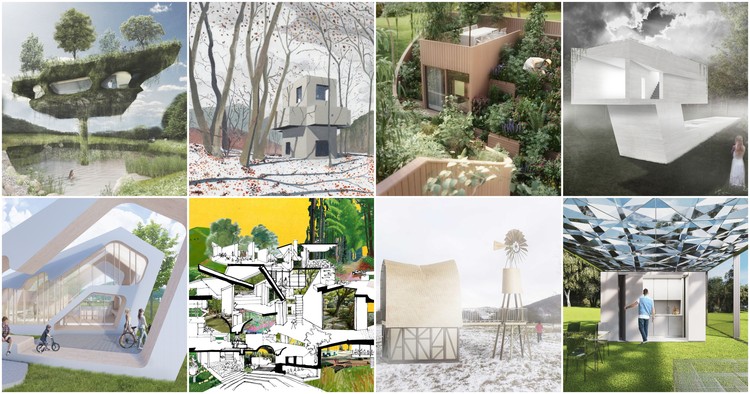
As the boundary that separates work and leisure in the 21st Century continues to be blurred by technology, architects Christoph Hesse and Neeraj Bhatia sought out to uncover a tranquil solution. The pair are co-curating an upcoming exhibition at the Kulturbahnhof Kassel in Germany as part of Experimenta Urbana in a show called “Ways of Life,” which opens July 5th.

This international initiative seeks to discover “a new nomaticism.” A gathering of 19 emerging architecture offices each presents a dwelling encompassed in nature. These buildings are often equal parts project and manifesto. The show’s overarching theme is the delicate balance of naturally induced relaxation and programmatically encouraged productivity. Each firm must additionally consider constraints that include limited square footage, integration of rapidly advancing information technology, and a strictly sustainable design.

19 Emerging Firms Design Prototype Houses for Living Among Nature - Image 13 of 419 Emerging Firms Design Prototype Houses for Living Among Nature - Image 22 of 419 Emerging Firms Design Prototype Houses for Living Among Nature - Image 50 of 419 Emerging Firms Design Prototype Houses for Living Among Nature - Image 70 of 419 Emerging Firms Design Prototype Houses for Living Among Nature - More Images+ 74