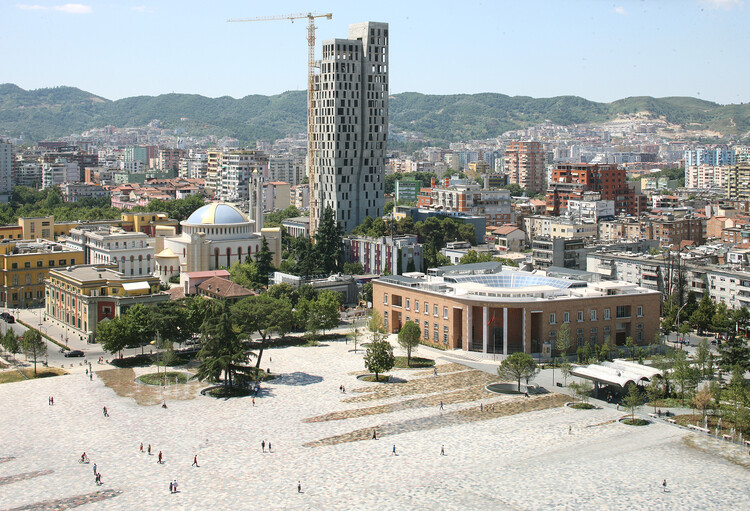
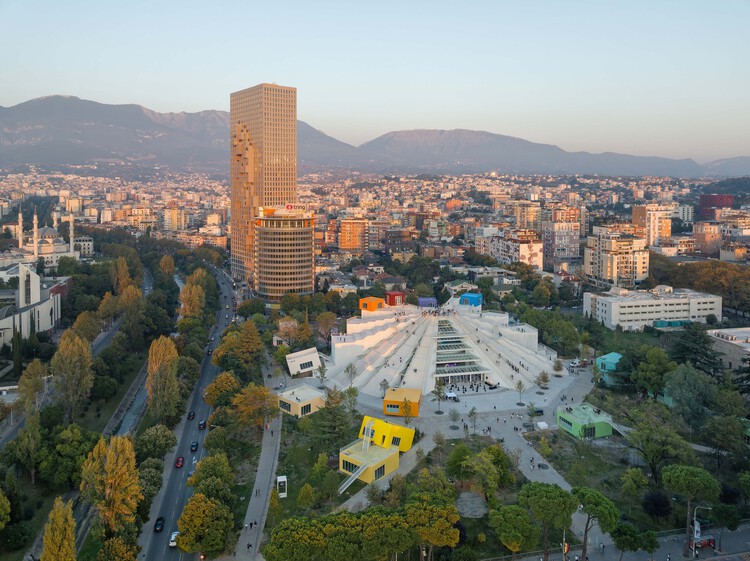
The second edition of The Bread & Heart Festival will be held in Tirana, Albania, from June 3 to 5, 2026. The annual event is organised by The Bread & Heart Foundation and co-curated with the NEWROPE Chair of Architecture and Urban Transformation at ETH Zürich. The Foundation's objective is to offer an open platform for dialogue on architecture, landscape, and development in Albania, a country undergoing rapid transformation and becoming one of the most active urban environments in Southeast Europe. The purpose of the event is to connect international figures from the architectural community, such as Francis Kéré, Jeanne Gang, Ma Yansong, and Sumayya Vally, with local practitioners, institutions, and a broader audience. As in 2025, the festival will take place at 51N4E's Book Building on Skanderbeg Square, bringing together participants under the theme "Landscapes of Abundance."
Located at the intersection of Adriatic landscapes and Balkan geopolitics, Tirana has undergone one of the most accelerated urban transformations in Europe over the last three decades. Once defined by rigid socialist planning and political isolation, the city has progressively reoriented itself through a combination of informal growth, international investment, and strategic urban interventions that seek to redefine its public image and spatial structure.
Since the early 2000s, a series of urban policies, most notably those initiated during the mayoral tenure of Edi Rama (now Albania prime minister), have promoted the use of color, public space, and architectural experimentation as tools for civic reactivation. Rather than relying solely on masterplans, Tirana's development has operated through interventions, where individual buildings and public spaces act as catalysts within a fragmented urban fabric.
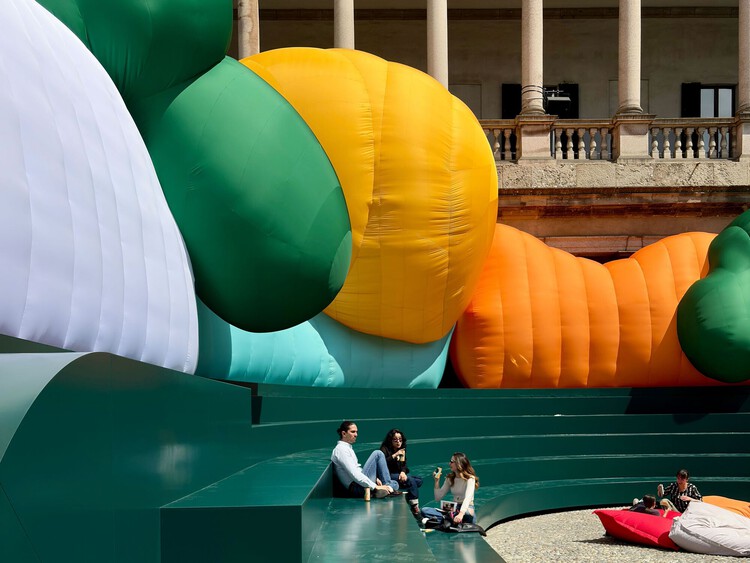
Ooooh, that's EpiQ! By Ricardo Orts Ulises. Image Courtesy of ArchDaily's editors on-site in Milano
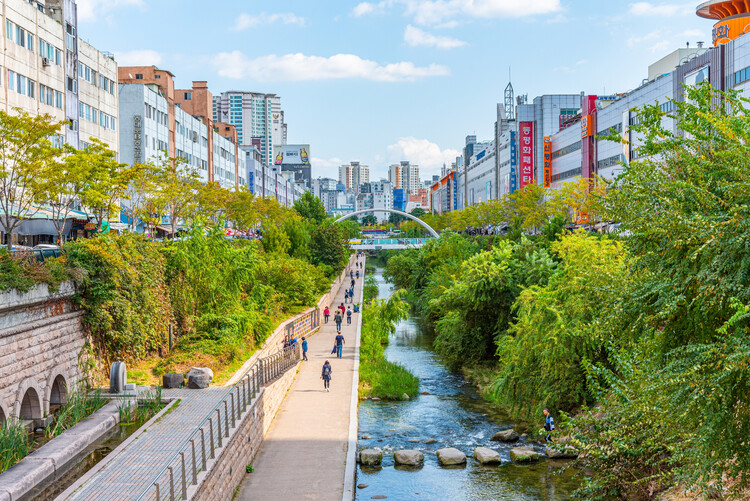
Observed annually on April 22, International Mother Earth Day frames this week's architectural discourse through an urgent call to rethink the relationship between the built environment and natural systems, foregrounding themes such as urban rewilding, the restoration of aquatic ecosystems, and the integration of ancestral knowledge into contemporary design practices. On another note, the opening of Salone del Mobile.Milano 2026 and Milan Design Week 2026 seek to reinforce the global relevance of design as a platform for exchange and experimentation, activating the city of Milan through a network of exhibitions and installations that engage both industry and public audiences. Among the announcements of award-winning architectural projects this week, the United Nations' House of No Waste (HØW) Competition highlights emerging architectural responses to climate and resource challenges. The awarded projects demonstrate scalable strategies for reducing material waste and embodied carbon while promoting adaptable, socially responsive, and resource-conscious public infrastructure.
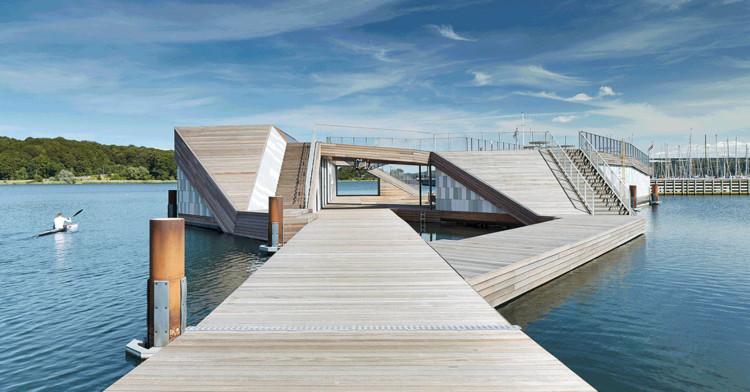
Building above water means doing away with a part of construction that is quite literally the basis of most of our built environment: the foundation. In a world dominated by water, currents, and shifting levels are variables that simply cannot be ignored, which is why the most emblematic feature these projects share is their adaptability.
Instead of robust, deep bases – such as piles or caissons – designed to anchor architecture into the earth, floating structures frequently employ solutions like concrete pontoons or plastic drums to prevent the building from sinking. These are typically paired with anchoring systems to "fix" the structures, even if only temporarily, to a specific location.
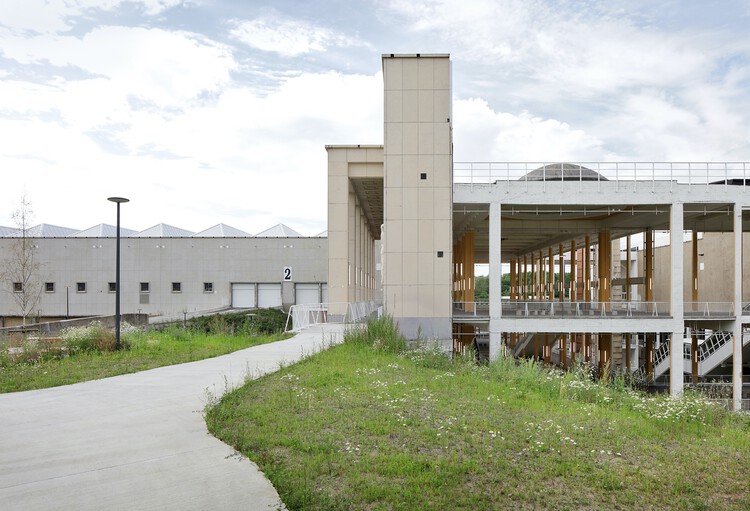
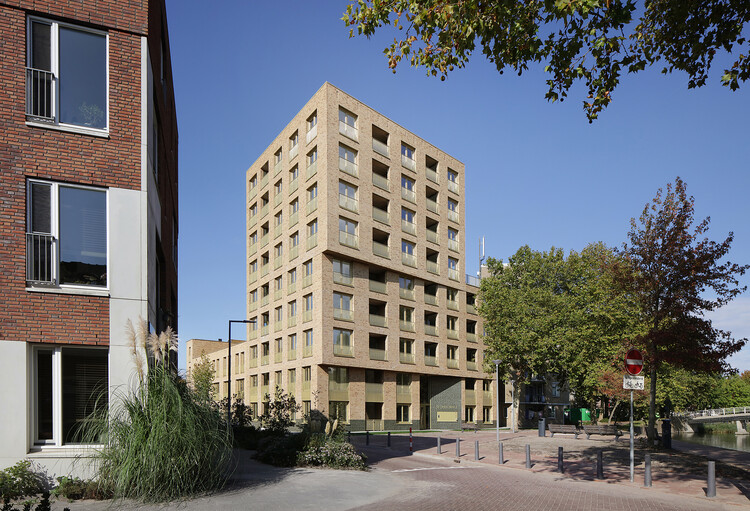
The European Commission and the Fundació Mies van der Rohe have announced the seven finalist projects for the 2026 European Union Prize for Contemporary Architecture - Mies van der Rohe Awards, supported by the European Union's Creative Europe programme. The selection follows the announcement of 410 nominated works in November and a shortlist of 40 projects revealed in early January. Of the seven finalists, five have been selected in the Architecture category and two in the Emerging category. According to the jury chaired by Smiljan Radić, the finalist projects are exemplary contributions to the future of European architecture, demonstrating how the discipline can respond simultaneously to specific local conditions and broader social, cultural, and environmental challenges. The selected works range from interventions in former industrial sites, small villages, and peripheral urban areas to carefully calibrated projects within larger cities. Across these varied contexts, the projects show how architecture can transform overlooked or ordinary settings into inclusive, high-quality spaces for living, learning, and social exchange.
Today, on the first Monday of October, we celebrate World Architecture Day. This year, the International Union of Architects (UIA) has set the theme "Design for Strength," a powerful call to action that resonates deeply with the UN's focus on urban crisis response. In a world facing unprecedented environmental and social disruptions, this theme challenges us to move beyond temporary fixes. It asks: How can our buildings and cities not only withstand shocks but also foster equity, continuity, and resilience?
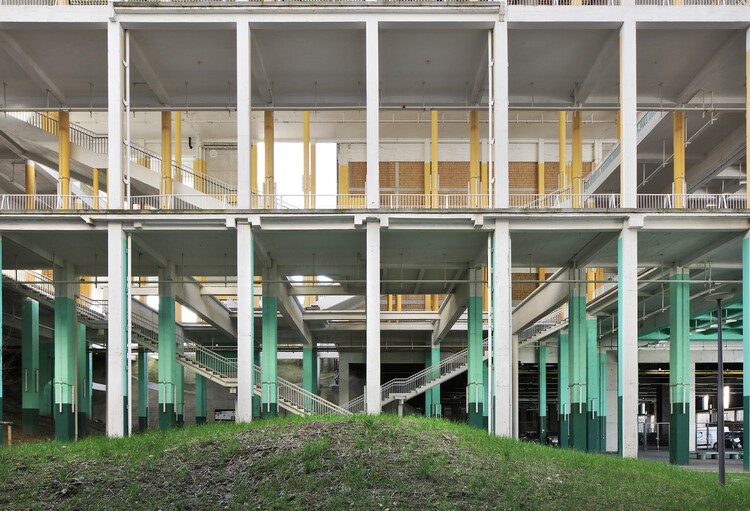
While the concept of strength in architecture can easily evoke images of reinforced concrete and steel, a more profound interpretation is emerging, one that defines strength not as mere rigidity, but as a holistic capacity to endure and adapt. This includes many facets, from ecological resilience and stewardship to long-lasting concepts of social resilience or the long-lasting conservation of existing urban structures, all contributing to a built environment more able to respond to the multitude of crises faced by cities worldwide.