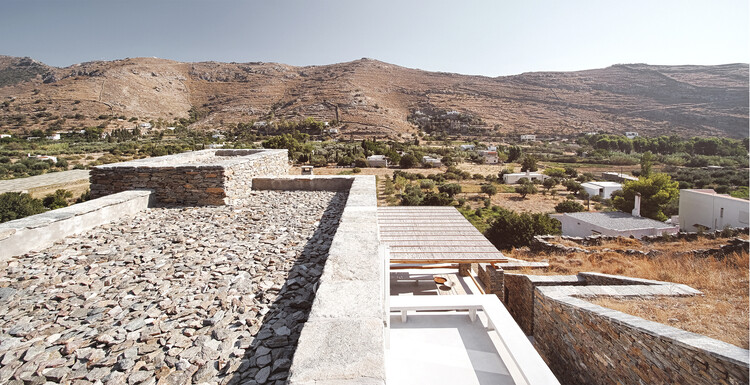
Eighteen years ago, two architecture students decided that they had a project worth pursuing. It wasn't a built structure, but a digital project that ended up revolutionizing the way people around the world consume architectural content. This was how ArchDaily was founded, and it still guides our work to this day. The future of architecture is continuously being shaped in classrooms, studios, and workshops around the world, and we want to continue supporting the students who are actively participating in this evolution. Recognizing the creativity and vision of students who are redefining architectural discourse around the world is what led us to create the Student Project Awards.
We are now pleased to present the longlisted projects for this first edition of the ArchDaily Student Project Awards. With hundreds of projects submitted from around the world, our in-house team of architects and editors carefully combed through every single entry, narrowing them down to 104 longlisted projects. The students who participated represent the diversity of the architectural landscape itself, with submissions from every continent, all levels of study, and in various scales and typologies.
https://www.archdaily.com/1039110/explore-the-longlist-of-the-archdaily-student-project-awardsDaniela Porto
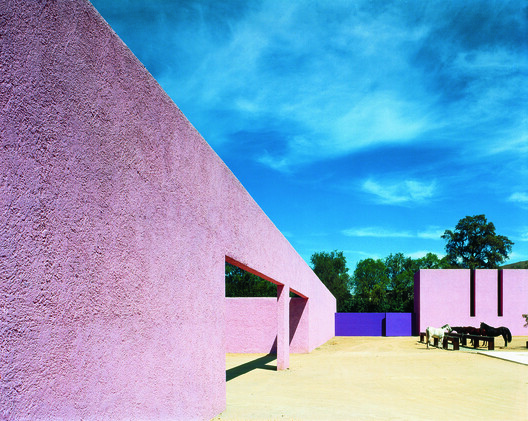
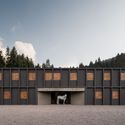
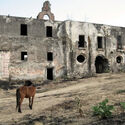
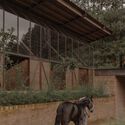
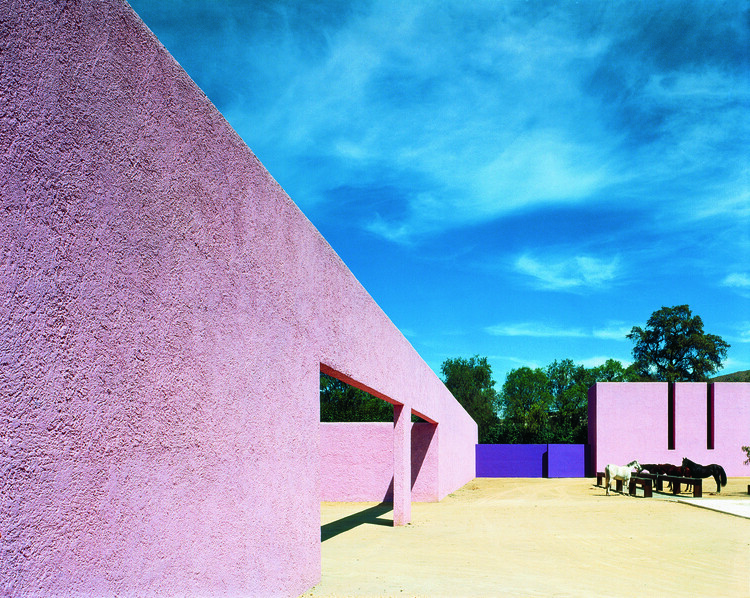
In the architectural history of the Mexican territory, the built environment has functioned not merely as a human stage, but as a biological infrastructure designed to organize proximity between species. The resulting spatial logic is not a solo performance, but a negotiated coexistence between human and animal bodies. To examine this heritage today is to shift the analytical focus away from stylistic authorship and toward a more fundamental phenomenon: the persistence of spatial practices that emerged to sustain shared forms of life.
Many of the architectural features now interpreted as cultural or aesthetic markers — oversized thresholds, expansive patios, and durable surfaces — can be understood instead as material traces of an interspecies contract. For centuries, horses, mules, and livestock were not external to architecture but essential inhabitants whose physical presence shaped scale, circulation, and material choices. Their bodies left measurable imprints in space, from the height of entrances that accommodated mounted riders to paving systems designed to withstand hooves, friction, and biological wear. Nowhere was this contract more visible than at the ground level of the colonial house.
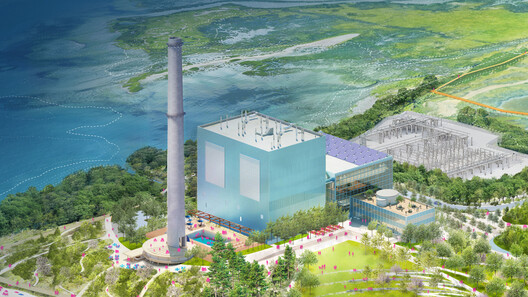
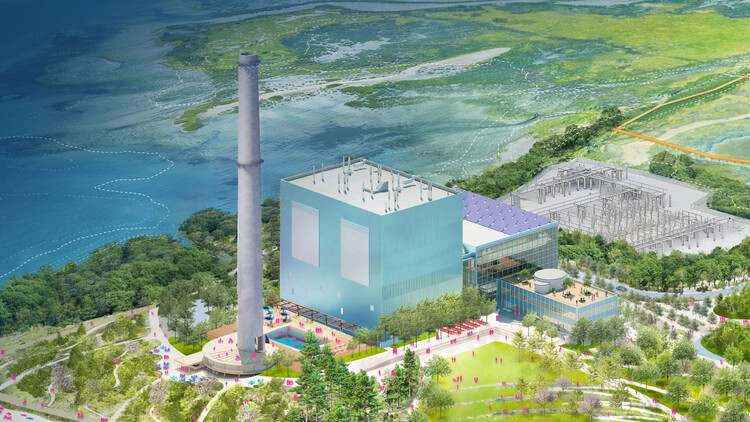
Manresa Wilds Zoomed Aerial. Image Courtesy of BIG
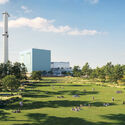
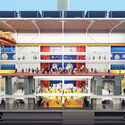
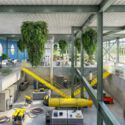
ManresaIsland Corp. has unveiled the final vision for Manresa Wilds, a 125-acre waterfront park planned on a former power plant peninsula along Long Island Sound in Norwalk, United States. Developed in collaboration with landscape architecture firm SCAPE and architecture studioBIG, the proposal outlines the transformation of a polluted and long-inaccessible industrial shoreline into a publicly accessible coastal landscape. Following the receipt of a stewardship permit from Connecticut's Department of Energy and Environmental Protection in December 2025, the project will move forward in phases, beginning with the opening of the 28-acre Northern Forest in spring 2027. Subsequent phases, extending into the early 2030s, will deliver the majority of the restored landscape and the adaptive reuse of the 1960s-era power plant as a year-round civic and educational hub, opening nearly two miles of coastline that have been closed to the public for decades.
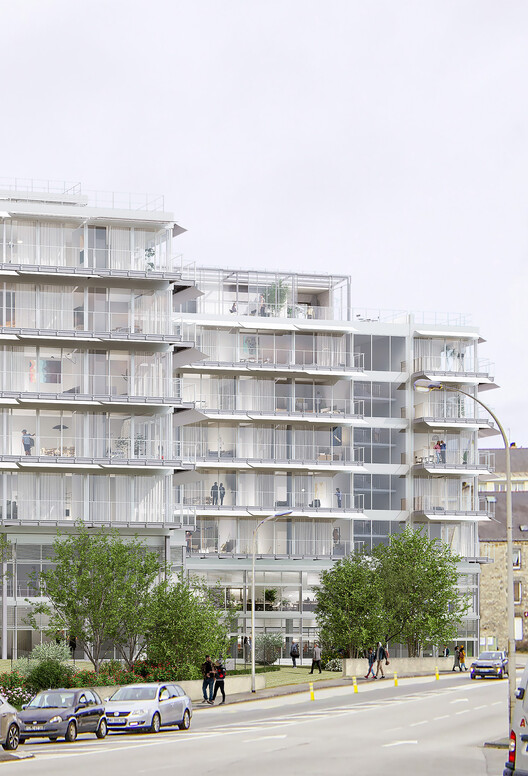
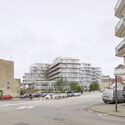
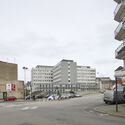
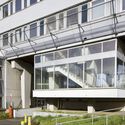
Lacaton & Vassal have announced the transformation of a former administrative center into a mixed-use residential and office building in Vannes, a medieval town in Brittany, northwest France. The project is part of a State policy to mobilize state-owned land for housing. In 2023, the French State launched a call for expressions of interest for a project on the former administrative complex, which housed several State services, in consultation with the City of Vannes. The winning proposal is a partnership between GReeStone Immobilier and Grand Ouest Immobilier, with an architectural team formed by the office of Anne Lacaton and Jean-Philippe Vassal, winners of the 2021 Pritzker Prize, in partnership with Emmanuelle Delage Architecte. According to the city government, the proposal was chosen with the aim of promoting resilience and limiting the carbon footprint by renovating rather than demolishing.
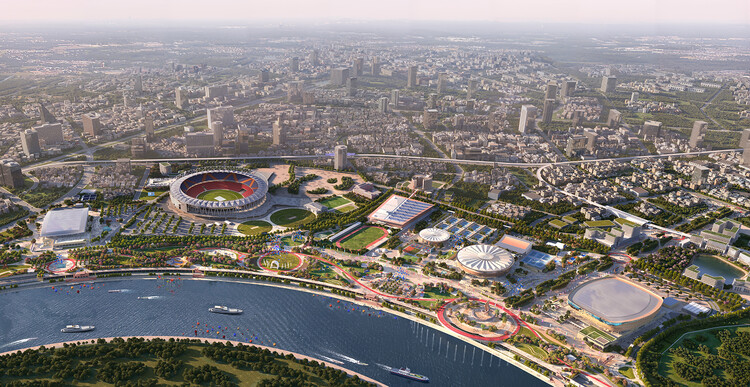
BDP, Cox Architecture, and Collage Design have unveiled the master plan for the 350-acre Sardar Vallabhbhai Patel Sports Enclave in Ahmedabad, India. Positioned on the Sabarmati Riverfront and structured around the 132,000-seat Narendra Modi Stadium, the world's largest stadium by capacity, the project proposes a large-scale sports district integrating international competition venues with public landscapes and community facilities. Conceived as both an events precinct and an urban park, the development is intended to accommodate the 2030 Commonwealth Games centenary event, following Ahmedabad's selection as host city.
On a hot afternoon in May, when the air over western India turns metallic with heat, no one remembers façade composition. They remember where the shade falls. They remember which corridor breathed. They remember the house that was cooler than the street. What stays in memory is comfort beyond the form. Repeated thermal preference stabilizes into spatial configuration, and over time, those configurations become building types.
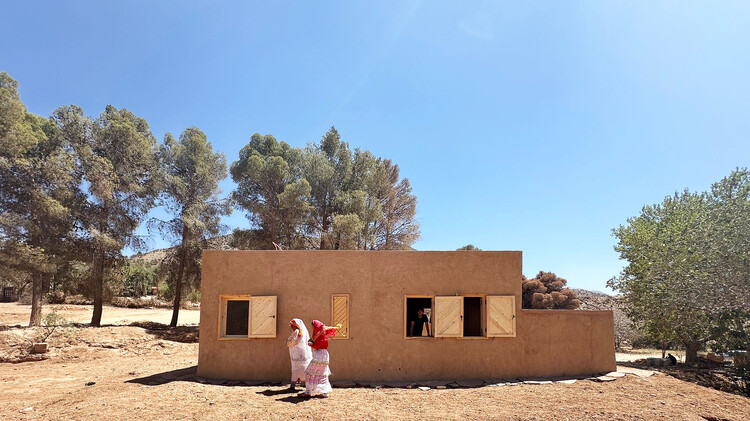
In an age so obsessed with skincare and appearances, few architects are truly interested in the intestines of our buildings. With a practice rooted in contextual awareness and technical pragmatism, sensitive to the needs of the people it serves and to resource limitations, Moroccan architect Aziza Chaouni focuses on the hidden systems that allow architecture to be. Over the past two decades, she has been working on projects across different geographies, particularly in the Saharan region, actively engaging with its communities and heritage.
Currently leading the South–North (SoNo) Lab for Sustainable Construction and Conservation at EPFL in Lausanne, Switzerland, Chaouni brings to the academic realm her architectural expertise in operating under pressing constraints, advocating for reciprocal collaboration between the Global South and the Global North. ArchDaily had the opportunity to speak with Aziza about her experience in Africa and how it can foster more sustainable ways of designing buildings for the future of our cities.
Azm / Samu by Hassan Qureshi. Image Courtesy of Riyadh Art
For centuries, sculpture has been associated with the materialization of religious values, the celebration of heroic achievements, or the consolidation of political power. Today, it also operates as a critical instrument and an urban mediator. Many contemporary works interrogate the present, challenge scale, engage with movement and circulation, and reshape perceptions of public space. Sculpture is no longer conceived as an isolated object, but as part of broader processes of urban transformation.
Riyadh, the capital of Saudi Arabia, exemplifies a city undergoing intense expansion and restructuring. Particularly under the Vision 2030 agenda, it has invested in upgrading public spaces, diversifying its cultural landscape, and consolidating an urban identity that brings together tradition, infrastructure, and global projection. Within this context, cultural production plays a structuring role, contributing to the redefinition of everyday urban experience and expanding the city's symbolic references.
As the architecture community looks ahead to the announcement of the 2026 laureate of the Pritzker Architecture Prize, anticipation once again gathers around what is widely regarded as the profession's highest honor. Founded in 1979 by Jay Pritzker and administered by the Hyatt Foundation, the prize recognizes a living architect whose body of work demonstrates a consistent and significant contribution to humanity and the built environment.
This week began with the World Day of Social Justice, foregrounding urgent questions of labor rights, spatial equity, and resource governance, and framing architecture as both a product of and a response to the social systems that shape access to land, housing, and opportunity. The announcement of the 15 winning projects of the 2026 ArchDaily Building of the Year Awards highlighted a global cross-section of built works recognized for their architectural quality, innovation, and social impact, offering a snapshot of contemporary practice across scales and geographies. This week's news prompts a broader reflection on architecture's civic responsibility, with heritage and community-building through cultural architecture emerging as central themes. Housing, meanwhile, anchors another critical strand of the discussion with three highlighted initiatives: a manifesto reframing housing not as a market commodity but as a civic right and collective project grounded in care; a large-scale waterfront regeneration masterplan responding to regional housing demand through coastal transformation; and a timber residential project that explores the potential of wood in medium-density housing.
ArchDaily is looking for Expert Contributor to join our Sponsored Content team. In this role, you will produce high-quality, editorially strong content that highlights architectural products, materials, and projects while maintaining the editorial integrity and design-focused voice that ArchDaily is known for.
This role requires a strong understanding of architecture and design, experience with branded or sponsored content, and the ability to communicate complex ideas in a clear, engaging, and professional manner. Sponsored content at ArchDaily is brand-funded writing created with partners that presents products, projects, and ideas in ArchDaily's editorial voice, with the aim of informing, inspiring, and engaging readers.
https://www.archdaily.com/1038256/open-call-for-expert-contributors-at-archdailyArchDaily Team
In Hong Kong, where interiors and small buildings are routinely caught between two extremes—high-gloss "luxury" finishes on one end, and budget-cautious industrial roughness on the other—a third attitude has emerged through the calibration of both: a uniquely precise, relevant, and materially honest execution that is not dependent on price point. This is calibrated rawness. Calibrated rawness describes an architecture that retains the directness of matter and materiality—concrete, metal, blockwork, exposed structure, visible services—while subjecting it to rigorous control.
The "raw" is not a costume, and the "refined" is not polished; it is a discipline of precise execution, producing spaces that feel balanced and considered, yet never "made up" or overworked. Studio 1:1 demonstrates this attitude consistently across its work—and its upcoming publication, Architecture under the Radar: Three Projects in Asia (with a foreword by Nader Tehrani), offers a timely frame through which to read this ethos as more than an aesthetic, but as a repeatable architectural method.
Porous City / MVRDV and The Why Factory. Image Courtesy of Frans Parthesius, MVRDV and The Why Factory
This article is part of our new Opinion section, a format for argument-driven essays on critical questions shaping our field.
Every architectural epoch has been defined by its instruments. The compass, the drawing board, the camera, and the computer have each altered how architects think and produce. Yet the current moment feels qualitatively different. As artificial intelligence and generative systems enter daily workflows, tools cease to be passive extensions of the architect's hand and begin to operate as semi-autonomous agents. They propose, optimize, and simulate, producing outcomes that are, at times, beyond the author's full anticipation.
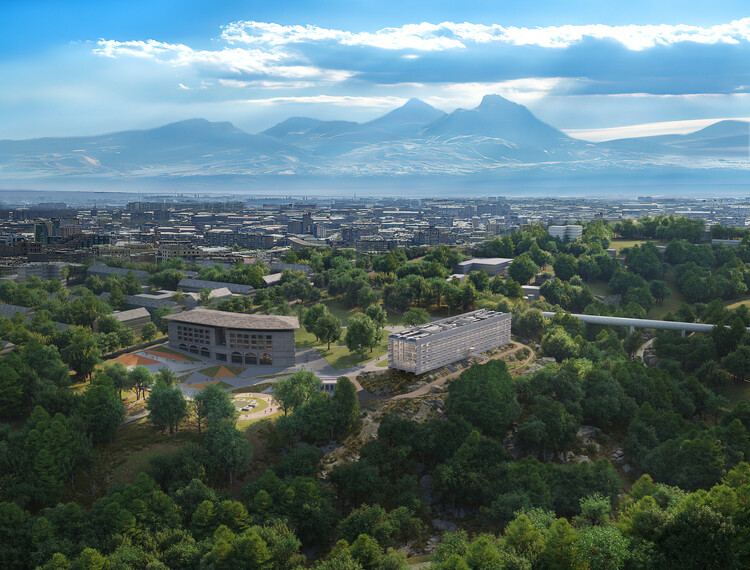
MVRDVhas started construction on the EU TUMO Convergence Center, a new educational and research facility in Yerevan, Armenia. Located in Tumanyan Park, the five-story building will expand TUMO's campus, providing spaces for free technology and creative education for teenagers and adults, alongside research and co-working areas for technology and design companies. Positioned on a hilly outcrop above the Hrazdan River Gorge, the project responds to the surrounding topography while establishing visual connections with the city, the gorge, and Mount Ararat. Construction officially commenced on 24 February, with local and international representatives in attendance.
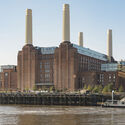
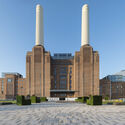
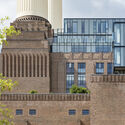
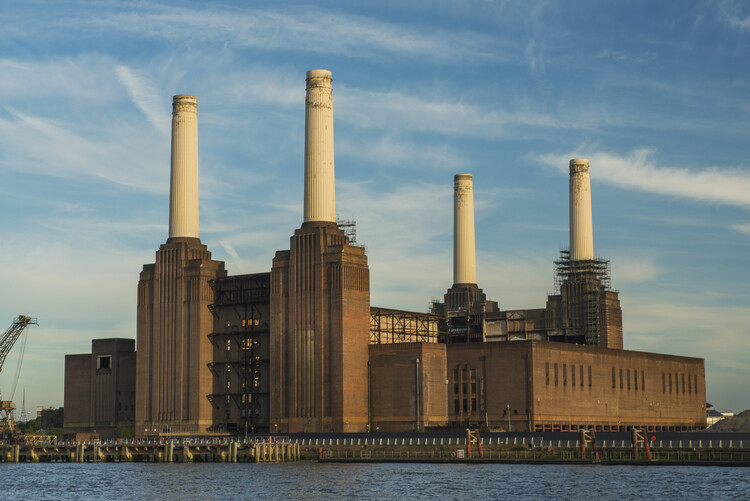
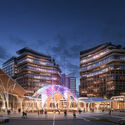
Battersea Power Station is a former coal-fired power station located on the south bank of the River Thames in London, originally designed by architects J. Theo Halliday and Giles Gilbert Scott. Notable for its appearance on the cover of Pink Floyd's 1977 studio album Animals and in Alfred Hitchcock's 1936 film Sabotage, the station is one of the world's largest brick buildings and is known for its Art Deco interior fittings and décor. Recognized today as part of modern industrial heritage, the site's transformation into a commercial development began in 2012, with the adaptive reuse guided by a masterplan designed by Rafael Viñoly. On February 16, Battersea Power Station announced the appointment of the strategic urban design practice Studio Egret West to evolve the original masterplan for the remaining 16 acres of the 42-acre riverside neighbourhood in the southwest London.
Urban masterplans remain an exploratory ground for unbuilt speculation, offering insight into how cities might recalibrate mobility, ecology, and collective life in response to accelerating environmental and social pressures. In this Unbuilt edition, submitted by the ArchDaily community, the selected projects bring together a range of large-scale proposals that examine urban centers, waterfront districts, infrastructural corridors, and cultural landscapes as spatial frameworks for reconnection and resilience. Rather than treating the masterplan as a rigid blueprint, these projects approach urbanism as an adaptive system shaped by climate, topography, infrastructure, and public space.
Across varied geographies, from Northern European town centers and Mediterranean coastal districts to Central Asian polycentric hubs and Gulf megacities, the proposals explore diverse architectural and urban strategies. They range from park-led civic transformations built over highway tunnels to elevated pedestrian networks above active transport systems, mixed-use blocks structured by historic planning logics, marina developments integrating environmental stewardship, and research-driven models for equitable landscape urbanization.
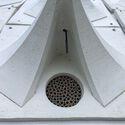
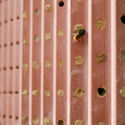
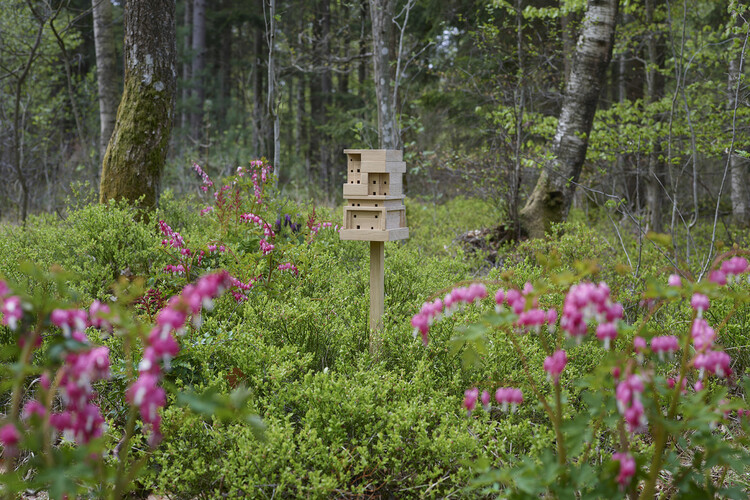
In the first days after birth, the bee remains inside the nest, cleaning cells and being fed by other workers. Over time, it begins organizing pollen stores, regulating the hive's temperature, and guarding the entrance. Only in the final weeks of its life does it leave the shelter to fly. It is in the moment of flight that its trajectory begins to intersect with architecture and the city. In search of nectar, it moves across a territory shaped not only by its spatial memory and the availability of flowers, but by the way we construct the built environment. Each movement becomes a negotiation with urban space: impermeable surfaces that disrupt natural cycles, air currents intensified between buildings, vegetation-free voids, scattered green fragments between lots, and technical rooftops.
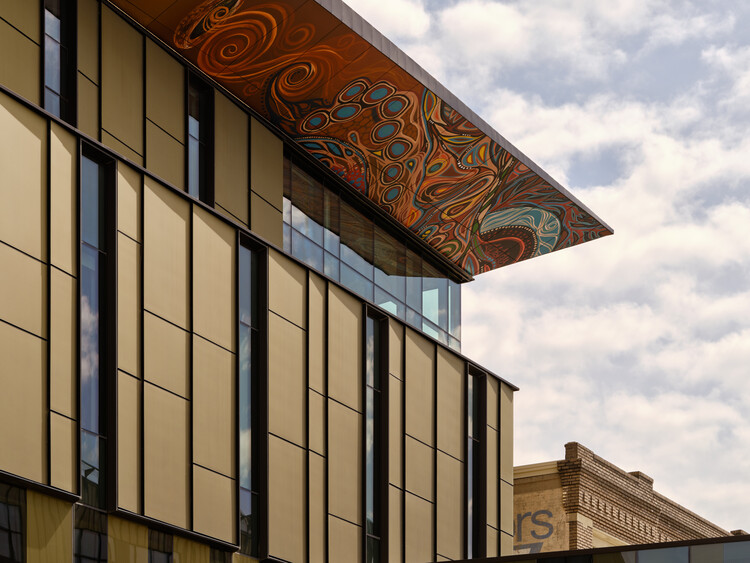
Courtesy of SolarLab, Photo by doublespacephoto.com. ImageRed River College Innovation Center / Diamond Schmitt Architects & Number TEN Architectural Group
As environmental accountability becomes embedded in design culture, the building envelope is being reconsidered not just as a protective skin, but as an active energy-producing surface. Treating solar technology as a material rather than an attachment reshapes how architecture is conceived and detailed. Color, texture, rhythm, and assembly become inseparable from performance. Building-Integrated Photovoltaics (BIPV) operate within this expanded definition of materiality. By integrating solar technology into façades and rainscreens from the earliest project stages, architects can reduce redundancy, align energy goals with design intent, and rethink how envelopes are composed. Yet translating this ambition into buildable systems requires technical precision and construction intelligence.
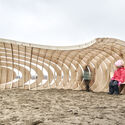
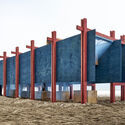
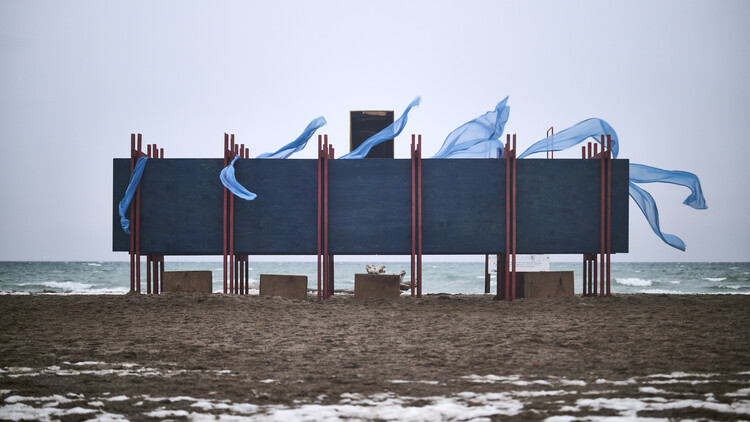
The annual Winter Stations design competition returns to Toronto for its twelfth edition, once again transforming the lifeguard stations of Woodbine Beach into temporary works of public art. On view from February 16 to March 30, 2026, this year's exhibition is organized under the theme Mirage, inviting participants to examine perception, illusion, and the shifting boundaries between what is seen and what is constructed. Selected from more than 300 international submissions, three winning proposals from Canada, the United States, and a Germany–Ukraine collaboration are presented alongside two installations developed by university teams. Installed along the frozen shoreline of Lake Ontario, the projects reinterpret seasonal infrastructure as platforms for spatial experimentation during the winter months.
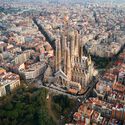
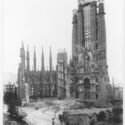
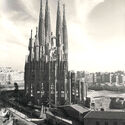
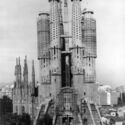
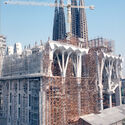
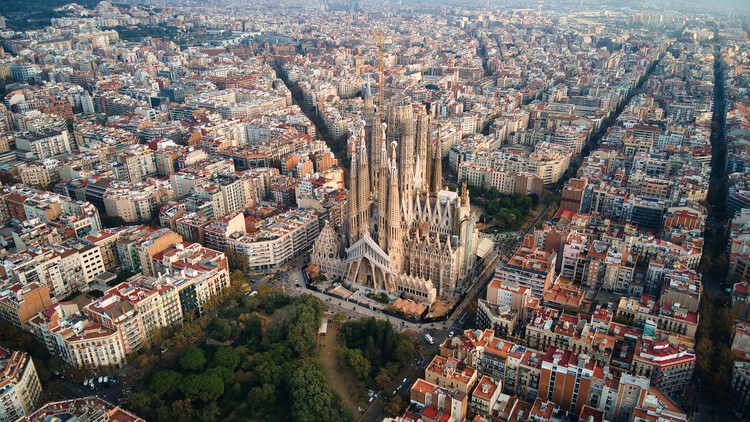
The final piece of the central tower of Barcelona's Sagrada Familia has been laid in place, bringing the church to its maximum height of 172.5 m. La Sagrada Familia, one of architectural history's most notorious unfinished buildings, became Antoni Gaudí's defining project in 1883, when he transformed a neo-Gothic design into one of the best-known structures of Catalan Modernisme. One hundred and forty-four years after construction began, the upper section of the 17-meter-high, four-sided steel and glass cross was winched into position at 11 a.m. on Friday, February 20, completing the tower dedicated to Jesus Christ. This milestone confirms the project's final stage of construction, which, back in March 2024, was announced as one of the most anticipated completions of 2026, commemorating the centenary of Antoni Gaudí's death.
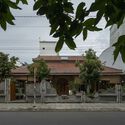
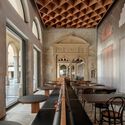
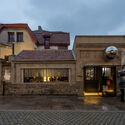
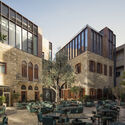
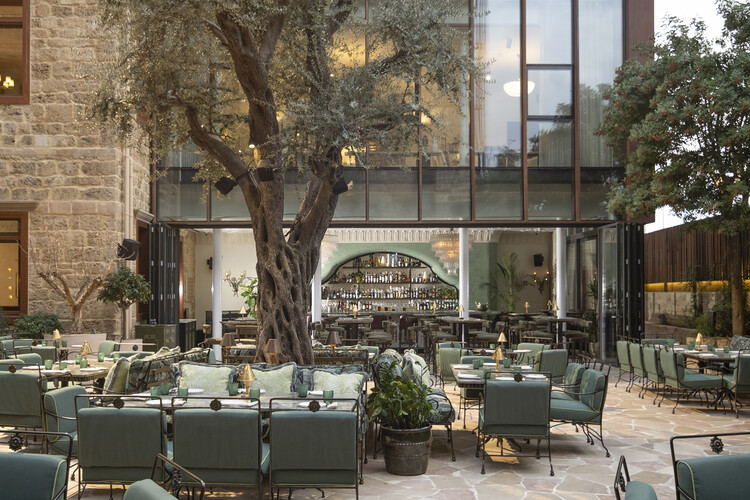
Hospitality-driven programs, specifically coffee shops and social hubs, are partly defined by their role as "third places": social anchors that bridge the gap between private and public life. Unlike residential or commercial office programs that require rigid partitioning for privacy and utility, they rely on expansive, open-plan environments. This allows for an architectural strategy of minimal intervention, allowing the structural envelope to remain intact. By avoiding the subdivision of space, architects maintain uninterrupted sightlines to original masonry, timber frames, or decorative ceilings, ensuring the building's historical narrative remains the protagonist. Simultaneously, the commercial activity provides the necessary maintenance and public engagement to ensure the site's continued existence.
In most cases, the power of decision lies with specialized professionals—historians, museologists, architects, geographers. But on what basis are these decisions made? Can the complexity of history be reduced to a checklist? Or, more fundamentally, which version of history underlies these choices?
As the primary interface between interior spaces and the external environment, facades play a central role in both the performance and architectural expression of buildings. Increasingly, they are no longer seen as static envelopes, but as active mediators between climate, energy, use, and aesthetic. In dense urban contexts, however, they are also gaining relevance for another reason: while roof surfaces are often limited, fragmented, or already occupied by technical equipment, vertical envelopes remain largely underutilized in terms of energy production.