9 m³ of Survival: Inside the Orion Spacecraft and the Architecture of Space Travel

7:33

Subscriber Access

It was July 1969, and people on planet Earth were about to witness a historical moment for humanity: the first time a human being stepped on the surface of the Moon aboard the Apollo 11 mission. After this event, NASA landed five more times on the lunar surface, with the last one being Apollo 17 in 1972. Since then, humans have not attempted to return to the Moon until this year, 2026, when they will launch the Orion spacecraft as part of the Artemis II Mission. Planned to set off between February and April 2026, Orion will not yet land people on the Moon, instead it will make a flyby, in order to allow testing of the software and systems. This will set the base for an actual human landing on the Moon's South Pole as part of Artemis III sometime between 2027 and 2028, eventually opening a brand new era in Extraterrestrial architectural design.
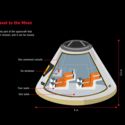

9 m³ of Survival: Inside the Orion Spacecraft and the Architecture of Space Travel - Image 6 of 119 m³ of Survival: Inside the Orion Spacecraft and the Architecture of Space Travel - Image 2 of 119 m³ of Survival: Inside the Orion Spacecraft and the Architecture of Space Travel - Image 7 of 119 m³ of Survival: Inside the Orion Spacecraft and the Architecture of Space Travel - Image 5 of 119 m³ of Survival: Inside the Orion Spacecraft and the Architecture of Space Travel - More Images+ 6

Content Loader

Image gallery

See allShow less
About this author
Cite: Moises Carrasco. "9 m³ of Survival: Inside the Orion Spacecraft and the Architecture of Space Travel" 07 Feb 2026. ArchDaily. Accessed . <https://www.archdaily.com/1038362/9-m3-of-survival-inside-the-orion-spacecraft-and-the-architecture-of-space-travel> ISSN 0719-8884
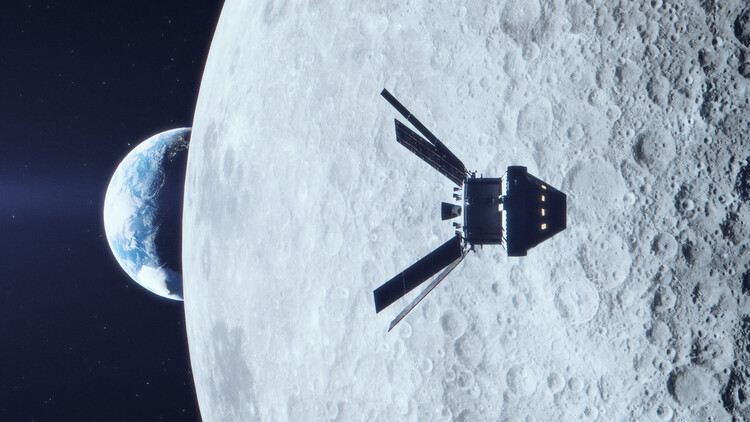
Artist representation of Orion's lunar flyby. Image via NASA under license CC BY-NC-ND 2.0

9立方米的生存空间:走进“猎户座”飞船与太空旅行建筑学

You've started following your first account!

Did you know?

You'll now receive updates based on what you follow! Personalize your stream and start following your favorite authors, offices and users.