1. ArchDaily
  2. moon

moon: The Latest Architecture and News

Gateway in Lunar Orbit: Extending Architecture Beyond Earth

The concept of the technosphere provides a framework for understanding the scale of human impact on Earth. The term was coined by Peter K. Haff, and it is defined as the global network of human-made artifacts: a physical layer of infrastructure, buildings, vehicles, and machinery that functions alongside the biosphere and atmosphere. Currently estimated at 30 trillion tons, this human-constructed mass is dominated by the built environment. In this context, architecture serves as the primary interface, shaping how technology interacts with local ecologies. However, it seems that soon, the Technosphere will no longer be confined to the terrestrial surface. Through NASA's Artemis program, this network of human-made mass is expanding beyond Earth's atmosphere and is looking to establish new orbital infrastructure that represents the first permanent off-world extension of this man-made system.

Gateway in Lunar Orbit: Extending Architecture Beyond Earth - Image 1 of 4Gateway in Lunar Orbit: Extending Architecture Beyond Earth - Image 2 of 4Gateway in Lunar Orbit: Extending Architecture Beyond Earth - Image 3 of 4Gateway in Lunar Orbit: Extending Architecture Beyond Earth - Image 4 of 4Gateway in Lunar Orbit: Extending Architecture Beyond Earth - More Images+ 3

9 m³ of Survival: Inside the Orion Spacecraft and the Architecture of Space Travel

Subscriber Access | 

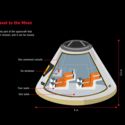
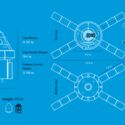
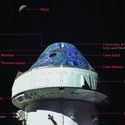
It was July 1969, and people on planet Earth were about to witness a historical moment for humanity: the first time a human being stepped on the surface of the Moon aboard the Apollo 11 mission. After this event, NASA landed five more times on the lunar surface, with the last one being Apollo 17 in 1972. Since then, humans have not attempted to return to the Moon until this year, 2026, when they will launch the Orion spacecraft as part of the Artemis II Mission. Planned to set off between February and April 2026, Orion will not yet land people on the Moon, instead it will make a flyby, in order to allow testing of the software and systems. This will set the base for an actual human landing on the Moon's South Pole as part of Artemis III sometime between 2027 and 2028, eventually opening a brand new era in Extraterrestrial architectural design.

9 m³ of Survival: Inside the Orion Spacecraft and the Architecture of Space Travel - Image 5 of 49 m³ of Survival: Inside the Orion Spacecraft and the Architecture of Space Travel - Image 1 of 49 m³ of Survival: Inside the Orion Spacecraft and the Architecture of Space Travel - Image 6 of 49 m³ of Survival: Inside the Orion Spacecraft and the Architecture of Space Travel - Image 4 of 49 m³ of Survival: Inside the Orion Spacecraft and the Architecture of Space Travel - More Images+ 6

The Moon, Gaza, and Ukraine Among New Additions to the 2025 Monuments Watch

The World Monuments Fund (WMF) has announced its 2025 World Monuments Watch, highlighting 25 sites facing significant challenges. This biennial program, launched in 1996, aims to raise awareness and mobilize action for the preservation of cultural heritage worldwide. The 2025 list includes diverse locations across five continents and, notably, the Moon, representing the need to protect artifacts from humanity's first lunar missions. The selection process involved over 200 nominations, revealing regional trends such as climate change impacts in Sub-Saharan Africa and urbanization challenges in Asia and the Pacific.

The Moon, Gaza, and Ukraine Among New Additions to the 2025 Monuments Watch - Image 1 of 4The Moon, Gaza, and Ukraine Among New Additions to the 2025 Monuments Watch - Image 2 of 4The Moon, Gaza, and Ukraine Among New Additions to the 2025 Monuments Watch - Image 3 of 4The Moon, Gaza, and Ukraine Among New Additions to the 2025 Monuments Watch - Image 4 of 4The Moon, Gaza, and Ukraine Among New Additions to the 2025 Monuments Watch - More Images+ 18

Hassell Unveils Lunar Habitat Masterplan, Aiming to Revolutionize Interstellar Living

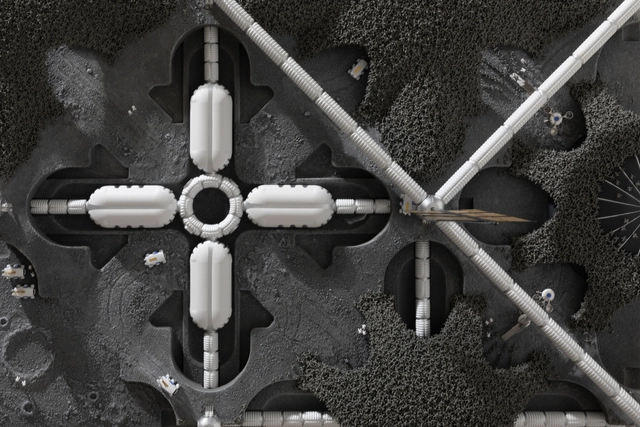
Last week, Hassell revealed the Lunar Habitat Masterplan, a modular concept for a moon base. Developed in collaboration with the European Space Agency (ESA) and Cranfield University, the project aims to contribute to the formation of the first permanent human settlement on the moon. Various renowned architects have previously contributed to space exploration through architecture. From Buckminster Fuller to Foster + Partners, BIG, and SOM, the architectural catalog in outer space has seen many advancements. Representing a significant set forward in interstellar exploration, this masterplan by Hassell hopes to support the development of a community on the moon.

Hassell Unveils Lunar Habitat Masterplan, Aiming to Revolutionize Interstellar Living - Image 1 of 4Hassell Unveils Lunar Habitat Masterplan, Aiming to Revolutionize Interstellar Living - Image 2 of 4Hassell Unveils Lunar Habitat Masterplan, Aiming to Revolutionize Interstellar Living - Image 3 of 4Hassell Unveils Lunar Habitat Masterplan, Aiming to Revolutionize Interstellar Living - Image 4 of 4Hassell Unveils Lunar Habitat Masterplan, Aiming to Revolutionize Interstellar Living - More Images+ 3

How is Architecture Supporting the Exploration of the Moon and Mars?

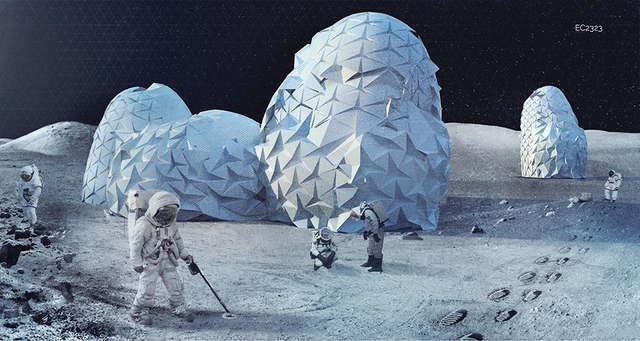
From inflatable and 3D-printed structures to entire habitats, architecture plays an unprecedented role in space exploration missions. As NASA plans for long-term human exploration of the Moon and Mars under Artemis and CHAPEA missions, new technologies are required to meet the unique challenges of living and working in another world. In response, figures like Buckminster Fuller, Foster + Partners, SOM, and BIG-Bjarke Ingels Group, in collaboration with emerging businesses such as ICON and SEArch+, have nourished the architectural catalog in outer space.
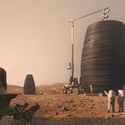
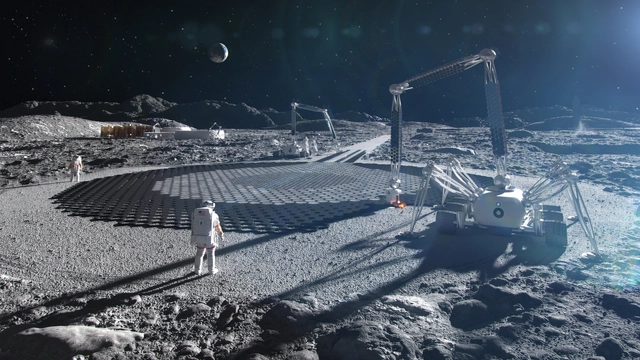
In the latest update, NASA awarded Austin-based company ICON a contract to continue ICON's Olympus construction system in partnership with BIG-Bjarke Ingels Group. The project will help build infrastructures such as landing pads, habitats, capsules, and roads on the lunar surface and Mars, using extrusion-based additive construction technology (3D printing) and local materials like lunar regolith. The contract runs through 2028 and supports Artemis, a mission for long-term human exploration of the Moon.

How is Architecture Supporting the Exploration of the Moon and Mars? - Image 1 of 4How is Architecture Supporting the Exploration of the Moon and Mars? - Image 2 of 4How is Architecture Supporting the Exploration of the Moon and Mars? - Image 3 of 4How is Architecture Supporting the Exploration of the Moon and Mars? - Image 4 of 4How is Architecture Supporting the Exploration of the Moon and Mars? - More Images+ 7

A Living Capsule on The Moon and a Garden Home in Colombia: 10 Unbuilt Visionary Houses Submitted to ArchDaily

This week's curated selection of Best Unbuilt Architecture highlights visionary homes by the ArchDaily community. From a prefabricated house to supporting Ukraine war victims, a modular multi-story house highlighted during the Dutch Design Week, and a villa "shaped" by the Dubai coastline wind flow, this round-up of unbuilt projects showcases how architects move forward from the conventional residence concept to project alternative habitational standards in responding to harsh environments, nature, and technology.

Featuring firms like architecten van Mourik, Archigardener, DKTV, Exint, Kalbod Design Studio, Lana Alk habbaz studio, Mitchell Designs Architecture, Mossawi Studios LLC, Void, and Team Group, the following list explores homes at different scales and varying stages of their development. Whether competition-winning projects or ongoing planned execution, each project develop a vision of living generated by unique site conditions and technical possibilities.

A Living Capsule on The Moon and a Garden Home in Colombia: 10 Unbuilt Visionary Houses Submitted to ArchDaily - Image 1 of 4A Living Capsule on The Moon and a Garden Home in Colombia: 10 Unbuilt Visionary Houses Submitted to ArchDaily - Image 2 of 4A Living Capsule on The Moon and a Garden Home in Colombia: 10 Unbuilt Visionary Houses Submitted to ArchDaily - Image 3 of 4A Living Capsule on The Moon and a Garden Home in Colombia: 10 Unbuilt Visionary Houses Submitted to ArchDaily - Image 4 of 4A Living Capsule on The Moon and a Garden Home in Colombia: 10 Unbuilt Visionary Houses Submitted to ArchDaily - More Images+ 46

NASA and AI Space Factory Develop a 3D Printed Lunar Structure

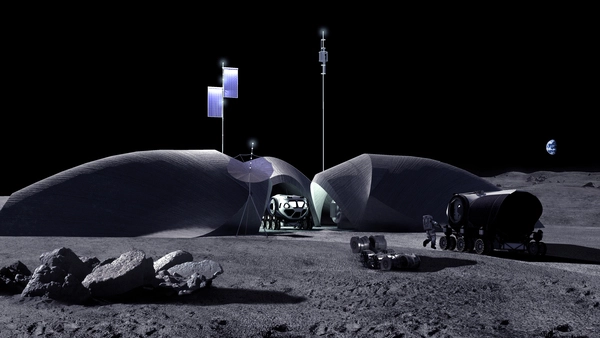
NASA and AI Space Factory developed LINA (Lunar Infrastructure Asset), an in-situ 3D-printed outpost to protect astronauts and critical missions on the Moon. The project is part of the Relevant Environment Additive Construction Technology (REACT), a multi-year collaboration to develop technologies for lunar surface constructions within the timeframe of the Artemis Mission: humankind’s return to the Moon. LINA is a step in the effort to expand civilization to Earth’s natural satellite and explore it in a sustainable way that minimizes human disturbance.

NASA and AI Space Factory Develop a 3D Printed Lunar Structure - Image 1 of 4NASA and AI Space Factory Develop a 3D Printed Lunar Structure - Image 2 of 4NASA and AI Space Factory Develop a 3D Printed Lunar Structure - Image 3 of 4NASA and AI Space Factory Develop a 3D Printed Lunar Structure - Image 4 of 4NASA and AI Space Factory Develop a 3D Printed Lunar Structure - More Images+ 7

15 Architecture Projects for Life in Space

Subscriber Access | 

The Apollo 11 Mission, departed Earth on July 16, 1969, and touched down on the moon 4 days later. This moment marked a milestone for humanity and, to this day, makes us reflect on how technological progress is bringing us ever closer to life beyond planet Earth.

With the help of 3D printers, highly developed and fully automated constructive technology, we have compiled a selection of 15 architectural projects that demonstrate that life on the moon and beyond is closer than we've ever imagined.

SOM Presents Vision of Lunar Settlements at the 2021 Venice Architecture Biennale

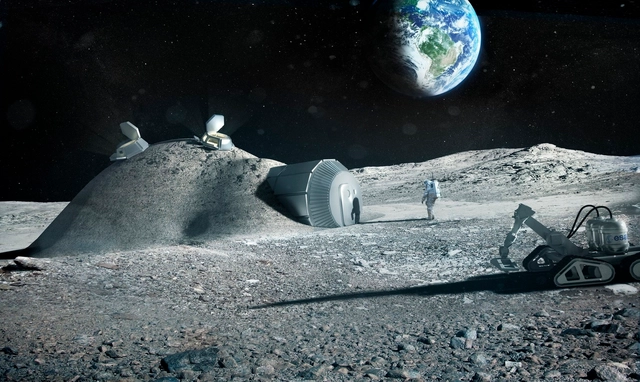
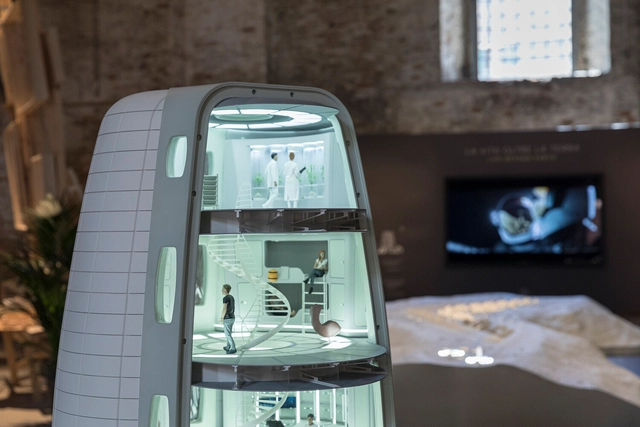
Invited to participate in the 17th International Venice Architecture Biennale, Skidmore, Owings & Merrill (SOM) exhibits Life Beyond Earth, a vision for a Moon Village. Developed together with the European Space Agency (ESA), the installation presents a proposal for a sustainable ecosystem that would support human presence on the Moon, exploring the opportunity of expanding the scope of architecture. The project reaffirms the importance of space exploration while also highlighting its potential to advance knowledge that would help address issues on Earth.

SOM Presents Vision of Lunar Settlements at the 2021 Venice Architecture Biennale - Featured ImageSOM Presents Vision of Lunar Settlements at the 2021 Venice Architecture Biennale - Image 3 of 4SOM Presents Vision of Lunar Settlements at the 2021 Venice Architecture Biennale - Image 7 of 4SOM Presents Vision of Lunar Settlements at the 2021 Venice Architecture Biennale - Image 1 of 4SOM Presents Vision of Lunar Settlements at the 2021 Venice Architecture Biennale - More Images+ 4

BIG and ICON Imagine Project Olympus, a Space-Based Construction System Developed with NASA

BIG has partnered up with ICON, a developer of advanced construction technologies, and with SEArch+ (Space Exploration Architecture) to imagine humanity’s home in another world. Working with NASA, the collaboration seeks to develop a “space-based construction system that could support future exploration of the Moon”.

SOM Collaborates with the European Space Agency to Research Habitation on the Moon

Skidmore, Owings & Merrill (SOM) has signed a Memorandum of Collaboration with the European Space Agency (ESA) in order to further develop their existing research for Moon Village. Signed in Paris, by Colin Koop, Design Partner at SOM, and Johann-Dietrich Wörner, Director General of ESA, the announcement was made earlier this month.

SOM Collaborates with the European Space Agency to Research Habitation on the Moon - Image 1 of 4SOM Collaborates with the European Space Agency to Research Habitation on the Moon - Image 2 of 4SOM Collaborates with the European Space Agency to Research Habitation on the Moon - Image 3 of 4SOM Collaborates with the European Space Agency to Research Habitation on the Moon - Image 4 of 4SOM Collaborates with the European Space Agency to Research Habitation on the Moon - More Images+ 8

9 Visions for Lunar Colonies Selected as Winners in Moontopia Competition

Eleven Magazine has announced the winners of the international design competition “Moontopia,” which asked architects to imagine a self-sufficient lunar colony designed for living, working, researching and space tourism.

From a pool of proposals from hundreds of applicants worldwide, 9 schemes were selected by an expert jury including space-architects, academics and NASA designers as the winners of the competition. Check out the winning projects below.