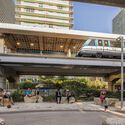
The High Line Effect: Transforming Abandoned Infrastructure in the United States

Subscriber Access

In the early 2000s, an abandoned rail line in Manhattan sat decaying - a memory from a time when freight trains traveled straight through the city. To most citizens, it was a site destined for demolition. However, a few visionary residents saw an opportunity in this neglected space and advocated to transform it into a public green space for the community. The success of the project seemed to spark a "High Line Effect", inspiring other American cities to pursue civic infrastructure on outdated railways, roadways, and industrial sites.


The High Line Effect: Transforming Abandoned Infrastructure in the United States - Image 7 of 11The High Line Effect: Transforming Abandoned Infrastructure in the United States - Image 11 of 11The High Line Effect: Transforming Abandoned Infrastructure in the United States - Image 3 of 11The High Line Effect: Transforming Abandoned Infrastructure in the United States - Image 10 of 11The High Line Effect: Transforming Abandoned Infrastructure in the United States - More Images+ 6

Content Loader

Image gallery

See allShow less
About this author
Cite: Ankitha Gattupalli. "The High Line Effect: Transforming Abandoned Infrastructure in the United States" 09 Jun 2024. ArchDaily. Accessed . <https://www.archdaily.com/1017239/the-high-line-effect-transforming-abandoned-infrastructure-in-the-united-states> ISSN 0719-8884
The Underline - Miami, FL. Image © Robin Hill

高线效应:改造美国的废弃基础设施

You've started following your first account!

Did you know?

You'll now receive updates based on what you follow! Personalize your stream and start following your favorite authors, offices and users.