This week's news explores how architecture responds to collective needs, environmental challenges, and changing cultural contexts. From the Lisbon Architecture Triennale's announcement of CO-OP as the theme for its 2028 edition to the recognition of Mexican practice COLECTIVO C733 with the inaugural Siza Award for Public Architecture, questions of cooperation and the public realm remain central. At COP31 in Antalya, discussions on building energy efficiency and urban resilience brought the built environment into focus, while the 2026 World Architecture Festival recognized projects engaging with environmental performance across different scales. Meanwhile, new cultural destinations are taking shape in Doha, Memphis, and Tulsa, where museum and pavilion projects reconsider the relationship between architecture, art, and public space.
Architecture, Cooperation, and the Public Realm
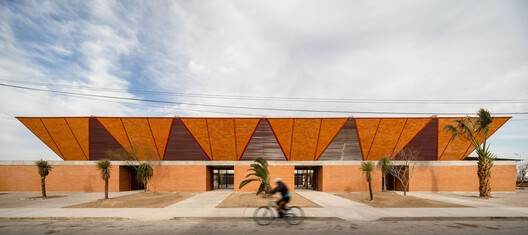
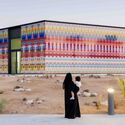
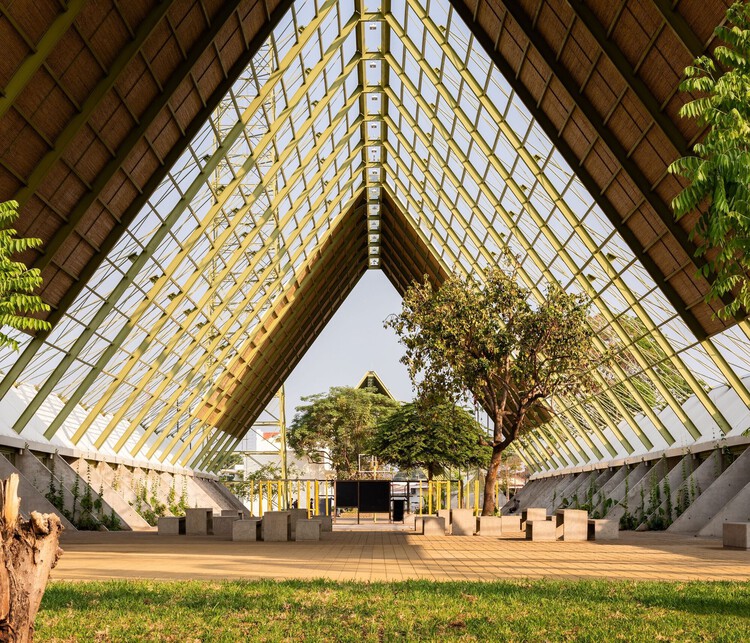
The relationship between architecture and collective life emerged through several announcements this week. The Lisbon Architecture Triennale selected CO-OP as the theme for its 2028 edition, with Chief Curator Joaquim Moreno proposing cooperation as a framework for examining housing, production, ownership, governance, and shared forms of living. The curatorial programme will explore how collective action shapes the production and use of space, extending the discussion from domestic arrangements to labour, landscape, and the common good. In Mexico, COLECTIVO C733 was named the inaugural recipient of the Siza Award for Public Architecture, established by the Serralves Foundation to recognize architectural generosity and engagement with public space. The practice's portfolio, which includes markets, cultural facilities, transport infrastructure, and public landscapes across Mexico, reflects the award's interest in architecture's relationship with local communities and their environments.
Related Article
The Portuguese Pavilion to Invite Four African Countries Through "Hands on the Ground" at the 2027 Venice Architecture BiennaleBuilding and Urban Systems in Transition
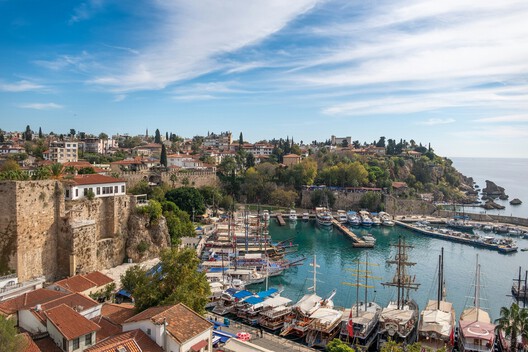
At COP31 in Antalya, the built environment featured in discussions on climate action through initiatives addressing energy efficiency, electrification, and urban resilience. The Turkish Presidency introduced the Antalya Compact for Energy Efficient Buildings, a voluntary framework targeting a 25% reduction in the operational energy intensity of the global building stock by 2035, compared with 2020 levels. Developed in collaboration with UNEP's Global Alliance for Buildings and Construction, the initiative outlines strategies for building renovation, reduced energy demand, efficient electrification, and improved building performance. Discussions also addressed how national climate commitments can translate into local investments in housing, infrastructure, and adaptation, while the Sustainable Urban Resilience Financing Facility (SURFF) was presented as a mechanism to connect cities with existing financing and technical support. Despite these sector-specific initiatives, disagreements over fossil fuels and climate finance prevented agreement on the proposed Antalya Pact, leaving broader questions about the international energy transition unresolved.
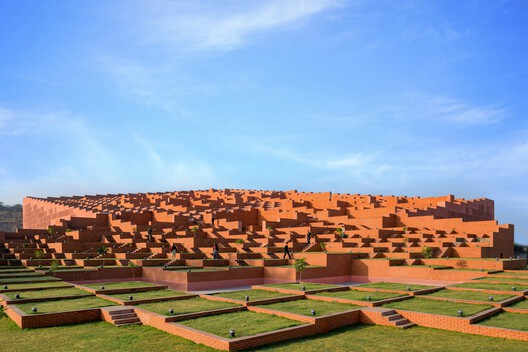
Questions of environmental performance and resource use also appeared among the projects recognized at the 2026 World Architecture Festival. The World Building of the Year award went to The Prestige University by Sanjay Puri Architects in Indore, India, whose stepped configuration draws on the spatial tradition of Indian stepwells while integrating courtyards that bring natural light into its interior spaces. The World Interior of the Year, &Matcha Three Yards by MLA at Home in the Philippines, uses open spaces, vegetation, water, and changing natural conditions to shape a small tea shop as a shared neighbourhood environment. Other winning projects approached environmental systems through different scales and disciplines, including Terreform ONE's Coding Kelp: Artificial Reef and Data Archive, named Future Project of the Year, and Natureza Urbana's Doca Linear Park in Brazil, awarded Landscape of the Year.
On the Radar
Qatar Museums Unveils Gerhard Richter's Permanent Doha Pavilion, Designed in Collaboration with Selldorf Architects
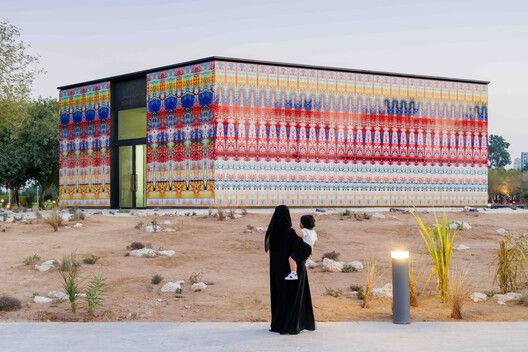
Qatar Museums has unveiled Doha Pavilion: Gerhard Richter, a permanent, site-specific structure conceived by the German artist in collaboration with Selldorf Architects. Located in MIA Park, outside the Museum of Islamic Art in Doha, the pavilion brings together a collection of Richter's paintings and sculptures, including a new work developed specifically for the space. Its hexagonal structure translates the artist's investigations into abstraction and perception into an architectural form, with six exterior walls featuring geometric patterns derived from his Patterns series. The design draws connections between Richter's mathematical approach to image-making and the repeating geometries of Islamic art. Realized as a legacy initiative of the Qatar-Germany 2017 Year of Culture, the pavilion joins other permanent public artworks in MIA Park and was unveiled as part of Qatar Creates Fall/Winter 2026–27, coinciding with the inaugural edition of Rubaiya Qatar.
Memphis Art Museum Opens New Herzog & de Meuron-Designed Building on the Mississippi River
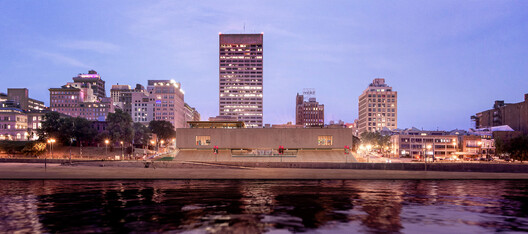
The Memphis Art Museum will open its new building on the banks of the Mississippi River on December 6, 2026. Designed by Herzog & de Meuron, with archimania as architect of record, the project expands the museum's gallery space by 50 percent and increases its free public areas sixfold. Constructed primarily from laminated mass timber, the new building forms a two-acre urban campus with a 50,000-square-foot rooftop art park, a riverfront amphitheater, and a 10,000-square-foot community courtyard. Its inaugural program includes Making Beauty: Hooks Brothers Studio, 1907–1984, an exhibition of more than 150 photographs documenting Black life and culture in the urban South, alongside 15 presentations from the museum's collection and four site-specific commissions.
Tulsa's Gilcrease Museum to Reopen in March 2027 Following Six-Year Closure
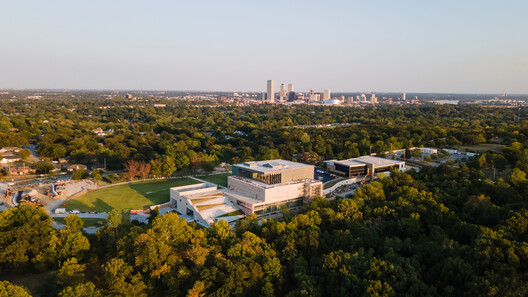
After six years of closure, the Gilcrease Museum in Tulsa, Oklahoma, is set to reopen in March 2027 with a new purpose-built building. Designed by SmithGroup in consultation with the Osage Nation, the museum will house a collection of more than 300,000 objects spanning 12,000 years of art, history, and culture across the Americas. The collection includes Indigenous art and cultural materials, colonial Latin American works, American portraiture, and art of the American West. Located on a 460-acre campus overlooking the Osage Hills, the museum will also connect its galleries with the surrounding landscape through 14 miles of hiking and biking trails. Founded in 1949 by Thomas Gilcrease, a citizen of the Muscogee (Creek) Nation, the institution's reopening marks a new phase for its collection and research activities.
This article is part of our new This Week in Architecture series, bringing together featured articles this week and emerging stories shaping the conversation right now. Explore more architecture news, projects, and insights on ArchDaily.