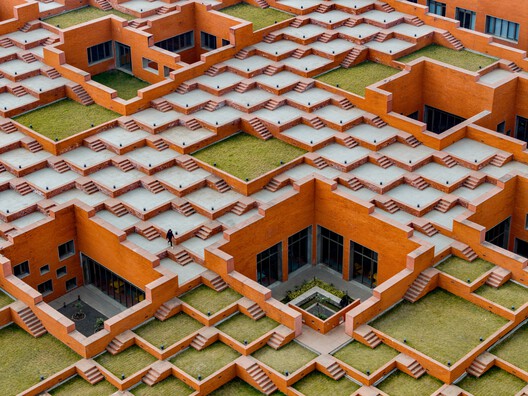
The Prestige University by Sanjay Puri Architects in Indore, India, has been declared the World Building of the Year at the 2026 World Architecture Festival (WAF). The ultimate accolades of World Building of the Year, World Interior of the Year, and Future Project of the Year were announced as hundreds of architects from across the world convened at a grand finale Gala Dinner at the Broward County Convention Center in Florida. A host of Special Prizes, including the American Beauty Prize sponsored by RFACT, were also announced at the closing event to celebrate the nineteenth edition of the festival. The announcement follows the final day of WAF, in which prize winners across all 42 categories have been competing for the winning titles.
World Building of the Year, supported by GROHE
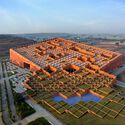
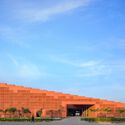
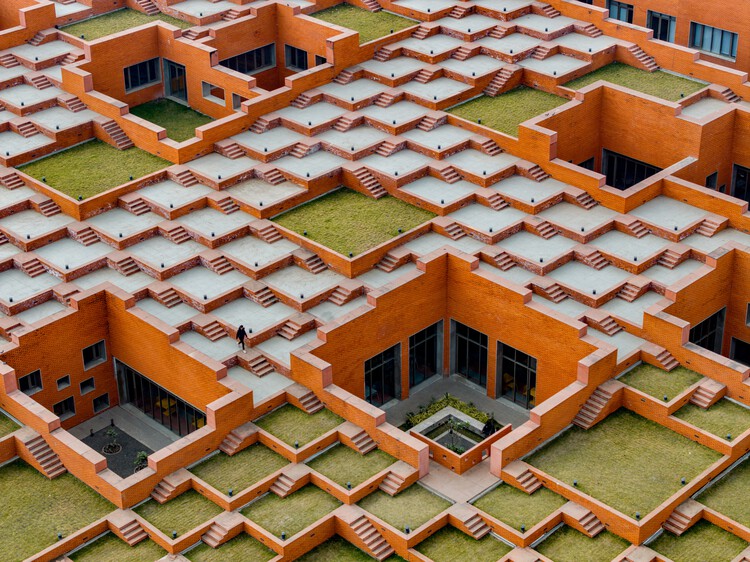
World Building of the Year went to The Prestige University by Sanjay Puri Architects in Indore, India.
Related Article
World Architecture Festival 2026: Day Two Winners Announced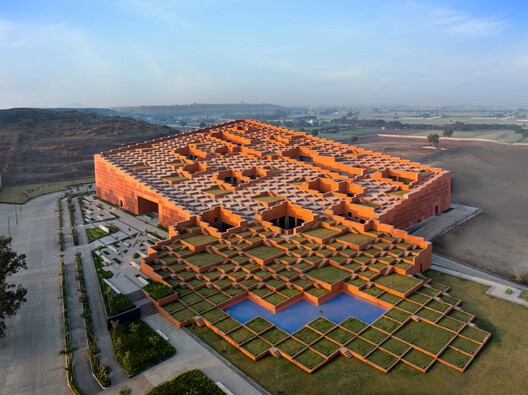
Situated within a 32-acre university campus, the main administration offices, along with an open-air auditorium, seminar halls, library, and cafeteria, form the functions of Prestige University. The building gradually steps up from the approach, becoming a multifunctional stage for large-scale events, seating 9000 students at a time. Inside, spaces are interspersed with naturally lit landscaped courtyards, allowing indirect light to infuse the internal volumes at each level, creating an energy-efficient, sustainable building with minimal dependence on artificial lighting and air conditioning - responding to a climate that varies from 30°C to 40°C for 8 months of the year. The built form evokes images of stepped wells in India which have existed since 1100 years; spaces not just built to store water but also social interactions bringing the community together.
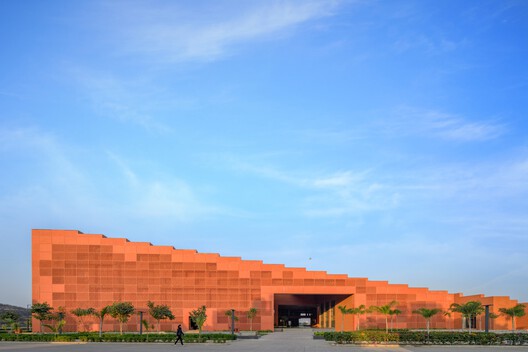
The winner was selected by a Super Jury chaired by Grace La, Co-Founder of LA DALLMAN, and Professor and Chair of Architecture at Harvard Graduate School of Design. The Jury also included: Adrien Gardère, Founder and CEO, Studio Adrien Gardère; Fernando Menis, Architect-Director, Fernando Menis SLPU; and Kai-Uwe Bergmann, Partner, BIG – Bjarke Ingels Group.
World Interior of the Year, supported by Deltalight
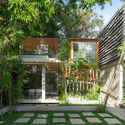
World Interior of the Year, supported by Deltalight, went to &Matcha Three Yards by MLA at Home in the Philippines.
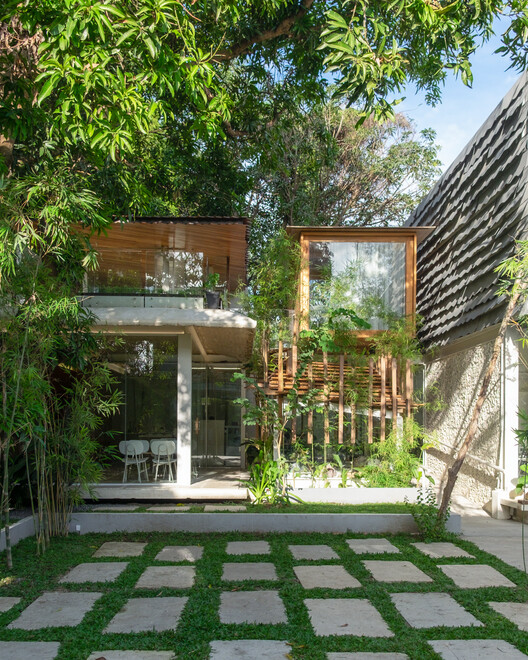
At just 100 square meters, &Matcha Three Yards demonstrates how void spaces can become civic infrastructure, where architecture works with the natural elements to set the conditions of the space. The tea shop offers neighbourhood belonging and ecological repair to the site. Gaps have been intentionally designed into the structure as instruments for change, allowing weather, light, shadow, sound, and air to shift so that no two visits are the same. At the centre of these changing sceneries is a floating tea chamber, surrounded by water and tree planes which catch shadows that move through the hours, days, and seasons. Movable tables and chairs also allow each visitor to form their own spatial relationship: alone or gathered, still or conversational, working or simply present.
Future Project of the Year
Future Project of the Year went to Coding Kelp: Artificial Reef and Data Archive by Terreform ONE, in Vancouver Island, Canada.
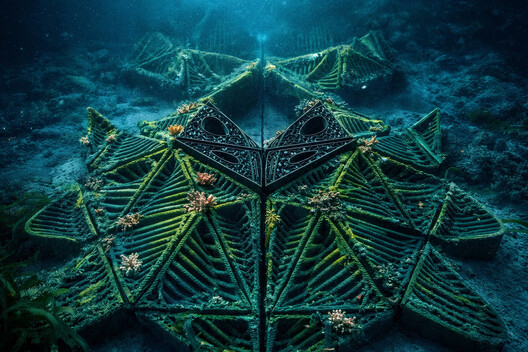
This neo-natural ocean kelp reef transforms architectural knowledge into botanical DNA. The structure is 3D-printed from calcium carbonate and engineered with porous zones that support kelp attachment and cold-water growth. Within geo-fenced, airtight vitrines, suspended specimens of dried ocean microalgae demonstrate a transgenic process in which texts, images, and drawings are encoded directly into the genetic material of engineered vegetation. The reef operates as a living, photosynthetic library. At planetary scale, the system merges two powerful sinks: carbon sequestration and long-term cold data storage.
Landscape of the Year
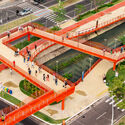
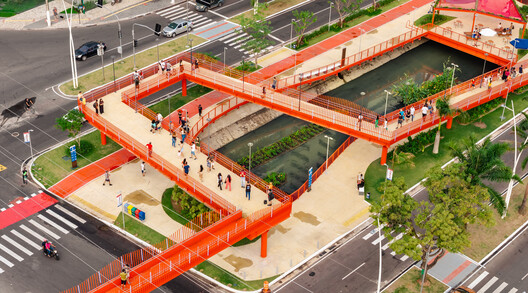
Landscape of the Year went to Doca Linear Park by Natureza Urbana in Brazil.
Special Prizes
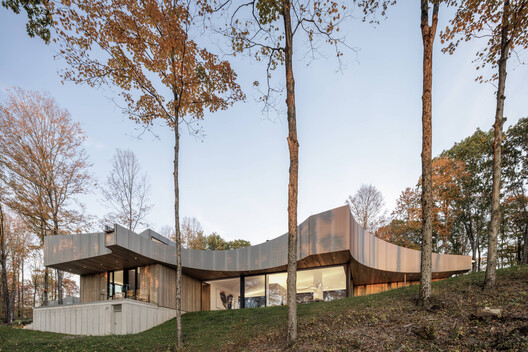
American Beauty Prize, supported by the Royal Fine Art Commission Trust: Chatham Residence by Desai Chia Architecture in Chatham, the United States
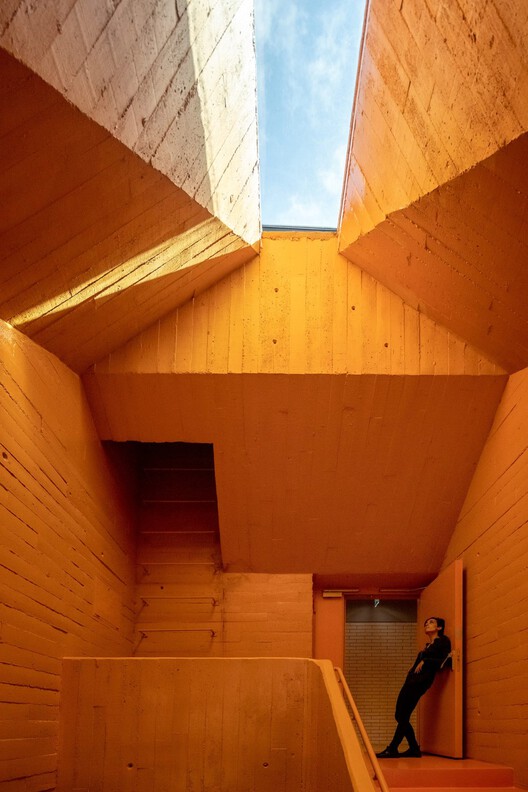
Best Use of Colour, supported by Della Townships: University of Lisbon Students' Residences by CVDB arquitectos in Lisbon, Portugal
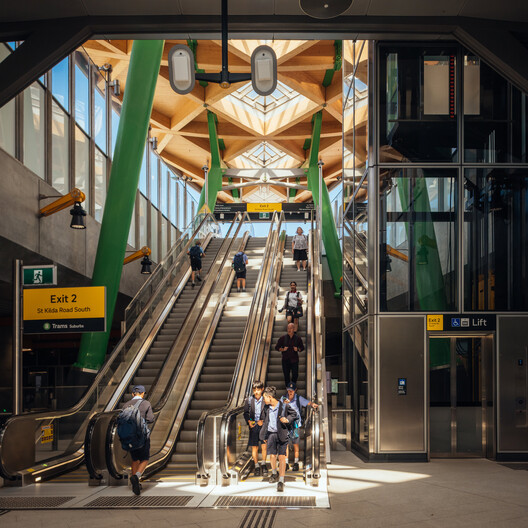
Best Use of Natural Light, supported by VELUX: Metro Tunnel Project by RSHP, Hassell & WW+P in Melbourne, Australia
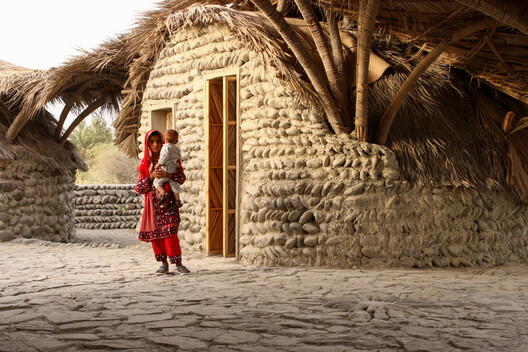
Best Use of Stone, supported by Turkish Stones: Nedarag Guesthouse by Nextoffice Studio of Architectural Research & Design in Kahnanikash Village, Sistan and Baluchestan province, Iran
Small Project of the Year: Hatmachida by Nikken Sekkei in Tokyo, Japan

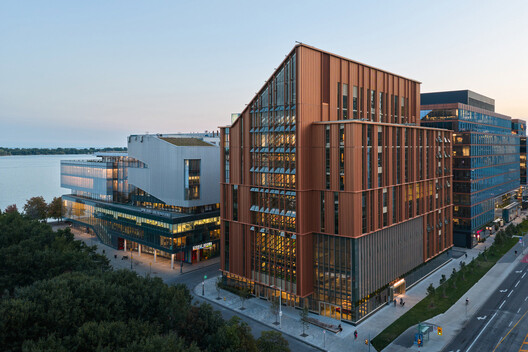
The Sustainability Prize, supported by ROCKWOOL: Limberlost Place by Moriyama Teshima Architects, Acton Ostry Architects in Toronto, Canada
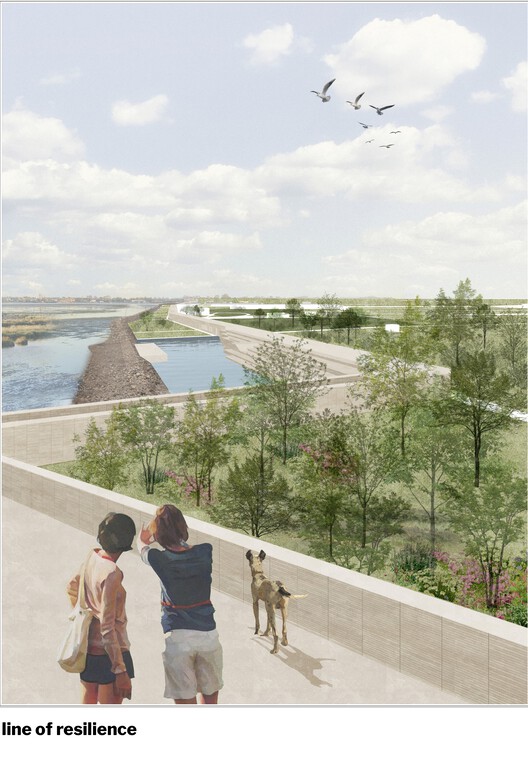
Student Charrette Prize: Line of resilience by IUAV University of Venice in Italy
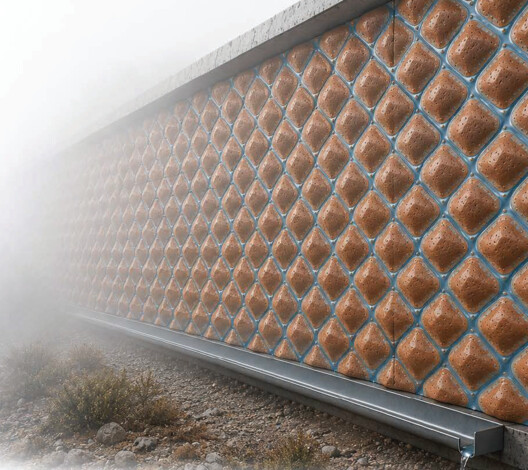
The GROHE Water Prize, supported by GROHE, was awarded to Carnegie Mellon University for Bio inspired Architectural Terra Cotta for Sustainable Water Harvesting
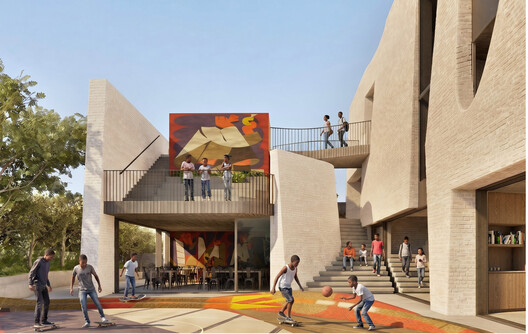
The Melvin Prize, established in memory of Jeremy Melvin, was awarded to 9Miles Learning Centre by SAOTA in Cape Town, South Africa.
A special mention was given to Ross Cameron, Hand Drawing Prize winner of The Architecture Drawing Prize, supported by Iris Ceramica Group, for his pencil drawing titled 'Glasgow School of Art 2026'. The overall winner will be announced at Sir John Soane's Museum in early 2027.