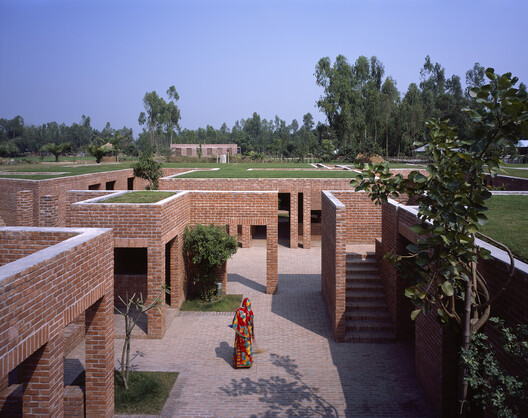
The Museum of Modern Art (MoMA) has selected Kashef Chowdhury/URBANA as the recipient of the first Ambasz–MoMA Annual Prize for Nature–Reconciled Architecture. The prize goes to the Dhaka-based architectural office for the design of the Friendship Centre, a rural training facility in Gaibandha, Bangladesh, inspired by one of the country's oldest urban archaeological sites. The prize, which MoMA describes as the largest award for a single architecture project, aims to recognize architectural practice while supporting tangible environmental action. Eligible projects may have been completed anywhere in the world in the past 30 years and must be considered exemplary in repairing architecture's relationship with nature. On this occasion, the $200,000 award is shared between the architect and the Fundación Gran Chaco, a nonprofit organization in Formosa, Argentina, which will plant trees in the Gran Chaco forest in the name of the project's client, the Friendship NGO, to contribute to reforestation efforts.

The prize is named after Argentine-American architect and industrial designer Emilio Ambasz, who was curator of design at MoMA between 1968 and 1976. He has also served as a member of MoMA's International Council continuously since 1978 and was on the board of directors of MoMA PS1 from 2002 to 2006. In 2020, he donated funds to establish the Emilio Ambasz Institute for the Joint Study of the Built and the Natural Environment, which aims to give visibility to forms of interaction between architecture and ecology, facilitating dialogue and research. Its work seeks to strengthen the relevance of cultural and art institutions for today's diverse audiences through research and programs such as panels, conferences, lectures and conversations. According to Evangelos Kotsioris, director of the institute, the inaugural prize extends this approach by recognizing architecture that merges environmental adaptation, historical continuity, and sensitivity to the communities it serves.
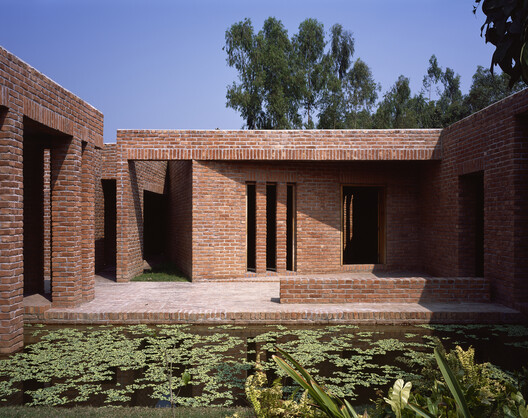
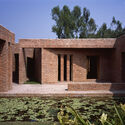
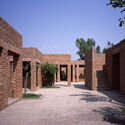
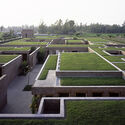
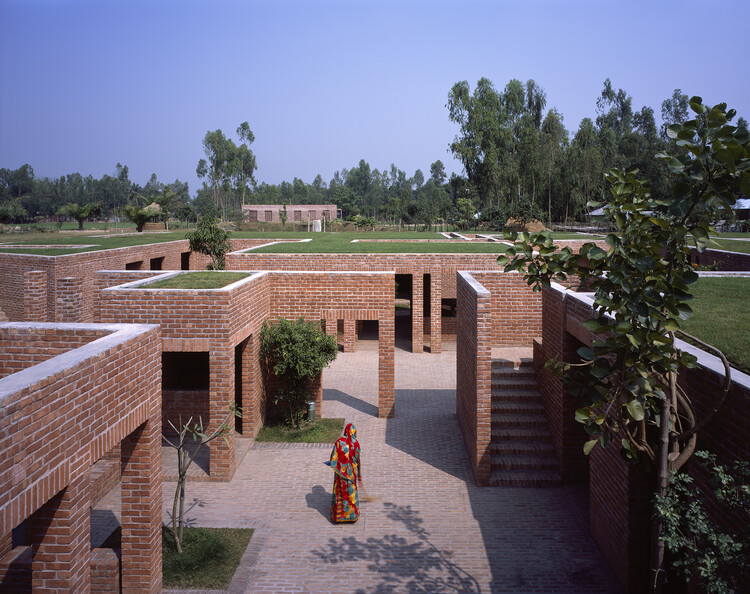
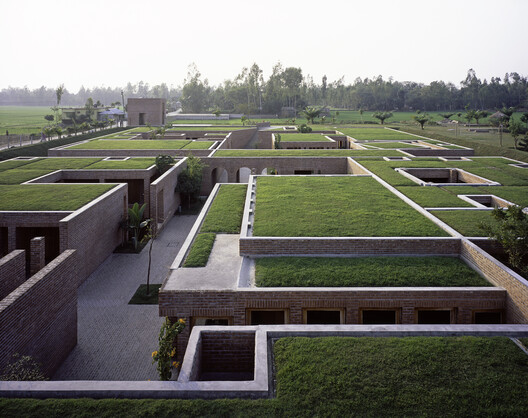
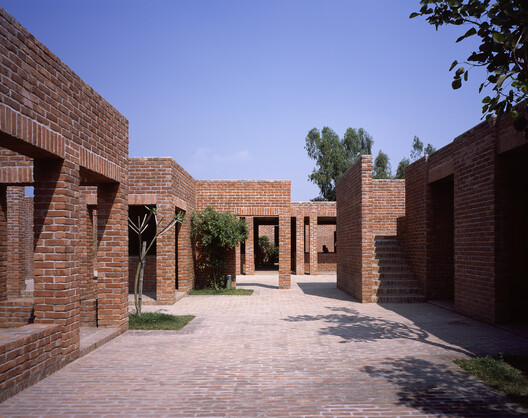
Describing the awarded project, Kotsioris says it "demonstrates how a remarkable economy of means can yield a richness of spatial experience, offering a compelling vision of how architecture might reconcile with nature." Completed in 2011, the Friendship Centre is a rural training facility and meeting space for communities in Bangladesh's flood-prone Jamuna River delta. The region is vulnerable to seasonal flooding and earthquakes, and the project responds with a compacted earthen embankment for flood protection and by building directly on the original, low-lying ground. The building was handcrafted mostly with local clay bricks, following community building traditions. The facility includes offices, classrooms, a library, meditation spaces, dormitories, and dining facilities distributed across two blocks. Its layout and image echo the nearby third-century BCE ancient city of Mahasthangarh, while adding contemporary elements such as green roofs, open-air courtyards and interconnected rainwater harvesting pools for temperature control and natural ventilation.
Related Article
MoMA Opens Architects of Liberation Exhibition on Independence-Era West African ModernismThe Friendship Centre has been in service to an underserved community for 14 years. Yet, it is not a building of 14 years of age, but rather 2,300 years of age, as it draws its inspiration for flood protection from the nearby third-century BC settlement of Mahasthan. We are delighted that its coexistence with the surrounding agricultural, rural landscape, without really showing its mass forms to adjoining villages, has been recognized in this important judgment. This pronouncement surely will, in no small terms, encourage an alternative reading of landscape and place making, not only in such locales as this remote part of one of the largest deltas in the world, but in every place where human intervention is destined to exist in the fragile ecosystem that we ourselves have caused to create. — Kashef Chowdhury
Kashef Chowdhury/URBANA's Friendship Centre was selected from a group of nearly 140 international projects, identified through research by the Ambasz Institute and proposals from 30 nominators representing different world regions. According to Martino Stierli, MoMA's Philip Johnson Chief Curator of Architecture and Design, the project was recognized as an example that leads architectural practices and design thinking into progressive new directions. The jury was composed of three representatives of MoMA's Department of Architecture and Design (Stierli; Evangelos Kotsioris, director of the Ambasz Institute and curator; and Paula Vilaplana de Miguel, assistant curator) and two external members: Shelley McNamara of Grafton Architects and Wang Shu of Amateur Architecture Studio. Projects were evaluated on rigor, creative engagement with the natural environment and alignment with the mission of the Emilio Ambasz Institute.

The award will be presented to Kashef Chowdhury/URBANA and the Fundación Gran Chaco during a ceremony at MoMA on December 12, 2026. Other recent architectural recognitions include the 2027 Le Prix Charlotte Perriand, awarded to Pritzker Prize laureates Anne Lacaton and Jean-Philippe Vassal for their work in renovating, preserving and updating architectural heritage; the 2026 Soane Medal, awarded to Farshid Moussavi for her contributions to architectural practice, history and theory; and the Praemium Imperiale, the global arts prize that recognized Daniel Libeskind for "his ability to evoke cultural memory through emotionally resonant and original architecture" and his "lifelong engagement with music, philosophy, and literature." The second edition of the ArchDaily Student Project Awards is currently open for submissions until January 31, 2027, at 11:59 p.m. CET, asking students around the world to submit their designs in response to one question: What can architecture enable in the city?

