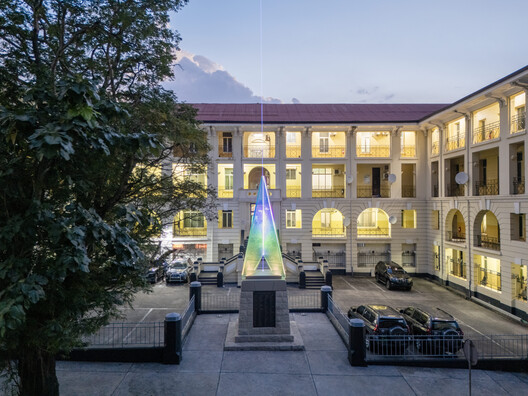
The Commonwealth War Graves Commission (CWGC) has unveiled a new memorial in Freetown, Sierra Leone, honoring more than 900 members of the Sierra Leone Carrier Corps who died in the First and Second World Wars. Designed by Lagos-based Oshinówò Studio, the intervention was unveiled on November 7 and commemorates the Carrier Corps individually by name for the first time. The design was first revealed in May 2025.
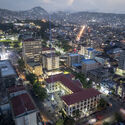
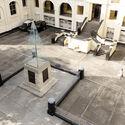
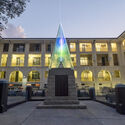
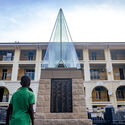
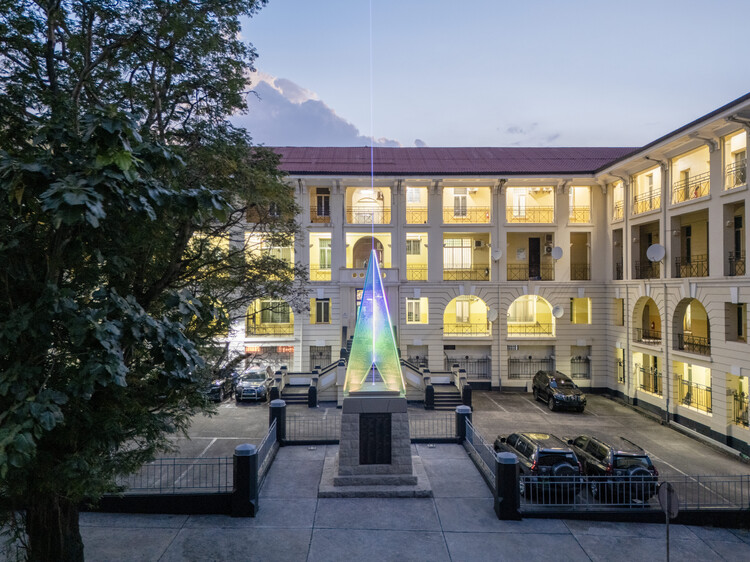
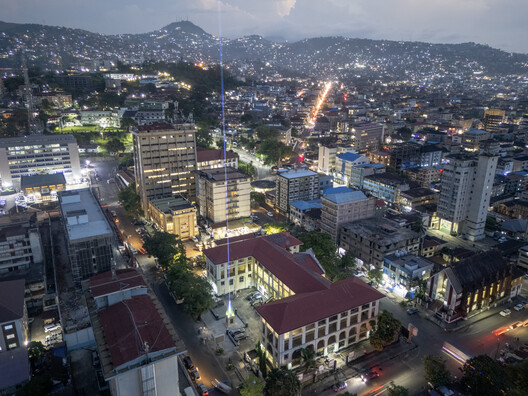
The original Freetown Memorial, designed by Sir Edwin Lutyens, was unveiled in 1931. It serves as Sierra Leone's national memorial for those who died in the World Wars and have no known grave. Its bronze panels record the names of African soldiers from the West African Regiment, the Sierra Leone Battalion of the West African Frontier Force and the Royal Engineers Inland Water Transport. Members of the Carrier Corps, however, were not named individually and were commemorated numerically.
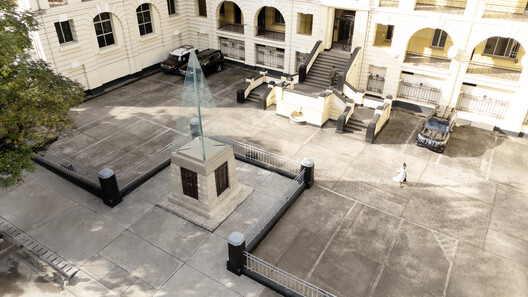
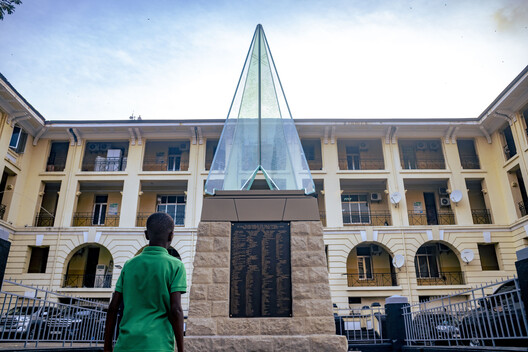
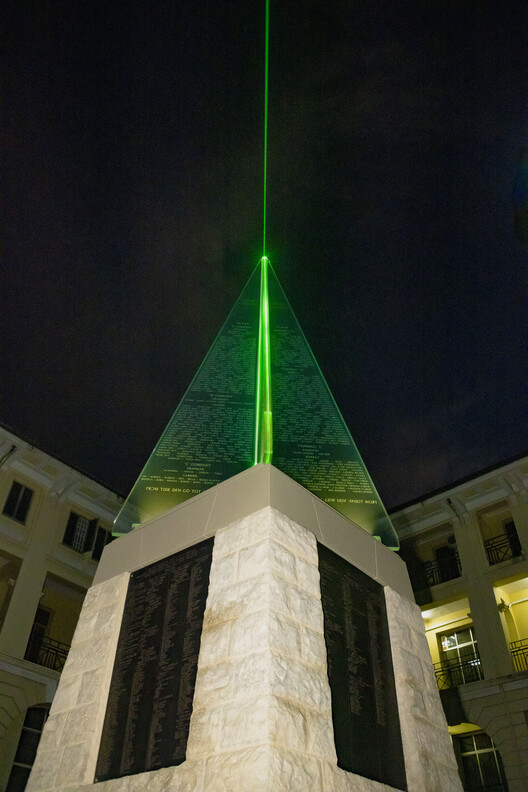
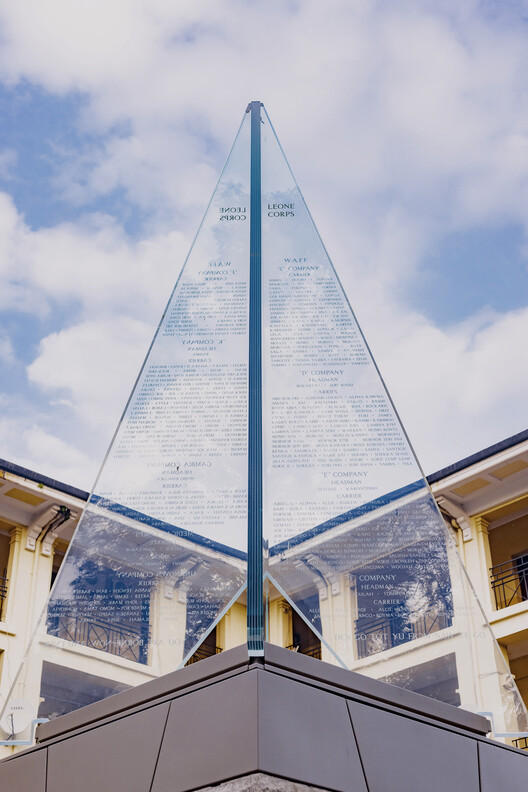
The new intervention consists of a prism of structural glass permanently integrated onto the Lutyens memorial. Four structural glass fins, reaching 8.4 meters in height, are etched with the names of the fallen, and the structure incorporates 4,000 kilograms of glass. The edges of the glass are lit, and a laser beacon will emit a pillar of light into the night sky on significant days of commemoration in Sierra Leone, visible within a five-kilometer radius across Freetown.
The project was developed with the CWGC over 16 months by engineers, glass designers, laser consultants and construction partners from Nigeria, the Netherlands, Spain, Sierra Leone and the UK. CWGC stonemasons and bronze specialists also restored the original base, uplifting the bronze panels and renewing the stonework. The names are accompanied by an epitaph in Krio and English by poets Nii Ayikwei Parkes and Julianknxx, which reads: "from today you will be carried, you are borne, now and ever."
Oshinówò Studio also designed four marker memorials in provinces from which carriers were raised. These satellite sites follow the language of the Freetown Memorial and result from a co-design process that determines the places, people and events to be memorialized, a new approach for the CWGC. The project is accompanied by a register of names, museum partnerships and educational programs for schools.
The Freetown Memorial is conceived through a material symbolism that allows it to resonate across cultures and contexts. The structure we designed is, in effect, an extension of Sir Edwin Lutyens' existing monument. By following its tapering geometry, the new monument rises higher, elevating the immense volume of names etched into glass. In this gesture, the Sierra Leone Carrier Corps are symbolically carried by their comrades, reversing the relationship between those who served and those who were served. There is a profound irony in this act: it becomes a fitting expression of gratitude to men whose sacrifice was fundamental to shaping the world we inhabit today. — Tosin Oshinówò
Recent news from Africa includes the completion of the new African Futures Institute (AFI) headquarters in Accra, Ghana, transforming a former tile warehouse into a center for architectural education, research, exhibitions and public programs. The Museum of Modern Art in New York is hosting an exhibition called "Architects of Liberation: Modernism in Western Africa" until January 2, 2027, examining African modern architecture in the context of political independence in the region. Studio NEiDA recently revealed its designs for The Falcon Cinema, a community art center dedicated to African film in Berekuso, Ghana.


