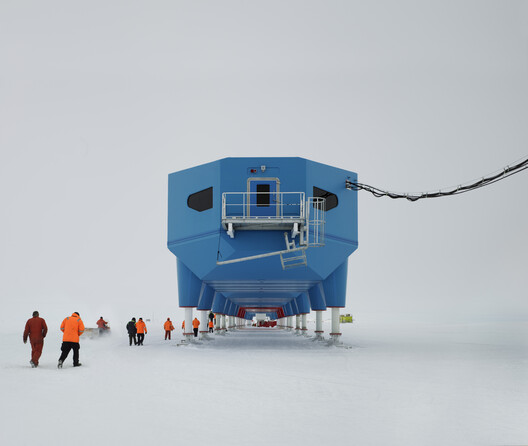
"Antarctica is known through narratives," states Victoria Nuviala Antelo during the lecture on Inhabiting the Extreme: An Architectural Biography of Antarctica, presented at the Buenos Aires International Architecture Biennial. Indeed, throughout architectural history, numerous stories, experiences, ways of inhabiting, and building practices have often been excluded from official narratives. Buried beneath thick layers of ice, the history of Antarctic architecture tells a story of impermanence. The ice surrounding the continent expands and contracts each year, doubling its surface area, while the species that inhabit it migrate and return according to their life cycles. Ice covers structures as katabatic winds erase the traces of more than 200 years of human presence. Explorations, settlements, architectural interventions, and ways of inhabiting remain concealed within one of the most extreme landscapes on the planet.


As a geologically complex territory characterized by mountainous landscapes and a constant interplay of extremes, Antarctica is home to more than 16,500 marine species and approximately 1,890 recorded species in its ice-free terrestrial areas. Among the latter are approximately 200 species of lichens, more than 50 bryophytes, over 700 algae species, and two vascular plant species. Among its most recognizable inhabitants, Antarctica's coasts and surrounding waters are home to millions of penguins and hundreds of thousands of whales, including approximately 500,000 minke whales and more than 2,000 Antarctic blue whales.
Antarctica is, traditionally, impossible to write. This idea is sustained by the powerful metaphor of the continent as a canvas, the 'vast white page.' -- Leane, 2012. Antarctica in Fiction: Imaginative Narratives of the Far South.
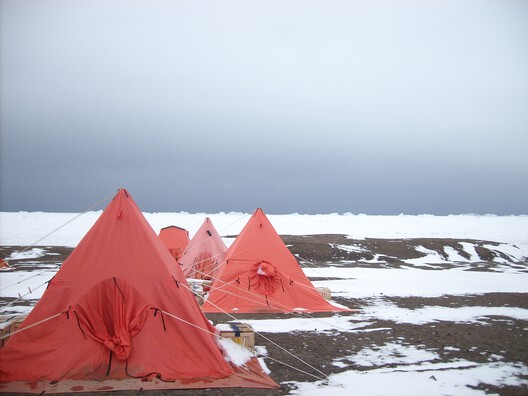
As described by Encyclopaedia Britannica, Antarctica is the world's fifth-largest continent by land area, covering approximately 14 million square kilometers. Winter temperatures range from −89.2°C (−128.6°F), the lowest temperature ever recorded, in 1983, to around −50°C (−58°F) in areas near sea level. During the summer, temperatures on the Antarctic Peninsula can reach up to 15°C (59°F), although they generally remain lower across the rest of the continent, averaging around 0°C (32°F) along the coast and ranging from −20°C to −35°C (−4°F to −31°F) in the interior. Under such extreme conditions, how can architecture be conceived and constructed? How can we inhabit, protect, and preserve such fragile ecosystems with responsibility and environmental awareness?
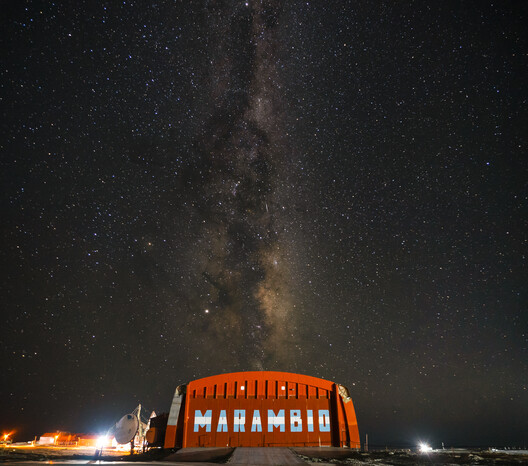
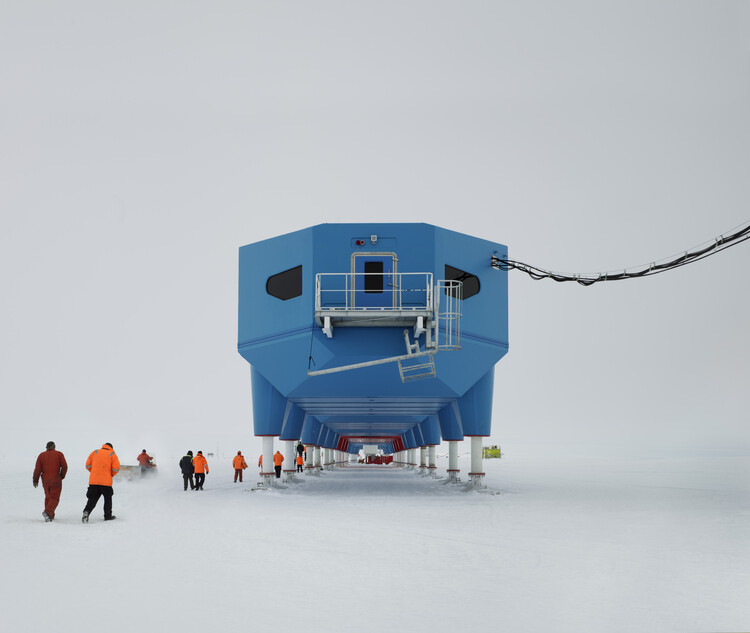
Antarctic architecture is part of architectural modernity, engaging with the principles of the Modern Movement, postwar technological utopias, the radical experiments of the 1960s and 1970s, postmodernism, and the contemporary challenges of building and inhabiting environments under increasingly extreme conditions. Indeed, India's Bharati Research Station reinterprets Le Corbusier's Villa Savoye, Buckminster Fuller's ideas and geodesic structures take physical form in the South Pole Dome, and Archigram's Walking City concepts come to life in the United Kingdom's Halley VI Research Station.
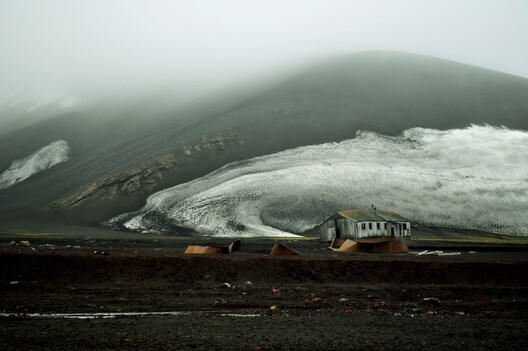
Inhabiting the Extreme: An Architectural Biography of Antarctica reveals the history of a territory shaped by more than two centuries of construction, where prototypes of minimal living environments coexist with radical reinterpretations of the International Style, transformations of Soviet Brutalism, and the materialization of some of the great architectural utopias and dystopias of the postwar era. The 6044 SUR collective, formed by Victoria Nuviala Antelo, Violeta Nuviala Antelo, Ximena Senatore Connolly, Lucia Roitman, Lucila Salvo, Guadalupe Tagliabue, Paz Fodde, Melina Lotarynski, Sol Lavintman, Emilia Oszlak, Mariana Gigliotti, Nerina Estelrich, and Bautista Marull, was established to recover and document 200 years of human occupation in Antarctica, tracing an architectural biography that brings together successive layers of history.
The history of Antarctic architecture is not separate from the history of global architecture. -- Violeta Nuviala Antelo, Director of SUR, Virtual Archive of Architecture and Habitat in Antarctica
The Search for Shelter: Exploring Antarctica (1800–1930)
Driven by exploration and exploitation, the earliest encounters with Antarctica were initially shaped by commercial and scientific interests. Among its first temporary inhabitants, sealers and whalers approached the continent's shores in search of marine mammals, constructing temporary settlements using locally available resources. Small stone shelters, covered with sealskins and furnished with materials derived from the animals themselves, such as whale vertebrae, were generally located near marine mammal colonies and occupied for short periods according to hunting seasons.
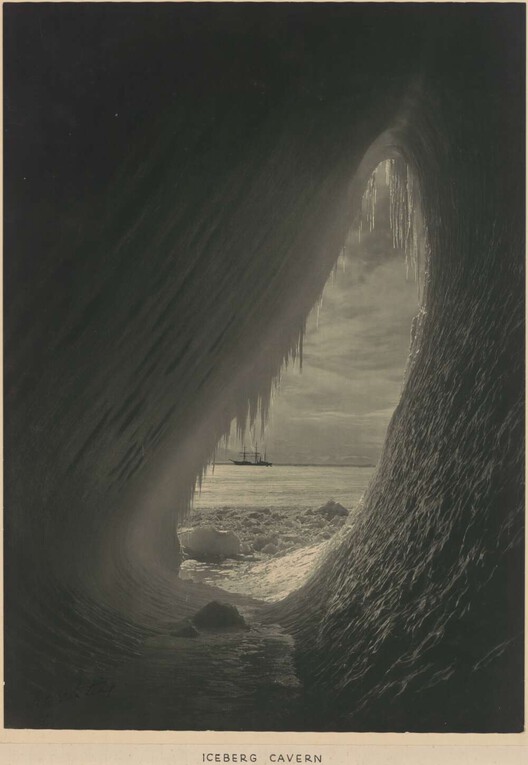
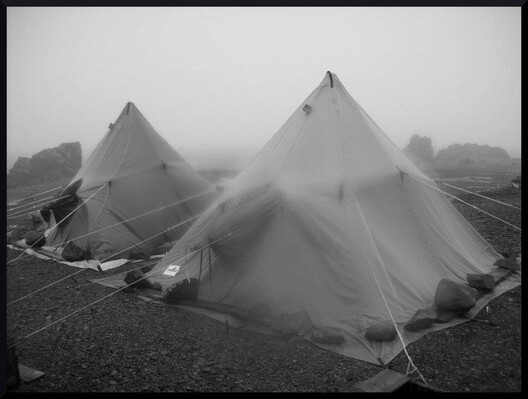
Scientific habitats, however, followed a more deliberate approach to planning and construction. Given the limited knowledge of Antarctic conditions, the earliest structures were designed in advance and, in many cases, prefabricated based on experiences in Arctic regions. Through compact layouts organized around shared spaces, these structures sought to optimize spatial efficiency, minimize surfaces exposed to the exterior, and consolidate the activities essential to survival and scientific research. Scientific expeditions also relied on complementary architectural solutions to explore the territory, combining prefabricated huts serving as base camps, pyramidal tents, and vessels that enabled movement inland and along the coast.
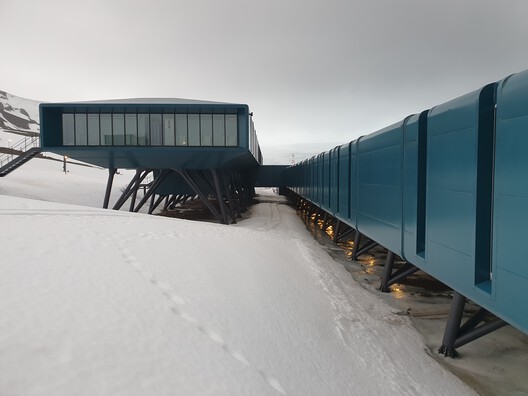
These different approaches to exploration reflected distinct relationships with the material world. While the earliest expeditions were ephemeral, flexible, and opportunistic, relying on architectural solutions shaped by locally available resources, these practices coexisted in the early 20th century with geographical and scientific exploration, which introduced planning and architectural design conceived from afar.
"Despite their differences, these various ways of inhabiting the continent shared a common condition: inhabiting without remaining." -- Ximena Senatore Connolly
Building Permanence: How to Inhabit Antarctica (1940–1980)
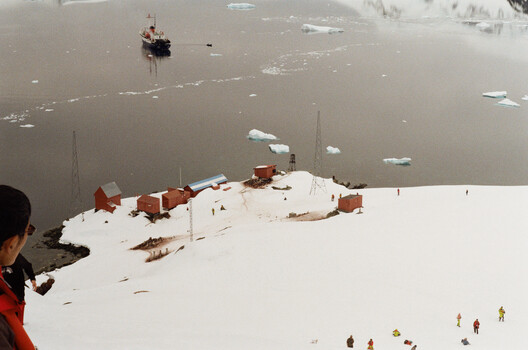
As Antarctica shifted from a territory of commercial exploitation to an international domain dedicated to peace and science, the continent underwent a transformation. Following World War II, several countries renewed their focus on Antarctica, and its architectural landscape began to expand and take shape. Nations such as Argentina, Australia, Chile, and the United Kingdom developed strategies for exploration and long-term occupation alongside new architectural experiments. Some established small research stations at strategic locations, while others pursued approaches based on stations that gradually expanded their footprint across the landscape. By 1957–1958, the architectural landscape had grown increasingly diverse and complex, encompassing designs ranging from timber and metal structures to concrete buildings and even constructions made from plastic materials.
In 1959, with the signing of the Antarctic Treaty, twelve nations agreed to preserve the continent for peaceful purposes and scientific research. In the following decades, the Antarctic Treaty System expanded, incorporating additional nations and new legal instruments to protect the Antarctic environment. Over time, it established a framework for international cooperation and territorial governance, reflecting a model of coexistence and collaboration among dozens of countries, including Argentina, Australia, Belgium, Brazil, Chile, China, France, Germany, India, Italy, Japan, New Zealand, Norway, Russia, South Africa, the United Kingdom, the United States, and Uruguay, among others.
Between polar Brutalism, minimal demountable structures, large elevated installations, geodesic domes, and underground stations, the Antarctic continent becomes a unique landscape of architectural modernity and postmodernity. -- Victoria Nuviala Antelo, Director of SUR, Virtual Archive of Architecture and Habitat in Antarctica
An Architectural Laboratory: Designing in Antarctica (1990–2026)
Antarctica emerged as a field for architectural experimentation; a territory for visionary possibilities and future scenarios. By the 1990s, the continent had become subject to the Environmental Protocol, marking a new phase in its protection. At the same time, its architectural landscape began to undergo a process of modernization, as countries upgraded their research stations and infrastructure to reduce their environmental footprint and minimize the impact of human activities on the continent. Architectural experimentation continued to evolve, with competitions becoming more frequent and new perspectives emerging on how to inhabit this extreme environment. These projects introduced new material, morphological, and siting strategies, establishing different forms of dialogue with the natural landscape, each nation's cultural heritage, and the temporal conditions and life cycles characteristic of Antarctica.
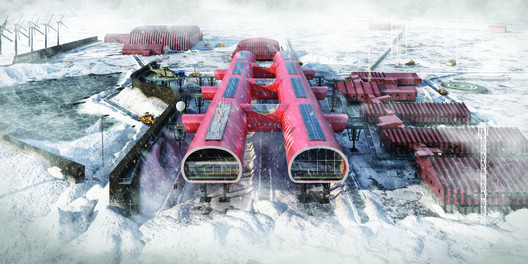
Architecture has also evolved into an environmental apparatus, integrating elevated volumes, elongated horizontal profiles, and sophisticated energy systems. The architectural landscape has come to embody modernity's futuristic vision. Yet as new research stations occupy the territory, older facilities must be removed, erasing traces of previous human occupation. Although Antarctica has no unified building codes or urban planning regulations, the protection of its nonhuman species remains a fundamental priority. Under the Environmental Protocol, obsolete structures and materials must be removed to prevent further environmental damage.
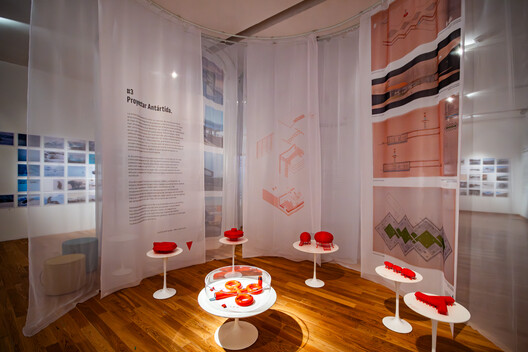
Antarctica thus emerges as a radical laboratory for technical, political, and environmental experimentation, where architecture operates simultaneously as shelter, infrastructure, and a geopolitical instrument. Inhabiting the Extreme: An Architectural Biography of Antarctica is a research project presented at the Buenos Aires International Architecture Biennial. Seventy institutions contributed materials to the exhibition, which seeked to recover forgotten histories and invites visitors to consider Antarctica as a testing ground for possible futures of inhabiting extreme and uncertain environments.
This article is part of the ArchDaily Topic: The Architecture of Water: Territories, Tensions & Transformations. Every month we explore a topic in-depth through articles, interviews, news, and architecture projects. We invite you to learn more about our ArchDaily Topics. And, as always, at ArchDaily we welcome the contributions of our readers; if you want to submit an article or project, contact us.


