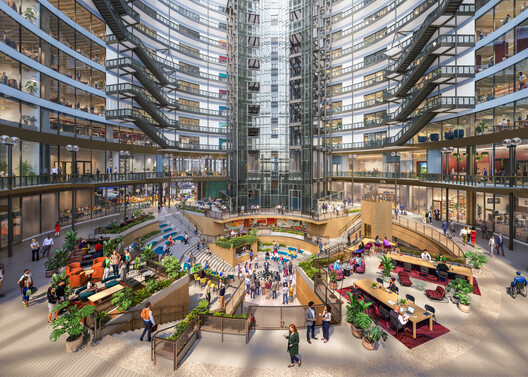
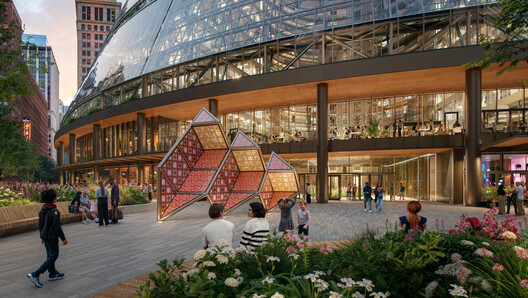
On September 16, 2026, Google announced the redevelopment of Chicago's Thompson Center as a space for work, culture, and community. The James R. Thompson Center is a postmodern architectural landmark designed by Helmut Jahn and completed in 1985. Commissioned by Illinois Governor James R. Thompson, the building reinterprets the classical state capitol by turning the traditional dome-and-public-plaza concept inside out. Occupying an entire city block in Chicago's Loop, it features a multicolored, curved glass atrium and a sloping, transparent corner entry. Controversial from day one, it has been criticized for poor climate control, high maintenance costs, and structural and leak issues. To restore it rather than demolish it, the company collaborated with Architecture Plus Information (A+I) to design a project that would integrate the building into the urban life of Chicago's Loop.
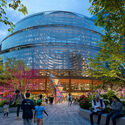
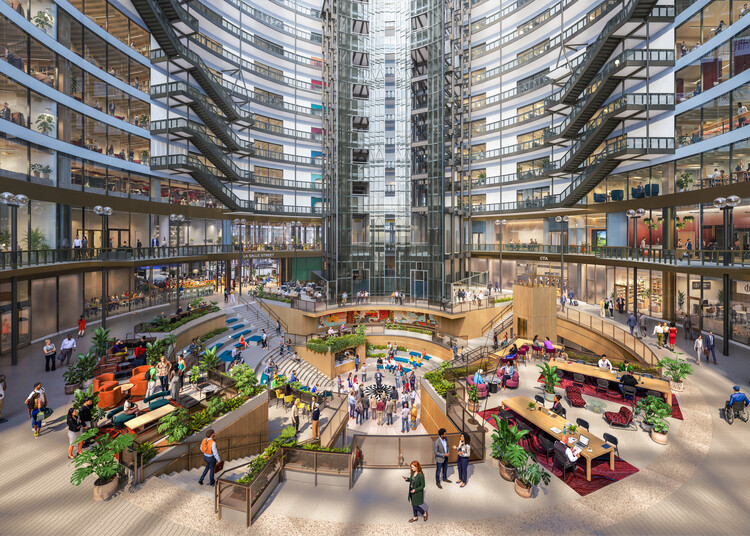
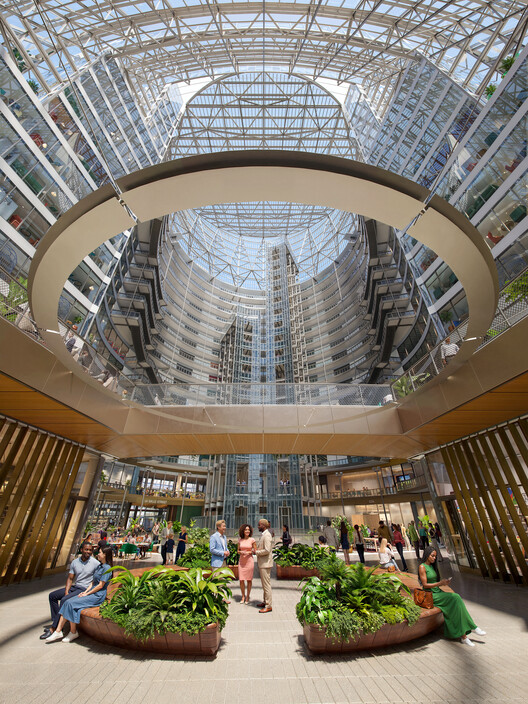
Roughly 30 years after its opening, Illinois state officials, citing the building's high upkeep costs, repeatedly floated selling the site and demolishing the structure to free up the valuable downtown Loop land. After Governor Bruce Rauner pushed a plan to sell the building in 2015, architecture critics, preservationists, and organizations including Landmarks Illinois and Docomomo campaigned to save it, arguing it was a significant work of postmodern architecture and one of Jahn's major buildings that deserved landmark protection rather than demolition. In 2022, the building was sold to developer The Prime Group, which committed to renovating rather than demolishing it. The same year, Google announced plans to purchase the building once renovations were complete, effectively ending the demolition threat. Renovations, including the removal of the building's original glass-and-metal exterior and portions of its atrium, began in May 2024.
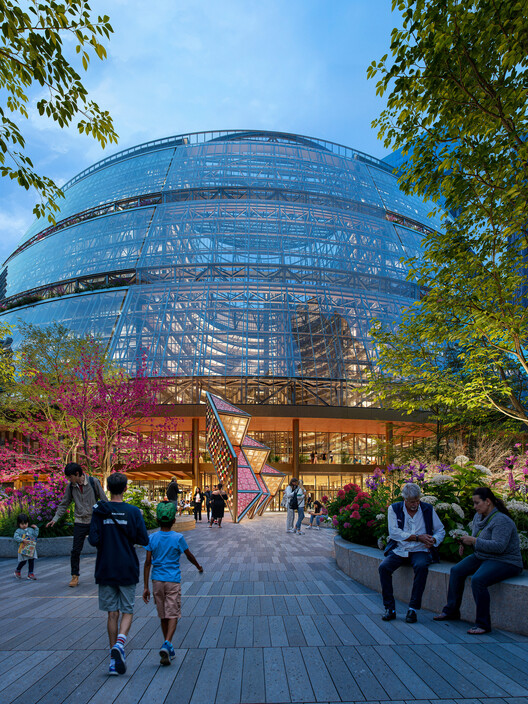
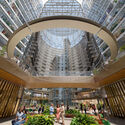
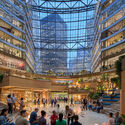
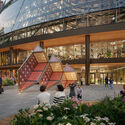
Google opened its first Chicago office in 2000, and as the city has grown into a technology hub, the company's local workforce has grown to more than 2,000 employees. The Thompson Center redevelopment to accommodate its new offices was conceptualized with Architecture Plus Information (A+I), now part of Perkins&Will. The redesign aims to bring new amenities to the Loop, including "a curated mix" of food, retail, and space for seasonal events in the building's atrium and plaza, and calls for expanding the central opening beneath the 17-story atrium and constructing a cascading staircase integrated with terraced seating and retail space. The plaza will also hold Vector, a 30-foot-tall sculpture by artist Sanford Biggers that reimagines traditional quilt patterns. Google is also partnering with After School Matters, a local nonprofit that provides paid after-school and summer opportunities to Chicago teens, who will contribute a large-scale commissioned piece to the building's atrium this year.
Elsewhere, the trend is also to transform rather than demolish. The African Futures Institute (AFI) has completed its new headquarters in Accra, Ghana, transforming a former tile warehouse in the city's Osu neighborhood into a center for architectural education, research, exhibitions, and public programs. London design collective Assemble is transforming the Grade II*-listed Bromley Hall into a creative and light-industrial workspace. And "Right to Housing! Now and Forever," an official European Citizens' Initiative calling for affordable, sustainable, and fair housing across the European Union, encompassing building renovation as well as financing tools and measures to ensure access, is now open for signatures.


