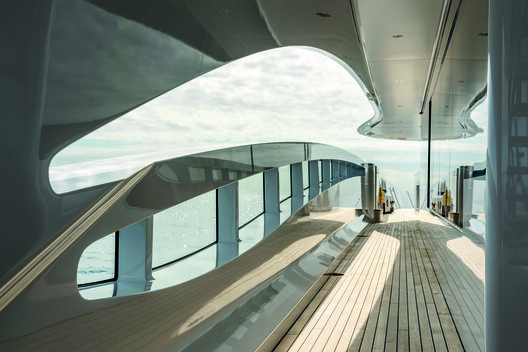
Unlike buildings, which are anchored to foundations and respond to climate from a fixed position, yachts are designed for constant movement and change. Interiors sway with the vessel, light changes by the minute, humidity is a permanent design condition, and every kilogram influences performance. Designing for the sea therefore requires architects, naval architects, engineers, and interior designers to solve questions that rarely exist on land: how can space remain calm while everything around it is in motion?
This floating form of architecture has existed for centuries. The word yacht originates from the Dutch jacht, meaning a fast vessel built for pursuit before later evolving into recreational and long-distance cruising craft. As yachts became places to live rather than simply modes of travel, naval architecture expanded beyond engineering into designing complete living environments, balancing hydrodynamics, structure, circulation, daylight, and interior planning within a vessel that is constantly in motion.
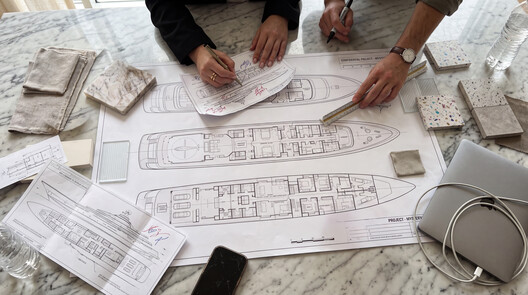

Like architects, naval architects organize circulation, structure, daylight, and material relationships while also accounting for buoyancy, balance, and resistance through water. The hull shape influences speed, efficiency, stability, and how movement is experienced inside the vessel. Weight distribution affects stability, so furniture, stone surfaces, bathrooms, and technical equipment all become part of the vessel's stability strategy.
These technical constraints extend to the smallest architectural details. Materials must withstand salt, moisture, UV exposure, and constant vibration while maintaining a comfortable interior atmosphere. Woods, stone, metals, textiles, and fittings must therefore meet the specific demands of a marine environment. Collections such as Dornbracht's are available for marine applications, with finishes and detailing suited to highly customized yacht interiors while meeting the demands of life at sea.
Making a Small Space Feel Generous
Unlike a conventional building, a yacht offers a strictly defined amount of space. Every room, piece of furniture, and storage element has to earn its place, making spatial efficiency an important part of the design. This is especially evident in the way yacht interiors use built-in elements to create generous living spaces within a limited footprint.
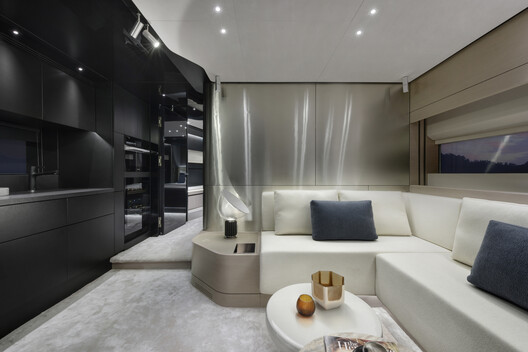
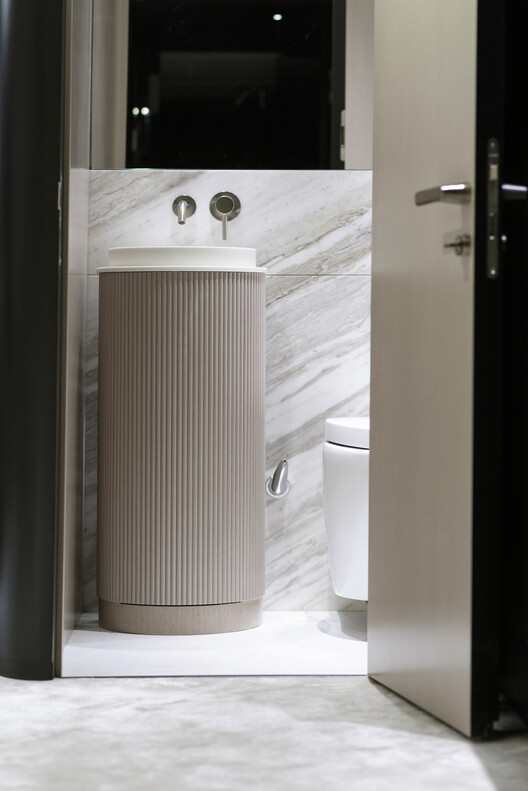
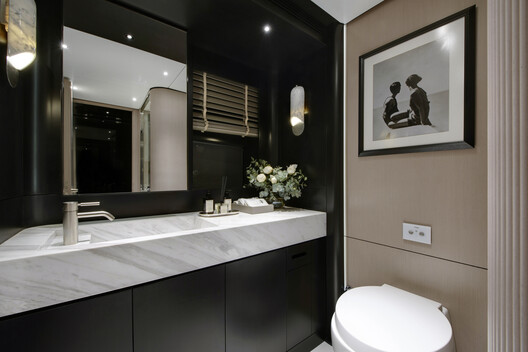
The REN 62, a 19-meter motor yacht designed by BAZ Yacht Design, demonstrates how compact interiors can feel remarkably generous through proportion, continuity, and built-in architecture. Custom joinery, integrated storage, and vessel-specific furniture make efficient use of every square meter while keeping circulation open and uninterrupted. A restrained palette of dark timber, brushed metal, stone, and soft textiles runs through the salon, kitchen, and cabins, creating a consistent material language. Long horizontal windows frame the surrounding sea and draw changing daylight deep into the living spaces, making the horizon part of the interior experience. That material continuity extends into the kitchen and bathrooms, where Dornbracht's LYV in Soft Black blends into the yacht's nearly monochromatic galley, while META in Brushed Platinum complements marble surfaces and cooler metallic finishes.
Materials That Perform in a Marine Environment
Material selection on a yacht is as much about composition as it is about performance. A vessel has to remain light enough to perform efficiently, making weight an architectural consideration alongside craftsmanship and longevity. These constraints influence not only how materials perform, but also how they are combined to create interiors that feel warm, durable, and visually balanced in Yacht design.
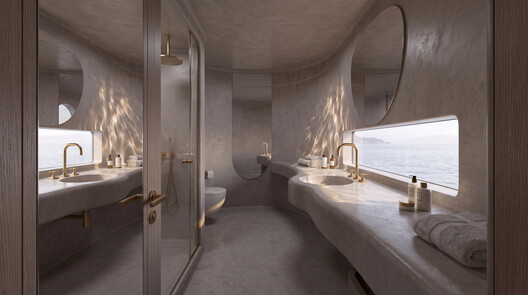
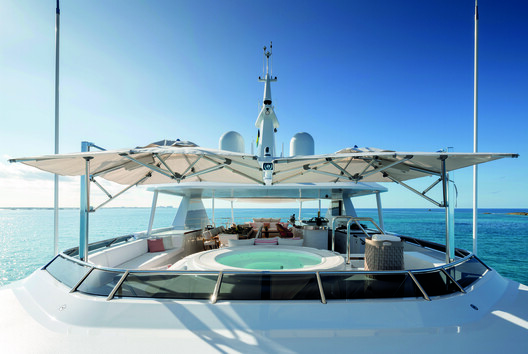
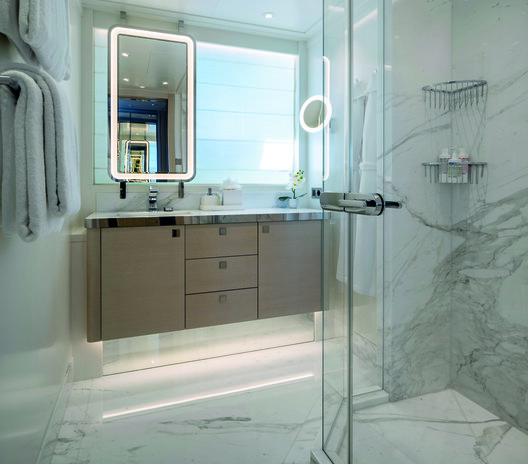
On the 57-meter Santosha by Heesen Yachts, materials define the interior's atmosphere and character. Harrison Eidsgaard combines dark timber, leather, brushed metals, cream-colored textiles, and generous glazing to create spaces that remain visually connected to the surrounding landscape. The bathrooms continue this palette through sculpted marble surfaces, including a relief panel by DKT Studio in the primary suite. Dornbracht's CYO fittings in Chrome sit within this composition as another material layer, contrasting subtly with the stone while reinforcing the project's restrained material palette
Blurring Thresholds
Architecture on water constantly navigates the relationship between shelter and landscape. Unlike a building fixed to a particular site, a yacht continually moves through different environments. Its windows, terraces, decks, and openings therefore become key architectural devices that connect the interior to the water.
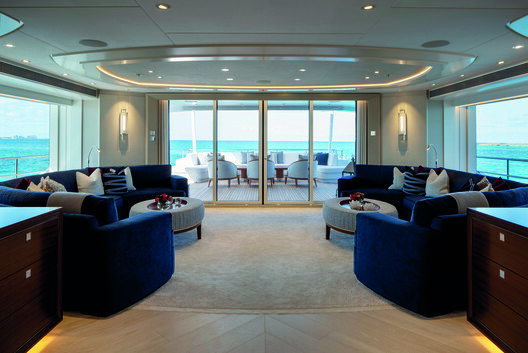
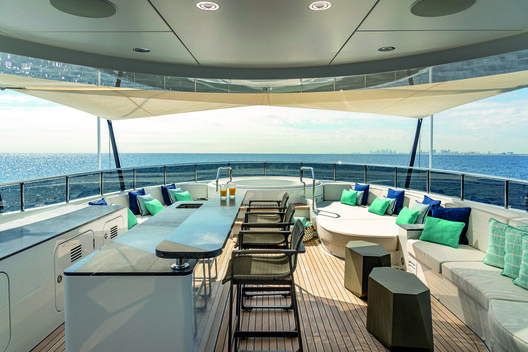
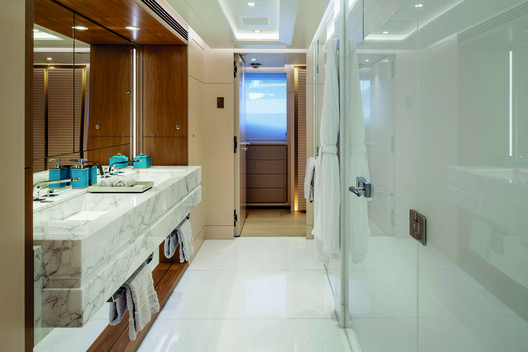
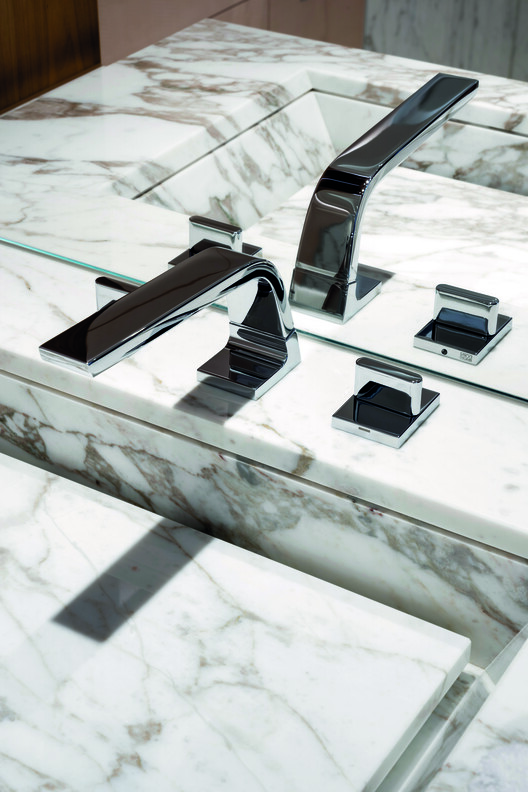
The Ocean Z approaches the relationship between interior and water through openness and light. Reymond Langton Design combines pale timber, white marble, curved forms, and Scandinavian-inspired simplicity with accents of sea green and deep blue. Floor-to-ceiling glazing, outdoor terraces, and a fold-out bathing platform soften the transition between interior living spaces and the surrounding sea, allowing views and daylight to shape the atmosphere on board. In the bathrooms, wood paneling and marble continue the material language, while Dornbracht's CL.1 in Chrome complements the clean, minimalist composition.
Yacht design brings together many of the questions architects address on land within a far more constrained environment. Space has to perform multiple functions without feeling crowded, materials must balance longevity with tactile quality, and interiors remain in constant dialogue with the surrounding landscape through light, views, and carefully framed openings.
The REN 62, Santosha, and Ocean Z each approach these challenges differently, yet all demonstrate how architecture on water depends on the careful coordination of structure, materials, light, and interior planning. The result is a design approach in which performance and the experience of inhabiting a space develop as one.



