What can a textile do that glass, wood, concrete, or metal cannot? Architectural composite fabrics don't replace conventional building materials. Instead, they can complement them and often add another layer of performance to the building envelope. Their application changes with context. A composite membrane can become an exterior shading system for a tropical conservatory, an interior skin that shapes acoustics and spatial experience in a museum, or part of a facade strategy that improves the environmental performance of an existing building.
Fabric-based envelope systems can support climate control, comfort, and architectural expression while remaining lightweight. Composite fabrics such as those manufactured by Serge Ferrari Architecture are used across applications ranging from tensile structures and solar protection to interior surfaces.
Climate: How to Create a Comfortable Environment in Extreme Conditions?
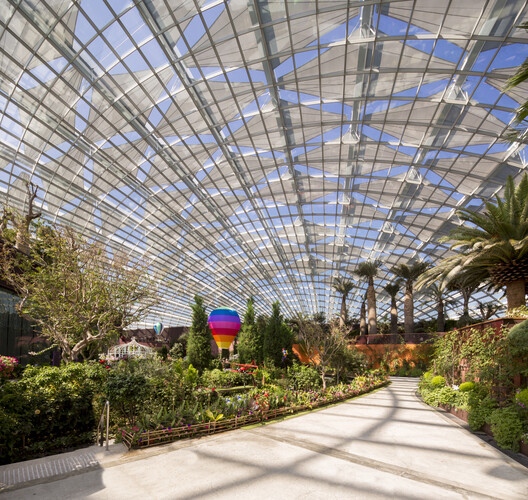
Singapore's Gardens by the Bay, designed by WilkinsonEyre, is home to two of the world's largest climate-controlled conservatories that include an indoor waterfall, a flowering meadow, cascading levels of vertical planting and walkways that rise through the trees. The challenge was to recreate Mediterranean and Cloud Forest environments inside a tropical climate while minimizing the enormous energy demand typically associated with cooling glass structures.
The project integrates shading directly into the envelope. More than 400 Soltis 92 retractable external textile shades are concealed within the conservatories' steel arches and deploy according to solar conditions throughout the day. Their triangular geometry follows the complex curvature of the domes, allowing each shade to respond independently to changing daylight and solar exposure.
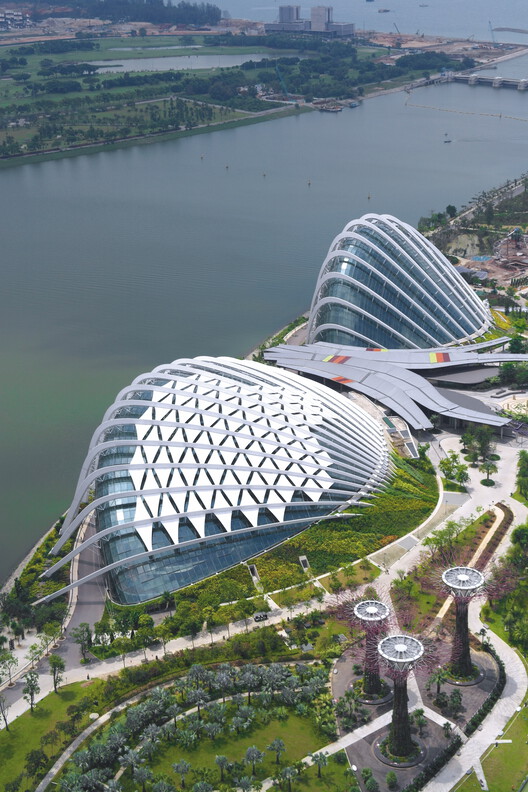
This dynamic, computer-controlled layer significantly reduces solar heat gain before it reaches the glazing, helping lower cooling loads while maintaining the daylight conditions required for the plant collections. Because the membrane sits outside the glass, it intercepts radiant heat before it enters the building envelope, a strategy that is considerably more effective than interior shading in hot climates.
The project demonstrates how architectural fabrics can support passive environmental strategies within highly engineered buildings. Lightweight enough to follow complex geometries without adding significant structural load, the shading system becomes part of the curvilinear conservatories' climate infrastructure.
Experience: How Does the Building Envelope Contribute to the Spatial Experience?
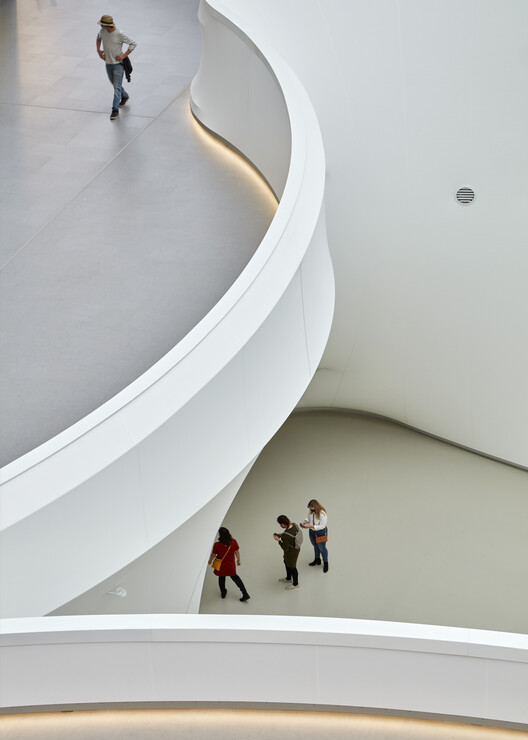
KANVA's renovation of Montréal's Biodome approaches the building envelope from a different perspective. Originally constructed as the velodrome for the 1976 Olympic Games, the building was transformed into an immersive science museum organized around five distinct ecosystems.
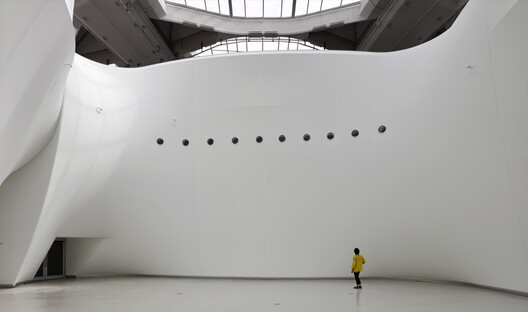
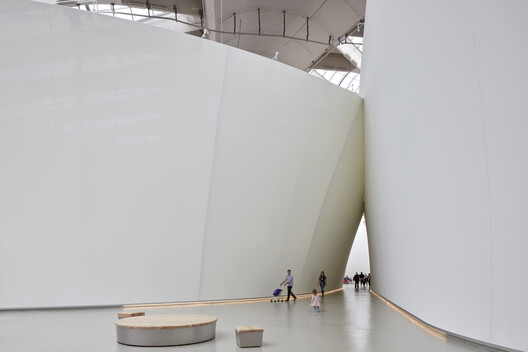
Instead of separating the museum's ecosystems and spaces with conventional walls, the architects introduced a continuous white textile membrane that wraps around them like a suspended landscape. Stretched across a complex aluminum-and-steel structure, the membrane guides visitors through the museum while filtering daylight from the added skylights above.
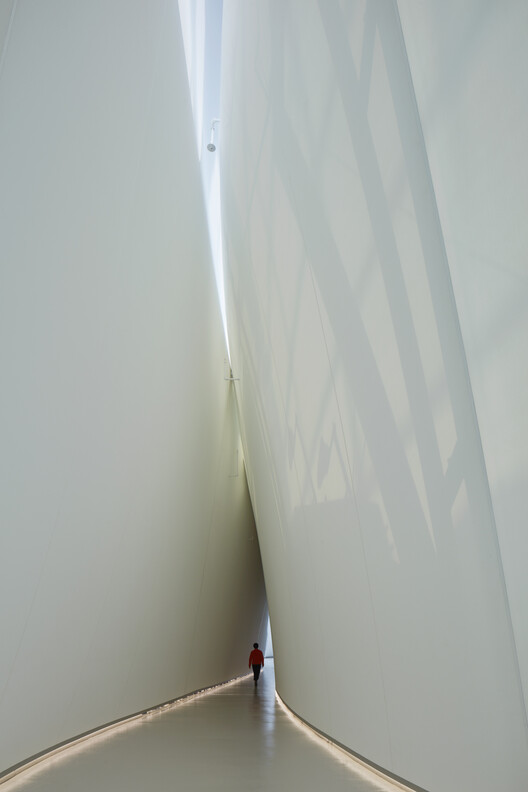
The intervention changes how visitors perceive the five ecosystems, including Tropical Rainforest, Laurentian Maple Forest, Gulf of St. Lawrence, Sub-Antarctic Islands, and Labrador Coast. Its translucent surface softens natural light, creates visual continuity between different environments, and establishes moments of calm before visitors enter the museum's multisensory ecosystems of sound, humidity, smell, and vegetation.
The Tenseo Comfort AW textile skin also addresses acoustics, absorbing reverberation within the large public atrium without compromising openness or daylight. Here, the membrane performs several architectural roles at once: enclosure, acoustic treatment, spatial orientation, and atmospheric filtering. The Biodome suggests that the building envelope is not always located at the exterior facade. Interior textile membranes can create environmental transitions within buildings, shaping experience through light, sound, and movement while remaining remarkably lightweight.
Transformation: How to Increase the Performance of an Existing Building?
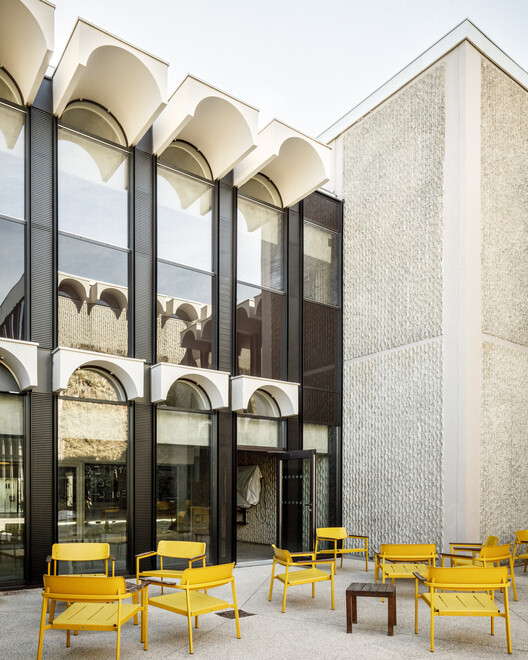
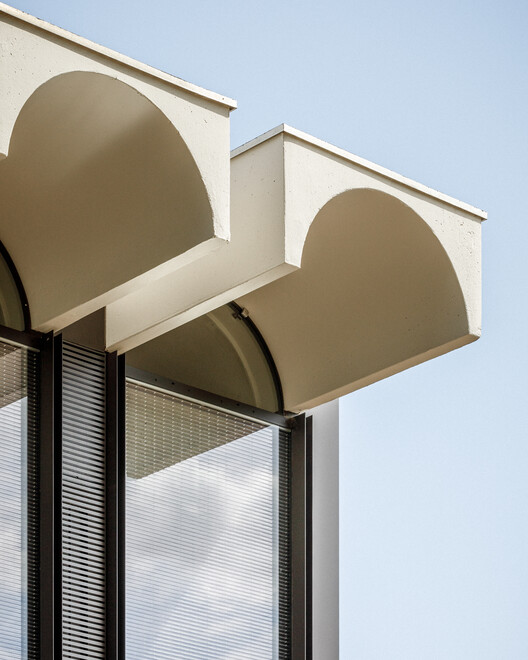
Retrofitting existing buildings often requires improving environmental performance without erasing architectural identity. The thermal and architectural renovation of the Montpellier National School of Architecture, designed by Maignial Architectes & Associés, shows how the envelope can become a tool for transformation instead of replacement.
Originally built in 1970, the school was reimagined around a facade envelope that combines insulation, ventilation, heating, cooling, and solar control within a single architectural system aiming to reduce energy consumption by 60%. Instead of adding independent layers of technical equipment, the renovation integrates multiple environmental functions directly into the facade assembly: insulation, air treatment, heating, cooling, and sun protection.
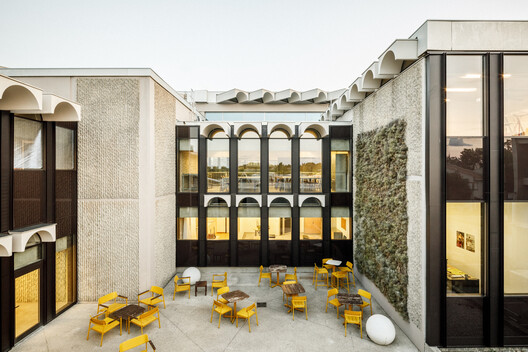
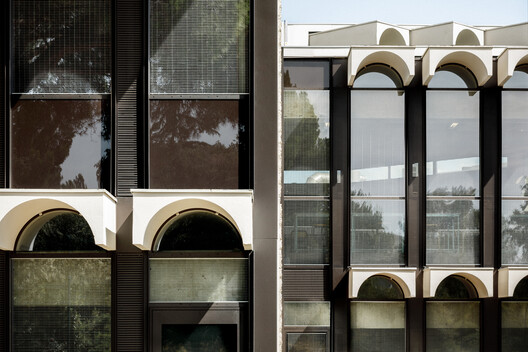
Solar protection plays an essential role in this strategy. Interior shading systems, including composite fabric screens such as Serge Ferrari's Soltis Touch, modulate daylight throughout the offices, meeting rooms, and documentation center on the east-, west-, and south-facing facades. Combined with high-performance glazing, natural night ventilation, and passive cooling through small, controllable openings, the envelope helps regulate seasonal solar gains while reducing operational energy consumption.
Beyond performance metrics, the renovation restores qualities of the original architecture obscured by previous interventions. The facade becomes both sustainable and educational, making environmental systems visible to students and encouraging occupants to interact with the building according to seasonal conditions, with help from a user manual.
The project highlights an important shift in architectural renovation: improving performance is not only about adding insulation, but about designing envelopes that actively participate in the building's life.
Across these projects, architectural composite fabrics appear as retractable shading systems, interior spatial membranes, acoustic surfaces, and responsive environmental layers that help buildings adapt to climate while enriching the experience of space. As architecture continues to balance performance with material efficiency, lightweight textile technologies offer new possibilities for designing envelopes that filter, respond, and transform rather than simply separate inside from outside.
Serge Ferrari will explore these questions further during a live event from Paris on September 24, 2026, at 1 PM (CEST), under the theme 'Buildings are designed for a world that no longer exists.' The event and reveal will be streamed online.